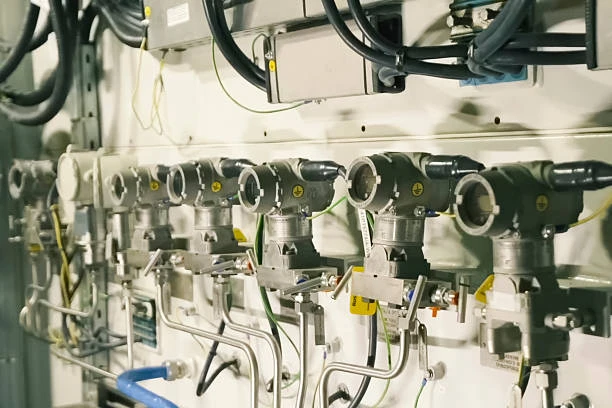

Thermal Mass Flow Meters are widely used in industrial, commercial, and research environments for measuring the flow of gases with high accuracy. Their ability to measure mass flow directly, rather than relying on pressure or volume corrections, makes them particularly valuable in applications where precision and consistency are essential. In gas systems, where safety, efficiency, and cost control are critical, the question of whether Thermal Mass Flow Meters can detect leaks is especially important.
Gas leaks can lead to safety hazards, environmental damage, product losses, and regulatory non-compliance. While leak detection is often associated with specialized sensors or inspection methods, Thermal Mass Flow Meters can play a meaningful role in identifying abnormal flow conditions that may indicate leakage.
How Thermal Mass Flow Meters Work
Principles of Thermal Mass Measurement
Thermal Mass Flow Meters operate on the principle of heat transfer. A sensor introduces heat into the gas stream, and the amount of heat carried away by the flowing gas is measured. Because the heat transfer rate depends directly on the mass of gas moving past the sensor, the meter can calculate mass flow without needing temperature or pressure compensation.
This direct mass measurement is a key advantage in gas systems. Changes in density caused by temperature or pressure fluctuations do not distort the flow reading, allowing Thermal Mass Flow Meters to maintain consistent accuracy across varying operating conditions.
Sensitivity to Low Flow Rates
One of the defining strengths of Thermal Mass Flow Meters is their sensitivity to very low flow rates. This capability allows them to detect subtle changes in gas movement that might otherwise go unnoticed. In systems where even small leaks can have serious consequences, this sensitivity becomes particularly valuable.
Because leaks often manifest as unintended low-level flows, the ability to measure small deviations from expected flow patterns is central to leak detection potential.
Leak Detection in Gas Systems
What Constitutes a Leak in Gas Infrastructure
In gas systems, a leak refers to any unintended release of gas from pipes, fittings, valves, seals, or equipment. Leaks may be continuous or intermittent, large or extremely small. Even minor leaks can accumulate over time, leading to significant losses or safety risks.
Detecting leaks typically involves identifying discrepancies between expected and actual system behavior. Thermal Mass Flow Meters can support this process by providing real-time, high-resolution flow data.
Traditional Leak Detection Methods
Conventional gas leak detection methods include pressure decay testing, soap bubble testing, ultrasonic detectors, infrared cameras, and gas sniffers. These approaches are often effective but may require system shutdowns, manual inspection, or specialized equipment.
Thermal Mass Flow Meters do not replace these methods entirely, but they can complement them by continuously monitoring flow conditions during normal operation.
How Thermal Mass Flow Meters Contribute to Leak Detection
Identifying Unexpected Flow Deviations
In a properly sealed gas system, flow rates should match known demand or operational parameters. When a leak develops, the system often experiences an increase in flow that is not associated with legitimate usage. Thermal Mass Flow Meters can detect this discrepancy by comparing actual flow data against expected values.
For example, if a system is designed to operate at a stable baseline flow during idle conditions, any measurable flow above that baseline may indicate leakage. The accuracy of Thermal Mass Flow Meters makes such deviations easier to identify.
Continuous Monitoring and Trend Analysis
Unlike spot-check detection methods, Thermal Mass Flow Meters provide continuous data. This allows operators to observe long-term trends and identify gradual changes that may signal developing leaks. Small leaks often worsen over time, and early detection can prevent more serious failures.
Trend analysis also helps differentiate between normal operational fluctuations and abnormal conditions. Consistent patterns of unexplained flow increases can prompt targeted inspections.
Applications Where Leak Detection Is Most Effective
Closed and Controlled Gas Systems
Thermal Mass Flow Meters are particularly effective in closed or semi-closed gas systems where flow conditions are well defined. In such environments, any deviation from expected mass flow can be quickly flagged as abnormal.
Examples include laboratory gas distribution networks, industrial process gas lines, and compressed air systems. In these settings, the meter’s data can be correlated directly with system demand.
Low-Flow and Standby Conditions
Leak detection is often most successful during low-flow or standby periods. When legitimate gas consumption is minimal, even small leaks become more apparent in flow measurements. Thermal Mass Flow Meters excel in these conditions due to their sensitivity at low velocities.
By monitoring flow during non-operational hours, facilities can identify leaks that would be masked during peak usage.
Limitations of Thermal Mass Flow Meters in Leak Detection
Inability to Pinpoint Leak Location
While Thermal Mass Flow Meters can indicate that a leak exists, they generally cannot identify the precise location of the leak. They measure flow at a specific point in the system, so additional diagnostic tools are usually required to find the exact source.
This limitation means that Thermal Mass Flow Meters are best used as early warning devices rather than standalone leak detection solutions.
Influence of System Changes and Demand Variability
In systems with highly variable gas demand, distinguishing between legitimate flow changes and leaks can be challenging. Sudden increases in flow may be due to process adjustments rather than leakage.
Accurate leak detection using Thermal Mass Flow Meters relies on a clear understanding of system behavior, operating schedules, and baseline flow characteristics.
Enhancing Leak Detection with System Integration
Integration with Control and Monitoring Systems
When Thermal Mass Flow Meters are integrated into building management systems, process control platforms, or data analytics software, their leak detection potential increases significantly. Automated alarms can be configured to trigger when flow exceeds predefined thresholds during specific operating states.
This integration enables faster response times and reduces reliance on manual monitoring.
Combining Multiple Measurement Points
Using multiple Thermal Mass Flow Meters at strategic points in a gas network can improve diagnostic capability. By comparing inlet and outlet flow rates across sections of the system, operators can narrow down areas where leaks are likely occurring.
This approach transforms flow measurement into a powerful diagnostic tool rather than a simple monitoring function.
Safety and Regulatory Considerations
Preventing Hazardous Conditions
In systems handling combustible, toxic, or environmentally harmful gases, early leak detection is critical for safety. Thermal Mass Flow Meters contribute to risk mitigation by providing continuous oversight of gas movement, helping identify abnormal conditions before they escalate.
While they are not gas concentration detectors, their role in detecting unexpected flow aligns with broader safety strategies.
Supporting Compliance and Efficiency Goals
Many industries face regulatory requirements related to gas usage, emissions, and energy efficiency. Undetected leaks undermine compliance efforts and increase operating costs. Thermal Mass Flow Meters help facilities demonstrate control over gas consumption and identify inefficiencies.
By reducing gas losses, organizations can achieve both regulatory compliance and sustainability objectives.
Practical Considerations for Implementation
Proper Installation and Calibration
To effectively support leak detection, Thermal Mass Flow Meters must be installed correctly, with appropriate straight pipe lengths and flow conditioning where required. Calibration should match the specific gas composition and operating conditions.
Accurate baseline data is essential. Without a reliable reference point, interpreting flow deviations becomes difficult.
Establishing Baselines and Alarm Thresholds
Successful leak detection depends on well-defined baselines for normal operation. These baselines should account for different operating modes, seasonal variations, and process changes. Alarm thresholds must be set carefully to avoid false positives while still capturing meaningful anomalies.
Regular review of flow data ensures that detection strategies remain effective as systems evolve.
Conclusion
Thermal Mass Flow Meters can play a valuable role in detecting leaks in gas systems, particularly when used as part of a comprehensive monitoring strategy. Their ability to measure mass flow directly, combined with high sensitivity at low flow rates, allows them to identify unexpected gas movement that may indicate leakage. While they cannot replace specialized leak detection tools or pinpoint leak locations, they serve as effective early warning devices that support safety, efficiency, and operational reliability.
When properly installed, integrated, and monitored, Thermal Mass Flow Meters enhance visibility into gas system behavior and help organizations respond proactively to potential leak conditions.




























Sign in to leave a comment.