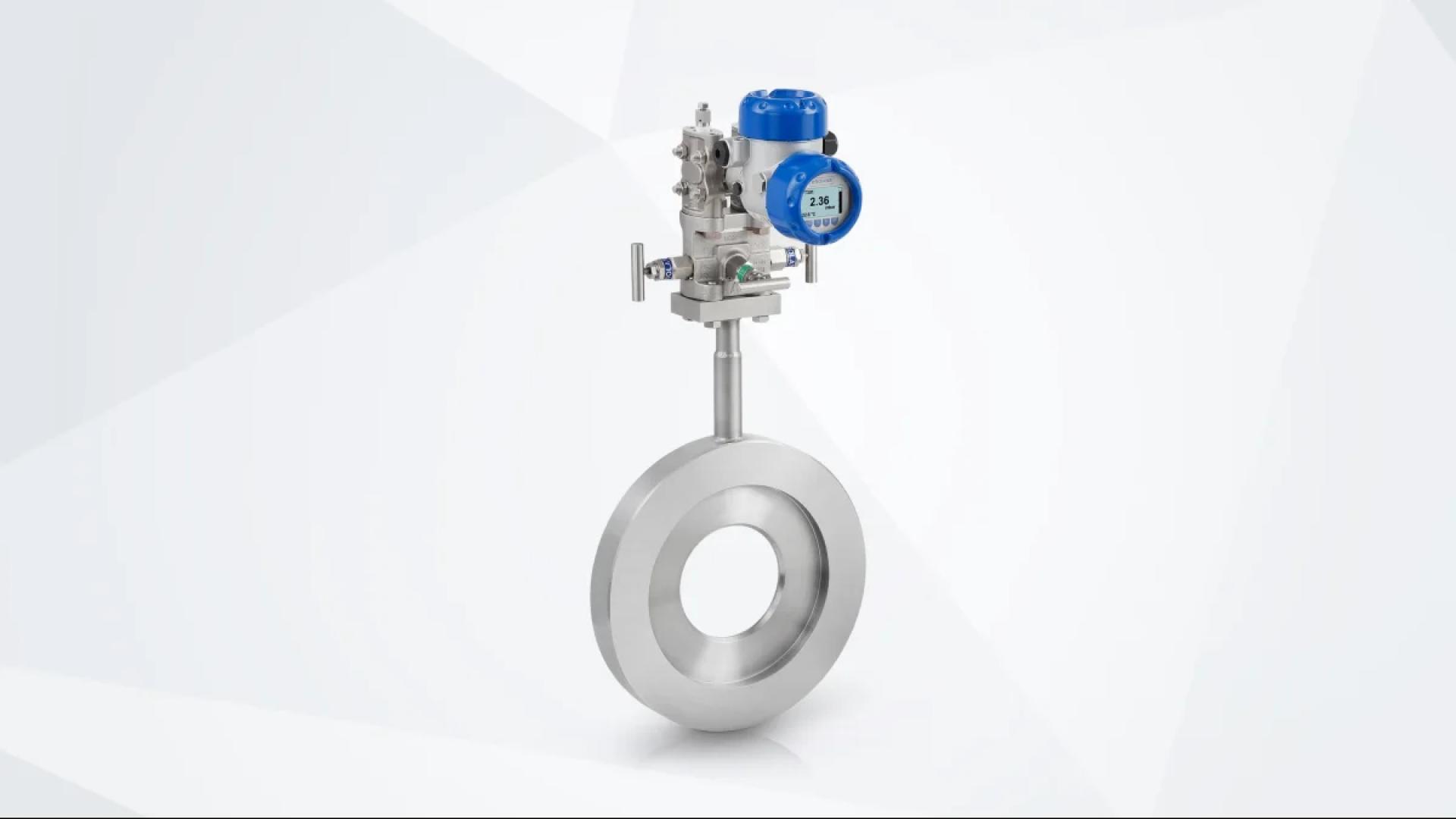

Accurate flow measurement depends not only on the sensing device but also on the condition of the fluid as it approaches the meter. Among differential pressure devices, the Orifice Plate Flow Meter is widely used due to its simplicity, standardization, and cost-effectiveness. However, it is also particularly sensitive to upstream flow conditions. One of the most significant challenges affecting its accuracy is flow profile distortion. Understanding how distorted velocity profiles influence measurement performance is essential for reliable operation in industrial systems.
Fundamentals of Flow Measurement With Orifice Plates
Operating Principle of the Orifice Plate Flow Meter
An Orifice Plate Flow Meter measures flow rate by introducing a restriction in a pipeline. As fluid passes through the sharp-edged orifice, velocity increases and static pressure decreases. The resulting pressure differential between upstream and downstream pressure taps is correlated to the flow rate using standardized equations.
This method assumes predictable, repeatable flow behavior upstream of the orifice. Specifically, the equations rely on the assumption of a fully developed, axisymmetric velocity profile. When this assumption is violated, measurement uncertainty increases significantly.
Importance of Flow Profile Assumptions
The discharge coefficient used in orifice plate calculations is derived from empirical testing under controlled conditions. These conditions typically include steady flow, uniform velocity distribution, and minimal swirl. Any deviation from these assumptions alters the relationship between differential pressure and actual flow rate.
Flow profile distortion disrupts this relationship, making the measured pressure drop an unreliable indicator of true volumetric or mass flow.
Understanding Flow Profile Distortion
What Is Flow Profile Distortion?
Flow profile distortion refers to any deviation from a symmetrical, fully developed velocity distribution across the pipe cross-section. In an ideal profile, fluid velocity gradually decreases from the pipe centerline toward the walls due to friction, forming a predictable shape.
Distorted profiles may exhibit asymmetry, excessive turbulence, swirl, or localized high-velocity regions. These distortions can persist for long distances downstream of certain piping elements, directly affecting flow meters installed nearby.
Common Sources of Distortion
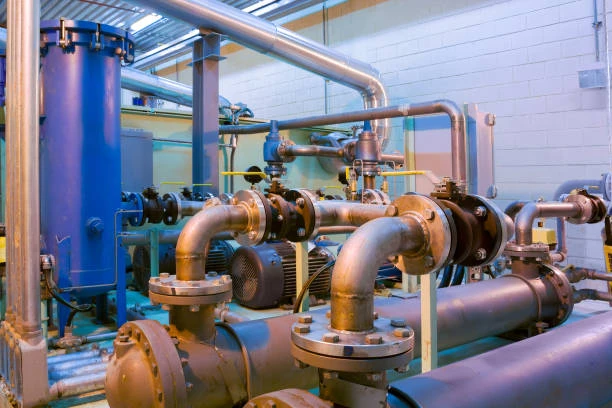
Flow disturbances are commonly introduced by upstream components such as elbows, tees, valves, pumps, reducers, and partially open control valves. Each of these elements alters fluid momentum, creating secondary flows or uneven velocity distributions.
In compact piping layouts, insufficient straight pipe runs often prevent the flow from re-developing before reaching the Orifice Plate Flow Meter, increasing susceptibility to error.
How Distorted Flow Affects Orifice Plate Performance
Influence on Differential Pressure Measurement
The pressure differential measured across an orifice plate is directly related to the kinetic energy of the fluid approaching the plate. When velocity distribution is uneven, the pressure drop no longer reflects average flow conditions.
High-velocity regions passing through the orifice may dominate the pressure signal, leading to an overestimation of flow. Conversely, asymmetric low-velocity zones can reduce effective kinetic energy, causing under-reading.
Bolded and Highlighted Subheading: Flow Profile Distortion and Measurement Bias
Flow profile distortion introduces systematic measurement bias by altering how kinetic energy is converted into differential pressure. Because the Orifice Plate Flow Meter integrates flow behavior across the pipe cross-section indirectly, it cannot distinguish between uniform and distorted velocity fields. This limitation makes it particularly sensitive to upstream disturbances compared to some other flow meter technologies.
The result is not random error but consistent bias, which can remain undetected without proper diagnostics.
Types of Flow Distortion and Their Effects
Asymmetric Velocity Profiles
Asymmetry occurs when flow velocity is higher on one side of the pipe than the other. This often results from single-plane elbows or closely spaced fittings. When asymmetrical flow reaches the orifice plate, the vena contracta forms unevenly, altering pressure recovery characteristics.
This condition can skew readings significantly, especially when pressure taps are positioned at standard locations that assume symmetry.
Swirling Flow and Rotational Effects
Swirl is a rotational motion superimposed on axial flow. It is commonly introduced by multiple out-of-plane bends or centrifugal pumps. Swirling flow changes the effective velocity vector entering the orifice.
Because orifice plate theory assumes purely axial flow, swirl can increase turbulence and reduce measurement repeatability. In severe cases, swirl may also accelerate wear on the plate edge, further degrading accuracy.
Turbulence Intensity Variations
While some turbulence is expected in industrial flows, excessive or uneven turbulence intensity can interfere with pressure signal stability. High turbulence levels cause fluctuating pressure readings, increasing noise in the differential pressure signal.
Although averaging may reduce short-term fluctuations, long-term accuracy can still suffer due to altered discharge coefficients.
Impact on Calibration and Standard Compliance
Deviation From Standardized Conditions
International standards for Orifice Plate Flow Meter installation specify minimum straight pipe lengths upstream and downstream to ensure flow development. When these requirements are not met, the meter operates outside its calibrated envelope.
Under distorted flow conditions, applying standard discharge coefficients becomes invalid. Even small deviations can result in errors exceeding acceptable limits for custody transfer or process control applications.
Challenges in Field Calibration
Calibrating an orifice plate in situ under distorted flow conditions is difficult because the distortion itself may change with operating conditions. Variations in flow rate, fluid properties, or valve positions can alter the flow profile dynamically.
This variability makes it challenging to establish a single correction factor that remains accurate across the operating range.
Mitigation Strategies for Flow Profile Distortion
Straight Pipe Runs and Flow Conditioning
The most common mitigation method is the use of adequate straight pipe lengths upstream of the orifice plate. Straight runs allow turbulence and secondary flows to dissipate naturally, restoring a more uniform velocity profile.
Where space constraints prevent long straight runs, flow conditioners may be installed. These devices restructure the velocity profile and reduce swirl, helping the Orifice Plate Flow Meter operate closer to its intended conditions.
Plate and Tap Configuration Considerations
Different pressure tap configurations may exhibit varying sensitivity to flow distortion. While standard taps are widely used, alternative arrangements can sometimes reduce susceptibility to asymmetry or swirl.
However, any deviation from standard configurations requires careful validation to ensure compliance with applicable measurement standards.
Comparison With Other Flow Meter Technologies
Sensitivity Relative to Other Differential Pressure Meters
Among differential pressure meters, orifice plates are generally more sensitive to upstream disturbances than devices such as Venturi tubes or flow nozzles. These alternatives have smoother geometries that are more forgiving of moderate flow profile distortion.
Despite this, the orifice plate remains popular due to its simplicity, low cost, and extensive standardization, provided installation guidelines are followed.
Implications for Technology Selection
In applications where space limitations or complex piping make flow profile distortion unavoidable, alternative flow measurement technologies may offer improved accuracy. However, understanding and mitigating distortion can often allow the Orifice Plate Flow Meter to perform adequately even in challenging conditions.
Operational Consequences of Ignoring Flow Distortion
Process Control and Efficiency Losses
Inaccurate flow measurement can lead to improper process control, affecting product quality, energy efficiency, and equipment life. Overestimating flow may result in overdosing chemicals or excessive energy consumption, while underestimating flow can compromise safety margins.
Because orifice plate errors due to flow distortion are systematic, these issues can persist unnoticed for long periods.
Maintenance and Diagnostic Challenges
Flow distortion may also mask other problems, such as plate damage or fouling, by introducing variability that is misattributed to mechanical issues. This complicates maintenance planning and troubleshooting efforts.
Accurate assessment of flow conditions upstream of the meter is therefore essential for reliable diagnostics.
Conclusion
Flow profile distortion has a profound impact on the accuracy and reliability of an Orifice Plate Flow Meter. Because the device relies on standardized assumptions about velocity distribution and flow behavior, deviations caused by upstream disturbances can introduce significant measurement bias. Asymmetry, swirl, and excessive turbulence all interfere with the relationship between differential pressure and actual flow rate.
Understanding the sources and effects of flow profile distortion enables better installation practices, informed use of flow conditioners, and more realistic expectations of measurement performance. When properly managed, the Orifice Plate Flow Meter remains a dependable and widely accepted solution. When ignored, flow distortion can undermine even the most carefully designed measurement systems.


























Sign in to leave a comment.