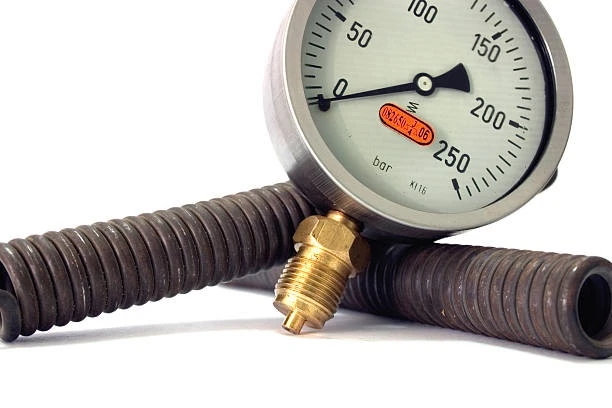

Pressure measurement plays a critical role in industrial systems, laboratories, HVAC applications, and process control environments. Among the many mechanical pressure-measuring instruments available, Bourdon tube pressure gauges and capsule pressure gauges remain two of the most widely used technologies. While both operate without external power and rely on mechanical deformation to indicate pressure, they differ significantly in construction, sensitivity, operating range, and ideal use cases. Understanding how Bourdon Tube Pressure Gauges compare to capsule pressure gauges provides clarity for selecting the right instrument for specific measurement requirements.
Fundamental Principles of Mechanical Pressure Gauges
Mechanical Deformation as a Measurement Method
Both Bourdon tube and capsule pressure gauges rely on the principle that a mechanical element deforms predictably when exposed to pressure. This deformation is then translated through a linkage and gear mechanism to move a pointer across a calibrated dial.
The key difference lies in the type of pressure-sensing element used and how it responds to applied pressure. These differences influence accuracy, sensitivity, durability, and application suitability.
Importance of Pressure Range and Media
Selecting the appropriate gauge depends heavily on the pressure range being measured and the nature of the process media. High-pressure systems, low-pressure environments, and differential pressure measurements each require different mechanical responses.
This is where the distinction between Bourdon tube and capsule pressure gauges becomes especially important.
Bourdon Tube Pressure Gauges: Design and Characteristics
Construction and Operating Mechanism
Bourdon tube pressure gauges use a curved or coiled metal tube that is sealed at one end and connected to the pressure source at the other. When pressure enters the tube, it tends to straighten due to elastic deformation.
This movement is transferred through a mechanical linkage to rotate the pointer on the dial. The degree of straightening is proportional to the applied pressure, allowing for accurate measurement over a wide range.
Pressure Range Capabilities
One of the defining advantages of Bourdon tube pressure gauges is their ability to measure high pressures. They are commonly used for pressures ranging from moderate values to extremely high levels, often exceeding several thousand psi or bar.
This makes them ideal for applications such as hydraulic systems, industrial compressors, steam systems, and chemical processing equipment.
Durability and Reliability
Bourdon tube pressure gauges are known for their robustness. The metal construction of the tube, typically made from brass, bronze, stainless steel, or special alloys, allows them to withstand harsh environments.
They perform well under vibration, temperature variation, and continuous operation, making them a standard choice in industrial settings.
Capsule Pressure Gauges: Design and Characteristics
Capsule Element Construction
Capsule pressure gauges use a thin, corrugated diaphragm capsule formed by welding or soldering two diaphragms together. This capsule expands or contracts when pressure is applied.
The movement of the capsule is magnified through mechanical linkages to drive the pointer across the dial. Because the capsule is highly sensitive, even small pressure changes produce noticeable movement.
Low-Pressure Measurement Capability
Capsule pressure gauges are specifically designed for low-pressure measurement. They excel in applications involving very low pressures, typically in the millibar, inch of water column, or Pascal range.
This sensitivity makes capsule gauges ideal for applications such as ventilation systems, filter monitoring, clean rooms, and gas flow measurement.
Sensitivity and Accuracy
The thin diaphragm structure of a capsule gauge allows it to respond to minute pressure changes with high resolution. This results in excellent readability and precision for low-pressure environments.
However, this sensitivity also limits the maximum pressure the capsule can withstand, making it unsuitable for high-pressure systems.
Comparing Pressure Ranges and Sensitivity
High-Pressure Versus Low-Pressure Performance
The most significant difference between Bourdon tube and capsule pressure gauges lies in their pressure ranges. Bourdon tube gauges dominate medium- to high-pressure applications, where strength and structural integrity are essential.
Capsule gauges, by contrast, are optimized for low-pressure applications where sensitivity and resolution are more important than mechanical strength.
Response to Pressure Fluctuations
Bourdon tube pressure gauges respond smoothly to gradual pressure changes but may be less effective at detecting extremely small fluctuations. Capsule gauges excel in detecting subtle pressure variations due to their flexible diaphragm construction.
This distinction influences their suitability for process control versus environmental monitoring.
Accuracy and Calibration Considerations
Calibration Stability Over Time
Bourdon tube pressure gauges generally maintain calibration well over long periods, particularly in stable operating conditions. Their relatively simple mechanical design contributes to long-term reliability.
Capsule pressure gauges, while highly accurate at low pressures, may require more frequent recalibration due to the sensitivity of the diaphragm element to fatigue and environmental factors.
Influence of Temperature and Vibration
Temperature changes can affect both gauge types, but Bourdon tube gauges are generally more tolerant of wide temperature ranges. Capsule gauges are more sensitive to temperature-induced expansion or contraction of the diaphragm.
Vibration resistance is typically better in Bourdon tube pressure gauges, especially when designed with dampening mechanisms.
Media Compatibility and Environmental Resistance
Process Media Interaction
Bourdon tube pressure gauges are available in a wide range of materials, allowing compatibility with corrosive, high-temperature, or aggressive media. Specialized alloys enable use in chemical and petrochemical industries.
Capsule pressure gauges are typically used with clean, dry gases. Exposure to liquids or corrosive media can damage the diaphragm, limiting their application scope.
Environmental Conditions
Industrial environments with dust, moisture, or mechanical stress favor Bourdon tube pressure gauges due to their rugged design. Capsule gauges are better suited for controlled environments such as laboratories or HVAC systems.
Application-Specific Suitability
Industrial and Process Applications
Bourdon tube pressure gauges are widely used in industrial processes, power generation, oil and gas operations, and manufacturing. Their ability to handle high pressures and harsh conditions makes them indispensable in these sectors.
Capsule pressure gauges are rarely used in such environments due to their limited pressure capacity and sensitivity to contamination.
HVAC and Environmental Monitoring
Capsule pressure gauges are commonly used in HVAC systems to measure air pressure, filter differential pressure, and airflow resistance. Their precision at low pressures provides valuable insight into system performance.
Bourdon tube gauges are sometimes used in HVAC systems for refrigerant pressure but are less suitable for airflow measurement.
Maintenance and Longevity
Service Life Expectations
Bourdon tube pressure gauges typically offer a long service life with minimal maintenance, especially when properly selected for the application.
Capsule pressure gauges may have a shorter lifespan if subjected to pressure spikes, contamination, or frequent pressure cycling.
Ease of Maintenance
Both gauge types are relatively easy to maintain, but Bourdon tube gauges are generally more forgiving of minor issues. Capsule gauges require careful handling to avoid damaging the sensitive diaphragm.
Cost and Availability
Manufacturing Complexity and Cost
Bourdon tube pressure gauges are mass-produced and widely available, making them cost-effective for many applications. Their design allows for scalability across pressure ranges.
Capsule pressure gauges, due to their specialized construction and precision requirements, can be more expensive for equivalent accuracy levels.
Market Availability
Both types are readily available, but Bourdon tube pressure gauges dominate the market due to their versatility and broad application range.
Conclusion: Choosing Between Bourdon Tube and Capsule Pressure Gauges
The comparison between Bourdon Tube Pressure Gauges and capsule pressure gauges highlights a clear division in purpose and performance. Bourdon tube gauges excel in medium- to high-pressure applications, offering durability, reliability, and adaptability across demanding industrial environments. Capsule pressure gauges, on the other hand, provide exceptional sensitivity and accuracy for low-pressure measurement in controlled settings.
Rather than competing directly, these two gauge types complement each other by serving different measurement needs. Selecting the appropriate gauge depends on pressure range, environmental conditions, media compatibility, and accuracy requirements. Understanding these distinctions ensures reliable pressure measurement and optimal system performance across a wide range of applications.






















Sign in to leave a comment.