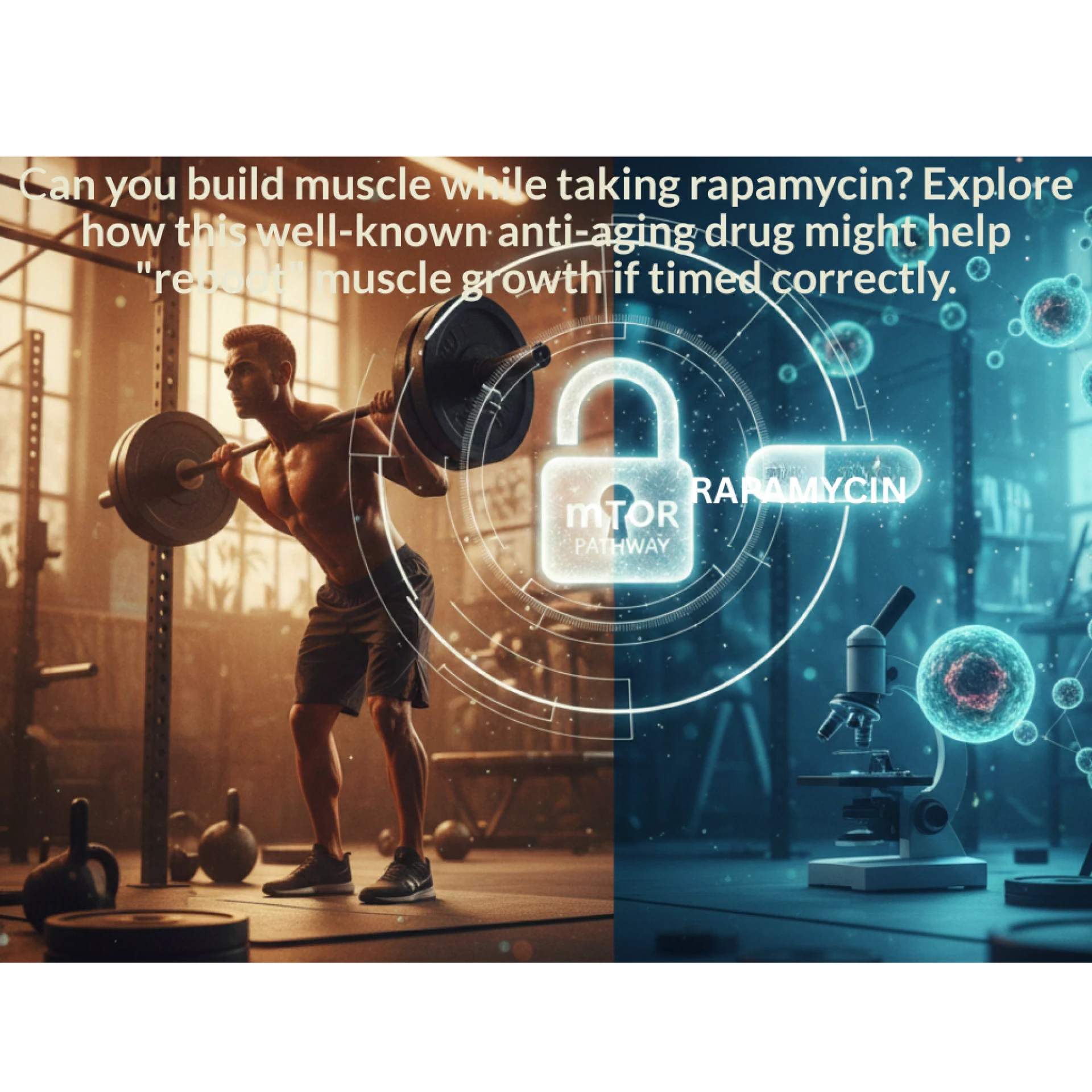

Rapamycin is being called one of the most exciting anti-aging drugs ever discovered. But what does it mean for your muscle gains? Here's everything you need to know.
If you've been following the longevity space, you've probably heard the buzz around rapamycin.
Scientists are calling it one of the most promising anti-aging compounds ever found. It extends lifespan in animals by up to 25%. It works even when started in middle age. And some of the world's top longevity doctors are taking it themselves.
But here's the thing that stops a lot of lifters in their tracks.
Rapamycin works by suppressing mTOR — the same molecular pathway your body uses to build muscle.
So the big question is: can you actually build muscle while taking rapamycin, or does longevity come at the cost of your gains?
In this article, we break down what the science really says, what the benefits of rapamycin actually are for people who train, and how to make smart decisions about your body and your long-term health.
What Is Rapamycin and Why Is Everyone Talking About It?
Rapamycin (also known as sirolimus) was originally developed as an immunosuppressant drug for organ transplant patients.
Then something unexpected happened.
Researchers discovered it dramatically extended lifespan in animals — by as much as 25% in some mouse studies. Even more remarkably, it worked when started in middle age, which is unusual for most longevity interventions.
This discovery sent shockwaves through the scientific community. A growing number of longevity physicians started exploring its potential for healthy humans, and today it's one of the most discussed off-label longevity drugs in the world.
So how does it work?
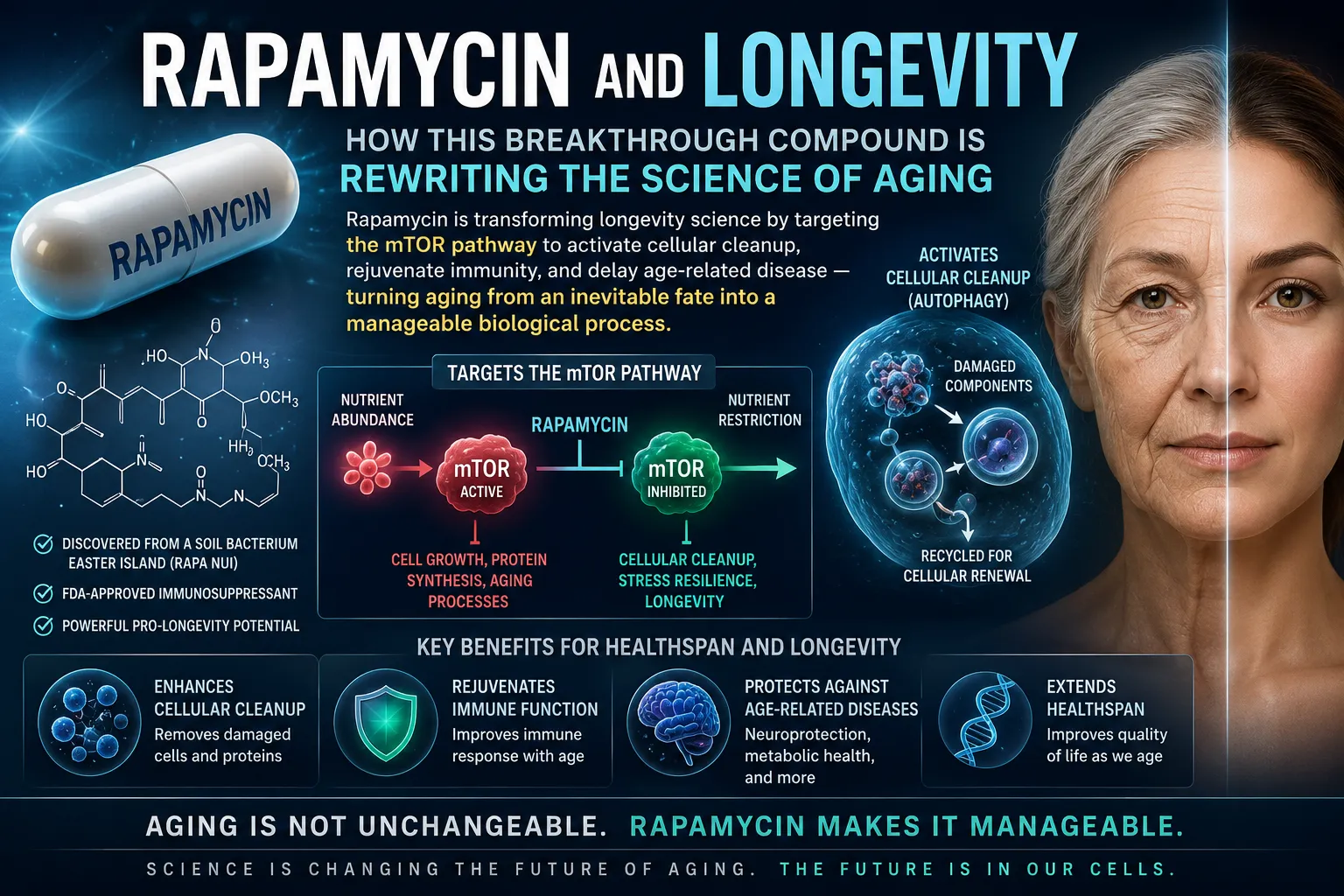
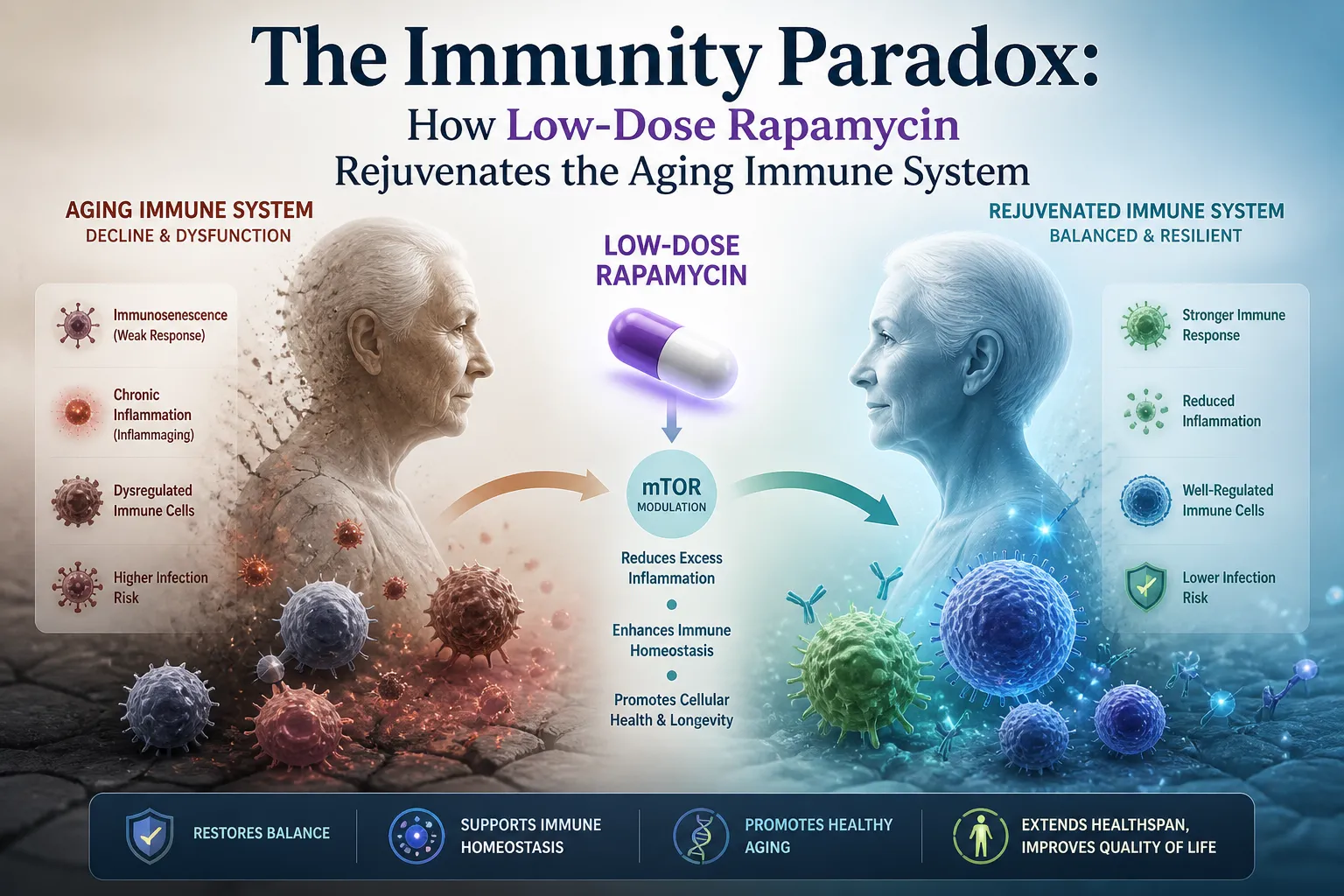
Rapamycin inhibits a cellular pathway called mTOR (mechanistic Target of Rapamycin). mTOR acts like a gas pedal for cellular growth. When it runs unchecked, cells grow fast — but they also age fast. By dialing it back, rapamycin shifts cells into a state of maintenance and repair rather than constant growth.
That maintenance state activates a powerful process called autophagy — and that's where things get really interesting.
What Is Autophagy and Why Does It Matter for Lifters?
Autophagy literally means "self-eating," but it's actually one of the most beneficial processes in your body.
When autophagy is activated, your cells:
- Break down and recycle damaged proteins and cell components
- Clear out toxic buildups linked to diseases like Alzheimer's and Parkinson's
- Replace old, inefficient mitochondria with fresh, high-functioning ones
- Neutralize pre-cancerous cells before they can cause harm
Rapamycin is one of the most effective activators of autophagy known to science.
For athletes and lifters, this matters more than most people realize. Better mitochondria means better energy production and endurance. Less chronic inflammation means faster recovery. Cleaner muscle tissue means stronger, more resilient performance over time.
The benefits go far beyond just living longer.
The mTOR Problem — and Why It's Not As Bad As You Think
Here's the part that worries lifters.
mTOR doesn't just drive cellular aging — it also drives muscle protein synthesis. When you eat protein and lift weights, mTOR activates and tells your muscles to grow. It's the core of every hypertrophic response your body has.
Rapamycin inhibits mTOR. So logically, it should hurt muscle building, right?
The reality is more nuanced than that.
In animal studies, chronic high-dose rapamycin did reduce muscle protein synthesis in some cases. But those doses were significantly higher than what longevity-focused humans typically take.
In human studies, the picture looks quite different. Research on older adults taking low-dose intermittent rapamycin showed no significant muscle mass loss over the study period — and in some cases, physical performance markers actually improved.
Why? Because aging itself is one of the most destructive forces your muscles face. Chronic inflammation, cellular dysfunction, mitochondrial decline — all of these quietly erode your muscle quality year after year. Rapamycin targets these exact processes. The net effect on functional strength may actually be positive, even if total mass stays roughly the same.
5 Key Benefits of Rapamycin for People Who Train
Let's get specific. Here's what rapamycin can actually do for athletes and serious lifters:
1. Reduces Chronic Inflammation
Intense training is great — but it comes with a cost. Over time, hard training can contribute to chronic low-grade inflammation that impairs recovery and degrades muscle quality.
Rapamycin suppresses pro-inflammatory pathways, helping clear that background inflammatory noise. The result is better recovery, cleaner adaptation to training, and a healthier foundation for long-term performance.
2. Upgrades Mitochondrial Quality
Mitochondria are the energy factories inside your muscle cells. As we age, mitochondrial quality declines — and that decline shows up as reduced endurance, increased fatigue, and weaker muscles.
Through autophagy, rapamycin helps clear out old, inefficient mitochondria and promotes their replacement with fresh ones. Better mitochondria means more sustained energy, less fatigue during training, and stronger muscles that recover faster.
3. Accelerates Post-Training Cellular Cleanup
Hard training creates cellular damage and protein debris inside your muscles. Your body cleans this up naturally — but the process slows as you age.
Rapamycin-activated autophagy speeds up this cleanup process significantly. The practical result: faster recovery between sessions, less soreness, and healthier muscle tissue in the long run.
4. May Improve Insulin Sensitivity
Insulin sensitivity is critical for muscle building and fat loss. When cells respond efficiently to insulin, nutrients get partitioned into muscle rather than stored as fat.
Several studies suggest that low-dose intermittent rapamycin may positively influence insulin sensitivity — which could actually support better body composition over time.
5. Protects Long-Term Cardiovascular Health
No matter how strong you are now, your long-term athletic performance depends on the health of your heart and cardiovascular system.
Rapamycin's protective cardiovascular effects have been among the most striking findings in longevity research. For anyone thinking about their performance at 60, 70, and beyond, this is one of the most compelling benefits on the list.
The Weekly Dosing Strategy — A Game-Changer for Lifters
Here's something that changes the muscle-building equation significantly.
Most people using rapamycin for longevity don't take it every day. The standard off-label protocol is once a week at a low dose — typically between 3 and 10 mg. This is deliberately designed to capture the longevity benefits while avoiding the immunosuppressive side effects of the high-dose daily regimens used in transplant medicine.
And for muscle building, this matters enormously.
Rapamycin has a half-life of about 60 hours. By day 5 or 6 after a weekly dose, blood levels have dropped substantially and mTOR signaling begins to recover. For most of the week, your body operates close to its normal anabolic capacity.
Many rapamycin users apply this strategically — taking their dose at the start of the week and scheduling their heaviest training sessions toward the end, when drug levels are lowest.
This timing approach hasn't been validated in a controlled clinical trial yet. But the pharmacokinetic logic is solid, and it costs nothing to implement.
Muscle Mass vs. Muscle Quality — Are You Asking the Right Question?
Most people frame the rapamycin-muscle debate around a single question: will I gain less mass?
But that's not the only question worth asking.
Muscle quality — mitochondrial density, fiber function, tissue health, and actual performance output — is just as important as raw mass. As we age, muscle quality deteriorates faster than most people realize, and it's that deterioration that drives weakness and loss of physical independence.
Rapamycin may reduce muscle mass gains very slightly at the margins. But its effects on muscle quality — through reduced inflammation and enhanced cellular cleanup — could more than compensate.
You might see a slightly smaller number on a DEXA scan. But you may actually be stronger, more resilient, and more capable in the gym and in everyday life.
For anyone focused on long-term physical function, that trade-off is worth taking seriously.
Practical Tips for Lifters Considering Rapamycin
If you're exploring rapamycin as part of your longevity strategy, here's what current evidence and expert guidance recommends:
Increase your protein intake. With mTOR partially modulated, amplify every anabolic signal you can control. Target 1.6–2.2 grams of protein per kilogram of body weight daily. Prioritize leucine-rich sources like whey protein, eggs, chicken, and red meat.
Keep training hard — don't dial back. Exercise-driven mTOR activation is mechanical and can partially offset the drug's effect on muscle signaling. Consistent, progressive resistance training matters more when you're on rapamycin, not less.
Be strategic about timing. Take your dose earlier in the week and front-load your harder training sessions toward the end. While still anecdotal, the pharmacological reasoning is sound.
Track your body composition with real data. Get regular DEXA scans and monitor your strength benchmarks over time. Don't rely on how you look or feel alone — objective data will tell you whether your approach is working.
Always work with a qualified physician. Rapamycin is a prescription drug with real risks — including immune suppression, wound healing impairment, and potential drug interactions. Leading longevity physicians consistently emphasize that this is not something to experiment with casually. Individualized dosing and regular monitoring are non-negotiable.
Who Should Consider Rapamycin — and Who Should Wait?
If you're in your 20s or early 30s and your primary goal is maximizing muscle mass and athletic performance, rapamycin is probably not the right tool for you right now. The mTOR modulation will work somewhat against your goals, and the longevity benefits don't become as meaningful until later in life.
If you're in your 40s, 50s, or beyond — training consistently, eating well, and thinking seriously about staying strong and functional for decades — rapamycin is genuinely worth understanding and discussing with a knowledgeable physician. The muscle trade-off is likely modest with weekly low-dose protocols, and the potential upside is substantial.
The "longevity paradox" for lifters is real. But it's not a dead end. It's a trade-off — and like all trade-offs in fitness and health, the right answer depends entirely on your individual goals, your stage of life, and what you're optimizing for.
Final Thoughts
Rapamycin won't replace your training. Nothing will.
But for the right person at the right stage of life, it may be one of the most powerful tools available for preserving long-term health, physical function, and quality of life.
The lifters who navigate this paradox most successfully will be the ones who stay consistent in the gym, dial in their nutrition, track their results honestly, and make decisions based on data rather than hype.
Which, when you think about it, is exactly the same approach that works with training.



























Sign in to leave a comment.