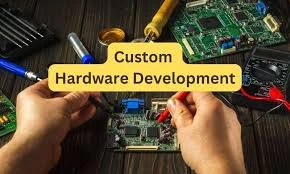

In today’s fast-growing technology world, edge devices play a very important role. From IoT sensors and smart meters to industrial controllers and healthcare devices, edge devices process data close to the source instead of sending everything to the cloud. To make these devices reliable, fast, and efficient, businesses need custom PCB and firmware development for edge devices, supported by strong custom hardware development.
This article explains everything in simple language—what custom PCB and firmware development is, why it matters for edge devices, and how custom hardware development helps businesses build better products.
What Are Edge Devices?
Edge devices are hardware systems that collect, process, and sometimes analyze data locally. Examples include:
- IoT sensors
- Smart home devices
- Industrial automation controllers
- Wearables and medical devices
- Smart cameras and gateways
Because edge devices work in real-world environments, they must be fast, power-efficient, secure, and reliable. This is where custom hardware development becomes essential.
Understanding Custom PCB Development
A PCB (Printed Circuit Board) is the backbone of any electronic device. It connects all electronic components like processors, sensors, memory, and power modules.
What Is Custom PCB Development?
Custom PCB development means designing a circuit board specifically for your product instead of using a generic or ready-made board. It includes:
- Schematic design
- Component selection
- PCB layout design
- Power and signal optimization
- Prototype and testing
Why Custom PCB Matters for Edge Devices
Edge devices often have unique needs such as low power usage, small size, and long-term reliability. Custom PCB development helps by:
- Reducing power consumption
- Improving performance and stability
- Supporting compact device designs
- Lowering manufacturing costs at scale
- Matching exact application requirements
This makes custom hardware development a smart investment for companies building edge products.
What Is Firmware Development?
Firmware is the low-level software that runs directly on the hardware. It controls how the device behaves and communicates with sensors, networks, and other systems.
Key Roles of Firmware in Edge Devices
Firmware is responsible for:
- Booting the device
- Managing hardware components
- Reading sensor data
- Handling communication (Wi-Fi, Bluetooth, LTE, etc.)
- Power management
- Security and updates
Without well-written firmware, even the best hardware cannot perform properly.
Custom Firmware Development for Edge Devices
Custom firmware development is tailored software written specifically for your device and hardware design.
Benefits of Custom Firmware
- Faster device performance
- Better hardware control
- Lower power usage
- Improved security
- Easier updates and maintenance
When firmware is developed alongside custom PCB design, it ensures perfect coordination between hardware and software—this is the core of custom hardware development.
Why Combine Custom PCB and Firmware Development?
Developing PCB and firmware together provides better results than handling them separately.
Key Advantages
- Optimized Performance
Hardware and firmware are designed to work together seamlessly. - Reduced Power Consumption
Important for battery-powered edge devices. - Higher Reliability
Fewer errors, crashes, or failures in real-world conditions. - Scalability
Easier to upgrade or add features in future versions. - Cost Efficiency
Lower long-term production and maintenance costs.
This integrated approach is what makes custom hardware development so valuable for edge computing solutions.
Use Cases of Custom Hardware Development for Edge Devices
Custom PCB and firmware development is widely used across industries:
1. IoT and Smart Devices
Custom boards and firmware help manage sensors, connectivity, and data processing efficiently.
2. Industrial Automation
Edge controllers require stable and rugged hardware with real-time firmware performance.
3. Healthcare Devices
Medical edge devices need accurate data processing, low power use, and high reliability.
4. Smart Cities
Traffic systems, surveillance, and environmental sensors depend on custom hardware development.
5. Agriculture Technology
Edge devices monitor soil, weather, and crops with custom-built hardware solutions.
Key Steps in Custom PCB and Firmware Development
Here is a simple overview of the development process:
- Requirement Analysis
Understand device purpose, environment, and performance needs. - Hardware Architecture Design
Select microcontrollers, sensors, power modules, and connectivity options. - Custom PCB Design
Create schematics and layout optimized for size, power, and performance. - Firmware Development
Write firmware to control hardware and enable communication. - Testing and Validation
Test hardware and firmware together under real conditions. - Prototype and Production Support
Finalize design for mass manufacturing.
Each step is crucial in delivering successful custom hardware development for edge devices.
Why Businesses Prefer Custom Hardware Development
Many businesses choose custom solutions instead of off-the-shelf boards because:
- Off-the-shelf hardware may include unnecessary features
- Custom designs improve efficiency and branding
- Better control over performance and security
- Competitive advantage in the market
For startups and enterprises alike, custom PCB and firmware development for edge devices helps create unique and future-ready products.
Final Thoughts
As edge computing continues to grow, the demand for reliable and efficient devices is increasing. Custom PCB and firmware development for edge devices ensures that products are optimized for performance, power efficiency, and long-term use.
By investing in custom hardware development, businesses can build smarter edge devices that meet exact requirements, scale easily, and stand out in competitive markets.




























Sign in to leave a comment.