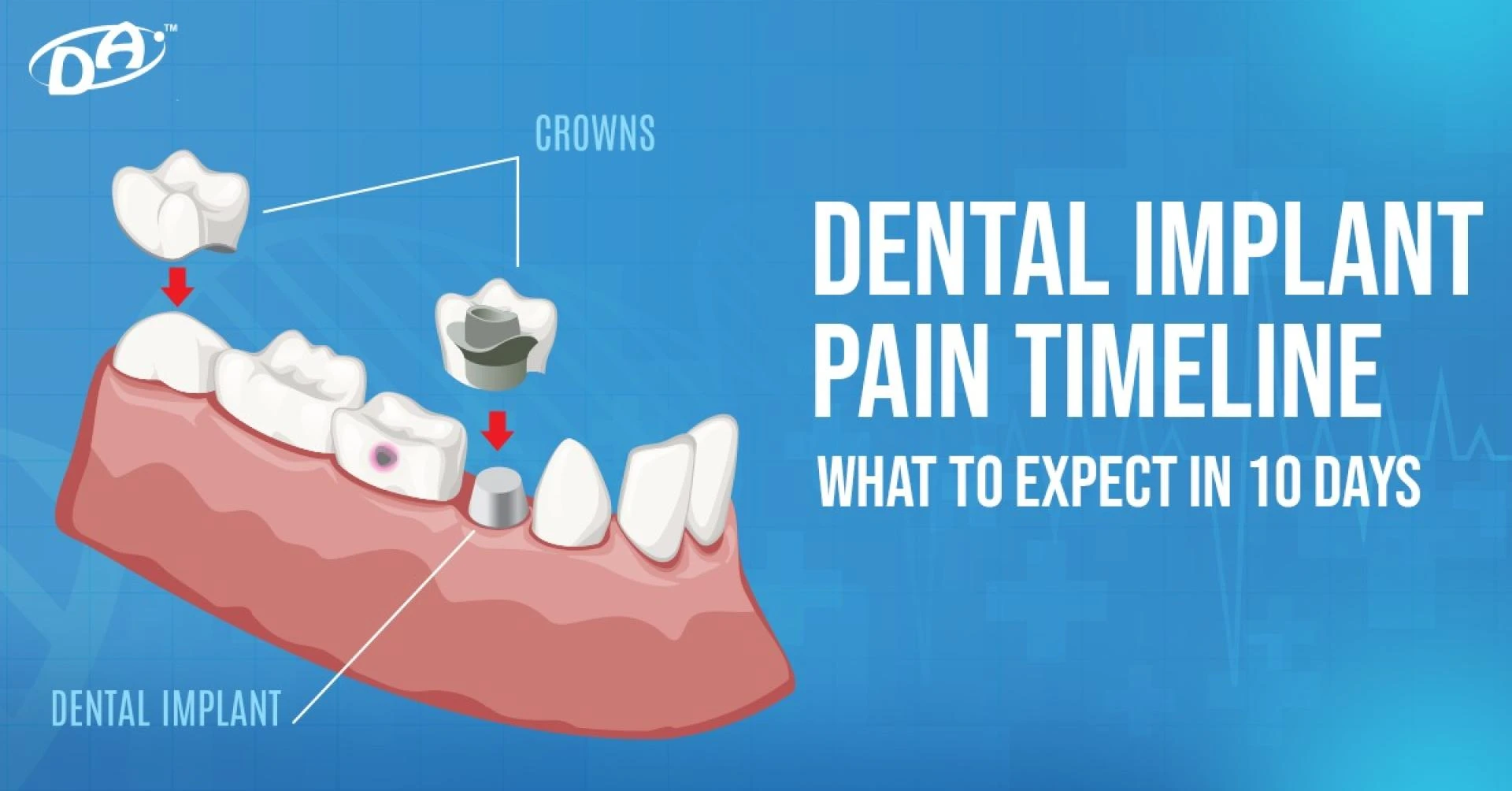

Are you scared to get a dental implant because you’re worried about days of agony?
You are not the only one who has wondered weekly, Do dental implants hurt? It is time to bust the myths, correct the expectations, and provide dentists and patients in India with a real-world, day-by-day pain roadmap to give them clear expectations of what to expect in the all-important first 10 days following implant surgery.
Overview of Dental Implants
Dental implants have truly revolutionised tooth replacement. The procedure involves placing a small titanium post into your jawbone, acting as a “root” for artificial teeth.
It sounds dramatic, but in skilled Indian dental clinics, it’s routine, precise, and nearly always done with local anaesthesia. For most, it’s discomfort not outright pain that dominates the first few days.
But is the implant painful? Let's see what the science and patient experience say.
Do Dental Implants Hurt?
Just because an implant involves “drilling” into bone doesn’t mean you’ll be in misery. Currently, with anaesthesia, you are either numb or not aware at all during the actual procedure, a pressure and perhaps a slight vibration.
A few hours after the surgery, often as numbness wears off, a dull feeling may emerge, and it is most severe after about two days, but are implants painful? Not in the way you might fear. Most Indian sources note that pre-surgical counselling (addressing anxiety and expectations) makes everything even easier.
Dental Implant Pain Timeline (Day by Day)
Day 0-1: The Surgery Day and First 24 Hours
Once the anaesthesia wears off, expect a numb, heavy feeling in your jaw, maybe some tingling of the lips, and a little blood-tinged saliva.
Soreness and swelling start to build, but dental instruments like surgical elevators and bone drills help ensure a smooth procedure. Prescription or OTC pain medication, taken as directed, keeps things very manageable. Ice packs (on & off every half hour) are your best allies. You may need soft foods and extra rest.
Day 2–3: Peak Discomfort
This is typically when pain after dental implant surgery is at its “worst”—think of a dull, persistent ache or mild throbbing in the jaw near the implant. Swelling reaches its maximum, so your cheek might look puffier than on day one.
Some patients, especially in India’s warmer climates, may experience more pronounced swelling. Any pain should be easily controlled with painkillers.
Pro Tip: Don’t skip your meds, and stick to cold, soft foods like curd rice or khichdi (no hot chai just yet!).
Day 4–7: Rapid Improvement
By now, composite restoration in adjacent areas (if present) will not feel sore. Swelling will begin to reduce and, in case there is a bruise, it will turn more yellowish.
You can consume a wider variety of soft foods, rinse, and converse normally. If you have dissolvable stitches, they may begin to loosen. Any mild discomfort by Day 7 is entirely normal.
Day 8–10: Nearly Normal
By 8-10 days, most Indian patients are back to normal, back to normal activities and normal routine. It is normal to experience some ache during eating tough foods or when palpating the surgical area but should not disrupt your day in any way. In case you still require a pain reliever more than once daily even after D8, visit your dentist.
If additional treatments like root canal sealer material were placed due to infection, mild soreness may still remain.
What’s NOT normal at each phase? The pain cannot be controlled, pus, smell, constant fever, and or swelling that is not reducing, but rather growing, warrants immediate assessment.
Common Questions: Pain After Dental Implant
How long does pain last?
For most, the answer is simple: 2–3 days of “worst,” fading rapidly by a week. Actual tooth implant pain should never be severe after the third day—and never, ever get worse instead of better.
Is Implant Painful?
Expect mild, occasionally moderate pain (3–4 out of 10), usually limited to the first 72 hours. Nerve pain or sharp shooting, continuous pain is not normal.
What about exceptional cases?
If you needed a bone graft, you may need a little longer (an extra day or two) to bounce back.
How to Manage Tooth Implant Pain?
- Medication: Use what your implantologist prescribes—often a combination of paracetamol and ibuprofen. Take the first dose before numbness goes away.
- Cold Packs: Traditional Ajwain or turmeric home remedies can soothe, but nothing beats wrapped ice packs for Day 1–2!
- Keep Your Head High: Prop up a couple of pillows at night, limiting swelling.
- Soft Diet: Yoghurt, moong dal soup, lassi… Give yourself “kid’s food” for a few days.
- Saltwater Rinses: After 24 hours, the mouth is swished with lukewarm salt water, which improves oral health and comfort. Avoid using harsh addition silicone impression material around healing areas during this time.
Red Flags & When to Call Your Dentist
You really shouldn’t have crazy pain after three days. If you experience:
- Throbbing pain that increases days after surgery
- Persistent fever or chills
- Pus discharge, bad breath, or metallic taste
- Numbness or tingling in the lips or chin beyond 24 hours
- Bleeding has not stopped with pressure
Recovery Tips for Best Results
- Food: Continue taking soft room-temperature food at least to Day 5.. No hot/cold extremes!
- Hygiene: Brush all non-surgical areas as usual, but don’t touch the implant area with a brush for the first 2–3 days. Use a prescribed mouthwash or salt water.
- Don’t: No smoking, alcohol, or vigorous rinsing or sipping with straws—these all slow healing and may even damage temporary dental filling material if placed near the implant.
- Activity: Easy walks are fine by Day 2, but avoid exercise that wakes the blood flow (and risk bleeding) till Day 5–7.
- Follow-up: Most Indian centres schedule a review at Day 7–10 for stitch removal or a check. Don’t miss this!
Key Takeaway
Thus, the question arises: Do dental implants hurt? Yes, but not much, and not long.
The majority of patients are surprised at how not painful the procedure seems in comparison to their phobias. Pain after dental implant is usually milder than tooth extraction.
If you’re still anxious, remember: good dentists work hard to make sure “Is implants painful” is a question with a reassuring answer.
































Sign in to leave a comment.