
The Quiet Revolution in Art Schools
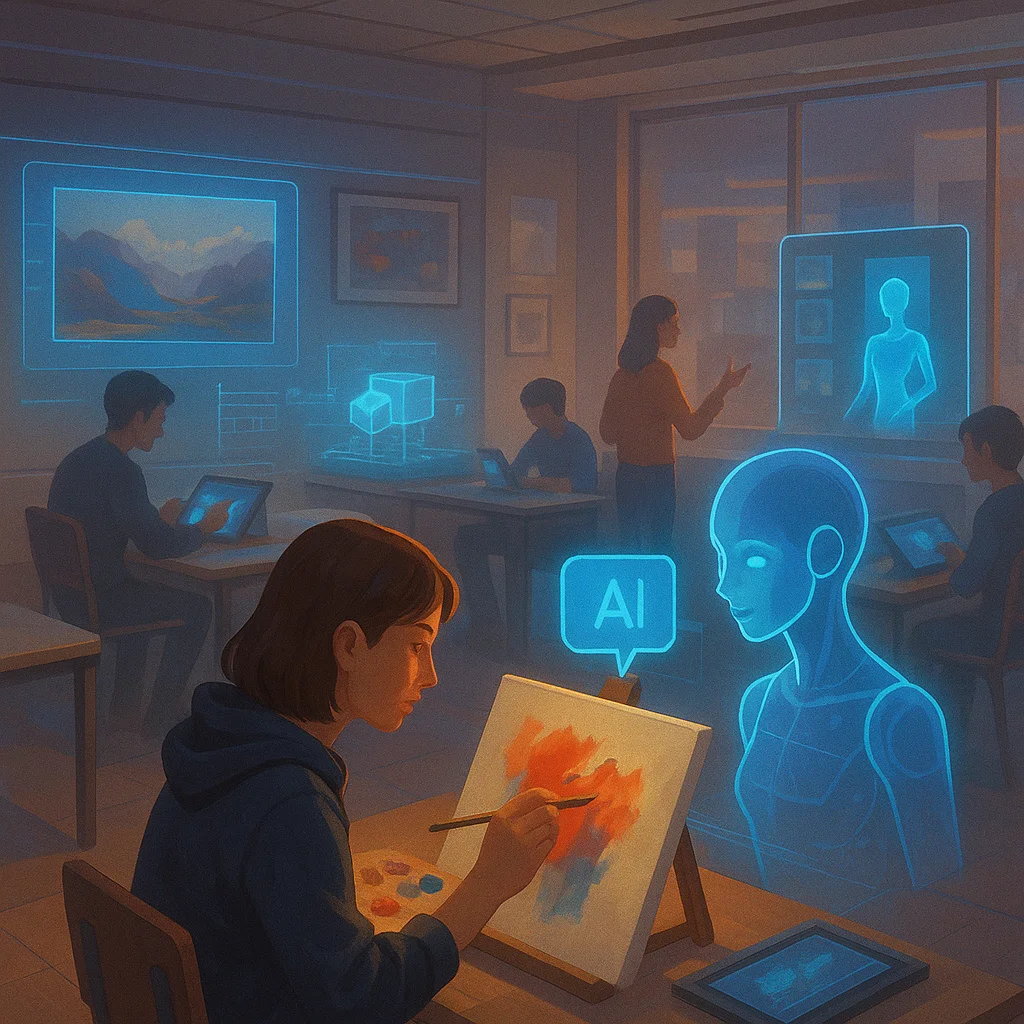
On a drizzly morning in Brighton, a group of art students gathered around a screen, their eyes flickering between brush strokes and algorithmic patterns. What was once a traditional studio session had subtly morphed into a hybrid space where AI-generated imagery and human creativity intertwined. This scene, increasingly common across art schools globally, underscores a compelling truth: like it or not, AI has woven itself into the fabric of art education.
Few could have predicted how swiftly AI tools, once the preserve of tech labs, would permeate creative disciplines. Yet today, whether experimenting with generative adversarial networks or exploring machine learning’s role in visual storytelling, students are engaging with AI not as an optional add-on but as an integral part of their curriculum. This shift challenges preconceived notions of artistry and craftsmanship, forcing educators and learners alike to reconsider what it means to create.
“The line between artist and algorithm is becoming increasingly blurred; understanding AI is now as vital as mastering the brush,” reflects Dr. Helena Muir, a lecturer at the Royal College of Art.
Tracing the Path: From Traditional Studios to AI-Enhanced Classrooms
The integration of AI into art education did not emerge overnight. It is the culmination of decades of technological advancement and pedagogical evolution. Historically, art schools were bastions of manual skill and conceptual exploration, relying heavily on physical media and direct human expression. However, the digital revolution of the late 20th century began to erode these boundaries, introducing digital painting, 3D modeling, and interactive installations.
By the early 2020s, AI tools capable of generating images, music, and text had matured beyond novelty applications. Pioneering institutions such as the Massachusetts Institute of Technology’s Media Lab and the School of Visual Arts in New York started experimenting with AI-driven projects, blending coding with creative processes. Art educators gradually recognized that ignoring AI’s potential meant leaving students ill-equipped for the contemporary creative landscape.
Today, AI's inclusion in curricula is no longer experimental; it is mainstream. This transformation owes much to the democratization of AI tools — platforms like DALL·E and Midjourney made creative AI accessible, while open-source machine learning libraries lowered barriers to technical experimentation.
Inside the AI-Driven Curriculum: Structure, Tools, and Outcomes
Modern art school curriculums reflect a delicate balance between preserving foundational artistic skills and embracing AI’s capabilities. Typically, AI modules are integrated into broader courses on digital media, creative coding, or interdisciplinary practices. Students learn not only to operate AI tools but to interrogate their implications critically, fostering a nuanced understanding of authorship, ethics, and aesthetics.
Consider the curriculum at Central Saint Martins, where a dedicated AI in Art course guides students through:
- Fundamentals of machine learning and neural networks tailored for creative applications.
- Hands-on workshops using generative AI tools to produce visual art and interactive experiences.
- Critical seminars exploring AI’s societal impact on art, culture, and intellectual property.
- Collaborative projects combining traditional media with AI-generated elements.
Such courses emphasize experimentation and conceptual rigor over technical mastery alone. In many respects, AI is treated as a medium—a new kind of paint or clay—with its own affordances and limitations.
Data from the Art Schools Association shows that over 65% of major art institutions worldwide have incorporated AI modules in at least one program by 2025, reflecting a rapid adoption curve. This trend aligns with industry demands; galleries and creative agencies increasingly seek artists fluent in AI tools to develop innovative works and immersive experiences.
“AI is not here to replace artists but to expand the palette they can draw from,” explains Naomi Chen, curator at London’s Tate Modern, highlighting the symbiotic potential of this technology.
2026: Fresh Developments Shaping AI in Art Education
The year 2026 marks a pivotal moment in the AI-art nexus, with several key developments redefining educational approaches. Advances in multimodal AI models now enable seamless integration of text, image, and sound creation, allowing students to craft holistic sensory narratives. Institutions are responding by designing cross-disciplinary courses that merge AI art with writing, music, and performance.
Furthermore, ethical considerations have taken center stage. In response to concerns over data bias, intellectual property disputes, and cultural appropriation, art schools have embedded comprehensive ethics frameworks into their AI syllabi. Workshops on consent, algorithmic transparency, and the socio-political ramifications of AI-generated art are mandatory components.
Technological accessibility continues to improve. Cloud-based AI platforms reduce hardware constraints, enabling students from diverse socioeconomic backgrounds to engage with sophisticated tools. Virtual reality classrooms using AI tutors provide personalized feedback, enhancing learning outcomes.
Recent initiatives include the Creative AI Fellowship launched by the British Council, which supports emerging artists working at the intersection of AI and traditional media. Such programs foster experimentation while emphasizing responsible practice.
Voices from the Field: Educators and Students on AI’s Artistic Role
Educators navigating the AI transition express a mixture of enthusiasm and caution. Dr. Muir notes that while AI can democratize creative expression, it also challenges long-held pedagogical values. “We must ensure that technology supplements rather than supplants the intellectual and emotional depth that art demands.”
Students, for their part, often embrace AI as a tool for expanding their creative horizons. Emily Rodriguez, a graduate from the Slade School of Fine Art, shares, “AI allowed me to explore forms I couldn’t physically sculpt. It opened doors to conceptual work that reacts and evolves.” However, some express concerns about overreliance on algorithms diluting personal voice, underscoring the need for critical engagement rather than passive use.
Industry professionals echo this sentiment. Galleries and creative directors increasingly seek artists who can harness AI’s power thoughtfully. As Naomi Chen observes, “The future belongs to those who can balance human intuition with machine intelligence in meaningful ways.”
Looking Ahead: What to Expect in the Future of AI and Art Education
The trajectory suggests a deepening entanglement of AI within the arts. Future art school curriculums will likely feature bespoke AI tool development, allowing students to create custom algorithms tailored to their artistic vision. Interdisciplinary collaborations between computer science, philosophy, and art will become the norm, fostering richer dialogues on creativity’s evolving nature.
Moreover, as AI-generated art gains commercial and cultural legitimacy, frameworks for rights, attribution, and compensation will mature. Art education will play a crucial role in preparing creators to navigate these complexities.
Educators and students alike will need to cultivate a dual fluency: technical competence and critical reflection. This duality ensures that AI remains a conduit for human expression rather than a replacement.
For those interested in a comprehensive overview of AI’s integration into art education, the Complete Guide to AI Integration in Art School Curriculums offers valuable insights. Additionally, the article AI in Art School Curriculums: A 2026 Perspective contextualizes these developments within this year’s evolving landscape.
- Greater emphasis on cross-disciplinary AI applications in art education.
- Mandatory ethics training focused on AI and creative practice.
- Expanded access through cloud platforms and virtual learning environments.
- Increased institutional support for AI-artistic fellowships and residencies.
- Growing industry demand for AI-literate artists and designers.
“Understanding AI is no longer a fringe skill; it is essential to the artist’s toolkit of the 21st century,” concludes Dr. Muir.
In reflecting on this quiet revolution, one is reminded of Virginia Woolf’s words in Orlando, Chapter 5: “The future is dark, which is on the whole, the best thing the future can be, I think.” AI in art education is part of that unfolding mystery, a tool that may yet illuminate new creative paths we have only begun to imagine.

























Sign in to leave a comment.