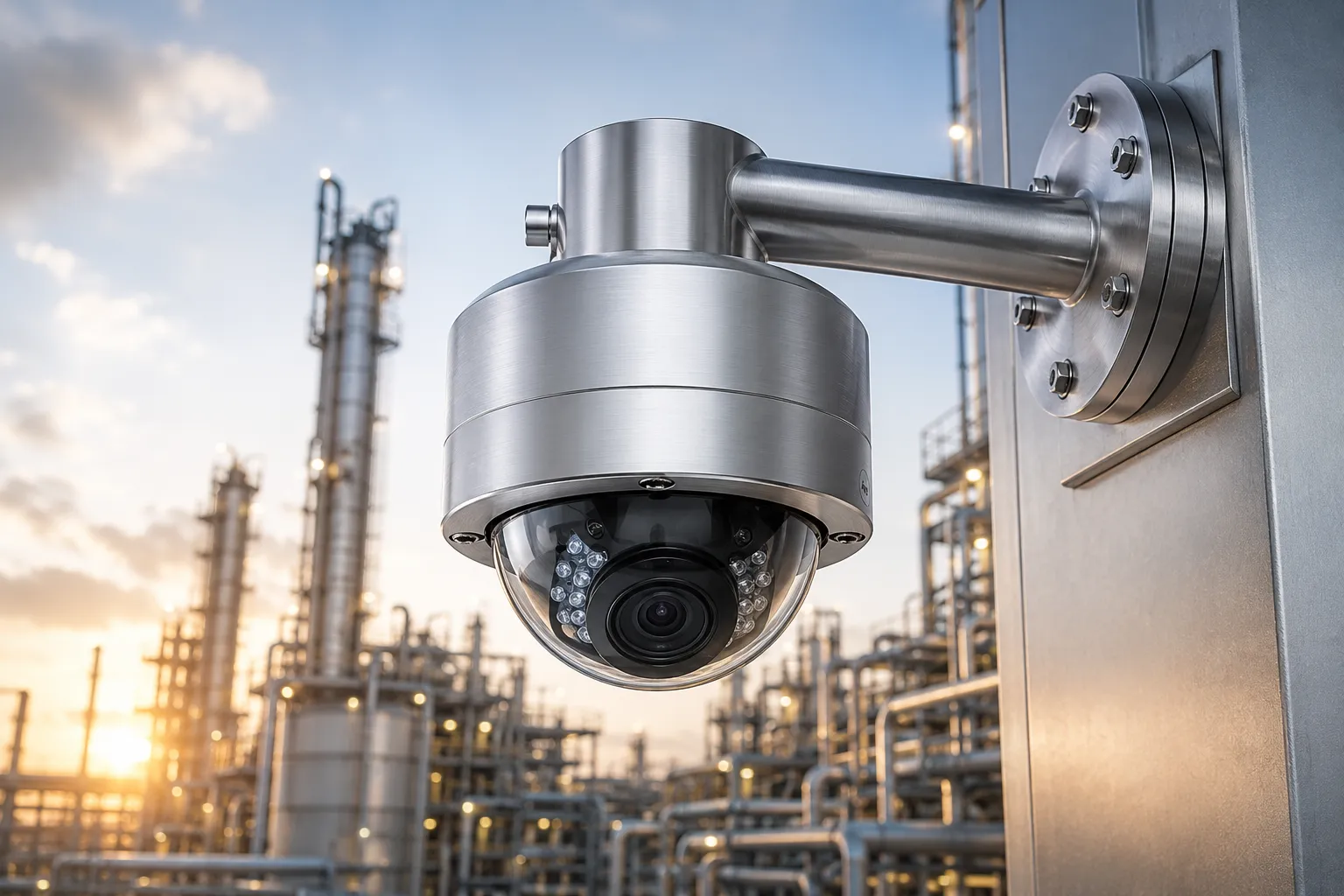

Explosion proof Fixed Type Camera for Offshore Wind Turbine Platforms in the UK: A Buyer's Guide
Offshore wind capacity across UK waters has grown faster than most operators' monitoring infrastructure, and arrays like Hornsea and Dogger Bank now run turbines in locations far enough offshore that a routine site visit costs a full day and a helicopter slot. When something needs visual confirmation inside a nacelle or at the turbine base, you can't always send a technician immediately, and waiting for the next scheduled visit isn't always an option either. Camera selection for these platforms isn't a like-for-like swap from onshore hazardous-area equipment — the environmental demands are harsher, the service logistics are far more constrained, and getting the specification wrong means paying for a helicopter trip you shouldn't have needed.
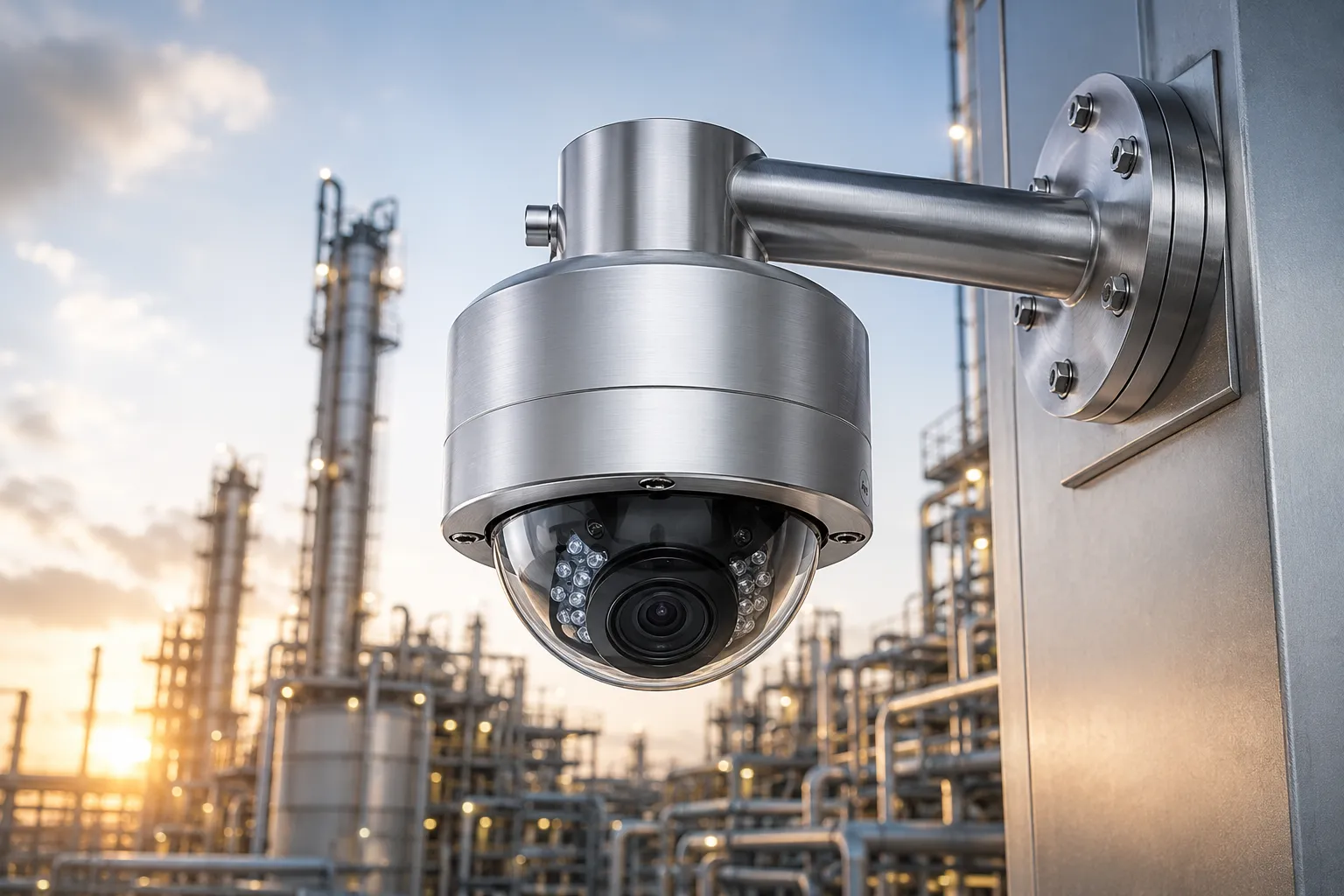
Environmental and Certification Demands Unique to Turbine Platforms
Turbine platforms combine three punishing conditions simultaneously: constant salt exposure, sustained high wind loading, and continuous low-frequency vibration from the drivetrain. Standard hazardous-area housings rated for onshore duty rarely survive this combination without early seal degradation or fastener corrosion. An Explosion proof Fixed Type Camera specified for turbine service needs a marine-grade corrosion-resistant housing, vibration tolerance validated against realistic drivetrain frequencies rather than transport shock testing alone, and a wind-load rating that accounts for gusting well beyond the platform's average conditions.
Certification still needs to match the zone classification present in battery rooms, transformer bays, and any nacelle areas where flammable materials or gas atmospheres exist. Your DSEAR obligations don't relax offshore — if anything, the isolation of the site makes rigorous documentation even more important.
Where Monitoring Actually Matters
Four locations consistently justify camera investment on a turbine platform:
- Nacelle access points — confirming safe entry conditions and monitoring personnel movement during maintenance visits.
- Nacelle interior — early detection of overheating, fluid leaks, or component wear before it escalates into a costly failure.
- Turbine base — visual confirmation of structural condition and any signs of corrosion at the tower-to-foundation interface.
- Array cabling routes — monitoring cable protection systems where damage risk is highest during installation and maintenance work.
A well-placed ATEX certified Explosion proof Fixed Camera at these points reduces the number of physical inspections your O&M team needs to schedule, which matters considerably when every visit involves weather windows and transfer vessel logistics.
Life-Cycle Costs You Need to Plan For
Upfront unit cost tells you very little about a turbine camera's real cost over its service life. Corrosion protection quality determines how many years pass before housing degradation forces early replacement — a marginally cheaper unit that fails after three years costs more than a robust one lasting ten. Servicing logistics matter just as much: a camera requiring physical access for routine maintenance adds cost every time a technician needs transporting offshore purely for a camera check.
Remote firmware updates deserve particular attention. A camera fleet that can be updated over the network without a site visit saves considerable operational cost across a large array, and it's a feature worth prioritising even where it adds slightly to the initial specification.
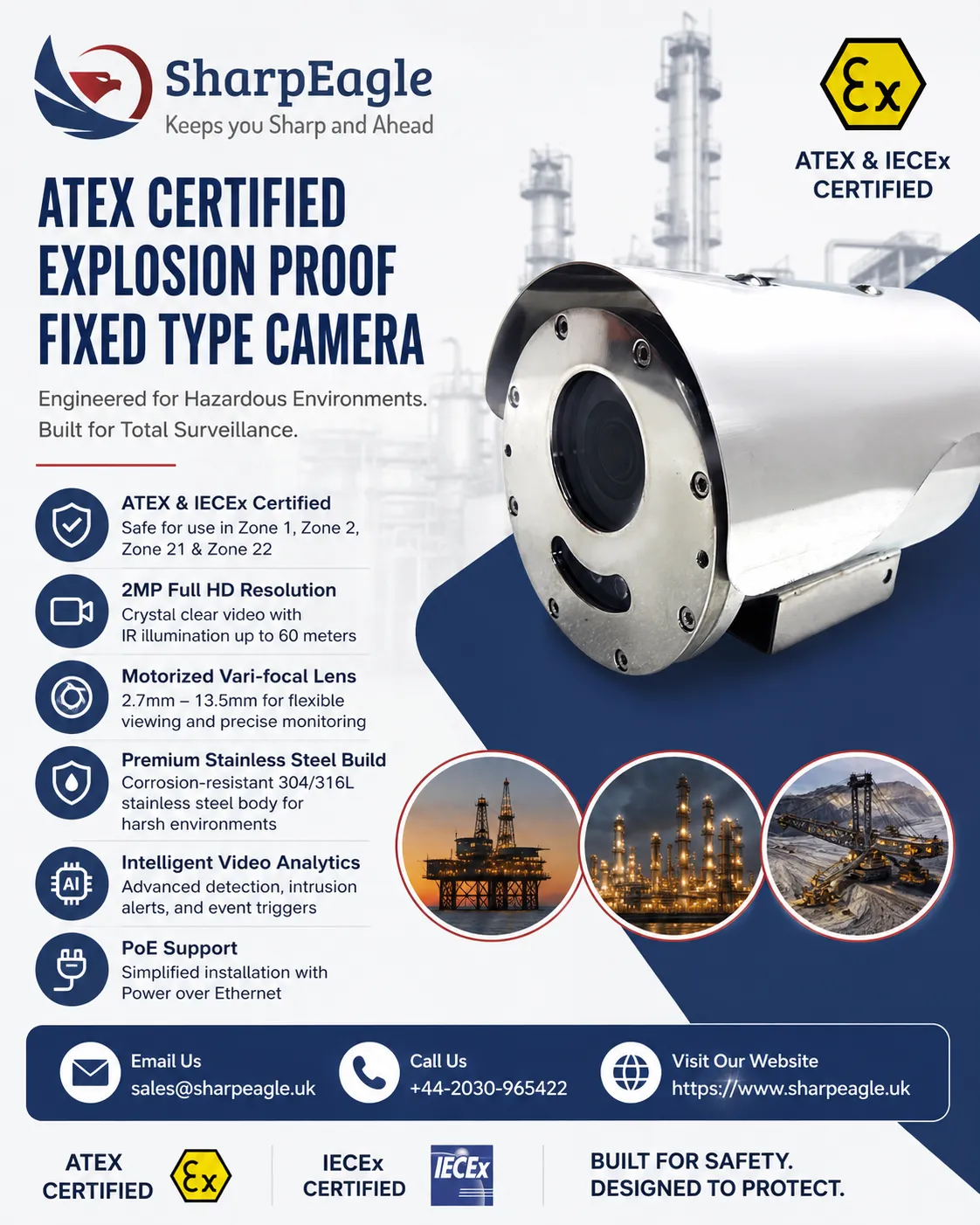
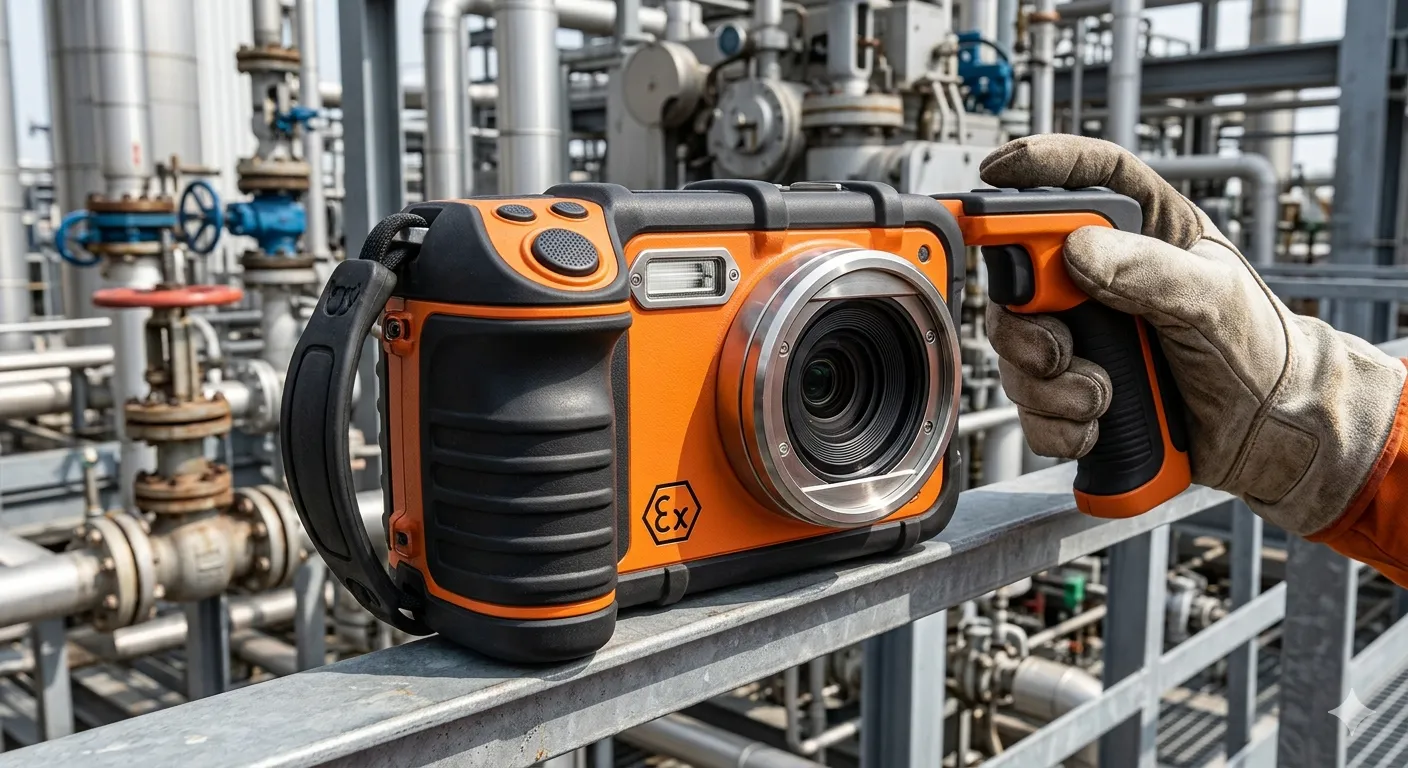
SharpEagle ATEX Certified Explosion proof Fixed Type Camera
For offshore wind operators specifying turbine platform monitoring, SharpEagle industrial explosion proof fixed camera supplier Uk offers a fixed camera range engineered for exactly these conditions. The housing combines marine-grade corrosion resistance with vibration tolerance tested against realistic drivetrain frequencies, and remote firmware update capability reduces the need for site visits dedicated purely to camera maintenance. Full ATEX certification covers relevant zone classifications for nacelle and transformer areas, with compliance documentation supplied upfront to simplify your asset register. Full specifications sit on the ATEX certified Explosion proof Fixed Type Camera product page.
Integration and Procurement Considerations
Camera feeds integrated into your platform's SCADA and asset management systems let control room staff correlate a visual alert with turbine performance data instantly, which shortens the diagnostic process considerably compared with reviewing footage manually after a fault report. An Explosion proof fixed camera for hazardous areas feeding directly into that dashboard turns a reactive maintenance model into something closer to predictive monitoring, catching developing issues before they force an unplanned visit.
For O&M contractors and asset owners procuring at fleet scale, standardising on one hazardous area ATEX Explosion proof Fixed Type Camera product line simplifies spares holding and reduces the training burden on technicians who service multiple turbines across an array. Fewer product variants also means fewer certification pathways to track, which matters considerably once your asset register spans hundreds of turbines.
The same certification rigour that applies to an Explosion proof Fixed Type Camera for oil and gas installation carries across directly, giving offshore wind procurement teams a proven compliance framework to build from rather than starting fresh. Vendors already established in oil and gas hazardous-area supply chains often bring exactly this kind of documentation maturity to wind projects, which shortens your own approval process considerably.
As UK offshore wind capacity keeps expanding into deeper, more remote waters, camera systems built for genuine turbine conditions will keep paying for themselves in avoided site visits and faster fault diagnosis. Contact SharpEagle Technology to specify a monitoring solution built for your array's exact operating conditions.






















Sign in to leave a comment.