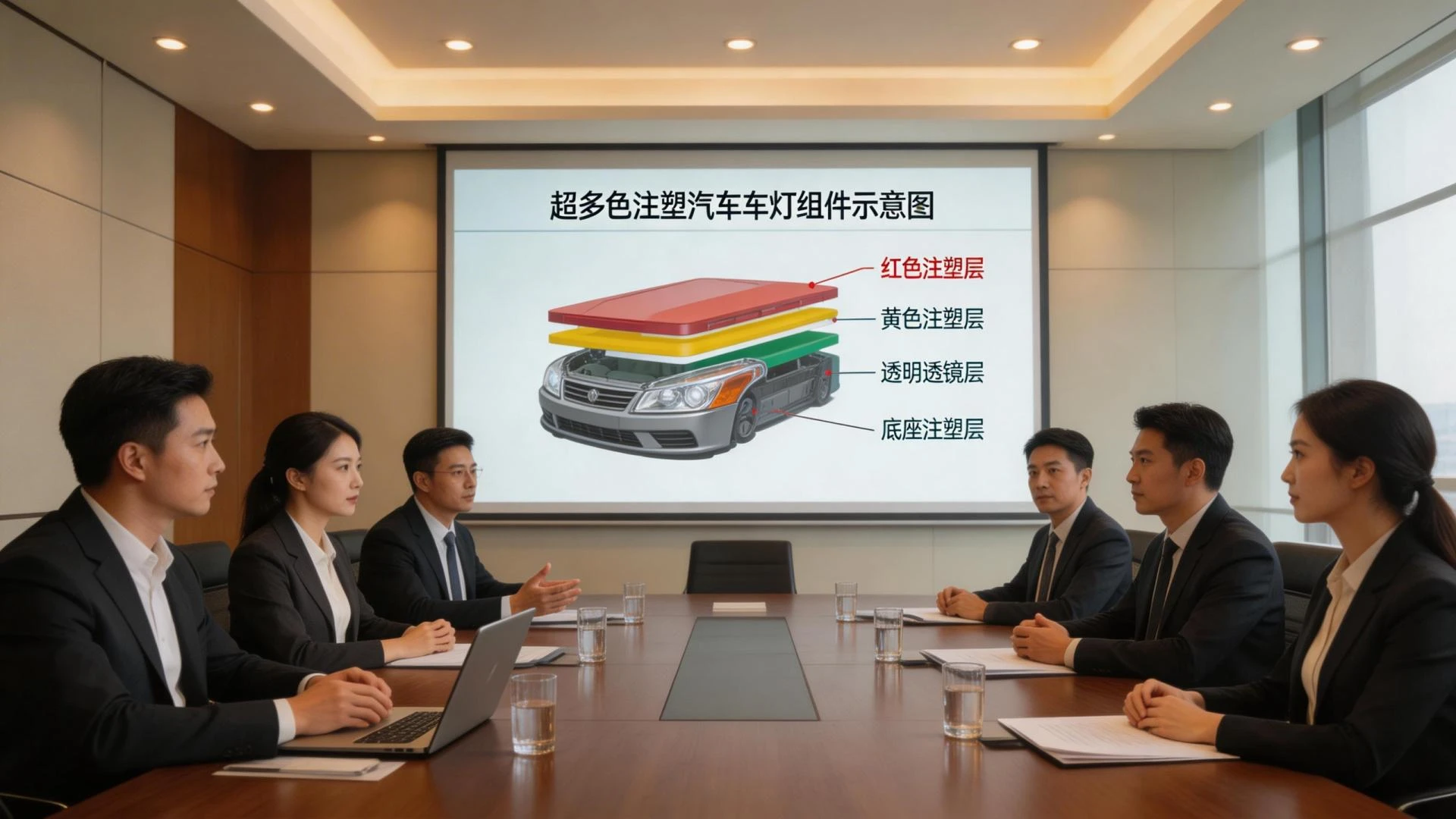
First Mold has recently participated in a professional symposium on the super multi-color injection-molded automotive lamps. Engineers, manufacturers, and suppliers were brought together by the symposium to discuss modern-day capabilities and technical challenges of automotive lighting production. The discussions revolved around the constant development of color integration according to the more complicated needs of the vehicle designs.
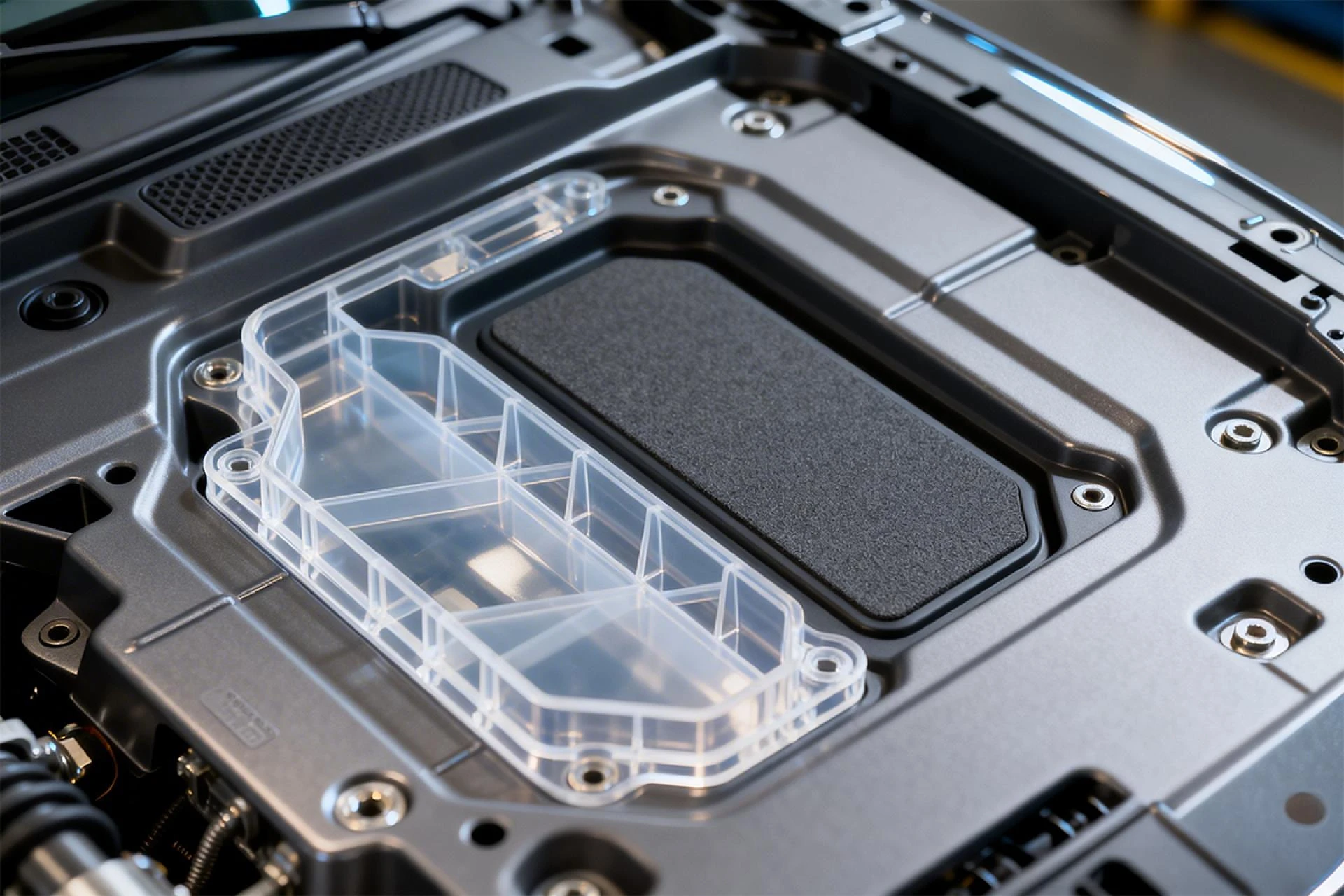
The industry professionals unanimously agreed that two-color injection molding is no longer an innovative solution during the symposium; it is actually just a two-color configuration that is applied in many automotive lamp applications. The use of double shot injection molding processes is seen to be used more to combine both the structural and aesthetic features of a single part. This shift highlights the growing need for accuracy, stability, and aesthetics in modern automotive cars.
The discussion then changed to a discussion of three-color injection molding and four-color injection molding technology. These mechanisms have evolved consistently over the last few years and can now be considered as the current upgrade trend of the high-end automotive lighting systems. Multi-color designs allow more effective light management, better functionality demarcation, and optical components integration. In high-end car models, these technologies are increasingly viewed as a sensible compromise between performance and production.
However, the symposium also discussed the limitations in the expansion of colors further. In practice, five-color and six-color injection molding is theoretically feasible under controlled conditions, though this comes with a lot of complications. Mold structures are dramatically complex, machine tools become expensive at a high rate, and the stability of manufacturing is hard to maintain throughout longer production runs. As a result, these technologies are typically only applicable to concept cars (or existing high-end models) in which their cost-performance ratio is significantly poorer compared to mass production. From a manufacturing perspective, these challenges highlight the importance of strong process control and design planning. Companies offering injection molding services must carefully evaluate feasibility before moving toward higher-color solutions. In automotive lighting, consistency and reliability remain as important as visual innovation.
Personal Statement
Multi-color injection molding innovation is now a necessity, with the modern automotive lighting designs continually pursuing increased integration. The engineers are progressively demanding a merging of functionalities into a limited number of parts. This, in turn, increases the pressure on the operations of molding, and it is necessary to achieve high levels of dimensional accuracy whilst maintaining the stability of the process.
The main issues can be seen in the geometry of molds, the compatibility of materials, and the synchronization of the processes. Through the addition of each color, both thermal and mechanical complexities are increased. Finding the balance of flow, integrity of bonds, and cycle stability is successively less manageable as the next stage is added. For suppliers involved in automotive plastic injection molding, progress depends on realistic application choices, not pushing complexity beyond practical limits.
This symposium highlighted an absolute claim, namely that innovation should be in accordance with real production needs. The pure use of technical feasibility is not enough. All determinations should be based on stability, cost containment, and sustained performance.
























Sign in to leave a comment.