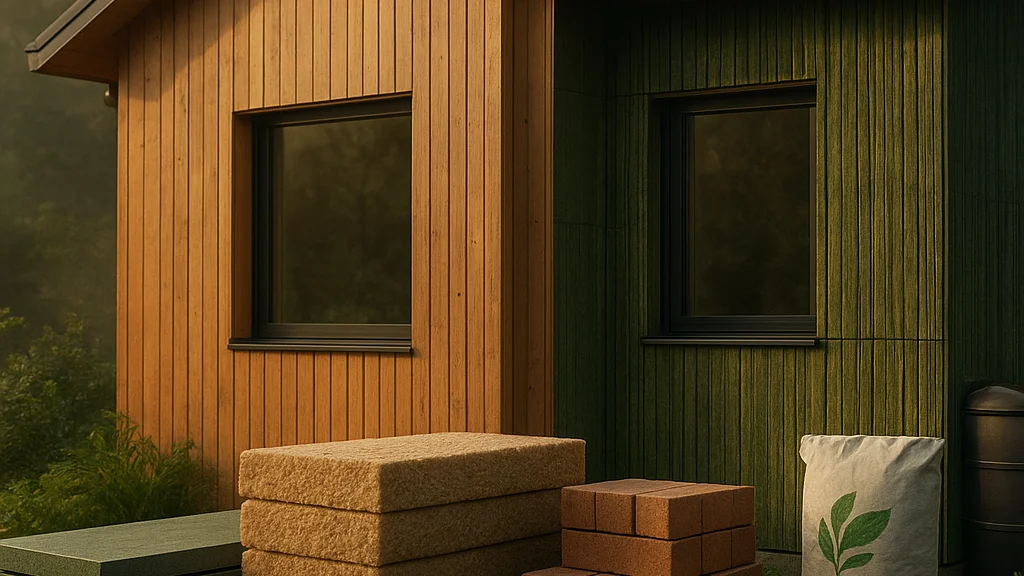

Walk through any historic quarter in Italy and one lesson becomes obvious: the buildings that last are the ones that respect climate, materials, and place. Thick stone walls in Lombardy, shaded courtyards in the south, timber details in Alpine villages, lime plasters that breathe rather than trap moisture: none of this was accidental. Modern green construction, despite the new vocabulary of carbon accounting and smart systems, is rediscovering that same principle. A truly eco-friendly home is not only a house with solar panels on the roof. It is a carefully assembled system where materials, orientation, insulation, ventilation, water use, and durability work together over decades.
The urgency is not abstract. Buildings and construction remain among the largest sources of global energy-related emissions, and a growing share of scrutiny now falls on embodied carbon, the emissions tied to extracting, manufacturing, transporting, and installing materials before a home is even occupied. That is why green building materials have moved from niche preference to strategic necessity. Market forecasters are responding to that shift: PR Newswire, citing MarkNtel Advisors, reported projections for the global green building materials market to reach USD 563.5 billion by 2032, while a separate Yahoo Finance report on an FMI study put the market at USD 962 billion by 2033. The gap between forecasts tells its own story: demand is rising fast enough that analysts are debating scale, not direction.
For homeowners, architects, and developers, the question is no longer whether green materials matter. The better question is which materials genuinely reduce environmental impact, improve indoor comfort, and remain financially sensible when maintenance and energy bills are counted honestly. That is where the conversation becomes more serious, and more useful.
A green home is not defined by one heroic product. It is defined by a sequence of better decisions, from structure to finishes to operation.
Why material choice now sits at the center of home sustainability
For years, public discussion around eco-friendly homes focused mainly on operational energy: efficient boilers, LED lighting, rooftop solar, and better appliances. Those remain important, but they are only part of the ledger. A low-energy home built with carbon-intensive materials can still carry a heavy environmental burden at the moment of completion. Cement, steel, aluminum, petrochemical insulation, and certain synthetic finishes can involve substantial emissions and pollution across their supply chains.
This has pushed architects and regulators toward life-cycle thinking. Instead of asking only how much energy a home consumes after move-in, they are asking how much carbon was emitted to make the wall, the floor slab, the window frame, and the insulation layer. The answer changes design priorities. Timber from responsibly managed forests may store carbon. Recycled steel can lower virgin resource demand. Lime-based plasters can improve vapor permeability and longevity. Cellulose insulation made from recycled paper can reduce waste while performing well thermally. Even simple design choices, such as keeping structural spans efficient or reducing unnecessary finishes, can cut material use significantly.
There is also a health dimension that households feel immediately. Eco-friendly homes increasingly emphasize low-VOC paints, formaldehyde-free panels, natural fiber insulation, and moisture-aware wall assemblies because indoor air quality is not an aesthetic detail; it is a daily public health issue. Families spend most of their time indoors. If a home traps pollutants, overheats in summer, or develops hidden condensation, the environmental label means little.
Recent consumer-facing coverage reflects this broader view. A Moneycontrol article on eco-friendly homes highlighted not just renewable energy, but natural light, water management, and design strategies that reduce dependence on mechanical systems. That is sensible. The greenest watt is often the watt not needed, and the greenest material is often the one used carefully, for a long life, in the right place.
Readers who want a broader primer on the category can compare this discussion with Inside Green Building Materials and Eco-Friendly Homes, which frames the topic from a homeowner perspective. Yet the market has matured enough that the conversation must now move beyond broad enthusiasm and into performance, sourcing, and trade-offs.
The materials that matter most, and what makes them genuinely green
Not every product marketed as sustainable deserves the label. Some reduce one environmental burden while increasing another. Others perform beautifully in one climate and poorly in another. The most credible green building materials tend to share several traits: lower embodied carbon, recycled or renewable content, durability, low toxicity, repairability, and compatibility with passive design.
Timber is the most discussed example, especially mass timber and engineered wood systems. When forests are managed responsibly and supply chains are transparent, wood can offer a lower-carbon alternative to more emission-intensive structural materials. It also allows prefabrication, which can reduce waste on site. Deutsche Welle recently drew attention to modular wood systems in its report on eco-friendly homes from wooden building blocks, illustrating how speed of assembly and material efficiency can reinforce one another.
Yet wood is not a universal answer. Moisture control, fire safety, local code compliance, and sourcing integrity all matter. Poorly detailed timber assemblies can fail just as badly as poorly detailed concrete ones. That is why the best projects combine material optimism with technical discipline.
- Mass timber and engineered wood: lower embodied carbon potential, rapid assembly, strong structural performance when designed correctly.
- Cellulose insulation: typically made from recycled paper, useful for retrofits, good thermal performance, relatively low embodied energy.
- Cork: renewable, naturally resilient, acoustic benefits, particularly relevant in flooring and insulation applications.
- Bamboo: fast-growing and versatile, though transport emissions and adhesive chemistry must be checked carefully.
- Recycled steel: valuable where structural strength is needed and circularity can be documented.
- Lime plaster and limecrete: breathable, repairable, often well suited to heritage-sensitive or moisture-prone buildings.
- Reclaimed brick, stone, and timber: excellent for reducing extraction demand and preserving character, especially in renovation projects.
Insulation deserves special attention because it influences both embodied and operational carbon. Mineral wool, wood fiber, cellulose, cork, hemp, and sheep wool all have different moisture behaviors, thermal values, fire characteristics, and costs. The correct choice depends on wall type, local humidity, fire regulations, and budget. In Mediterranean climates, summer performance matters as much as winter heat retention. Materials with good thermal lag can help reduce overheating, an increasingly serious issue as heatwaves intensify across southern Europe.
Windows and glazing complete the picture. Triple glazing may be essential in colder climates, while high-performance double glazing with shading can be more balanced elsewhere. Frames made from timber, fiberglass, or certain recycled-content composites may outperform standard options depending on the project. What matters is not a fashionable label, but the assembly as a whole.
The most sustainable wall is not the one with the longest marketing brochure. It is the one that delivers comfort, durability, and low impact in the climate where it actually stands.
Design beats gadgets: how eco-friendly homes reduce demand first
One mistake in the market is to treat eco-friendly homes as technology packages rather than climate-responsive designs. A house can feature solar panels, battery storage, and intelligent controls, yet still consume too much energy because it is badly oriented, poorly shaded, and over-glazed on the wrong façade. Good green design begins before materials are purchased.
Passive solar orientation remains fundamental. In colder regions, careful placement of glazing can capture winter sun; in hotter regions, overhangs, shutters, trees, and external louvers can sharply reduce cooling loads. Cross-ventilation, stack ventilation, and airtightness balanced with mechanical ventilation where needed are not glamorous topics, but they determine comfort more reliably than many expensive add-ons.
There is a reason vernacular architecture still teaches us. Venetian palazzi managed light and airflow with precision long before software simulations existed. Rural farmhouses used thermal mass and shaded transitions to soften temperature swings. Today, digital tools allow architects to model these same principles with far greater accuracy. The wisdom is old; the measurement is new.
For homeowners planning a new build or deep renovation, the order of priorities should be disciplined:
- Reduce energy demand through orientation, compact form, shading, insulation, and airtightness.
- Select durable, low-impact materials with verified sourcing and low-toxicity finishes.
- Install efficient systems sized to the reduced demand, not to the waste of a poor envelope.
- Add renewable generation such as rooftop solar where site conditions make sense.
- Monitor performance after occupancy, because real behavior often differs from design assumptions.
This sequence matters financially as well. Oversized heating and cooling systems often compensate for design flaws that could have been solved more elegantly with envelope improvements. Once the building shell performs well, smaller systems become possible, and long-term bills usually improve.
Water is another neglected frontier. Rainwater harvesting, low-flow fixtures, drought-tolerant landscaping, and greywater strategies are becoming more relevant as urban areas face water stress and intense rainfall events in the same year. Earth Times, in its overview of green technology and eco-friendly innovations, points to the broader convergence of digital management, cleaner energy systems, and sustainability-focused design. Homes are part of that convergence, but the strongest projects still start with passive fundamentals, not software dashboards.
For a complementary angle on integrated design choices, Green Building Materials for Smarter Eco-Friendly Homes offers a practical bridge between material selection and household performance.
What has changed recently: the 2026 market and policy picture
The green building conversation in 2026 is more concrete than it was even three years ago. Three developments stand out. First, embodied carbon has moved closer to the center of procurement decisions, especially in Europe and among larger developers. Second, supply chains for lower-carbon products are becoming more professionalized, with better environmental product declarations and more pressure for traceability. Third, affordability concerns are forcing the industry to distinguish between premium branding and genuine life-cycle value.
Europe remains a critical arena because building regulations, renovation targets, and energy security concerns have reinforced interest in efficient homes. The push to renovate older housing stock is especially consequential. New construction attracts headlines, but the climate challenge is largely in existing buildings: masonry apartments, postwar concrete housing, detached suburban homes with weak insulation, and heritage properties needing careful upgrades. Here, low-impact materials must prove they can work in retrofit conditions, not only in idealized new builds.
Manufacturers are responding with more prefabricated wall systems, bio-based insulation options, and lower-carbon cement blends. Timber systems continue to expand, though not without debate over forestry practices, fire perceptions, and insurance. The market’s growth projections, whether one uses the MarkNtel Advisors estimate reported by PR Newswire or the FMI estimate reported by Yahoo Finance, signal capital moving into this sector at scale.
Several current trends deserve attention in 2026:
- Bio-based materials are mainstreaming: wood fiber, hemp-lime systems, cellulose, and cork are no longer fringe choices in many markets.
- Retrofit-compatible products are gaining traction: thin internal insulation systems, breathable plasters, and prefabricated façade upgrades are increasingly important.
- Low-carbon concrete innovation continues: supplementary cementitious materials and alternative binders are attracting investment, though availability varies widely.
- Digital material tracking is improving: builders and specifiers are using product-level data more often to compare embodied impacts.
- Heat resilience is rising on the agenda: cool roofs, shading, and materials that limit overheating are now central in southern climates.
Another change is cultural. Buyers are asking different questions. They want to know whether a home will stay cool during summer heat, whether insulation contains harmful chemicals, whether replacement parts will be available in ten years, and whether maintenance costs are realistic. This is a healthier market than one driven by slogans alone. It rewards transparency.
Readers looking for a more trend-focused summary can also consult 2026 Update: Innovations in Green Building Materials and Eco-Friendly Homes, which tracks some of the latest product and design shifts shaping the sector.
The economics: upfront cost, operating savings, and the value of durability
Green homes still face one stubborn obstacle: many buyers see the upfront premium before they see the operating savings. This is understandable, but often incomplete. Some eco-friendly materials do cost more at purchase. Others do not, especially when sourced locally or used in simplified assemblies. The real issue is whether the project is evaluated over a meaningful time horizon.
A cheap material that fails early, traps moisture, requires frequent replacement, or increases heating and cooling demand is rarely cheap in the long run. By contrast, a durable envelope with robust insulation, airtight detailing, quality windows, low-maintenance cladding, and sensible shading can reduce utility bills and repair risks for decades. This is where green building becomes less ideological and more actuarial.
Developers and lenders are slowly catching up. Better-performing homes may support stronger resale value, lower energy burden, and greater resilience against climate-related stress. In regions with volatile energy prices, efficiency becomes a hedge. In flood-prone or overheating-prone areas, resilient design becomes a form of risk management. Insurance markets are beginning to notice these distinctions, even if pricing practices remain uneven.
There are, however, real constraints. Skilled labor is not always available for advanced airtightness detailing, natural plasters, or timber systems. Certification paperwork can burden smaller builders. Supply shortages can affect bio-based materials. Some imported “green” products arrive with transport emissions and weak transparency, undercutting their environmental promise. This is why local sourcing matters so much. A modest, regionally appropriate material palette often outperforms an imported eco-luxury specification.
Homeowners can improve outcomes by asking suppliers for clear documentation, by preferring repairable assemblies over sealed disposable ones, and by budgeting for commissioning and post-occupancy checks. A blower-door test, moisture review, and ventilation balancing may not sound romantic, but they can protect both comfort and investment.
Seen this way, the economics of eco-friendly homes resemble good tailoring in Milan: quality cut, correct fabric, and careful finishing cost more than haste, but they wear far better and age with dignity.
How to choose wisely: practical criteria for homeowners and designers
The abundance of green claims can confuse even experienced clients. A practical filter helps. Start with the project type. A new detached home on a suburban lot has different priorities from a deep retrofit in a 1930s apartment block or a rural stone house. Then examine climate, local regulations, and maintenance capacity. Sustainability that cannot be maintained is only temporary theatre.
When comparing materials, ask five direct questions. What is the embodied impact? How long will it last in this application? What chemicals or emissions does it bring indoors? Can it be repaired or reused? Is the supplier transparent about sourcing and performance? If a product fails these questions, elegant branding should not rescue it.
For designers, one of the strongest strategies is to simplify. Fewer material layers, cleaner junctions, and better coordination between structure, insulation, and finishes reduce waste and construction error. Complexity often hides defects. Simplicity, when well designed, can be both greener and more beautiful.
Homeowners should also resist the temptation to copy trends from another climate. A heavily glazed minimalist box may photograph well, but in hot summers it can become an energy-hungry greenhouse unless shaded expertly. Likewise, a highly sealed envelope without proper ventilation design can create indoor air problems. Good eco-housing is contextual. It listens to sun, wind, humidity, and local craft.
Useful due diligence includes:
- Request environmental product information where available, especially for insulation, structural products, and finishes.
- Prioritize low-VOC paints, adhesives, and sealants for indoor air quality.
- Ask how assemblies handle moisture over time, not just how they perform on day one.
- Check whether materials can be sourced regionally to reduce transport impact and delays.
- Budget for shading, ventilation, and commissioning, not only for visible finishes.
- Choose contractors with demonstrated experience in high-performance envelopes.
Another sensible step is to study what others have already learned. Exploring Green Building Materials and the Rise of Eco-Friendly Homes is useful for readers comparing broad approaches, while more technical buyers may benefit from reviewing case studies and supplier documentation side by side before committing to a specification.
What the next decade will reward
The homes that will age best are unlikely to be the most gadget-heavy. They will be the ones designed for lower demand, built with durable and lower-impact materials, and adapted to harsher weather patterns. Heat resilience, moisture safety, circularity, and repairability are becoming as important as energy efficiency. This is not a passing taste. It is the logic of climate adaptation entering ordinary housing.
Expect more progress in low-carbon cement, recycled-content products, modular construction, and bio-based insulation. Expect tighter scrutiny of greenwashing as buyers and regulators demand evidence. Expect renovation to become even more central than new construction, because the carbon already locked into existing buildings gives refurbishment a strategic advantage when done well. And expect aesthetics to evolve. The future eco-home will not necessarily look rustic or experimental. It may look refined, urban, and contemporary, while still using humble materials intelligently.
There is also a social question that the sector cannot avoid. Eco-friendly homes must not remain a premium niche. If green materials only appear in luxury developments, the climate benefit will be too narrow and the politics too fragile. Scale requires affordability, standardization where useful, and public policy that supports retrofit, efficient housing, and cleaner supply chains.
My own conclusion is simple. The best green homes feel calm. They use daylight well. They stay comfortable without mechanical excess. They smell clean, not chemical. They age with grace. Like the finest Italian craft, they combine beauty with discipline. This is the real promise of green building materials: not merely lower emissions on a spreadsheet, but homes that are healthier, wiser, and built to endure.
































Sign in to leave a comment.