
Professional services firms live and die by execution accuracy. Deals are closed in CRM, projects are delivered by service teams, costs are tracked in ERP, and invoices must reflect exactly what was delivered—on time and within scope. Yet in many firms, these systems operate independently, forcing teams to rely on spreadsheets, emails, and manual data entry to keep everything aligned.
As firms scale, this fragmentation becomes a serious risk. Delays in project setup, billing errors, revenue leakage, and missed SLAs all stem from disconnected systems. This is why more firms are turning to workflow-driven automation—and specifically to platforms like ConnectorHub—to unify CRM, ERP, and operational systems.
The Core Challenge in Professional Services Operations
Most professional services organizations run on a familiar stack:
- CRM to manage sales pipelines, contracts, and customer details
- ERP to handle finance, billing, revenue recognition, and reporting
- CMMS or service delivery tools for execution, assets, and field work (especially in HVAC, facilities, and managed services)
The problem is not the tools themselves—it’s the lack of orchestration between them.
Common pain points include:
- Projects manually created in ERP after deals close in CRM
- Scope, pricing, and milestones re-entered multiple times
- Service completion data not reflected accurately in billing
- Finance teams chasing delivery teams for “what was actually done”
This disconnect grows exponentially in firms offering recurring services, field operations, or asset-based delivery models.
Why Traditional Integrations Fall Short
Many firms attempt to solve this with:
- Point-to-point integrations
- Custom scripts or APIs
- Generic automation tools
These approaches often fail because professional services workflows are:
- Multi-step and long-running
- Highly contextual (projects, assets, SLAs, contracts)
- Subject to frequent change
What firms need is not just connectivity, but workflow orchestration—the ability to define how work flows from sales to delivery to billing, and to change that flow as the business evolves.
ConnectorHub as a No-Code Integration Platform for Services Firms
ConnectorHub is built as a no-code integration platform designed for service-centric and operations-heavy organizations. Instead of treating integrations as static data syncs, it treats them as living business processes.
With ConnectorHub, firms can:
- Visually define workflows that span CRM, ERP, and service systems
- Automate project creation, updates, and closures
- Ensure billing reflects real delivery activity
- Reduce dependency on custom development
This approach shifts integration ownership closer to operations and finance—where process knowledge actually lives.
Automating Project Setup From CRM to ERP
One of the most common bottlenecks in professional services is project setup.
Without Automation
- A deal closes in CRM
- Ops or finance manually creates a project in ERP
- Scope, rates, and milestones are re-entered
- Errors and delays creep in
With ConnectorHub
ConnectorHub listens for CRM events (deal closed, contract signed) and automatically:
- Creates the project in ERP
- Maps scope, pricing, milestones, and cost centers
- Assigns the correct billing rules and revenue schedules
This ensures projects start faster and more accurately—without manual handoffs.
Connecting Service Execution to Billing Accuracy
For many firms, especially those with field or asset-based services, billing accuracy depends on execution data.
This is where the ability to connect CMMS and CRM systems becomes critical.
ConnectorHub enables:
- Work orders or service activities to sync with CRM records
- Completion status and effort data to flow into ERP
- Invoices to reflect actual work performed
This closed-loop automation eliminates disputes, write-offs, and billing delays.
HVAC Workflow Automation as a Real-World Example
Professional services firms in HVAC, facilities, and managed services face unique challenges:
- High volumes of service calls
- Strict SLAs
- Field technicians operating remotely
- Complex billing models
HVAC workflow automation is a powerful example of ConnectorHub’s value.
Using ConnectorHub, HVAC service providers can:
- Automatically convert CRM service requests into CMMS work orders
- Track labor, parts, and time in real time
- Sync completed work to ERP for invoicing
- Update CRM so customers and account teams see status instantly
This level of automation is nearly impossible to maintain with manual processes or brittle integrations.
The Role of Pre-Built Connectors
A major reason ConnectorHub deploys quickly is its library of pre-built connectors.
These connectors:
- Handle authentication and API complexity
- Support standard objects like projects, work orders, invoices, and customers
- Reduce setup time from months to days
For professional services firms, this means:
- Faster onboarding of new systems
- Less maintenance as APIs change
- More consistent integrations across clients or business units
Pre-built connectors turn integration from a development project into a configuration exercise.
Service Provider Integrations at Scale
Many professional services firms operate as service providers for multiple clients, each with different systems and requirements.
ConnectorHub is designed for service provider integrations, supporting:
- Multi-tenant architectures
- Client-specific ERP mappings
- Shared workflows with isolated data
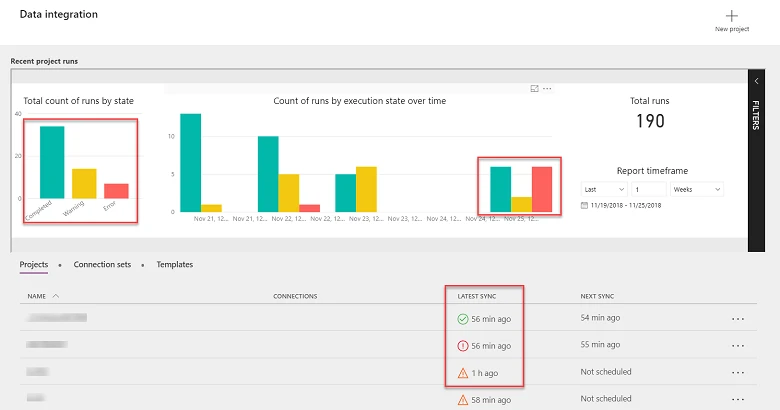
- Centralized monitoring and governance
This allows firms to scale operations without duplicating integration effort for every client.
Billing Automation That Finance Teams Trust
Finance teams often hesitate to automate billing because they fear loss of control. ConnectorHub addresses this by:
- Making workflows transparent and auditable
- Ensuring every invoice ties back to delivery data
- Supporting approvals and exception handling
Instead of chasing spreadsheets, finance teams gain real-time visibility into:
- Billable work in progress
- Revenue at risk
- SLA compliance
Automation improves control—it doesn’t remove it.
Reducing Revenue Leakage and Operational Risk
Disconnected systems are one of the biggest causes of revenue leakage in professional services.
ConnectorHub helps firms:
- Capture all billable activity automatically
- Prevent missed or delayed invoices
- Reduce disputes caused by data mismatches
- Improve cash flow predictability
When project, service, and billing data are aligned, firms operate with confidence.
Why No-Code Matters for Professional Services
Professional services processes change constantly:
- New pricing models
- New service offerings
- New client requirements
A no-code integration platform allows firms to adapt without rewriting software. Teams can:
- Modify workflows visually
- Add or remove steps
- Adjust mappings as contracts evolve
This agility is essential in competitive service markets.
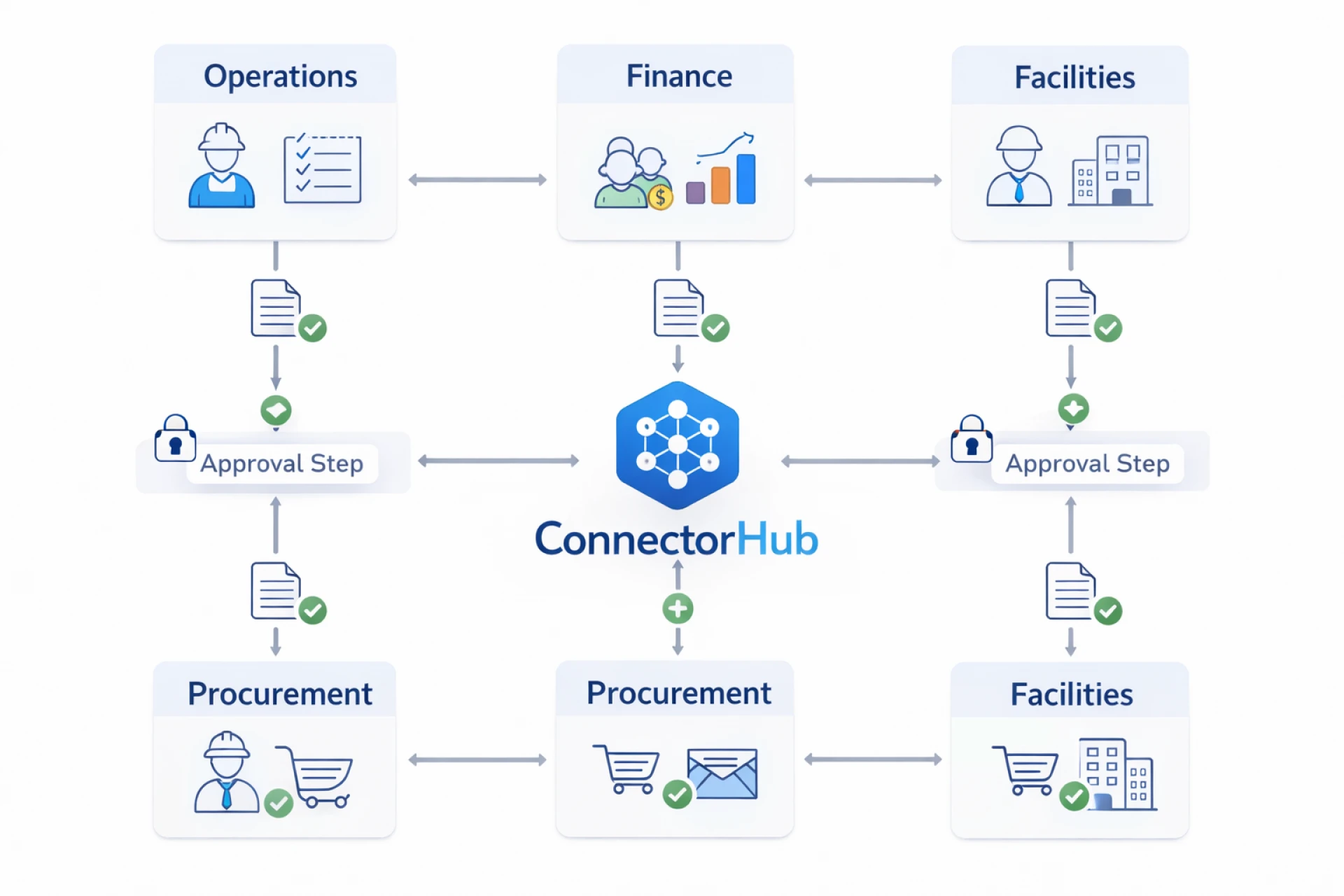
How ConnectorHub Fits Into the Services Tech Stack
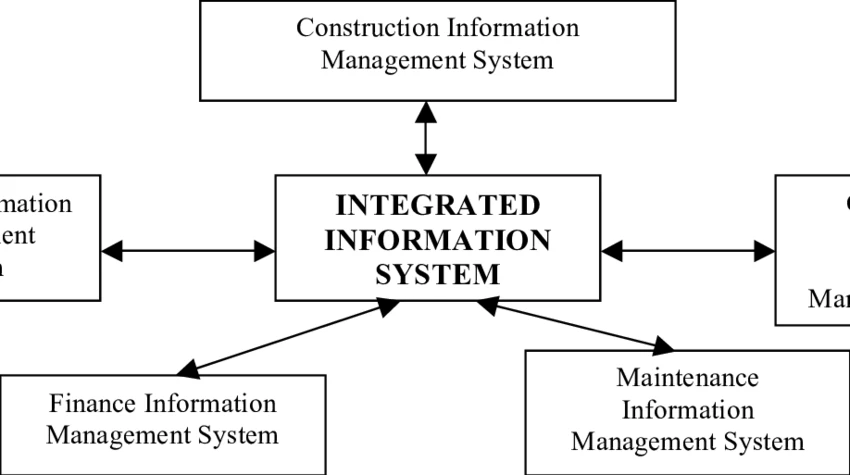
Platforms like ConnectorHub sit at the center of the services ecosystem, orchestrating how CRM, ERP, CMMS, and billing systems work together.
ConnectorHub doesn’t replace your tools—it ensures they operate as a single, coordinated system.
Final Takeaway
Professional services firms succeed when sales, delivery, and finance move in lockstep. Manual handoffs and disconnected systems make that nearly impossible at scale.
By using ConnectorHub as a no-code integration platform with pre-built connectors, firms can:
- Automate project creation from CRM to ERP
- Connect CMMS and CRM systems for accurate execution tracking
- Enable HVAC workflow automation and other field service models
- Scale service provider integrations securely and reliably
The result is faster project kickoff, accurate billing, reduced risk, and teams that spend less time reconciling data—and more time delivering value to clients.

























Sign in to leave a comment.