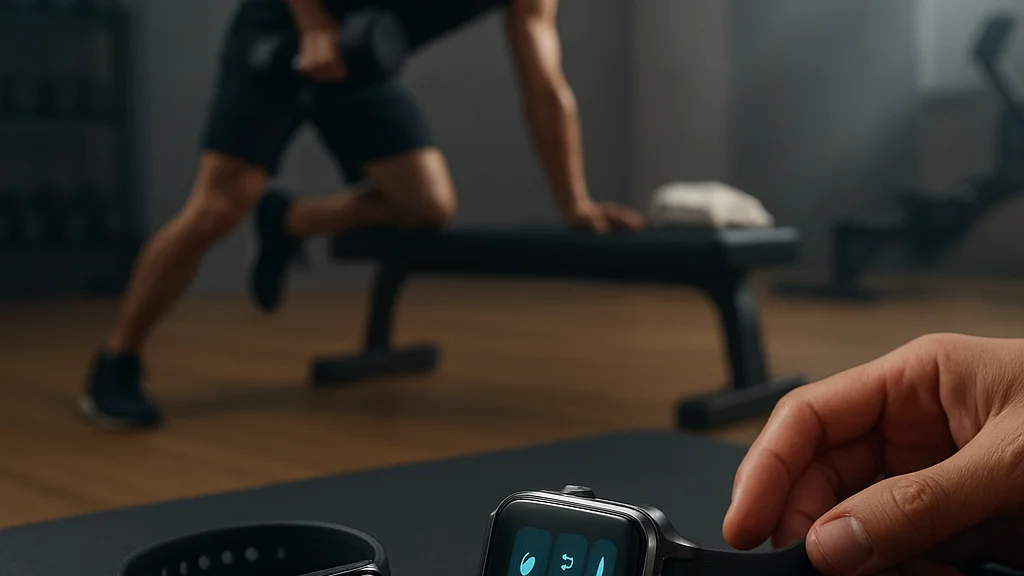

A runner in San Francisco can now finish a tempo session with a wristful of evidence: heart-rate drift, cadence stability, sleep debt, skin temperature changes, recovery score, and a training recommendation for tomorrow morning. A decade ago, most people left the track with a finishing time and a vague sense of effort. That shift matters. Fitness trackers have moved from simple step counters to compact physiological dashboards—and that evolution is changing how people train, recover, and avoid the classic trap of working harder without getting better.
The reason fitness trackers improve workout performance is not mystical. It is measurable. They reduce guesswork. They turn effort into data, data into patterns, and patterns into decisions. When used well, a tracker can help an athlete hold the right intensity, spot fatigue before it becomes injury, and stay consistent long enough for adaptation to happen. According to Digital Trends, the most useful wearables in 2026 are no longer judged only by hardware—they are judged by how effectively they interpret training load, sleep, and readiness in ways that influence behavior.
That is the key distinction I keep seeing across Silicon Valley health-tech circles: raw metrics are not the win. Better decisions are. A tracker does not make someone fitter by itself. It improves performance by closing the feedback loop between what the body is doing and what the athlete thinks the body is doing. Those two things are often very different.
Fitness trackers are most powerful when they replace assumption with evidence—especially during pacing, recovery, and long-term progression.
For readers who want a parallel breakdown of this topic, this WriteUpCafe guide on precision insights and this companion piece on motivation and performance both reinforce a central point: wearable technology works best when it supports a training system rather than acting as a novelty.
From step counting to biometric coaching
The first generation of mainstream fitness trackers focused on movement volume—steps, calories, active minutes. That was useful, but crude. A 10,000-step day says little about whether someone improved aerobic capacity, managed workout intensity, or recovered from heavy lifting. Over the last several years, the category has matured into a much more sophisticated branch of health and wellness tech. Devices now routinely combine optical heart-rate sensors, GPS, accelerometers, gyroscopes, blood oxygen estimation, skin temperature tracking, and increasingly nuanced software models.
That matters because workout performance is multifactorial. A cyclist’s output is shaped by cardiovascular efficiency, sleep quality, fueling, heat stress, and accumulated fatigue. A strength athlete’s progress depends on recovery, volume management, and consistency. A casual exerciser trying to improve body composition needs adherence more than heroic sessions. Modern wearables can support all three profiles because they capture not just movement, but context.
Industry coverage in 2026 reflects that broadening role. Everyday Health highlights that the best trackers now serve different user types—from beginners seeking motivation to more advanced users who want recovery analytics and training guidance. Esquire similarly emphasizes all-around functionality rather than one-dimensional step logging. The market has effectively acknowledged that performance is built across the full day, not just the 45 minutes spent exercising.
What changed under the hood is equally important. Sensor accuracy has improved, though not perfectly, and software has become more interpretive. Instead of merely reporting resting heart rate, many devices now flag changes from personal baseline. Instead of listing sleep duration, they estimate sleep stages, disruptions, and readiness. Instead of counting exercise minutes, they estimate strain or training load. Those are not laboratory-grade substitutes for every metric, but they are directionally useful—and for many people, direction is exactly what was missing.
- Then: steps, calories, simple activity rings
- Now: heart-rate zones, sleep scoring, readiness, GPS pacing, recovery trends
- Performance impact: better intensity control, smarter recovery, more consistent progression
That progression explains why trackers have become less like accessories and more like lightweight coaching systems. They do not replace human expertise, but they often make coaching principles visible to people training on their own.
Real performance gains come from pacing, load, and recovery control
If I had to narrow the performance value of fitness trackers to three functions, I would choose pacing, load management, and recovery control. Those are the levers that most directly influence whether a workout produces adaptation or simply accumulates fatigue.
Start with pacing. Many recreational runners go too hard on easy days and too easy on hard days. A tracker with reliable heart-rate zones and GPS can help correct that. During endurance work, staying in the prescribed aerobic zone can improve mitochondrial efficiency and build volume without excessive strain. During intervals, pace and heart-rate feedback can keep the session honest. The same principle applies to rowing, cycling, hiking, and even circuit training. Objective feedback prevents the common mismatch between intended effort and actual effort.
Load management is where wearables become especially valuable over weeks rather than single workouts. Training adaptation depends on progressive overload, but overload without recovery is just stress. Devices that estimate strain, acute load, or recovery trends can help users avoid stacking intense sessions when the body is already signaling cumulative fatigue. This does not mean blindly obeying a readiness score. It means using the score as one input alongside soreness, mood, and performance markers.
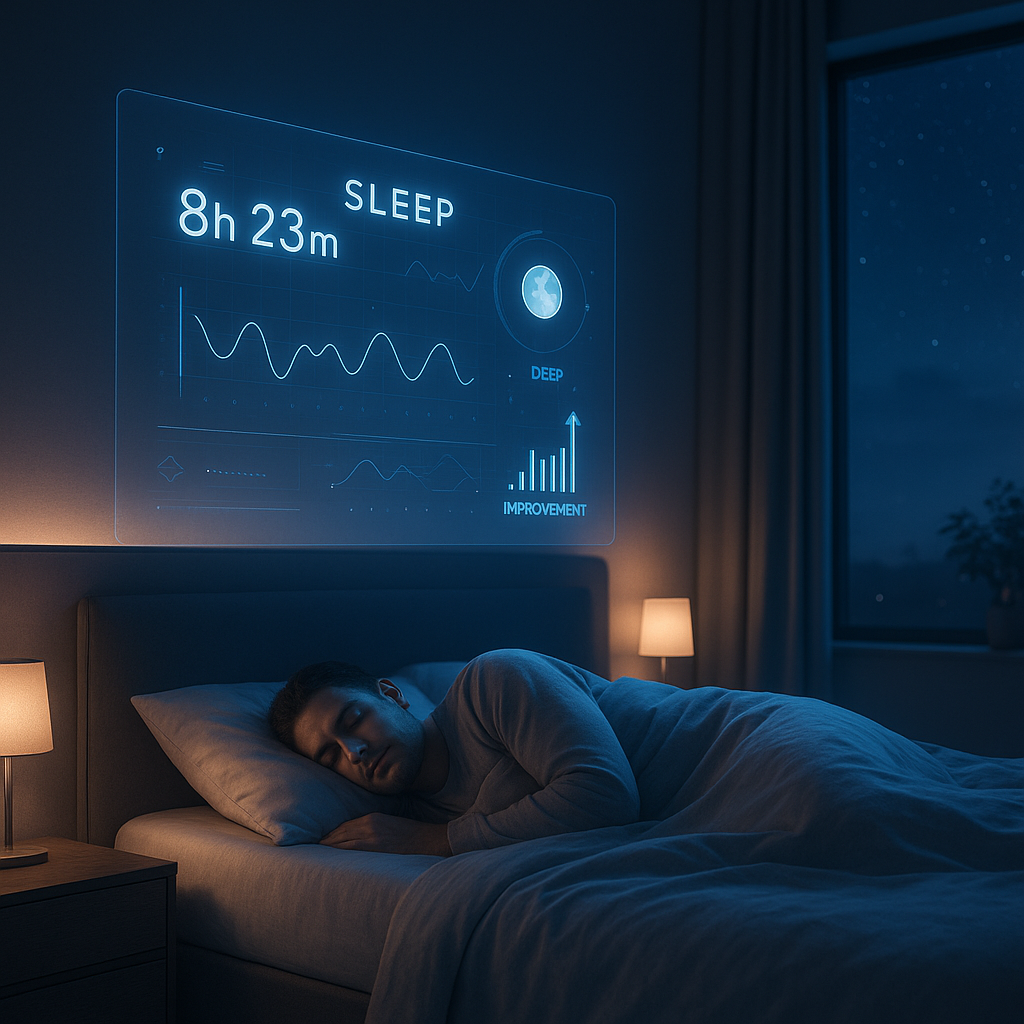
Recovery control may be the most underrated feature. In Silicon Valley, where high performers often try to optimize everything, I still see people obsess over workout metrics while neglecting sleep debt and autonomic stress. Yet resting heart rate, heart-rate variability trends, and sleep duration often tell a clearer story about tomorrow’s workout quality than yesterday’s calorie burn. A tracker can reveal when a user is under-recovered even if motivation remains high.
The best workout is not always the hardest one. Often it is the session your body can absorb, adapt to, and build from.
Here is where trackers most often improve outcomes:
- They keep easy sessions easy, preserving energy for quality work.
- They identify rising fatigue, reducing the chance of overreaching.
- They reinforce progression, showing whether training volume and intensity are actually increasing over time.
- They shorten the feedback cycle, so users make changes this week rather than after a month of stalled results.
This is also why the conversation has expanded beyond elite athletes. For the average user, performance improvement may mean finishing a 5K without walking, increasing weekly training consistency, or lifting with less burnout. Trackers support all of those by making invisible strain visible.
The metrics that matter most—and the ones people misuse
Not every number on a wearable deserves equal attention. One of the recurring problems in consumer health tech is metric overload. Users collect more data than they can interpret, then either ignore it or become anxious about it. The performance benefit comes from focusing on a handful of high-signal indicators that align with the goal.
For endurance training, the strongest practical metrics are usually pace, distance, heart-rate zones, resting heart rate trends, and sleep consistency. For strength training, wearables are less precise at counting reps or estimating muscular fatigue, but they still help through recovery markers, session duration, heart-rate response, and general activity balance. For weight management, the most useful outputs are often adherence indicators—daily movement, workout frequency, and sleep regularity—rather than calorie estimates, which can vary widely.
Heart-rate variability has become one of the most discussed metrics in wellness tech, and for good reason. It can reflect autonomic nervous system balance and recovery status. But it is also highly individual. A low HRV reading on one day is not a diagnosis and should not trigger panic. Trends matter more than isolated values. The same caution applies to sleep scores. They are directional tools, not verdicts on health.
Users also overvalue calorie burn. Consumer wearables can estimate energy expenditure, but those estimates are not precise enough to anchor aggressive nutrition decisions. If someone believes a tracker’s calorie number is exact, they may overeat after workouts or misjudge deficits. Better uses of the device include intensity control, habit reinforcement, and trend spotting.
- High-value metrics: heart-rate zones, pace, distance, sleep duration, resting heart rate trends
- Useful with caution: HRV, readiness scores, stress scores, sleep stages
- Most often overtrusted: calorie burn estimates and single-day recovery judgments
This is where education matters. The article How Fitness Trackers Enhance Workout Performance in 2026 captures a point I strongly agree with: metrics are only as powerful as the behavior they shape. A user who checks trends and adjusts training intelligently will outperform someone who stares at dashboards without changing anything.
What 2026 changed: smarter software, broader use cases, tighter ecosystems
The most important 2026 development is not a single new sensor. It is the convergence of wearable hardware, AI-assisted interpretation, and ecosystem integration. Fitness trackers now sit inside broader health platforms that connect workouts, sleep, stress, menstrual health, nutrition prompts, and coaching recommendations. That creates a more complete performance picture.
Mainstream buyer guides this year show how competitive the field has become. MSN’s 2026 roundup points to a market where smartwatches and dedicated trackers increasingly overlap, while AOL’s tested review underscores how different form factors now target specific needs, including comfort, style, and all-day wearability. That last point is not cosmetic. A tracker only improves performance if people actually wear it consistently enough to generate usable longitudinal data.
Another notable shift is the growing emphasis on recovery and mental health awareness. That is a welcome change. In Bay Area wellness circles, the conversation has moved beyond hustle metrics toward sustainable training. Devices increasingly surface stress patterns, breathing guidance, and sleep deficits alongside workout summaries. For many users, this prevents the classic problem of chasing performance while quietly eroding resilience.
Software coaching is also more contextual in 2026. Recommendations are less generic than they were a few years ago. Some platforms now suggest easier sessions after poor sleep, identify unusual cardiovascular strain during familiar workouts, or detect when a user’s baseline has improved and training zones should be updated. None of this is perfect, and false positives still occur, but the direction is clear: wearables are becoming more adaptive.
Three 2026 realities stand out:
- Integration beats isolation. The best systems combine training data with sleep and recovery.
- Comfort drives compliance. Lighter devices and longer battery life improve data continuity.
- Interpretation is the product. Hardware matters, but software guidance increasingly determines real-world value.
That evolution is why fitness trackers now influence not only workout execution but the entire rhythm of training life.
Where fitness trackers help different athletes differently
A common mistake in product marketing is to talk about “fitness users” as if they are a single category. They are not. The performance benefit of a tracker depends heavily on the training objective. A marathoner, a CrossFit enthusiast, a new gym member, and a midlife walker focused on cardiometabolic health all need different forms of feedback.
For endurance athletes, trackers are strongest at managing volume and intensity. GPS accuracy, heart-rate zoning, route analysis, and recovery trends can materially improve training quality. These users benefit from seeing whether their easy pace is becoming faster at the same heart rate over time—a practical sign of improved aerobic fitness.
Strength trainees get less perfect direct measurement, but still meaningful support. Wearables can show whether lifting days are followed by poor sleep, elevated resting heart rate, or reduced readiness. That helps with split design and deload timing. Some users also rely on smartwatch timers, rep logging, and movement reminders to keep sessions structured.
Beginners may gain the most from simple adherence features. Daily movement prompts, streaks, and visible progress reduce dropout risk in the first months of a fitness journey. According to Everyday Health, motivation remains one of the main reasons consumers buy trackers in 2026. That should not be dismissed as superficial. Consistency is the foundation of performance.
Older adults and health-focused users often benefit through safety and pacing. A tracker can reveal when walking intensity is too low to challenge cardiovascular fitness or too high to be sustainable. It can also encourage regular activity without requiring advanced sports knowledge.
In practical terms:
- Runners and cyclists: pacing, aerobic zone control, recovery monitoring
- Lifters: recovery trends, session structure, sleep and stress awareness
- Beginners: habit formation, accountability, visible milestones
- Older adults: safe progression, heart-rate awareness, activity consistency
The lesson is straightforward—buying the most feature-rich device is less important than choosing one aligned with the way you train. A simple, comfortable tracker used daily will outperform a premium device abandoned after two weeks.
The limits, blind spots, and risks of overreliance
Fitness trackers are useful, but they are not neutral. They shape attention, and sometimes they distort it. The biggest risk is outsourcing bodily awareness to an algorithm. If a user feels exhausted yet trains hard because the watch says they are “ready,” that is not optimization. It is misplaced trust.
Sensor accuracy still varies by device, skin tone, tattoo coverage, motion type, fit, and workout conditions. Wrist-based heart-rate tracking can struggle during high-intensity intervals, resistance training, or activities with substantial arm movement. GPS can drift in dense urban environments—something I have seen repeatedly on San Francisco routes bordered by tall buildings. Sleep staging is still an estimate, not a clinical sleep study. These caveats do not make wearables useless, but they do require humility.
There is also a psychological dimension. Some users become excessively attached to scores. Poor sleep score? Anxiety rises. Readiness dips? Workout confidence collapses. This can undermine performance rather than improve it. The healthiest relationship with a tracker is collaborative, not submissive. Use it as a second opinion, not a commander.
Privacy remains another live issue in health tech. Fitness trackers collect intimate behavioral and physiological data. Consumers should pay close attention to data-sharing policies, ecosystem lock-in, and whether a platform’s value justifies the information it gathers. Performance gains are real, but so are the stakes around personal health data.
To use a tracker intelligently, keep these guardrails in mind:
- Trust trends more than single readings.
- Cross-check device feedback with perceived exertion and mood.
- Do not build nutrition plans around calorie estimates alone.
- Update heart-rate zones and goals as fitness changes.
- Take breaks from constant monitoring if the data increases stress.
Wearables are tools for better judgment. They should sharpen self-awareness, not replace it.
How to use a fitness tracker for better workouts, starting now
The strongest use case for a fitness tracker is not collecting more data tomorrow. It is changing one decision today. If you want better workout performance, start with a narrow protocol. Pick one training goal, identify the two or three metrics that best support it, and ignore the rest for a month.
If your goal is endurance, use heart-rate zones and pace to keep easy days controlled. If your goal is strength with less burnout, track sleep duration, resting heart rate trends, and weekly training frequency. If your goal is general fitness, focus on consistency markers—daily movement, number of completed sessions, and whether recovery is improving.
Then create a review habit. Once a week, look for patterns rather than isolated wins or failures. Did poor sleep precede weak workouts? Did your pace improve at the same effort? Did motivation drop after too many intense days in a row? This is where the performance dividend appears. Trackers make retrospective honesty much easier.
For people who train without a coach, I recommend a simple hierarchy:
- First: consistency across weeks
- Second: appropriate intensity distribution
- Third: recovery quality
- Fourth: gradual progression in volume or difficulty
That order matters. Many users reverse it and chase advanced metrics before they have built a stable routine. The flashiest dashboard cannot compensate for sporadic training.
The broader truth is encouraging. Fitness trackers improve workout performance because they make training more legible. They reveal cause and effect. They show when discipline is paying off and when ambition is outrunning recovery. In 2026, with better software, broader ecosystem support, and rising mental health awareness, these devices are less about quantified vanity and more about sustainable athletic decision-making.
Used wisely, a tracker becomes a quiet coach on your wrist—one that reminds you that progress is rarely random. It is usually the product of measured effort, repeated often, adjusted intelligently, and supported by recovery that too many people still underestimate.




























Sign in to leave a comment.