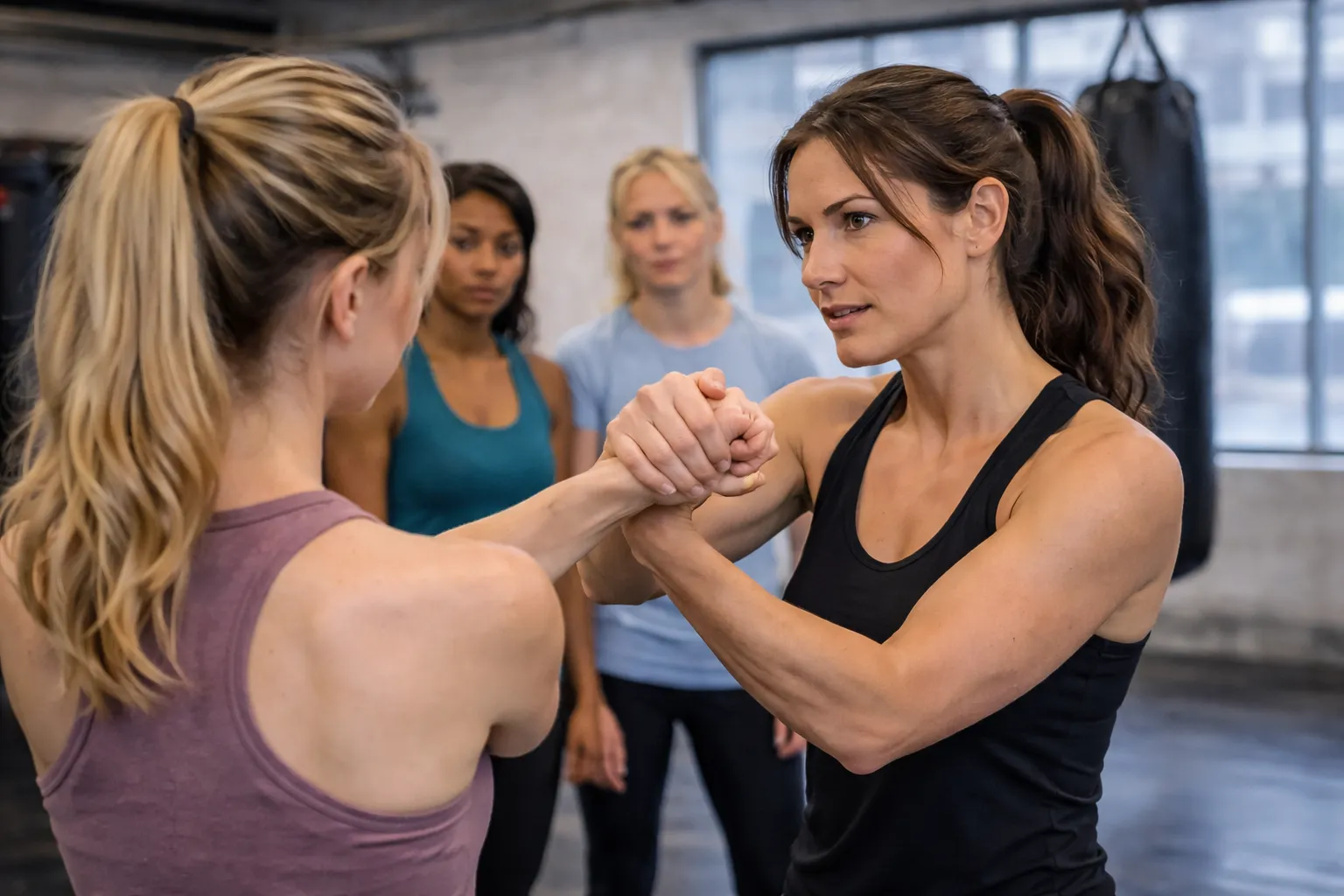

Many women do not start Krav Maga because they expect physical conflict.
They start because they have experienced pressure.
Pressure appears in everyday situations. An uncomfortable interaction on the subway. A conversation that continues after clear signals to end it. Someone standing too close. Someone ignoring boundaries. A situation that feels wrong without providing an obvious reason.
The challenge is rarely recognizing discomfort.
The challenge is deciding what to do with it.
After teaching women in New York City for many years, one pattern appears repeatedly. Most women already notice more than they give themselves credit for. The difficulty is often responding while the situation is still developing.
This is where Krav Maga training begins changing behavior.
Pressure often creates hesitation before it creates action
Many women can recall situations where they noticed discomfort immediately.
A comment felt inappropriate.
Someone's behavior felt unusual.
A situation started feeling different from everyone around it.
The awareness was already there.
What followed was hesitation.
Should I ignore it?
Am I overreacting?
Maybe I misunderstood.
Those thoughts are common because pressure creates uncertainty. People often wait for clearer evidence before responding.
The problem is that situations continue developing during that delay.
Krav Maga training addresses this directly. Students repeatedly work through situations where decisions must happen before certainty arrives. Over time, they become more comfortable acting on observations instead of waiting for perfect confirmation.
Why women in NYC experience pressure differently
Life in New York City creates constant interaction.
People share sidewalks, trains, elevators, office buildings, restaurants, and public spaces with strangers every day.
Most of these interactions are completely normal.
Some are not.
The challenge is that uncomfortable situations rarely announce themselves clearly. They often begin as small behavioral changes.
Someone continues asking questions after receiving short answers.
Someone repeatedly adjusts position to remain close.
Someone ignores signals that would normally end an interaction.
These moments do not always require physical self-defense.
They require judgment.
At Krav Maga Experts, many women discover that judgment improves before physical skills become noticeable.
Why confidence changes response timing
People often think confidence means feeling less fear.
That is not usually what happens.
Many women still experience discomfort, uncertainty, or concern during unusual situations.
The difference is that they respond sooner.
Confidence changes timing.
A woman who once tolerated an uncomfortable interaction for ten minutes may decide to leave after two. Someone who previously remained silent may establish a boundary immediately. Someone who once questioned every instinct may trust their observations more quickly.
The feeling is not always different.
The response is.
That distinction matters because timing often determines how a situation develops.
A subway interaction many women recognize
A woman enters a subway car during her evening commute.
A few stops later she notices another passenger paying unusual attention to her.
Nothing openly threatening happens.
The person continues looking in her direction. Their behavior feels slightly different from everyone else around them.
Before training, the situation may create internal debate.
After training, the process often changes.
Attention shifts toward observation.
Where is the nearest exit?
What are the available options?
Does the behavior continue?
The goal is not assuming danger.
The goal is understanding the situation more clearly.
Many women who begin women's self-defense training discover that this ability to evaluate pressure becomes useful long before physical techniques are needed.
Why training changes communication
Pressure affects communication.
People often become quieter, less direct, or less decisive when uncertainty appears.
Training creates repeated opportunities to communicate while under stress.
Students establish boundaries. They make decisions. They manage situations while pressure is present instead of waiting for it to disappear.
Over time, communication becomes clearer.
This change often appears outside the gym.
Women frequently report becoming more direct in conversations, more comfortable ending interactions, and less likely to explain away behavior that makes them uncomfortable.
The improvement comes from experience.
They have practiced responding while pressure exists.
The first changes are usually behavioral
A common misconception is that Krav Maga changes people through techniques alone.
Techniques matter.
The first changes are often behavioral.
Awareness improves.
Decision making becomes faster.
Confidence becomes more practical.
Women often notice these changes in workplaces, social settings, public transportation, and everyday interactions long before they notice major physical improvements.
That observation appears consistently among students who continue training.
What women are often looking for
Many women begin Krav Maga because they want self-defense skills.
What they often discover is something broader.
They become more comfortable handling uncertainty.
They trust their observations more.
They stop requiring complete certainty before taking reasonable action.
Those changes affect far more than personal safety.
They influence communication, decision making, and the way pressure is handled in everyday life.
That is one reason Krav Maga in NYC changes the way women respond to pressure. The training develops skills that become relevant long before physical self-defense is ever required.
FAQs
How does Krav Maga help women handle pressure?
Training helps women make decisions, communicate clearly, and respond effectively while uncertainty still exists.
Does Krav Maga reduce fear?
Many women still experience fear or discomfort. Training often changes how they respond to those feelings.
Why do women hesitate during uncomfortable situations?
Pressure creates uncertainty. People often wait for additional information before deciding how to respond.
What changes first during training?
Many students notice improvements in awareness, confidence, and decision making before major physical changes.
Is Krav Maga only useful for dangerous situations?
No. Many of the skills apply to workplaces, social interactions, public transportation, and everyday situations where pressure influences behavior.























Sign in to leave a comment.