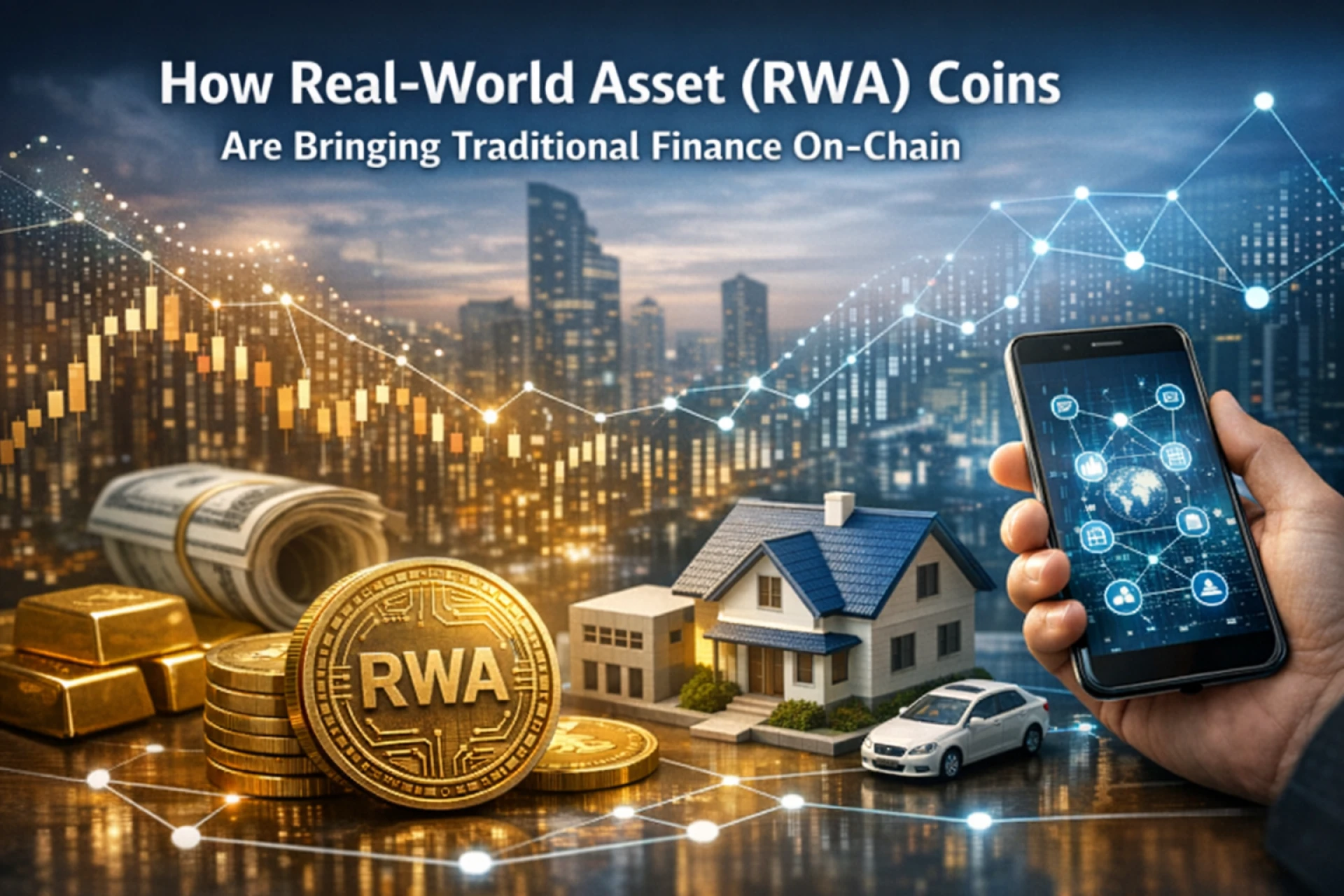

The emergence of Real-World Asset (RWA) coins marks a structural inflection point in the evolution of blockchain ecosystems. Traditionally, financial instruments such as bonds, real estate holdings, commodities, and invoices have been confined to off-chain infrastructures characterized by intermediaries, opacity, and latency. RWA coins introduce a tokenized abstraction layer that bridges these legacy systems with decentralized networks, enabling composability, programmability, and fractional accessibility.
At a foundational level, RWA tokenization involves representing tangible or intangible assets as cryptographic tokens on distributed ledgers. These tokens are typically backed by legally enforceable claims, custodial guarantees, or collateralized frameworks, ensuring that their on-chain representation corresponds to verifiable off-chain value. This convergence of traditional finance (TradFi) and decentralized finance (DeFi) redefines liquidity paradigms and introduces new vectors for capital efficiency.
Tokenization Infrastructure and Asset Digitization
The process of transforming real-world assets into on-chain instruments requires a multi-layered architecture. This includes asset origination, legal structuring, custodianship, oracle integration, and smart contract deployment. Each layer ensures the fidelity and enforceability of the tokenized asset.
Key components involved in RWA tokenization include:
- Special Purpose Vehicles (SPVs): Legal entities that isolate assets and issue tokenized representations, mitigating counterparty risk.
- Oracles: Middleware protocols that feed real-time data (e.g., asset valuation, interest rates) into smart contracts, ensuring accurate pricing mechanisms.
- Custodial Frameworks: Regulated entities responsible for holding underlying assets, bridging trust between off-chain and on-chain environments.
- Compliance Modules: KYC/AML layers embedded into token standards to align with jurisdictional regulations.
This infrastructure enables seamless digitization of traditionally illiquid assets, transforming them into divisible and tradable units within blockchain ecosystems. The involvement of a crypto coin developer becomes critical in designing interoperable token standards and ensuring smart contract robustness.
Liquidity Transformation and Market Efficiency
One of the most compelling value propositions of RWA coins lies in their ability to unlock liquidity from historically illiquid markets. Assets such as commercial real estate or private credit instruments often suffer from long settlement cycles and limited market participation. Tokenization mitigates these inefficiencies by enabling fractional ownership and secondary market trading.
The implications for market structure are significant:
- Fractionalization: High-value assets can be divided into smaller units, lowering entry barriers for retail and institutional participants.
- 24/7 Trading: Blockchain networks operate continuously, eliminating temporal constraints associated with traditional exchanges.
- Reduced Intermediation: Smart contracts automate settlement processes, reducing reliance on brokers, clearinghouses, and custodians.
- Global Accessibility: Cross-border participation becomes frictionless, as tokenized assets can be accessed via decentralized platforms.
These attributes collectively enhance capital velocity and democratize access to investment opportunities that were previously restricted to a narrow cohort of investors.
Risk Vectors and Regulatory Considerations
Despite their transformative potential, RWA coins introduce a complex risk landscape that spans both technological and legal domains. Unlike purely digital assets, RWAs are inherently tied to off-chain realities, creating dependencies that can introduce systemic vulnerabilities.
From a regulatory perspective, jurisdictions are still grappling with the classification of tokenized assets. Whether they are treated as securities, commodities, or hybrid instruments has profound implications for compliance frameworks. Additionally, the enforceability of token-holder rights depends on the legal structures underpinning the asset, such as SPVs or trust arrangements.
Technological risks also persist, including smart contract vulnerabilities, oracle manipulation, and custody failures. A misalignment between on-chain data and off-chain asset status can lead to valuation discrepancies and investor losses. Therefore, robust auditing mechanisms, decentralized oracle networks, and transparent governance models are essential to mitigate these risks.
Institutional Adoption and Future Trajectories
The integration of RWAs into blockchain ecosystems is increasingly being driven by institutional participation. Major financial entities are exploring tokenized bonds, treasury instruments, and real estate funds as a means to enhance operational efficiency and broaden investor reach. This institutional influx lends credibility to the RWA narrative and accelerates its mainstream adoption.
Looking ahead, the evolution of RWA coins is likely to be shaped by advancements in interoperability protocols, regulatory harmonization, and decentralized identity frameworks. Cross-chain solutions will enable seamless movement of tokenized assets across ecosystems, while standardized compliance layers will facilitate global scalability.
Moreover, the convergence of RWAs with emerging paradigms such as decentralized autonomous organizations (DAOs) and algorithmic credit markets could unlock novel financial primitives. For instance, tokenized invoices could be integrated into DeFi lending pools, enabling real-time credit provisioning based on verifiable cash flows.
In essence, RWA coins are not merely an incremental innovation but a foundational shift in how value is represented, transferred, and managed. By bridging the gap between physical assets and digital infrastructures, they are redefining the contours of global finance and paving the way for a more inclusive and efficient economic system.


















Sign in to leave a comment.