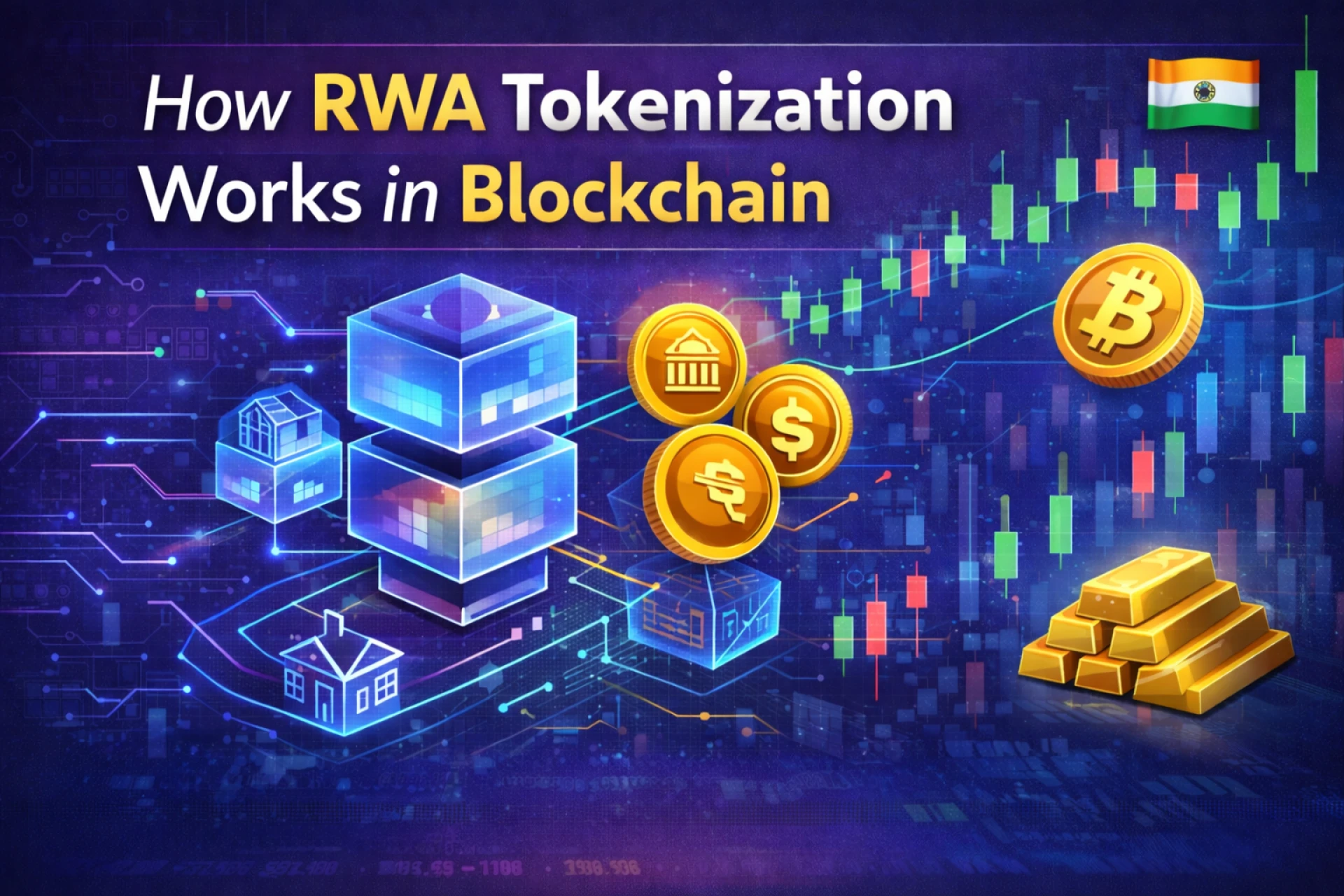

The world of cryptocurrency is evolving rapidly, and one of the most exciting innovations in recent years is RWA tokenization. It is changing the way people invest by bringing real-world assets onto the blockchain.
From real estate and gold to bonds and commodities, almost anything can now be converted into digital tokens. But how exactly does RWA (Real World Asset) tokenization work in blockchain? Let’s understand it in a simple and practical way.
What is RWA Tokenization?
RWA tokenization refers to the process of converting real-world assets into digital tokens on a blockchain. These tokens represent ownership or a share in a physical or financial asset.
For example:
- A property can be divided into multiple tokens
- Each token represents a small ownership share
- Investors can buy and sell these tokens easily
This makes investing more accessible, especially for people who cannot afford large investments.
How RWA Tokenization Works
RWA tokenization is a step-by-step process that involves multiple components. Let’s break it down:
1. Asset Selection
The first step is choosing the real-world asset to tokenize. This can include:
- Real estate
- Gold or commodities
- Bonds or treasury assets
- Art and collectibles
The asset must have clear ownership and legal documentation.
2. Legal Structuring
Before tokenization, the asset is placed under a legal framework. This ensures that the tokens represent actual ownership or rights.
This step is important to maintain trust and compliance with regulations.
3. Token Creation on Blockchain
Next, the asset is converted into digital tokens using blockchain technology.
- Smart contracts are used to create tokens
- Each token represents a fraction of the asset
- Tokens are recorded on the blockchain
This ensures transparency and security.
4. Smart Contracts Execution
Smart contracts are self-executing programs that manage the tokens. They handle:
- Ownership transfers
- Dividend or income distribution
- Compliance rules
Since they are automated, there is no need for intermediaries.
5. Listing on Platforms
Once the tokens are created, they can be listed on platforms where investors can buy and sell them.
Investors often use platforms similar to top cryptocurrency exchanges to trade tokenized assets easily.
6. Trading and Liquidity
One of the biggest advantages of RWA tokenization is liquidity.
Unlike traditional assets (like property), which are difficult to sell quickly, tokenized assets can be traded instantly.
Traders can also apply crypto trading strategies to these tokens, just like they do with cryptocurrencies.
Why RWA Tokenization is Important
RWA tokenization is gaining popularity because it solves many traditional problems.
Fractional Ownership
Investors can buy small portions of expensive assets
Increased Liquidity
Assets can be traded quickly on digital platforms
Transparency
All transactions are recorded on blockchain
Global Access
Anyone with internet access can invest
Example of RWA Tokenization
Imagine a real estate property worth ₹1 crore.
- It is divided into 1,000 tokens
- Each token costs ₹10,000
- Investors can buy as many tokens as they want
This allows small investors to participate in high-value assets.
Risks and Challenges
Despite its benefits, RWA tokenization also has some risks:
- Regulatory uncertainty in different countries
- Legal complexities
- Platform reliability
- Market volatility
Investors should always research before investing.
🇮🇳 RWA Tokenization in India
In India, the concept of RWA tokenization is still developing. However, interest is growing as more investors explore blockchain-based opportunities.
Many traders who invest in top Indian cryptocurrency assets are also exploring RWA tokens as a new investment option.
As regulations become clearer, RWA tokenization could play a major role in India’s financial ecosystem.
Future of RWA Tokenization
RWA tokenization is expected to transform the global financial system.
Large institutions are already exploring tokenized bonds, real estate, and other assets. This trend is likely to grow in the coming years, making investment more accessible and efficient.
Conclusion
RWA tokenization is bridging the gap between traditional finance and blockchain technology. By converting real-world assets into digital tokens, it offers greater accessibility, liquidity, and transparency.
As the crypto industry evolves, understanding concepts like RWA tokenization can help investors stay ahead of the curve.



















Sign in to leave a comment.