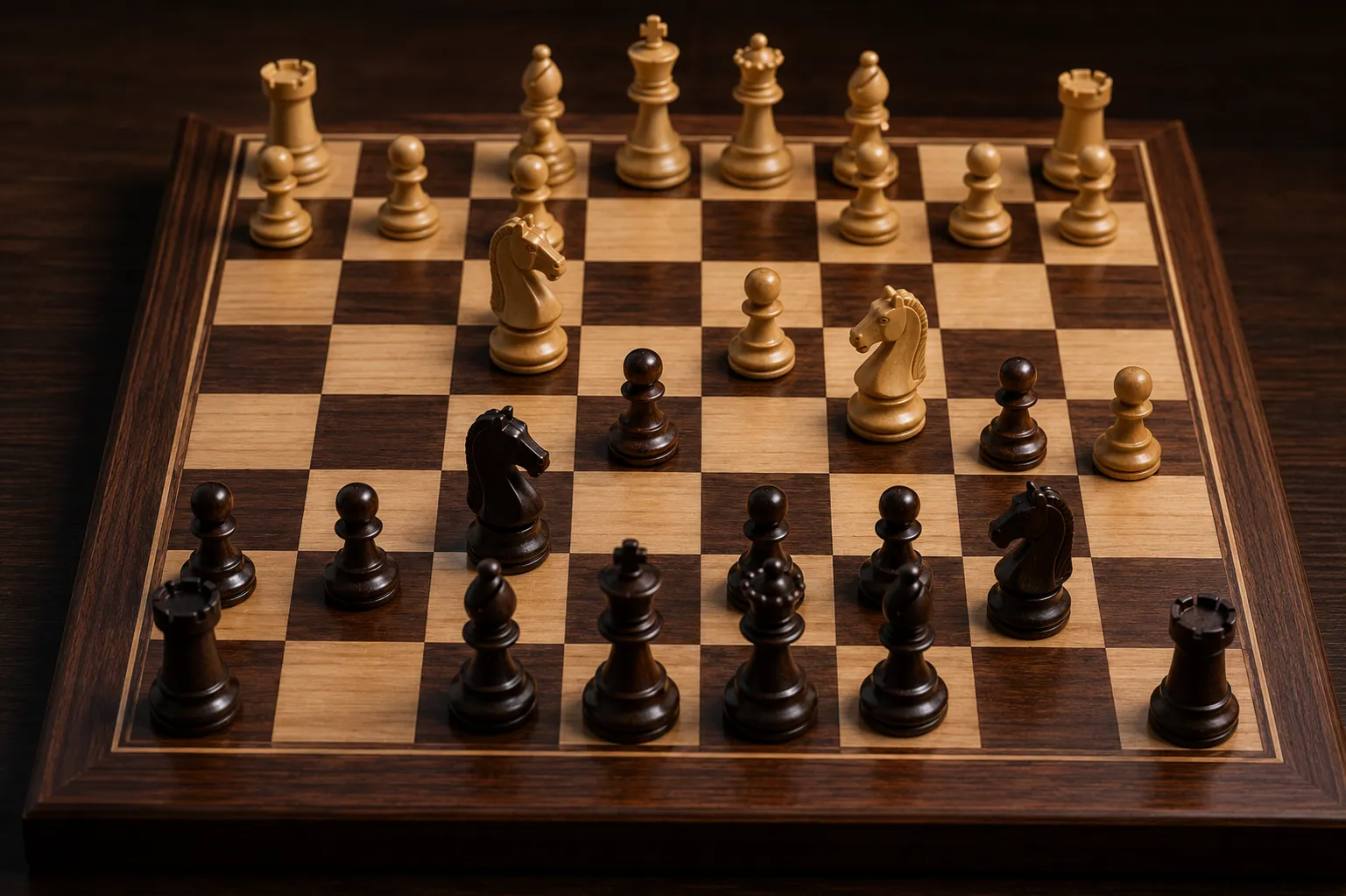

A long chess game can test much more than your opening preparation or tactical knowledge. As the game continues, you must repeatedly analyze positions, respond to your opponent's ideas, manage your clock, and make decisions even when you become mentally tired.
This is why learning How to Keep Focused During Long Chess Games is an important part of practical chess improvement.
Good concentration does not mean thinking intensely about every position. Instead, it means staying attentive, recognizing important moments, and using a reliable thinking process when the position demands it.
Why Focus Can Become Difficult During Long Games
A chess game can contain dozens of decisions, and not every position requires the same amount of attention.
During a long game, players may experience mental fatigue, time pressure, frustration after mistakes, or reduced attention during quieter positions. These factors can make it easier to overlook an opponent's threat or play a move without sufficient verification.
The challenge is therefore not simply to “think harder.”
It is to manage your attention effectively throughout the game.
Use the Clock as a Thinking Tool
Time management is an essential part of tournament chess. FIDE's Laws of Chess specify that players have a predetermined amount of thinking time and that the chess clock records the time available to each player.
Because your time is limited, you should not spend the same amount of time on every move.
Simple positions may require only a short check. Critical positions may deserve considerably more attention.
Before investing significant time, ask:
- Has the position changed?
- Is there a tactical threat?
- Are exchanges available?
- Has my opponent created a new weakness?
- Is this a critical decision?
This approach helps you connect your thinking time with the importance of the position.
Follow a Consistent Thinking Process
Long games become easier to manage when you use a repeatable process.
Instead of immediately searching for a move, first understand what is happening on the board.
Ask:
What changed after my opponent's move?
Then ask:
What is my opponent threatening?
After identifying the important features of the position, look for candidate moves. In tactical positions, calculate forcing possibilities such as checks, captures, and threats. Then compare the resulting positions before making your decision.
Finally, perform a short blunder check:
What is my opponent's strongest response?
A consistent routine gives your attention a clear direction and reduces the temptation to play the first move that looks attractive.
Avoid Playing on Autopilot
One of the easiest ways to lose concentration is to assume that a familiar position requires no serious thought.
A move may look natural because you have played similar positions many times. However, the exact position is always different.
Before making a routine move, pause briefly.
Check:
- Are any pieces undefended?
- Has a tactical opportunity appeared?
- Is my king safe?
- What checks does my opponent have?
- What captures are available?
- Did the last move create a new threat?
This does not mean calculating everything from scratch.
It simply means verifying that your intended move actually fits the current position.
Recognize Critical Moments
Not every position deserves the same level of calculation.
A critical moment may occur when:
- A tactical sequence is possible
- A major exchange is being considered
- The pawn structure is about to change
- A king becomes exposed
- A piece can be sacrificed
- A pawn break can transform the position
- The opponent creates a serious threat
When such a moment appears, increase your level of attention.
In quieter positions, you can use the time to improve your pieces, review your plan, or identify useful pawn breaks.
This variation in thinking intensity can help you manage mental effort over a long game.
Don't Let One Mistake Control the Rest of the Game
A blunder can create a strong emotional reaction.
You may replay the mistake in your mind and think about what you should have done differently. But the game continues from the current position.
After a mistake, try to separate two questions:
What happened?
and
What can I do now?
The first question belongs to post-game analysis.
The second question belongs to the current game.
Return your attention to the board and reassess the position objectively. Your opponent may have an advantage, but you still need to identify their threats and find the most practical response.
Stay Focused When You Are Winning
A large advantage can create its own concentration problem.
When players believe that the game is nearly won, they may stop checking their opponent's ideas carefully. This can lead to unnecessary risks or simple tactical oversights.
Being ahead does not remove the need for accurate thinking.
Continue asking:
- What is my opponent's strongest idea?
- Can they create counterplay?
- Is my king safe?
- Can I simplify safely?
- Is there a tactical problem with my intended move?
If the position can be converted through a simpler method, there may be little reason to create unnecessary complications.
Stay Composed When You Are Worse
Losing positions can also damage concentration.
A player may become frustrated and start searching only for spectacular combinations. Sometimes this creates additional problems.
Instead, continue evaluating the position.
Look for:
- Defensive resources
- Tactical opportunities
- Counterplay
- Active piece placement
- Possible exchanges
- Ways to create practical problems
A difficult position still deserves accurate thinking.
The objective is not necessarily to prove that the position is equal. It is to find the best decision available in the position you actually have.
Give Your Mind Short Resets
During a long game, your attention may drift.
When you notice this happening, use a short reset instead of immediately moving.
Take a moment to look at the entire board.
Then ask:
- What changed?
- What is my opponent's main idea?
- Which pieces are loose or poorly placed?
- Are there forcing moves?
- What does the position require from me?
This simple routine can bring your attention back to the position.
The purpose is not to spend more time automatically.
The purpose is to make your thinking more deliberate.
Manage Physical Preparation
Long tournament games can also involve extended periods of sitting and mental effort. Preparing appropriately can make it easier to remain comfortable and attentive.
Before a serious game, get adequate rest and arrive prepared for the expected playing conditions.
Follow the tournament's rules concerning food, drinks, breaks, and other equipment. FIDE's Laws of Chess and related regulations define the conditions under which official games are played.
Good physical preparation cannot replace chess skill, but avoiding unnecessary discomfort can help you concentrate on the position.
Practice Long-Game Concentration
If you want to improve your ability to stay focused, include longer time-control games in your training.
Afterward, analyze the game and identify moments where your concentration changed.
Ask yourself:
- Where did I start making decisions too quickly?
- Did I miss a threat because I was distracted?
- Did I spend too much time on an unimportant position?
- Did frustration affect my next move?
- Did I perform a blunder check before critical moves?
This type of review can help you identify your personal concentration patterns.
You can also practice calculation without moving the pieces, analyze complete games, and solve positions that require sustained thought.
Build a Reliable Long-Game Routine
Learning How to Keep Focused During Long Chess Games is less about forcing yourself to concentrate intensely for hours and more about developing habits that bring your attention back to the position.
Use your clock intelligently.
Recognize critical moments.
Avoid automatic moves.
Reset after mistakes.
Continue checking your opponent's ideas when you are winning.
And remain objective when the position becomes difficult.
These habits can make your decision-making more consistent during long games.
Conclusion
Long chess games challenge your ability to remain attentive while managing limited time and changing positions.
The most useful approach is to create a reliable thinking routine rather than trying to calculate deeply on every move. Pay more attention when the position becomes critical, use quieter moments efficiently, and perform a final check before important decisions.
When mistakes happen, return your attention to the current position instead of allowing frustration to control the rest of the game.
With regular practice and post-game analysis, you can become more comfortable handling the mental demands of longer chess games.
The goal is not perfect concentration from beginning to end.
The goal is to recognize when your attention has drifted—and deliberately bring it back to the board.
Book a trial lesson with an MM Chess Academy coach →
Frequently Asked Questions
Q1. Why is it difficult to stay focused during a long chess game?
Long games require repeated calculation and decision-making. Time pressure, mental fatigue, emotional reactions, and reduced attention during quiet positions can make concentration more difficult.
Q2. Should I spend the same amount of time on every chess move?
No. Critical positions generally deserve more attention, while simple positions may require only a brief evaluation and blunder check.
Q3. How can I avoid playing chess on autopilot?
Pause before routine moves and check what changed, what your opponent is threatening, and whether any tactical opportunities or weaknesses have appeared.
Q4. What should I do after making a blunder?
Accept the mistake and focus on the current position. Identify your opponent's threats and look for the best practical response rather than continuing to replay the previous position.
Q5. Can long chess games help improve concentration?
Playing longer games gives you opportunities to practice sustained decision-making. Reviewing those games afterward can also help identify when and why your concentration decreased.
























Sign in to leave a comment.