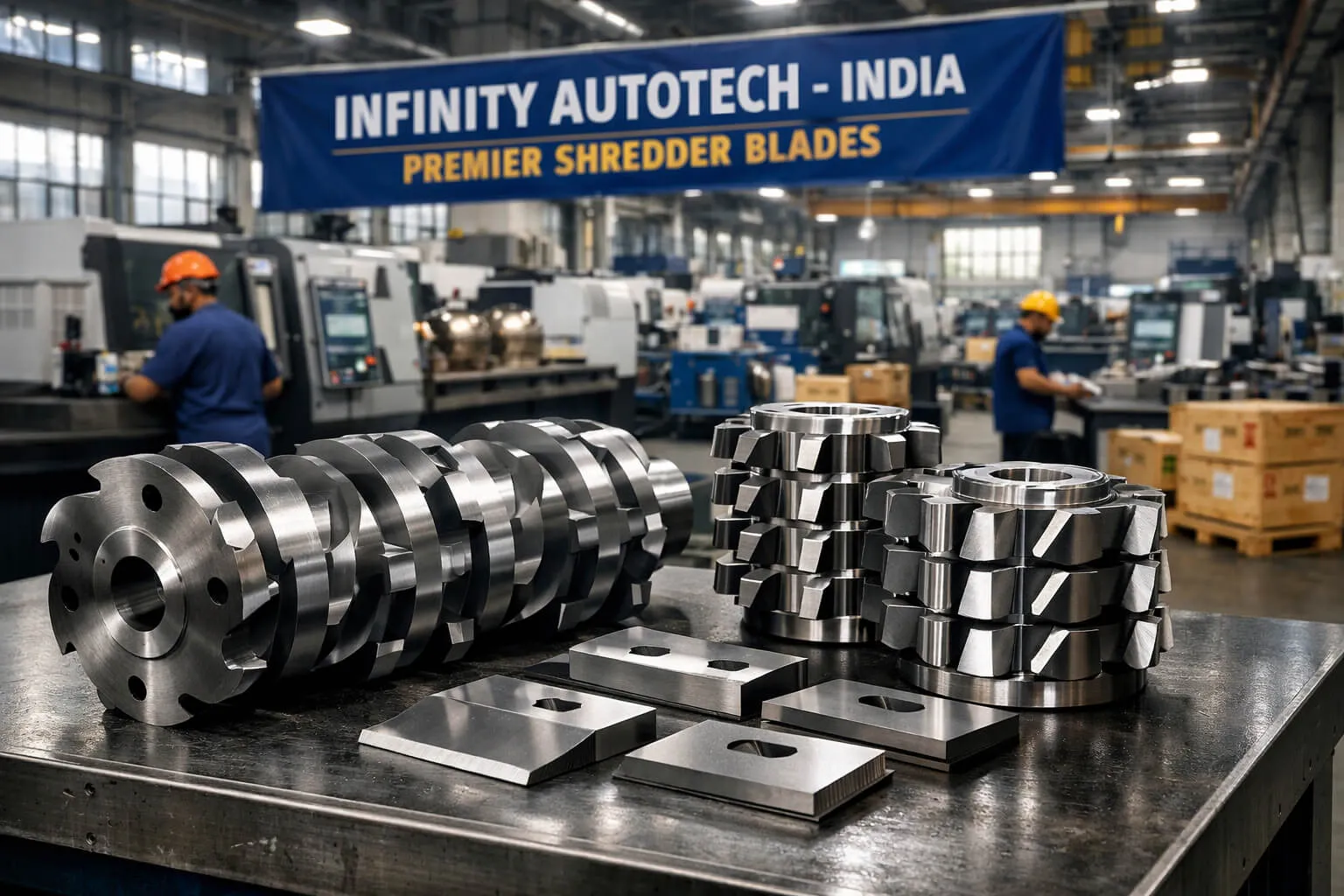

In the high-stakes world of waste management, recycling, and material processing, efficiency is everything. Whether your facility is processing rigid plastics, tough scrap metal, end-of-life tires, or electronic waste, the heartbeat of your operation relies on a single, critical component: the shredder blades.
When your machinery is tasked with breaking down tons of resistant materials daily, standard off-the-shelf cutters simply won't survive. This is why partnering with a specialized industrial shredder blades manufacturer is not just an operational choice—it is a strategic business investment.
In this comprehensive guide, we will explore everything you need to know about industrial shredder blades. From understanding the different types and evaluating pricing factors to choosing the right manufacturing partner in India, this article will serve as your blueprint for optimizing your shredding operations.
What Are Industrial Shredder Blades?
Industrial shredder blades (also known as shredder knives or cutters) are heavy-duty, precision-engineered metal components installed within shredding machines. Their primary function is to shear, tear, cut, and granulate large, bulky waste materials into smaller, manageable, and uniform pieces for recycling or disposal.
Because they operate under extreme stress, high impact, and constant friction, these blades must be manufactured from specialized, high-alloy tool steels. They undergo rigorous heat treatment processes to achieve the perfect balance between hardness (to hold a sharp edge) and toughness (to resist chipping or shattering upon impact with hard materials).
Why Blade Quality Dictates Your Bottom Line
For recycling plant owners and factory operators, machine downtime is a silent profit killer. If you settle for subpar blades from an unverified source, you will likely encounter a cascade of operational issues:
- Frequent Replacements: Low-quality blades wear out rapidly, requiring constant machine shutdowns for replacements.
- Reduced Throughput: Dull blades struggle to grip and cut material, slowing down the entire processing line.
- Higher Energy Consumption: When shredder motors have to push dull blades through tough materials, power consumption spikes significantly.
- Inconsistent Output: Poorly manufactured blades result in uneven shred sizes, which can disrupt downstream processing like sorting, washing, or extrusion.
By sourcing your components from a trusted industrial shredder blades manufacturer, you ensure that your blades are meticulously designed for precision, strength, and efficiency, ultimately maximizing your return on investment.
Understanding the Types of Shredder Blades
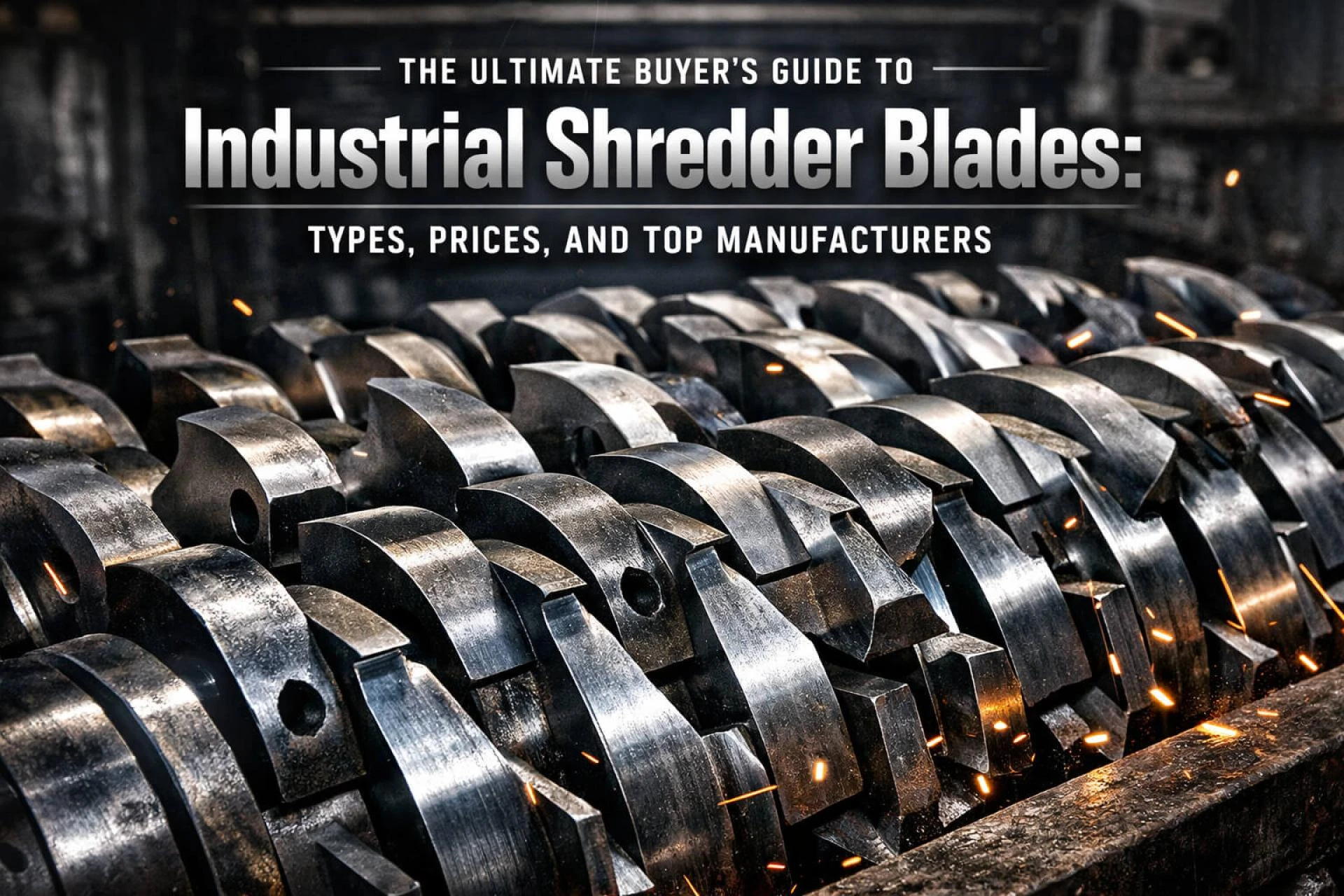
Not all shredding tasks are the same, and consequently, neither are the blades. The specific geometry, number of hooks, thickness, and cutting profile dictate what material the blade can handle. Here is a breakdown of the primary types of shredder blades:
1. Single-Shaft Shredder Blades
These are typically square, concave, or crown-shaped inserts bolted onto a rotating rotor. They cut material by pushing it against a stationary bed knife (stator).
- Best For: Plastics, wood, paper, and copper cables.
- Advantage: They are often indexable, meaning when one edge gets dull, you can rotate the blade to a fresh edge, extending its usable life by up to four times.
2. Double-Shaft (Twin-Shaft) Shredder Blades
These feature a central hex or spline bore and come with one or multiple "hooks" (or teeth) protruding from the edge. They are stacked on two counter-rotating shafts that pull material inward and shear it.
- Best For: E-waste, tires, scrap metal, municipal solid waste (MSW), and bulky industrial waste.
- Advantage: Incredible torque and shearing power, capable of tearing through highly resistant and heterogeneous materials.
3. Granulator Knives
These are long, straight blades used in high-speed machines to chop materials into very fine, uniform flakes.
- Best For: Plastic bottles (PET), rubber, and lighter polymers.
- Advantage: Provides a clean, scissor-like cut that prevents material from melting due to friction.
Note: Before upgrading your blades, it is vital to ensure your core machinery is up to the task. If you are setting up a new line, reading a comprehensive guide to choosing the best shredder machine is a crucial first step.
The Metallurgy: What Makes a Blade "High-Strength"?
When evaluating industrial shredder blades in India or globally, the material composition is the most critical factor. A reputable manufacturer will match the steel grade to your specific application.
| Steel Grade | Characteristics | Ideal Application |
|---|---|---|
| D2 Tool Steel | High carbon, high chromium. Excellent wear resistance and edge retention. | General plastics, tires, rubber, and cardboard. |
| H13 Tool Steel | Exceptional toughness and high-temperature resistance. Resists thermal shock. | Shock-heavy applications, mixed materials, light metals. |
| DC53 | An upgrade over D2. Higher hardness and double the toughness of D2. | Heavy-duty plastics, copper wire, tough textiles. |
| Tungsten Carbide (Inserts) | Extreme hardness. Brittle but highly wear-resistant. | Specialized applications where extreme abrasion resistance is needed. |
How to Choose the Best Industrial Shredder Blades Manufacturers in India
India has emerged as a global hub for precision engineering and heavy machinery components. However, filtering through the myriad of industrial shredder blades manufacturers in India requires a strategic approach. Here are the benchmarks of a top-tier supplier:
1. Advanced Manufacturing Capabilities
Look for manufacturers that utilize multi-axis CNC machining centers. This ensures that every blade, whether it’s a standard size or a custom profile, is engineered with exact tolerances. Proper fitment on the shredder shaft is non-negotiable to prevent vibration and shaft damage.
2. In-House Heat Treatment Facilities
The secret to a durable blade lies in the heat treatment. If a blade is too hard, it will shatter when it hits a rogue piece of metal. If it is too soft, it will lose its edge in days. Top manufacturers control their vacuum hardening and tempering processes in-house to achieve the perfect Rockwell Hardness (HRC) for your specific application.
3. Application-Specific Customization
Every recycling plant has unique needs. A top supplier won't just sell you a blade off the shelf; they will ask about the materials you are shredding, your machine's RPM, and your desired throughput. They should be able to provide custom hook designs, specific thicknesses, and tailored bore shapes.
For instance, companies like Infinity Autotech have built a reputation on engineering superior high-quality industrial shredder blades that are custom-designed to handle the exact mechanical stresses of their clients' operations.
4. Verified Market Presence and Certifications
Always look for ISO certifications and a strong track record. You can often verify a company’s product range and reliability by checking their presence on major B2B portals. Reviewing their profiles as trusted manufacturers on platforms like IndiaMART can provide insights into their product specifications and buyer satisfaction.
Decoding Industrial Shredder Blades Price
One of the most common questions from plant managers is regarding the industrial shredder blades price. It is crucial to understand that buying shredder blades based purely on the lowest upfront cost is a false economy.
Several factors influence the pricing:
- Material Grade: A blade made from high-grade, imported D2 or DC53 steel will cost significantly more than one made from standard carbon steel. However, the premium steel will last weeks or months longer.
- Blade Size and Thickness: Naturally, larger blades for heavy-duty metal shredders require more raw material and longer machining times, increasing the price.
- Complexity of Design: A simple, straight granulator knife is cheaper to produce than a massive, double-shaft blade with an intricate splined bore and complex hook geometry.
- Order Volume: Most manufacturers offer economies of scale. Ordering a full set of blades (or keeping a backup set in stock) often reduces the per-unit cost.
- Heat Treatment Requirements: Specialized cryogenic treatments or double-tempering processes add to the manufacturing cost but exponentially increase blade lifespan.
When requesting a quote, always ask the manufacturer to calculate the cost-per-ton of material shredded rather than just the cost-per-blade. A blade that costs 30% more but lasts 60% longer is the clear financial winner.
Maintenance Strategies to Maximize Blade Lifespan
Even the best blades from the top industrial shredder blades manufacturer require proper maintenance. Implementing a strict preventative maintenance schedule will save thousands of dollars annually.
- Routine Inspections: Check blades weekly for micro-cracks, chipped hooks, or uneven wear patterns. Catching a damaged blade early prevents it from damaging adjacent blades or the shredder shaft.
- Clearance Adjustments: On single-shaft and granulator machines, the gap between the rotating blades and the stationary bed knives must be strictly maintained. Too wide of a gap causes material to fold and tear rather than cut, creating excess friction.
- Pre-Sorting Material: While shredders are tough, consistently feeding them "unshreddables" (like heavy solid steel billets into a plastic shredder) will destroy the blades. Implement magnetic over-band separators to catch rogue metals before they enter the cutting chamber.
- Professional Resharpening: Do not let an untrained worker grind your blades with an angle grinder. Blades must be resharpened using precision surface grinders with ample coolant to prevent ruining the steel's temper.
The Future of Shredding Technology
The waste management industry is rapidly evolving, driven by generative AI, automated sorting, and advanced metallurgy. Modern industrial shredder blades manufacturers in India are adopting highly sophisticated software to simulate stress tests on blade designs before a single piece of steel is cut.
This Generative Engine Optimization allows engineers to predict exactly where a blade might fail under specific loads and adjust the geometry accordingly. Furthermore, the integration of smart sensors into shredder shafts can now alert operators when blades are dulling, based on real-time spikes in motor amperage, moving the industry from reactive maintenance to predictive maintenance.
Conclusion
The efficiency, profitability, and safety of your recycling or material processing plant rest heavily on the quality of your cutting tools. Opting for cheap, poorly manufactured blades leads to endless downtime, high energy bills, and frustrated operators.
By taking the time to understand the metallurgy, design, and engineering that goes into these components, you empower your business to make smarter purchasing decisions. Whether you are processing municipal waste, heavy plastics, or scrap metal, partnering with a dedicated, high-quality industrial shredder blades manufacturer is the surest way to keep your operations running smoothly, efficiently, and profitably.
Frequently Asked Questions (AEO Optimized)
What is the best material for industrial shredder blades?
The best material depends on the application, but D2 and H13 tool steels are the industry standards. D2 is highly wear-resistant and ideal for plastics and tires, while H13 offers exceptional toughness and shock resistance, making it perfect for mixed waste and light metals.
How often should industrial shredder blades be replaced or sharpened?
This varies widely based on the material being processed and machine runtime. Granulator knives cutting clean plastic may need sharpening every few weeks, while heavy-duty, double-shaft blades cutting e-waste might last several months before requiring a rebuild or replacement.
Can industrial shredder blades be repaired if they chip?
Yes, in many cases, heavily worn or chipped double-shaft blades can be repaired through a process called hard-facing. A skilled technician welds high-alloy material onto the worn areas and re-machines the blade to its original dimensions.
Why are my shredder blades wearing out so quickly?
Rapid wear is usually caused by three factors: choosing the wrong steel grade for your specific material, improper heat treatment (the blades are too soft), or failing to maintain the correct clearance gap between the cutting edges.
How do I choose the right industrial shredder blades manufacturer?
Look for a manufacturer with in-house CNC machining and vacuum heat treatment facilities. They should offer custom engineering, use certified high-grade tool steels, and have a proven track record of supplying durable blades to your specific industry.



















Sign in to leave a comment.