

Recent security breach news often highlights sophisticated network intrusions and devastating ransomware deployments. However, the initial compromise vector in many of these high-profile incidents remains remarkably consistent: a targeted phishing attack. Threat actors continually refine their methodologies, transitioning from easily identifiable mass-spam campaigns to highly coordinated, technically complex operations. Understanding the precise workflow of these modern attacks is critical for security engineers and IT administrators aiming to fortify their perimeters. This analysis examines the technical lifecycle of a contemporary credential harvesting operation, tracing the execution from the initial infrastructure setup to the final data exfiltration.
Phase 1: Malicious Infrastructure and Domain Setup
The lifecycle of a phishing attack begins long before any malicious emails reach a target's inbox. Threat actors must first establish an infrastructure that can withstand automated security scans and manual inspection.
Typosquatting and Homograph Techniques
Adversaries frequently register domains that closely mimic legitimate corporate or financial institutions. They utilize typosquatting—registering common misspellings—or internationalized domain name (IDN) homograph attacks, where characters from different scripts are used to create visually identical URLs. For example, replacing a Latin "a" with a Cyrillic "а" creates a deceptive domain that appears legitimate to the human eye but directs traffic to an attacker-controlled server.
Securing the Rogue Assets
To establish false legitimacy, attackers routinely acquire TLS/SSL certificates for these fraudulent domains. By leveraging automated certificate authorities, threat actors ensure their malicious landing pages display the standard padlock icon in the victim's browser. This step is crucial for bypassing basic user suspicion and evading legacy web filters that block HTTP traffic.
Phase 2: Crafting the Deceptive Payload
Once the infrastructure is active, the focus shifts to developing the mechanism for credential theft. Modern adversaries rarely rely on static HTML forms. Instead, they deploy dynamic frameworks designed to bypass modern authentication controls.
Adversary-in-the-Middle (AiTM) Frameworks
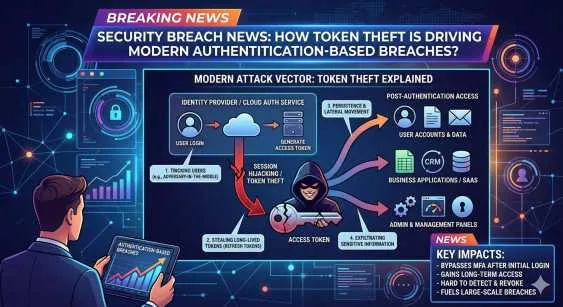
To defeat Multi-Factor Authentication (MFA), attackers increasingly utilize Adversary-in-the-Middle (AiTM) frameworks such as Evilginx2 or Modlishka. These tools function as reverse proxies. When a user navigates to the malicious domain, the proxy silently forwards the request to the legitimate service. The user interacts with the actual login page, but all traffic flows through the attacker's server. This setup allows the threat actor to intercept not only the username and password but also the active session cookie generated after a successful MFA prompt.
Phase 3: Delivery Mechanisms and Evasion Tactics
Delivering the phishing link to the target requires bypassing multiple layers of email security, including SPF, DKIM, and DMARC protocols.
Exploiting Legitimate Services
Rather than sending emails from their newly registered domains—which lack reputation and are often flagged by spam filters—attackers often compromise legitimate email marketing platforms or utilize hijacked corporate accounts. By sending the phishing attack payload through a trusted infrastructure, the emails successfully navigate standard authentication checks.
Obfuscating the Payload
To prevent email security gateways from analyzing the malicious URL, adversaries employ various obfuscation techniques. They may embed the link within a QR code (Quishing), hide it behind a legitimate cloud storage redirect, or use CAPTCHA gateways. These methods force human interaction before the final payload is revealed, effectively blinding automated security scanners to the ultimate destination.
Phase 4: Credential Harvesting and Exfiltration
The critical juncture of the attack occurs when the target interacts with the deceptive message. According to recent security breach news, the workflow at this stage often operates with automated precision.
Upon clicking the link or scanning the QR code, the user is directed to the AiTM proxy server. The user inputs their credentials and completes the MFA challenge. The proxy instantly captures these authentication tokens. Because the proxy passes the legitimate session cookie back to the user, the victim is seamlessly logged into their actual account, remaining entirely unaware that a compromise has occurred. Meanwhile, the attacker uses the intercepted session cookie to gain immediate, unauthenticated access to the corporate environment from a separate location, setting the stage for lateral movement or data theft.
Mitigating Credential Theft at the Perimeter
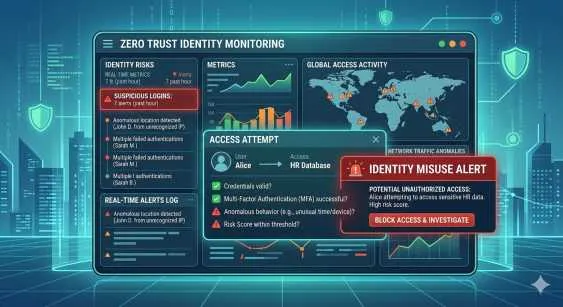
Defending against an advanced phishing attack requires a multi-layered security architecture. Relying solely on user awareness training or basic MFA is no longer sufficient. Organizations must implement FIDO2-compliant security keys, which are fundamentally resistant to AiTM proxy attacks because the authentication cryptographic exchange is bound to the specific domain being accessed. Furthermore, deploying advanced endpoint detection and response (EDR) agents and continuously monitoring SIEM logs for anomalous login locations or impossible travel scenarios can help security teams detect and isolate compromised accounts before significant damage occurs.
































Sign in to leave a comment.