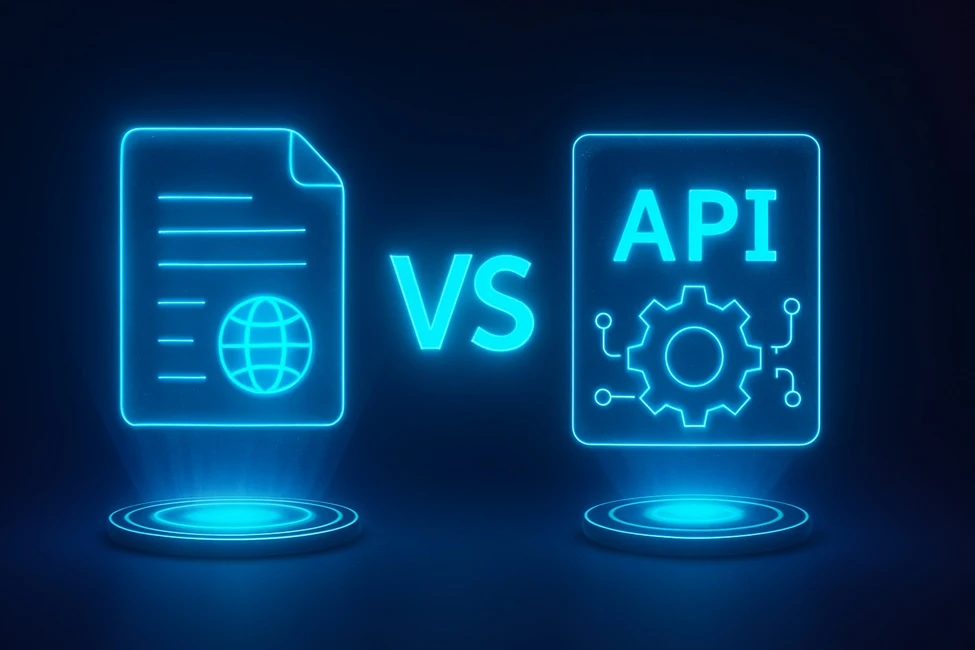

In recent conversations about modern architecture and integration strategies, terms like MCP vs API naturally emerge when comparing new standards such as the Model Context Protocol against more conventional interface conventions. Understanding the differences between what constitutes a protocol versus what defines an API is crucial for developers trying to design robust systems. The distinctions go beyond terminology, reaching into implementation, abstraction, usage intent, and system design. This article explores these differences deeply, offers insights from industry trends, and supports developers in making educated decisions.
What Are Protocols?
A protocol refers to a formal specification of rules that govern communication between independent systems. It defines how messages must be constructed, how they are exchanged, and how responses must be formatted. A protocol ensures that two parties speak a common language to exchange data reliably and predictably.
In networked systems, communication protocols determine message size, structure, ordering, and error handling. A developer using a protocol must understand and follow these rules precisely. For example, REST is an architectural style with set constraints such as statelessness, uniform interface, and caching, which deliver benefits in scalability, simplicity, reliability, and portability.
What Are APIs?
An API, or Application Programming Interface, represents the exposed interface of an application or service that allows code to interact with it. It specifies a set of functions, methods, or endpoints that external clients may call to use functionality or data. APIs abstract complexity; they provide a simplified, consistent way to access system behavior without requiring deep knowledge of internal protocols or state machines.
APIs may build upon one or more protocols. For instance, a web API may rely on HTTP as the underlying protocol while presenting endpoints and parameter formats to developers. An API defines the “what,” whereas a protocol lays down the “how.”
Contrast: Protocol vs API
1. Abstraction Level
A protocol describes rules for communication and data exchange at a low level. It defines messaging patterns, formats, timing, and error handling. By contrast, an API is a higher-level abstraction. It enables callers to invoke methods or endpoints without concern for how the underlying protocol is implemented.
One perspective from a software engineering discussion captures this clearly:
“A protocol is a specification, a set of rules a message (and its response) must follow. An API is the part of an application that is exposed to the user.”
Further, another explanation adds nuance:
“When you are writing at the protocol level, you use tools that do not know the protocol. You must ensure compliance. When you interact at the API level, you rely on tools that understand the API and the underlying protocol.”
2. Purpose and Use Case
Protocols enable interoperability among agents, services, and systems. They are foundational for messaging and networked communication. APIs, on the other hand, empower developers to use services, libraries, or applications in high-level, accessible ways. APIs facilitate integration, automation, and reusability.
3. Evolution and Ecosystem
Protocols evolve slowly because changes can break interoperability across many systems. By contrast, APIs may change more frequently and offer versioning methods to maintain backward compatibility. APIs add convenience and developer experience enhancements on top of durable protocols.
4. Documentation and Developer Experience
APIs have become increasingly user-centric. For example, API documentation now often includes interactive tools, specification-driven portals, and analytics to monitor usage. These trends improve developer experience and adoption.
Industry Trends and Statistics
API Adoption and Usage
APIs remain mission-critical across enterprises. Surveys indicate that 97 percent of enterprise leaders regard APIs as essential, and 90 percent of developers use APIs regularly. Internal APIs are particularly prevalent, with 94 percent of respondents currently using them. In comparison, third-party APIs are used by 82 percent of organizations. Private and public APIs are also in active use, though at lower percentages.
Growth of the API Economy
The global API economy is expanding rapidly. Forecasts estimate its value will reach $267 billion by 2025, underlining how central APIs have become to business and innovation. The API management market is expected to grow at 35 percent by 2025, reflecting increasing investment in API infrastructure and security.
Emerging Trends in 2025
Several trends are redefining how APIs are designed, discovered, and secured:
- API-as-a-Product: Organizations increasingly treat APIs as standalone products—branded, monetized, managed through SLAs, and supported with developer portals.
- AI Integration: Artificial intelligence is shaping API design, automation, and governance. APIs will need enhanced control, visibility, and security frameworks to support AI-driven workflows.
- Security Concerns: More organizations are experiencing API-related security incidents. In 2024, over 55 percent reported security events, with 20 percent facing losses exceeding $500,000. AI-enhanced attacks are already emerging.
- Standards Diversification: REST remains common, yet GraphQL is gaining ground. A survey found 61 percent of respondents use GraphQL in production; AsyncAPI use has surged to 17 million downloads in 2023, up from 5 million in 2022.
- Ecosystem Thinking: APIs are evolving from point-to-point interfaces to ecosystem connectors. Open data sharing, cross-sector collaboration, and regulation-driven integration are driving new ecosystem architectures.
Protocols, APIs, and MCP
What Is MCP?
The Model Context Protocol (MCP) defines a standardized framework designed to connect AI agents with external tools and data sources. It supports secure two-way communication, contextual metadata tagging, and interoperability across platforms. It is architected to serve as a protocol.
How MCP Relates to APIs?
MCP acts as a protocol that enables API-like interactions—shaping how AI systems ingest data, transform context, and invoke tools. It defines messaging rules and behaviors at a lower level, over which APIs may be built or exposed.
Leading organizations have already begun adopting MCP. OpenAI integrated MCP into ChatGPT, Agents SDK, and its Responses API in March 2025. Google DeepMind, Microsoft, GitHub, and others have followed suit—highlighting MCP’s growing role in agentic infrastructure.
Security remains a concern. Researchers in April 2025 identified vulnerabilities in MCP, including prompt injection and tool-permission attacks.
Why Developers Should Care?
- Architecture Clarity: Understanding the difference between protocols and APIs helps developers design clearer, more maintainable systems.
- Interoperability: Protocols like MCP can enable powerful integrations across agentic ecosystems. Developers must know the rules under the hood.
- Security Focus: Protocols and APIs must be governed securely. Awareness of vulnerabilities—such as those found in MCP—is critical for trusted system design.
- Trend Awareness: APIs are evolving. Developers must track shifts in design approaches, governance models, and the rise of AI-driven tooling.
- Strategic Thinking: Protocols underpin reliable, large-scale communication. APIs drive usability and innovation. A balanced mastery will enable systems that are both robust and approachable.
Conclusion
Protocols establish the rules that ensure predictable communication. APIs build on those foundations to deliver accessible, developer-focused functionality. Recognizing how each function—and where emerging technologies like MCP fit—is vital to effective system design. The API ecosystem is expanding rapidly, becoming central to strategy, security, and user experience. By understanding both, developers can build systems that are interoperable, future-proof, and secure.

























Sign in to leave a comment.