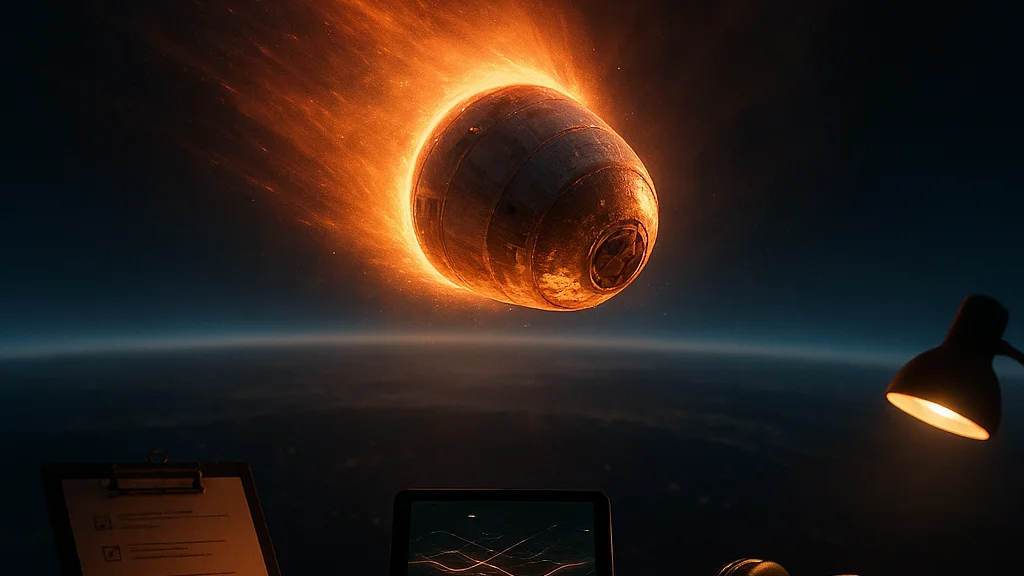

A falling spacecraft, a working day, and a modern attention test
A 1,300-pound NASA probe making an uncontrolled plunge through Earth’s atmosphere sounds like pure space-news drama, and on one level it is. Reports on July 15, 2026, have focused on the expected reentry of a small NASA spacecraft component, the uncertainty around where surviving debris might land, and the familiar public question, should anyone worry. NASA and independent trackers have long explained that most uncontrolled reentries end with little or no harm to people on ground, because much of the hardware burns up and Earth is mostly ocean. Still, the phrase uncontrolled plunge travels faster than a bullet train across chat apps, news alerts, and office Slack channels. It interrupts attention before facts have even settled.
That makes this event unusually relevant to remote work and productivity. Distributed teams now operate in a climate where high-velocity information arrives without context, where one startling headline can fracture a morning of focused work across five time zones. A manager in Singapore sees a push alert, a designer in Berlin posts a meme, an analyst in Toronto opens a live tracker, and by the time Tokyo logs in, half the team has shifted from planned priorities to ambient speculation. Work does not stop with a loud crash. More often, it dissolves quietly, minute by minute.
For readers following the incident itself, WriteUpCafe has separate coverage in NASA’s 1,300-Pound Probe Makes Uncontrolled Earth Atmosphere Plunge in 2026 and NASA’s 1,300-Pound Probe Plunges Uncontrolled Through Earth’s Atmosphere. My concern here is different. I want to examine what this kind of event reveals about modern work, why rare public-risk stories trigger disproportionate workplace distraction, and how teams can respond with calm systems instead of improvisation.
Remote productivity is not only about time management. It is also about attention defense under conditions of uncertainty.
Seen through that lens, a spacecraft reentry is less a curiosity than a stress test. It shows whether a team has built rituals strong enough to absorb noise without becoming brittle. In Japanese practice, kintsugi teaches that breakage can reveal structure. The fracture line tells truth. So does a day like this.
What is actually happening with the NASA probe, and why uncertainty drives attention
The core facts matter, because productivity advice without factual grounding becomes mist. NASA has dealt with uncontrolled reentries before, especially involving retired satellites, upper stages, and mission hardware no longer capable of controlled disposal. In these cases, orbital decay eventually brings object back into denser layers of atmosphere. Friction increases, temperatures rise sharply, and many components are destroyed before reaching surface. The remaining uncertainty usually involves timing, fragmentation, and whether any heat-resistant pieces survive.
Public interest spikes because the event combines three elements that human attention finds irresistible: visible danger, incomplete information, and a countdown. According to NASA’s Orbital Debris Program Office and long-running public guidance from agencies such as the European Space Agency, the statistical risk to any individual from reentry debris is extremely low. Reuters and the Associated Press have repeatedly noted in past reentry events that experts consider the chance of a person being struck vanishingly small. Yet low probability does not mean low distraction. A rare event with cinematic framing often outweighs routine tasks with immediate business value.
There is also a structural reason this spreads so efficiently in remote organizations. Office workers once had limited channels for interruption, perhaps a television in lobby, perhaps a colleague mentioning breaking news. Now every worker carries a private newsroom in pocket and a public reaction engine on desktop. That multiplies exposure.
- Push alerts reach employees before internal priorities do.
- Algorithmic feeds amplify emotionally charged headlines over measured explanation.
- Group chats reward fast reactions, not verified understanding.
- Remote workers often consume news and work in same digital environment, with no physical boundary.
When those conditions align, a story like this becomes a productivity sink even if no operational change is required. That is why managers should not dismiss the issue as trivial. The attention loss is real, and it is measurable in delayed responses, fragmented documents, missed handoffs, and shallow work.
Uncertainty is expensive. Teams pay for it first in attention, then in coordination, and only later in output.
The practical lesson begins with separating event magnitude from attention magnitude. They are not same thing. A probe reentry may pose minimal public danger while producing maximum workplace distraction. Mature teams know how to make that distinction quickly.
Why rare-risk headlines hit remote teams harder than traditional offices
Remote work was sold, correctly in many cases, as a path to autonomy and deep focus. But autonomy without containment can become drift. The home office, kitchen table, coworking space, and train seat all place workers closer to the open web than the old office did. That proximity changes how news events interact with performance. A dramatic science headline no longer sits outside the workflow. It enters same screen as budget model, code repository, customer ticket, and calendar.
Psychologists have long studied the availability heuristic, the tendency to judge likelihood by how easily examples come to mind. A spacecraft falling from orbit is vivid. Quarterly reconciliation is not. So the brain misprices importance. In distributed teams, that cognitive bias gets reinforced socially. One person posts, “Did you see this?” Another adds a map. A third asks whether flights are affected. Within ten minutes, a topic with no bearing on deliverables has become shared emotional weather.
Gallup and Microsoft have, in separate workplace research over recent years, documented the costs of interruption, meeting overload, and fragmented attention in hybrid and remote environments. Their work does not focus on space debris, of course, but the pattern is relevant. Workers lose efficiency not only from large disruptions, but from repeated context switching. A sensational news alert is context switching with extra adrenaline attached.
Traditional offices had one hidden advantage, collective filtering. People learned what deserved concern by observing room. If nobody in operations changed course, perhaps the event was just news. Remote teams lack that ambient calibration. Silence can mean ignorance, not stability. Employees then seek clarity by checking more sources, which deepens distraction.
- Alert arrives, usually stripped to its most dramatic phrase.
- Worker checks social feeds for context, encountering speculation and jokes.
- Team chat lights up, creating pressure to acknowledge event.
- Focus block breaks, and original task becomes harder to resume.
- Residual anxiety lingers, reducing quality even after worker returns.
This sequence is common enough that it deserves operational response. Kaizen begins with observation, not blame. If your team loses ninety minutes to a low-relevance headline, that is not moral failure. It is signal that your communication design is incomplete.
Another factor is time-zone asymmetry. Uncontrolled reentry windows are estimates, not exact appointments. One region may be sleeping while another is speculating in real time. By the time all staff are online, the conversation has already forked into rumor, reassurance, and fatigue. Without a simple protocol, leaders end up repeating themselves across channels, which compounds noise.
The management playbook: how to keep output steady during high-noise events
When a public event captures attention but does not directly threaten operations, leaders should resist two bad instincts. The first is overreaction, sending dramatic all-hands messages that elevate the issue. The second is denial, pretending workers can simply ignore it. Better approach is short, factual, and procedural. Think of shinkansen timing, precise, calm, no wasted movement.
Start with a single source of internal truth. One message in the main operations channel should summarize known facts, name the source, state whether there is any business impact, and tell staff what to do next. If there is no operational impact, say so clearly. If employees in a specific geography should monitor local civil guidance, specify geography. Ambiguity invites side conversations.
For managers, I recommend a four-step response that can be used for spacecraft reentries, severe weather headlines, internet outage rumors, or geopolitical scares that have limited direct effect on business.
- Verify: confirm facts through trusted institutions or established wire services such as Reuters or AP.
- Scope: determine whether the event affects employee safety, infrastructure, customers, or compliance.
- Signal: post one concise team update with next action, even if action is “continue planned work.”
- Shield: protect focus blocks by moving nonessential discussion into a dedicated thread.
This matters because remote productivity is built less on motivation than on friction control. Every unnecessary branch in communication tree costs energy. During noisy news cycles, leaders should also make decision rights explicit. Who decides whether regional staff pause work? Who monitors external developments? Who updates customers if needed? If nobody knows, everyone monitors everything. That is pure waste.
There is useful parallel with incident response in engineering teams. Mature organizations define severity levels. Not every alert becomes a fire. You can adapt same logic for attention events:
- Level 0: no business impact, no action required, optional discussion thread only.
- Level 1: localized awareness, managers check in with affected staff, no workflow change.
- Level 2: probable operational disruption, activate contingency staffing or schedule shifts.
- Level 3: direct safety or infrastructure risk, formal incident command begins.
The NASA probe story, for most teams, belongs at Level 0 or Level 1. Labeling it as such prevents escalation by emotion. This is where Zen discipline helps. The aim is not to suppress curiosity. The aim is to see event clearly, then return to task without residue. A calm system is kinder than repeated reassurance.
What 2026 has changed: AI summaries, alert overload, and the new speed of distraction
The year 2026 has sharpened this problem in several ways. First, AI-generated summaries now spread breaking news faster than original reporting. That can be helpful when summaries are accurate, but it also means half-digested interpretations appear in workplace channels within seconds. Employees often read a summary card, not a full report, then react to that abstraction. Nuance disappears. A reentry window becomes “probe crashing today.” A low-risk assessment becomes “debris could hit Earth,” which is technically true but cognitively distortive.
Second, collaboration tools have become more integrated with external information. Calendar apps surface headlines. browsers embedded in chat tools make source-switching frictionless. Phone operating systems bundle live activities and predictive alerts. Productivity stack and media stack are now braided together. This saves time in some cases, but during sensational events it widens interruption surface.
Third, many companies in 2026 are leaner than they were two years ago. After rounds of cost control across technology, media, consulting, and startups, fewer teams have slack capacity. That makes attention loss more expensive. When a five-person product team loses one hour each, there may be no buffer left in sprint plan. The cost is not abstract. It shows up in postponed release candidate, slower customer response, or late executive deck.
Recent reporting across major outlets has also shown stronger public awareness of orbital debris and satellite traffic. That awareness is justified. Low Earth orbit is busier, commercial launches remain frequent, and regulators worldwide continue debating debris mitigation standards. But awareness without literacy can create false urgency. People know enough to worry, not enough to calibrate.
For remote teams, the 2026 adjustment is clear: attention governance must become part of operations. Not wellness theater, not vague encouragement to focus, but actual design.
- Default notification settings should be reviewed quarterly.
- Breaking-news chatter should have a dedicated social channel, separate from execution channels.
- Managers should maintain a template for public-event updates.
- Teams should define when curiosity is acceptable and when response is required.
If that sounds rigid, consider the alternative. On noisy days, many organizations improvise same conversation ten times in ten different places. That is not flexibility. That is entropy with emojis.
Readers interested in broader self-management systems can also explore WriteUpCafe’s related coverage through its Productivity topic page, where many of these principles appear in less dramatic settings, from calendar control to focus recovery.
Case study thinking: how different remote teams should respond today
Not every distributed team should respond to the NASA probe story in same way. Context decides. A global software company, a freelance design collective, and a remote customer support operation each face different exposure to public events. Good productivity practice means tailoring response, not copying a generic memo.
Consider a software engineering team with members in Japan, India, Germany, and the United States. The event has no direct infrastructure impact, but engineers are highly online and likely to share live updates. Here, the right move is a brief note from engineering operations: “We are monitoring verified reporting. No service impact expected. Please keep discussion in #social-news and continue sprint priorities.” This preserves autonomy while protecting build channels. If one engineer is truly anxious, manager can handle it in one-to-one check-in rather than turning concern into group drift.
Now consider a customer support team serving travelers or families. Public headlines can trigger inbound questions even when company has no connection to aerospace. In that case, productivity depends on prewritten macros. Support leads should prepare a short response: acknowledge the news, advise customers to consult official local authorities for safety guidance, and avoid speculation. This reduces handling time and prevents agents from improvising risky claims.
Freelancers face different challenge, because they lack institutional filtering. Solo workers can lose half day to ambient news without anyone noticing. For them, a personal protocol helps:
- Check one trusted source at fixed times only.
- If no local impact is reported, mute related keywords for next two hours.
- Finish current work block before reopening news.
- Capture any anxiety in notebook, not browser tabs.
This is simple, but simplicity is power. Zen practice often returns to one breath, one action. Productivity under uncertainty works same way. One verified source, one decision, one next task.
There is another lesson here for leaders who manage knowledge workers. Curiosity is not enemy. Shared interest in science can build culture. The mistake is allowing every interesting event to enter same lane as execution. Separate lanes create freedom. Teams can discuss the wonder of orbital mechanics at lunch, and still ship on time by evening.
For readers who want the incident-specific context before applying these work lessons, the two WriteUpCafe reports linked earlier provide a useful factual baseline. That order matters. First facts, then workflow.
What to watch after the reentry, and the durable lesson for remote productivity
By end of day, this NASA probe story will likely resolve in familiar fashion. Tracking agencies will narrow the window, observers will report that most material burned up, and any surviving debris, if confirmed at all, will almost certainly not justify the scale of public fascination it briefly generated. Then the next alert will arrive, perhaps weather, perhaps markets, perhaps another orbital object. The cycle is continuous. That is exactly why teams need durable habits rather than event-specific improvisation.
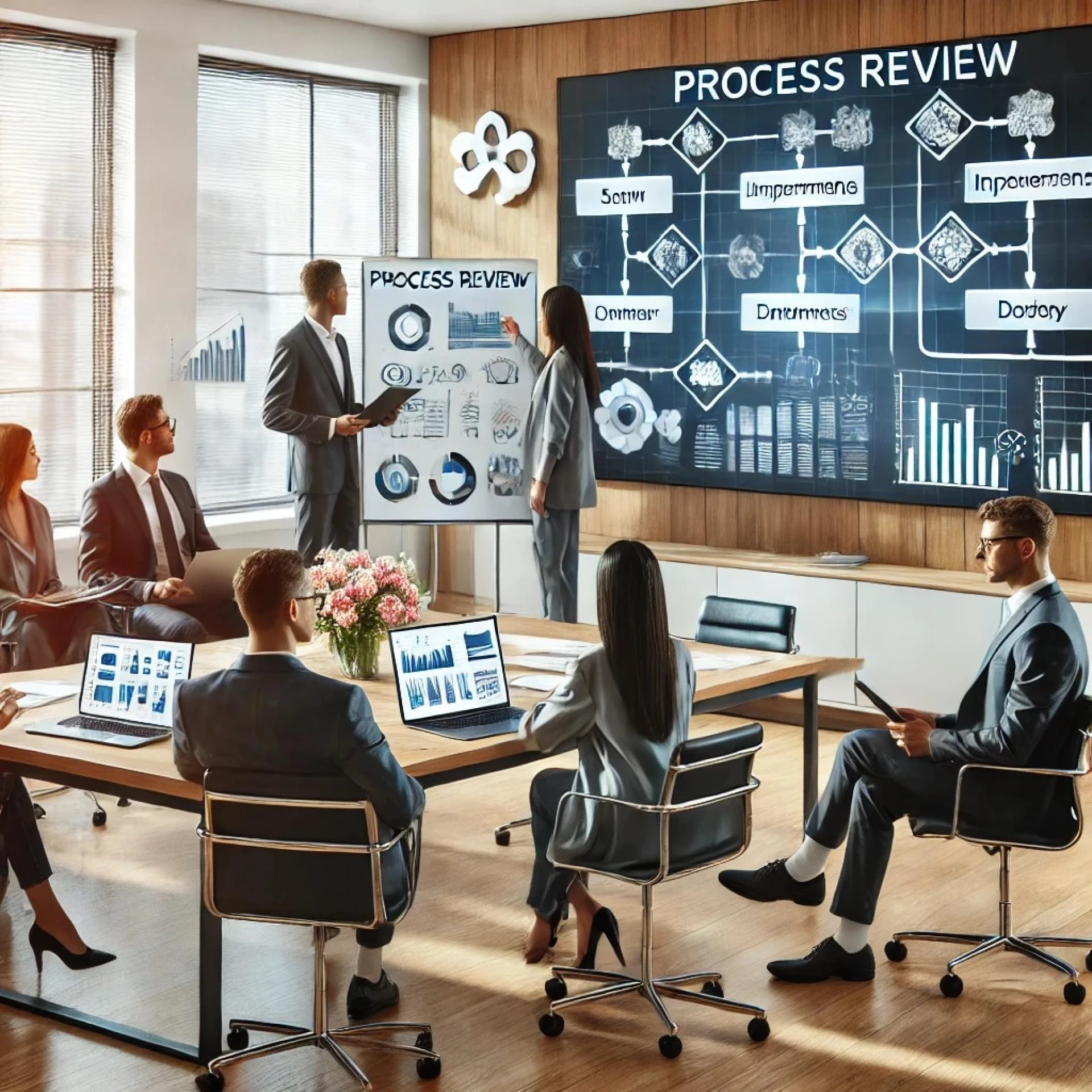
The first thing to watch is how your team behaved, not only what happened in sky. Did people know where to look for verified information? Did managers communicate once or repeatedly? Did project channels stay clean? Did anyone lose a full morning because no one said, calmly, “No action required”? This is post-incident review for attention, and it should be as honest as any technical retrospective.
The second thing to watch is emotional residue. Even low-risk public events can leave workers unsettled, especially those already carrying stress from family care, health concerns, or regional instability. Productivity systems that ignore human state become brittle. A short manager check-in can help: “Anything operational you need from me?” Keep it practical. Care does not need performance.
The third thing is whether your organization learns. Kaizen is small improvement repeated. After today, many teams could make one useful change:
- Create a breaking-news protocol.
- Clarify which channels are for execution only.
- Reduce default notifications.
- Assign one person to monitor external events during work hours when needed.
- Document a focus-recovery routine after interruption.
Those are not dramatic reforms. They are the kind that hold under pressure. Like kintsugi, they strengthen line where break once appeared.
The deeper lesson from an uncontrolled atmospheric plunge is almost philosophical. Much of remote work is an attempt to create order without shared physical space. We cannot stop objects from falling out of orbit, and we cannot stop headlines from arriving. We can decide whether every disturbance enters our mind with equal force. Productive teams are not the ones that never look up. They are the ones that look up, assess clearly, and return to ground task with steady hands.
That is discipline, not detachment. It is also respect, for colleagues, for time, and for work that deserves full attention. On a day when a spacecraft falls through atmosphere, that may be the most useful thing to remember.























Sign in to leave a comment.