
ne Classes vs On-Campus Learning in 2026: Which Is Better?
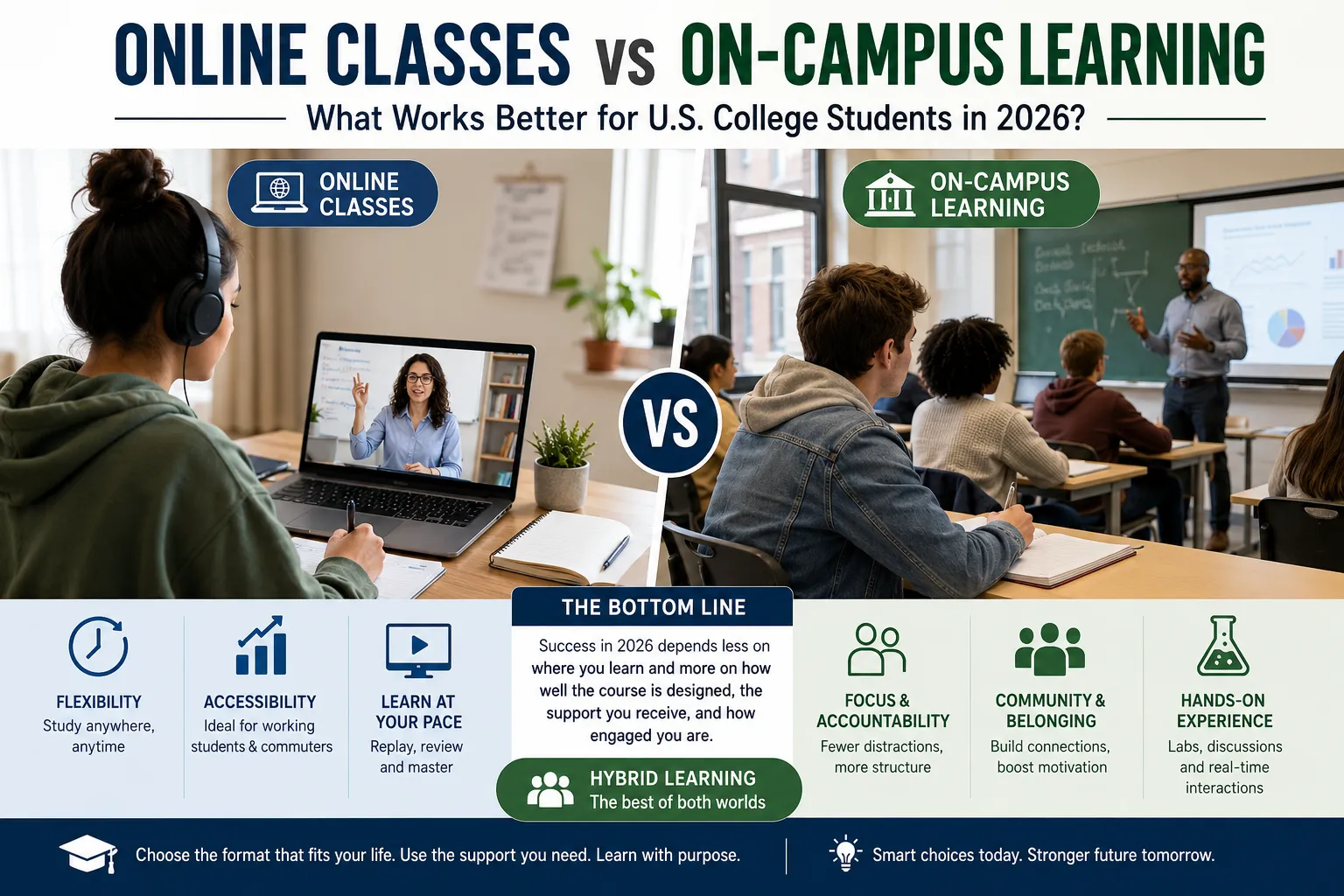
Online classes and on-campus learning are both popular choices in 2026. Most U.S. colleges now offer a mix of online, in-person, and hybrid courses. Students have more flexibility than ever before. But many still ask the same question: Which option works better?
The answer depends on the student. Recent research shows that success is less about where you learn and more about how well the course is designed and supported. The best choice often comes down to your schedule, learning habits, and personal goals.
Online Classes Give Students More Flexibility
Flexibility is the biggest reason students choose online learning.
Many college students work jobs, care for family members, or commute long distances. Online classes make it easier to fit education into a busy life. For some students, studying online is the only realistic way to earn a degree.
Online learning also lets students learn at their own pace. They can pause a lecture, replay a difficult section, or review materials whenever they need to. This can be especially helpful in subjects like math, science, and engineering.
Imagine learning a tough algebra concept. In a classroom, the professor may move on after a few minutes. Online, you can replay the explanation until it makes sense. That simple difference can reduce stress and improve understanding.
As digital learning grows, students are becoming more comfortable using online tools. Many now compare information from different sources before accepting an answer. This habit helps them become stronger and more independent learners.
Why Students Still Prefer Campus Learning
Even with the rise of online education, many students still prefer being on campus.
One major reason is focus. It is often easier to stay engaged when you are sitting in a classroom with classmates and instructors around you. Physical attendance creates structure and accountability.
Campus learning also offers something online classes cannot fully replace: human connection.
Students learn from conversations before class, group study sessions, campus events, and casual discussions with professors. These experiences help build confidence and a sense of belonging.
Research shows that students who feel connected to their college community are more likely to stay enrolled and complete their degrees. That is why many students continue to prefer face-to-face lectures, labs, and hands-on learning activities.
College is not only about earning credits. It is also about building relationships, gaining experience, and developing skills that last beyond graduation.
Hybrid Learning Combines the Best Parts of Both
Many colleges now see hybrid learning as the future.
Hybrid courses combine online and on-campus learning. Students might watch lectures online during the week and attend discussions or labs in person.
This approach gives students flexibility while keeping the benefits of classroom interaction. It also allows instructors to use class time more effectively.
For example, students can learn the basics of a topic online. Then they can spend classroom time asking questions, solving problems, or working on projects. This often creates a more active learning experience.
The most successful hybrid programs are carefully planned. Schools must decide which activities work best online and which require face-to-face interaction. When done well, hybrid learning can improve both convenience and engagement.
Student Support Makes a Bigger Difference Than Format
The research points to one clear lesson: support matters more than the learning format itself.
A student in a well-supported online course can perform just as well as a student sitting in a classroom. On the other hand, students often struggle when support systems are weak.
Online tutoring has become one of the most valuable learning tools in recent years. Studies show that students who receive tutoring often earn better grades and gain more confidence in their abilities.
This is especially important for students taking challenging courses. Instead of spending hours stuck on one problem, they can get help from an expert and move forward.
Many students also use platforms like Expertsmind.com that connect learners with subject experts for academic guidance. These resources can help students understand difficult topics, prepare for exams, and stay on track throughout the semester.
The key is using these tools to learn rather than simply looking for answers. Students who ask questions and engage with the material gain the most benefit.
So, Which Option Is Better in 2026?
There is no single winner in the online classes vs on-campus learning debate.
Online learning works well for students who need flexibility and independence. Campus learning works well for students who value structure, community, and face-to-face interaction. Hybrid learning offers a balance between the two.
The strongest predictor of success is not the format. It is the quality of the course, the support available, and the effort students put into their studies.
As colleges continue improving digital tools and hybrid programs, the gap between online and classroom learning will become smaller. Students will have more freedom to choose the learning style that fits their lives.
The best choice in 2026 is the one that helps you stay engaged, get support when you need it, and keep moving toward your goals.

























Sign in to leave a comment.