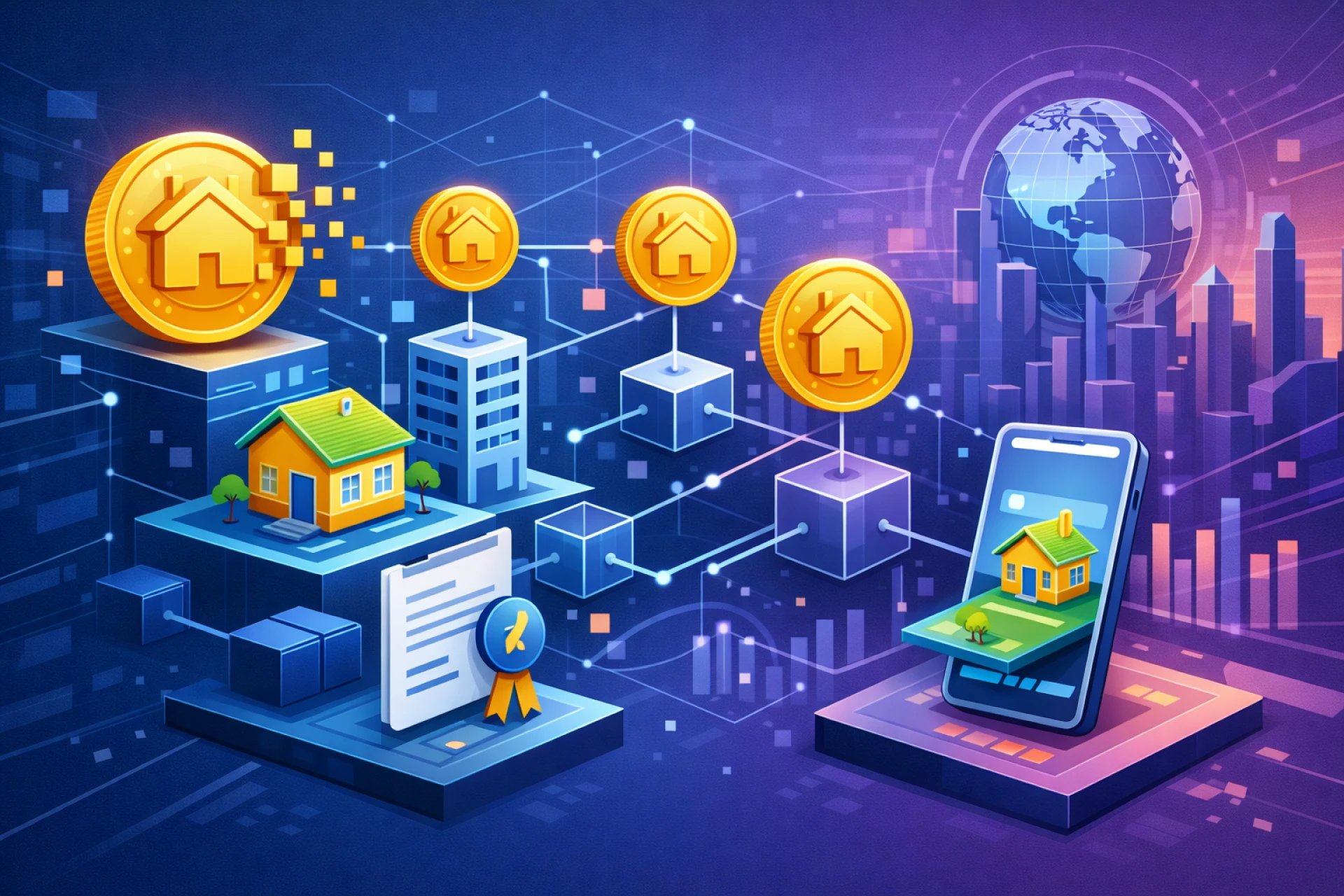

Real estate has traditionally been one of the most valuable yet rigid asset classes in the global economy. Property ownership is capital intensive, geographically bound, slow to transact, and burdened by layers of legal and administrative complexity. Despite its scale and importance, the sector has lagged behind other asset classes in adopting modern financial infrastructure.
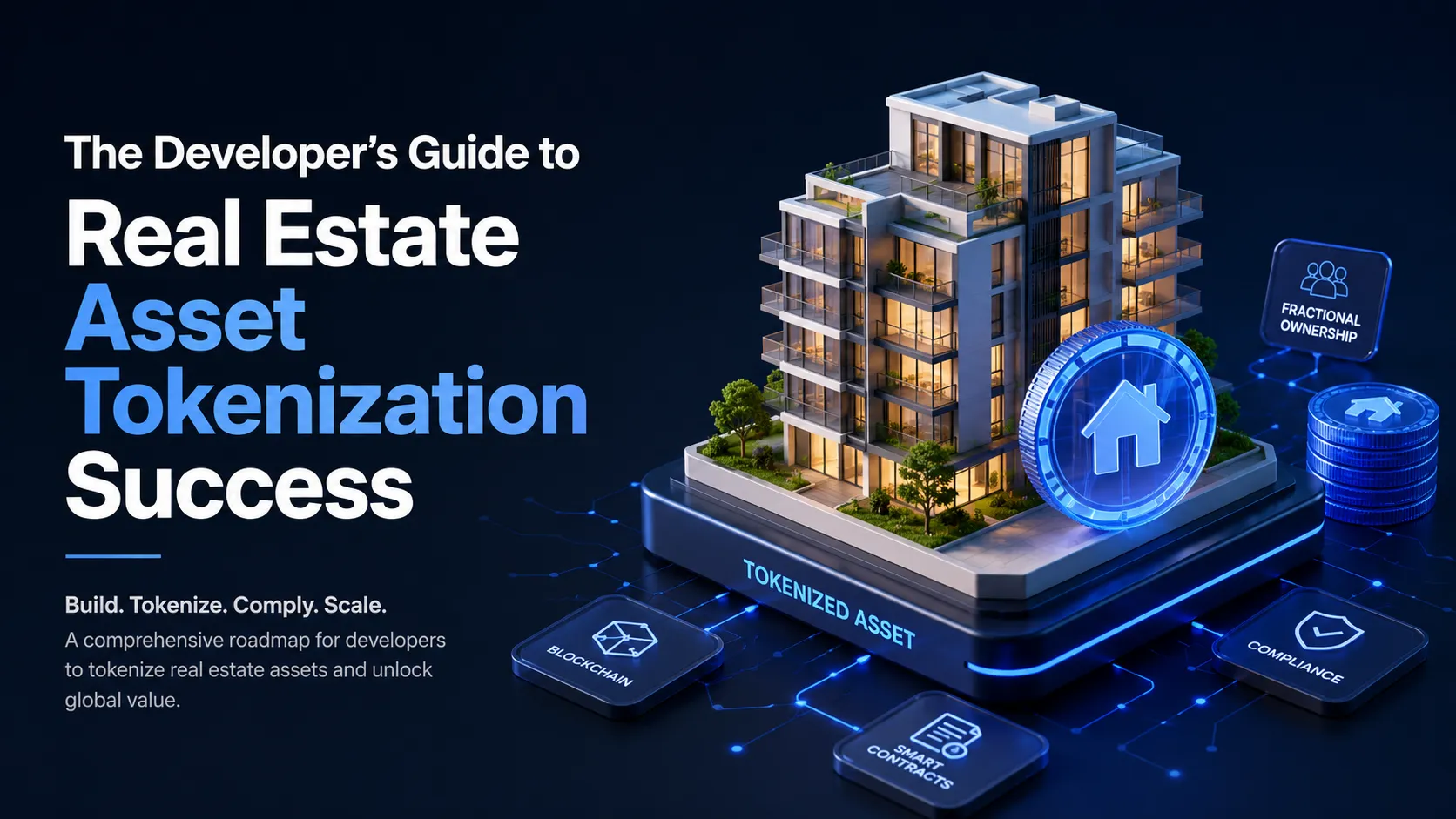
Real estate tokenization development is changing this reality. By converting property rights into programmable digital tokens on blockchain networks, real estate is evolving from a static physical asset into a dynamic, software driven financial instrument. Ownership, income distribution, governance, compliance, and liquidity can now be encoded directly into the asset itself.
This shift is not incremental. It represents a fundamental transformation in how property is owned, traded, financed, and managed. Real estate is no longer just bricks and land. It is becoming programmable capital.
What Is Real Estate Tokenization Development?
Real estate tokenization development refers to the process of representing property ownership or economic rights as blockchain based digital tokens. These tokens can represent full ownership, fractional interests, income rights, or governance privileges linked to a physical or income generating property.
Unlike simple digitization of documents, tokenization embeds logic into the asset. Smart contracts define how ownership transfers occur, how revenue is distributed, how compliance rules are enforced, and how the asset interacts with external systems.
At its core, tokenization development includes:
• Legal structuring of the underlying property
• Smart contract design for ownership and rights management
• Blockchain infrastructure selection
• Investor access and compliance logic
• Lifecycle automation from issuance to trading and settlement
The result is a property asset that behaves like software.
Why Real Estate Is Ripe for Programmability
Real estate has structural inefficiencies that make it ideal for tokenization.
High capital barriers exclude most investors
Illiquidity locks value for years or decades
Manual processes increase transaction costs
Cross border investment is complex and risky
Revenue distribution is slow and opaque
Programmable assets directly address these challenges by embedding automation, transparency, and divisibility into the asset itself.
Understanding Property as a Programmable Asset
What Does Programmable Mean in Real Estate?
A programmable real estate asset is one whose behavior is governed by code rather than manual intervention. Rules are predefined and executed automatically based on on chain logic.
This means the asset can:
• Distribute rental income automatically
• Enforce transfer restrictions
• Execute compliance checks before transactions
• Trigger governance votes
• Adjust rights based on conditions
The property becomes an active participant in financial workflows rather than a passive object.
Core Components of Real Estate Tokenization Development
Legal Asset Structuring
Tokenization does not replace legal ownership. It restructures how ownership is represented.
Methods include:
• Special purpose vehicles holding property titles
• Trust based ownership models
• Profit participation agreements
• Lease or revenue backed instruments
Each model defines what the token legally represents, whether equity, income rights, or debt exposure.
Smart Contract Architecture
Smart contracts form the programmable layer of tokenized real estate.
Key contract functions include:
• Token issuance and supply control
• Ownership transfer rules
• Dividend and yield distribution
• Voting and governance mechanisms
• Compliance enforcement
Contracts ensure that asset behavior is predictable, transparent, and automated.
Blockchain Infrastructure Selection
Different blockchains offer varying tradeoffs between scalability, security, cost, and ecosystem maturity.
Selection depends on:
• Transaction volume requirements
• Regulatory environment
• Investor accessibility
• Integration needs
The infrastructure layer defines how efficiently the asset operates.
Fractional Ownership: Redefining Property Access
How Fractionalization Works
Tokenization allows a single property to be divided into thousands or millions of digital units. Each token represents a proportional claim on the asset.
This enables:
• Lower investment minimums
• Portfolio diversification
• Global investor participation
• Easier capital formation
Fractional ownership is not new, but tokenization makes it scalable and liquid.
Economic Impact of Fractional Real Estate
Fractional tokens unlock dormant capital by making real estate accessible to smaller investors and institutions alike. This expands demand, improves price discovery, and accelerates capital flow into property markets.
Smart Contracts and Automated Property Operations
Rental Income Distribution
One of the most powerful features of programmable real estate is automated cash flow management.
Methods include:
• Periodic on chain revenue calculations
• Proportional distribution to token holders
• Transparent accounting records
• Real time payment execution
This eliminates delays, disputes, and manual reconciliation.
Expense Management and Reserves
Smart contracts can also manage expenses such as maintenance, taxes, and insurance by allocating funds automatically based on predefined rules.
On Chain Governance and Decision Making
Token Based Voting Rights
Token holders can participate in property governance using voting mechanisms encoded in smart contracts.
Decisions may include:
• Renovation approvals
• Lease changes
• Property sale triggers
• Management appointments
Voting power is proportional to ownership, ensuring alignment between capital and control.
Transparent Governance Records
All governance actions are recorded on chain, creating immutable audit trails and reducing conflicts.
Compliance and Regulatory Logic Built In
Automated Compliance Enforcement
Real estate tokenization development allows regulatory rules to be enforced directly at the asset level.
Examples include:
• Investor eligibility checks
• Jurisdictional restrictions
• Transfer lockup periods
• Reporting obligations
Compliance becomes a function of code rather than manual oversight.
Reducing Regulatory Risk
By embedding compliance into smart contracts, tokenized real estate platforms reduce operational risk while increasing investor confidence.
Liquidity Transformation Through Tokenized Markets
Secondary Market Enablement
Traditional real estate transactions take months. Tokenized assets can be traded in minutes on compliant digital marketplaces.
Liquidity benefits include:
• Faster entry and exit
• Improved price discovery
• Reduced transaction friction
• Continuous market access
Liquidity does not mean speculation. It means optionality and flexibility.
Capital Efficiency Gains
Investors can rebalance portfolios without waiting for full property sales, unlocking capital that would otherwise remain idle.
Cross Border Real Estate Investment Simplified
Global Capital Access
Tokenization removes geographic barriers by standardizing ownership representation and transaction processes.
Benefits include:
• International investor participation
• Simplified settlement
• Reduced currency friction
• Transparent ownership records
Real estate becomes a globally accessible asset class.
Integration With DeFi and Digital Finance
Real Estate as Financial Collateral
Programmable real estate tokens can interact with decentralized financial systems.
Use cases include:
• Collateralized lending
• Yield aggregation
• Automated refinancing
• Portfolio rebalancing
Property assets begin to function like financial primitives.
Expanding Utility Beyond Ownership
Tokens are no longer just ownership markers. They become active financial instruments capable of generating, securing, and optimizing capital.
Security, Transparency, and Risk Management
Immutable Ownership Records
Blockchain ledgers provide tamper resistant records of ownership and transaction history, reducing fraud and disputes.
Real Time Auditability
Every transaction, distribution, and governance action is visible and verifiable, increasing trust among stakeholders.
Challenges in Real Estate Tokenization Development
Legal and Regulatory Complexity
Regulatory frameworks vary across jurisdictions, requiring careful structuring and legal alignment.
Technical Maturity
Smart contract security, scalability, and integration remain critical considerations.
Market Education
Investors and property owners must understand how programmable assets differ from traditional ownership models.
Despite these challenges, momentum continues to accelerate.
Real Estate Tokenization Development Methods
Method 1: Equity Tokenization
Represents ownership shares in property holding entities.
Best for long term capital appreciation and governance participation.
Method 2: Revenue Tokenization
Tokens represent income streams rather than ownership.
Suitable for yield focused investors.
Method 3: Debt Based Tokenization
Tokens represent loan obligations backed by real estate assets.
Ideal for structured financing models.
Method 4: Hybrid Token Models
Combines equity, revenue, and governance features into a single programmable framework.
Offers maximum flexibility and customization.
Use Cases Across the Real Estate Value Chain
Residential Properties
• Fractional home ownership
• Rental income distribution
• Community governance
Commercial Real Estate
• Office and retail investment
• Long term lease automation
• Institutional participation
Hospitality and Mixed Use
• Revenue sharing models
• Dynamic pricing logic
• Investor transparency
Development Projects
• Construction phase funding
• Milestone based capital release
• Risk managed investor exposure
The Long Term Impact on Asset Finance
Real estate tokenization development does more than modernize property ownership. It reshapes asset finance itself.
Assets become modular
Capital becomes programmable
Liquidity becomes continuous
Governance becomes transparent
Property transforms from a slow moving store of value into an active financial engine.
Why Programmable Real Estate Is the Future
The convergence of blockchain, smart contracts, and real world assets signals a structural shift in global finance. Real estate, as the largest asset class in the world, is at the center of this transformation.
Programmable property unlocks efficiency, accessibility, and innovation that traditional systems cannot match. As infrastructure matures and regulatory clarity improves, tokenized real estate will move from experimentation to mainstream adoption.
The question is no longer whether real estate will become programmable. It is how quickly the industry will adapt.
Conclusion: Property Is Becoming Software
Real estate tokenization development represents a paradigm shift in how property is defined, owned, and monetized. By embedding logic directly into assets, property becomes dynamic, interactive, and globally accessible.
Programmable real estate is not about replacing physical assets. It is about upgrading the financial infrastructure that governs them.
As real estate evolves into software driven capital, those who understand and adopt tokenization early will shape the future of asset finance.


















Sign in to leave a comment.