

Real World Asset Tokenization has moved beyond experimentation and entered a decisive growth phase in 2026. What was once a niche blockchain concept is now becoming a core infrastructure layer for global finance, real estate, commodities, private equity, and alternative investments. Enterprises, institutional investors, regulators, and technology providers are collectively shaping a new ownership and liquidity model for physical and financial assets.
This acceleration is not driven by a single trend. It is the result of multiple converging market forces that are reshaping how assets are issued, owned, traded, and governed. From liquidity pressure in traditional markets to the rise of programmable finance, Real World Asset Tokenization is emerging as a structural solution rather than a speculative innovation.
This article explores the most powerful market forces driving Real World Asset Tokenization forward in 2026 and explains why adoption is happening faster now than at any previous point.
Understanding the Shift Toward Tokenized Real World Assets
Before examining the forces themselves, it is important to understand why the market is ready now. Traditional asset markets suffer from inefficiencies that have persisted for decades. These include illiquidity, slow settlement cycles, high intermediary costs, limited global access, and fragmented ownership records.
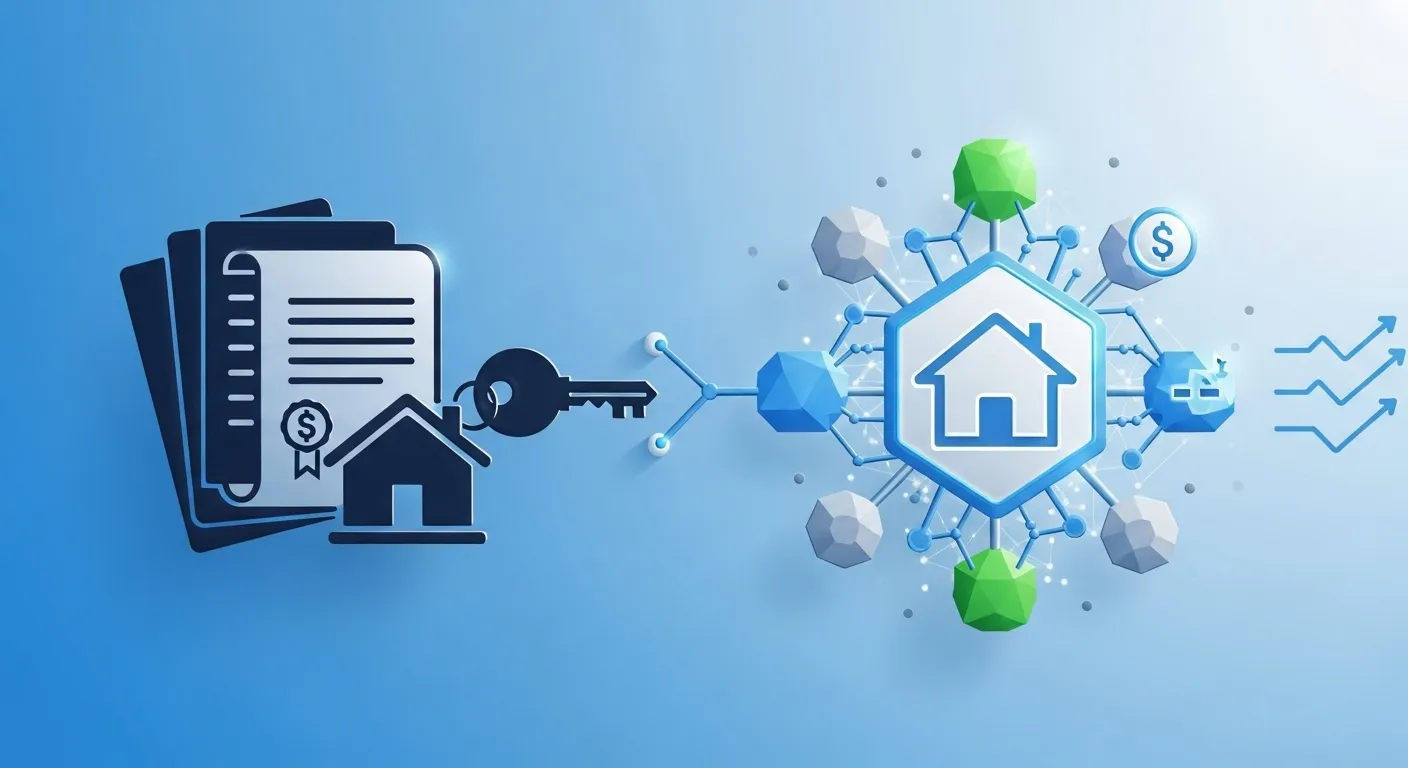
Real World Asset Tokenization addresses these challenges by converting ownership rights into digital tokens recorded on distributed ledgers. These tokens represent legally enforceable claims tied to physical or financial assets. The result is a system that enables fractional ownership, faster settlement, automated compliance, and broader investor participation.
In 2026, tokenization is no longer viewed as disruptive for disruption’s sake. It is increasingly seen as a modernization layer that complements existing financial systems.
Institutional Liquidity Pressure Is Driving Tokenization Adoption
One of the strongest forces accelerating Real World Asset Tokenization is the growing liquidity strain faced by institutional asset holders. Pension funds, private equity firms, real estate developers, and infrastructure investors are holding vast amounts of capital in assets that are difficult to exit efficiently.
Traditional secondary markets for private assets remain limited and opaque. Tokenization introduces a new liquidity mechanism by enabling fractional ownership and controlled secondary trading environments.
Key liquidity-driven motivations include:
- Unlocking capital from long-hold assets without full liquidation
- Creating structured exit options for early investors
- Improving balance sheet flexibility for asset-heavy enterprises
- Reducing dependency on traditional intermediaries
In 2026, liquidity optimization has become a board-level priority. Tokenization offers a practical way to reengineer capital flow without destabilizing asset value.
Regulatory Maturity Is Reducing Adoption Barriers
Regulatory uncertainty once slowed Real World Asset Tokenization. In 2026, this landscape has changed significantly. While global regulation is not fully harmonized, clearer frameworks have emerged around digital securities, custodianship, investor protections, and compliance requirements.
Regulators are increasingly focused on enabling innovation while preserving market stability. This has resulted in clearer guidance for asset issuers and tokenization platforms.
Regulatory progress is influencing adoption in several ways:
- Legal recognition of tokenized ownership structures
- Improved clarity on investor eligibility and disclosures
- Defined roles for custodians and transfer agents
- Stronger enforcement mechanisms that increase trust
As regulation matures, risk-averse institutions are gaining confidence to participate. Tokenization is no longer viewed as a regulatory gamble but as a compliant financial innovation.
Demand for Fractional Ownership Is Reshaping Investment Models
The rise of fractional ownership is another powerful force behind Real World Asset Tokenization. High-value assets such as commercial real estate, fine art, infrastructure projects, and commodities have historically been inaccessible to most investors.
Tokenization breaks these assets into smaller digital units, allowing investors to participate with significantly lower capital requirements. This democratization of access is reshaping both retail and institutional investment strategies.
Fractional ownership benefits include:
- Expanded investor base for asset issuers
- Increased portfolio diversification for investors
- Lower entry barriers for global participants
- Improved price discovery through broader participation
In 2026, fractional ownership is not just about inclusion. It is also about efficiency. A larger and more diverse investor pool increases market resilience and transaction velocity.
Technology Infrastructure Has Reached Enterprise Readiness
Earlier tokenization initiatives often struggled with scalability, security, and integration challenges. In 2026, the underlying technology stack has matured significantly, making enterprise-grade deployment viable.
Advancements in distributed ledger performance, identity verification, custody solutions, and smart contract security have removed many early limitations. Enterprises can now integrate tokenization platforms with existing financial systems without disrupting operations.
Key technological improvements driving adoption include:
- Scalable blockchain infrastructure capable of handling high transaction volumes
- Secure digital identity and access management frameworks
- Interoperability between legacy systems and tokenized platforms
- Automated compliance embedded into smart contracts
This technological readiness is a critical enabler. Without it, market forces alone would not be enough to drive large-scale adoption.
Global Capital Markets Are Becoming Increasingly Fragmented
Global capital markets are experiencing fragmentation due to geopolitical shifts, regional regulations, and capital controls. Investors and asset issuers are seeking more flexible and border-agnostic mechanisms for capital movement.
Real World Asset Tokenization enables cross-border participation while maintaining compliance with local regulations. Tokenized assets can be structured to accommodate jurisdiction-specific rules without fragmenting the asset itself.
This flexibility is accelerating adoption because it allows:
- Global investor access without complex intermediaries
- Faster capital inflows and outflows across regions
- Reduced dependency on centralized clearing systems
- Improved transparency in cross-border transactions
In 2026, tokenization is increasingly viewed as a solution to global capital inefficiencies rather than a replacement for national financial systems.
Automation and Programmability Are Transforming Asset Management
Another major force accelerating tokenization is the rise of programmable finance. Tokenized assets can embed rules, rights, and workflows directly into their digital structure.
This programmability enables automation across the asset lifecycle, from issuance and compliance to distribution of returns and corporate actions.
Examples of programmable benefits include:
- Automated dividend or yield distribution
- Real-time compliance enforcement
- Smart contract-based governance mechanisms
- Reduced administrative overhead
For asset managers, this translates into lower operational costs and higher transparency. For investors, it means improved trust and predictability.
Institutional Custody Solutions Are Strengthening Market Confidence
Custody was once a critical bottleneck for Real World Asset Tokenization. Institutions require secure, insured, and regulated custody solutions before committing capital.
In 2026, custody infrastructure has evolved to meet institutional standards. This includes segregated wallets, multi-signature authorization, audit trails, and regulatory oversight.
The availability of robust custody solutions is influencing adoption by:
- Reducing counterparty and operational risk
- Enabling compliance with fiduciary obligations
- Supporting large-scale institutional participation
- Increasing investor confidence in tokenized markets
As custody concerns diminish, tokenization transitions from experimental pilots to production-grade financial infrastructure.
Asset Issuers Are Seeking Faster Capital Formation
Traditional capital formation processes are slow, costly, and heavily intermediated. Real World Asset Tokenization offers a more efficient issuance model that reduces friction while maintaining compliance.
Tokenized issuance allows asset owners to raise capital faster and with greater precision. Issuers can tailor offerings to specific investor profiles and automate many administrative processes.
Capital formation advantages include:
- Reduced time to market for new offerings
- Lower issuance and compliance costs
- Greater transparency for investors
- Enhanced control over investor participation
In a competitive capital environment, speed and efficiency matter. Tokenization provides both.
Market Volatility Is Pushing Investors Toward Alternative Assets
Economic uncertainty and market volatility have increased demand for alternative assets such as real estate, commodities, infrastructure, and private credit. However, traditional access to these assets is limited and illiquid.
Real World Asset Tokenization bridges this gap by making alternative assets more accessible and liquid. Investors can adjust exposure more dynamically without long lock-up periods.
This shift is accelerating tokenization as investors seek:
- Inflation-resistant assets
- Diversification beyond public markets
- Stable yield-generating investments
- Greater control over portfolio allocation
In 2026, tokenization aligns perfectly with evolving investor preferences.
Competitive Pressure Is Forcing Financial Institutions to Innovate
Banks, asset managers, and exchanges are facing increasing competition from fintech and digital-native platforms. Tokenization is becoming a strategic response to this pressure.
Institutions that fail to modernize risk losing relevance in a rapidly evolving market. As a result, many are investing in tokenization initiatives to future-proof their offerings.
Competitive motivations include:
- Retaining high-value clients
- Expanding product offerings
- Improving operational efficiency
- Differentiating through innovation
Tokenization is no longer optional for institutions seeking long-term relevance.
The Network Effect Is Accelerating Ecosystem Growth
As more assets become tokenized, network effects begin to compound. Platforms, investors, custodians, and service providers benefit from shared infrastructure and standards.
This ecosystem growth accelerates adoption by lowering entry barriers for new participants and increasing overall market liquidity.
Network-driven advantages include:
- Standardized asset issuance frameworks
- Interoperable marketplaces
- Shared compliance infrastructure
- Increased investor confidence through scale
In 2026, the ecosystem momentum behind Real World Asset Tokenization is undeniable.
Conclusion: A Structural Shift, Not a Temporary Trend
The acceleration of Real World Asset Tokenization in 2026 is driven by deep structural forces rather than short-term hype. Liquidity needs, regulatory clarity, technological maturity, and shifting investor behavior are converging to reshape how assets are owned and traded.
What makes this moment significant is not just the pace of adoption, but the quality of participation. Institutional players, regulators, and enterprises are now actively shaping tokenization frameworks rather than reacting to them.
As these market forces continue to reinforce one another, Real World Asset Tokenization is set to become a foundational pillar of the global financial system. The question in 2026 is no longer whether tokenization will scale, but how quickly organizations can adapt to a world where ownership itself is programmable, liquid, and globally accessible.


















Sign in to leave a comment.