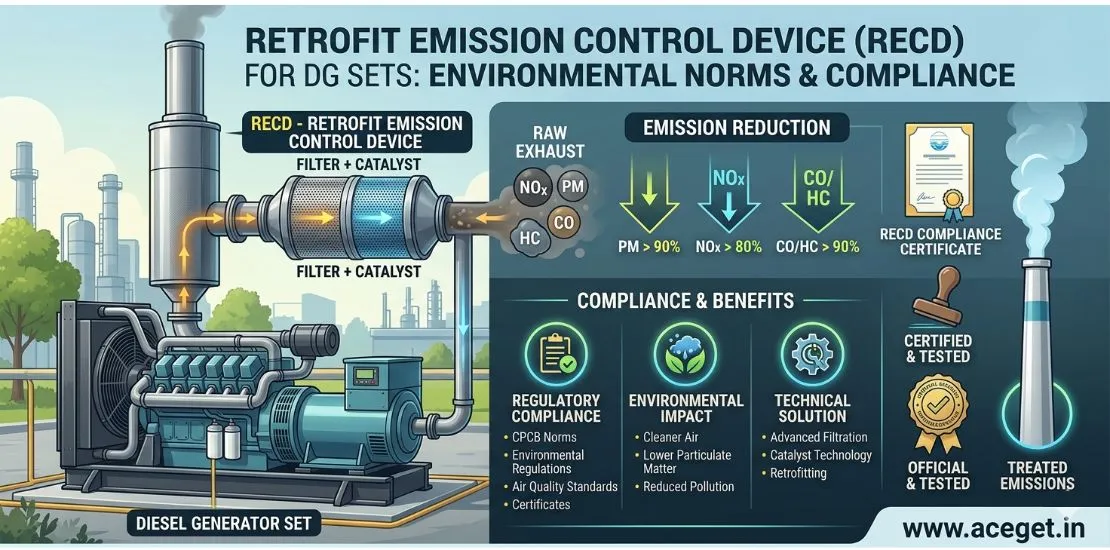

Diesel Generator (DG) sets are widely used across industries, commercial complexes, hospitals, and residential buildings in India to ensure uninterrupted power supply. However, they are also a major source of air pollution, emitting harmful pollutants such as particulate matter (PM), nitrogen oxides (NOx), carbon monoxide (CO), and hydrocarbons (HC). To address this environmental challenge, Retrofit Emission Control Devices (RECDs) have emerged as an effective solution for reducing emissions and ensuring regulatory compliance.
What is a Retrofit Emission Control Device (RECD)?
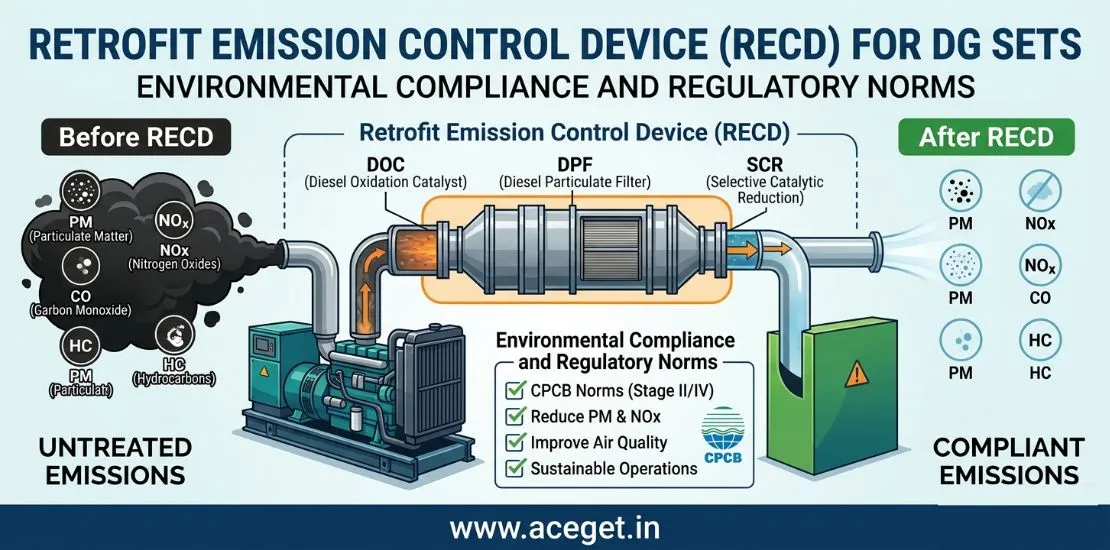
A Retrofit Emission Control Device (RECD) is an advanced pollution control system installed in the exhaust of an existing diesel generator. It is designed to reduce harmful emissions and bring older, non-compliant DG sets within permissible environmental limits.
RECDs typically work using a combination of filtration and catalytic processes to capture and convert pollutants into less harmful substances. These systems can reduce emissions by up to 90–96%, depending on technology, fuel quality, and generator condition.
Need for RECD in DG Sets
DG sets are considered one of the significant contributors to urban air pollution. Studies and regulatory observations show that emissions from DG sets can significantly impact local air quality, especially in densely populated areas.
Older DG sets, particularly those manufactured before modern emission standards, often fail to meet current environmental norms. Replacing them entirely can be costly; hence, retrofitting with RECD offers a practical and cost-effective alternative.
Key reasons for adopting RECD include:
- Reduction in toxic emissions
- Improvement in ambient air quality
- Compliance with environmental regulations
- Avoidance of penalties and operational restrictions
Environmental Norms for DG Sets in India
The Central Pollution Control Board (CPCB), under the Ministry of Environment, Forest and Climate Change, has established stringent emission norms for DG sets.
1. Emission Standards (CPCB Norms 2025–26)
The latest CPCB norms apply to diesel engines used for power generation up to 800 kW and regulate emissions of:
- Nitrogen Oxides (NOx)
- Hydrocarbons (HC)
- Carbon Monoxide (CO)
- Particulate Matter (PM)
- Smoke opacity
These norms are part of updated environmental regulations expected to be mandatory for new gensets.
2. Applicability of RECD
Regulatory authorities such as the Commission for Air Quality Management (CAQM) and CPCB have mandated the installation of RECDs for:
- DG sets manufactured between July 2004 and June 2023
- DG sets above certain capacities (commonly >125 kVA in polluted regions like NCR)
In highly polluted areas, such as Delhi-NCR, compliance is strictly enforced, and non-compliant DG sets may be banned from operation.
3. Stack Height and Exhaust Norms
CPCB also specifies stack (chimney) height requirements to ensure proper dispersion of pollutants. Adequate stack height reduces the concentration of emissions at ground level and minimizes human exposure.
Compliance Requirements for RECD Installation
Installing an RECD is not just about fitting a device it involves adherence to a structured compliance framework.
1. CPCB Approval and Certification
RECD systems must be:
- Tested as per CPCB protocols
- Approved by authorized agencies such as ARAI, ICAT, or IIP
- Installed by certified vendors
Only CPCB-approved technologies are considered valid for compliance.
2. Type Approval and Conformity of Production (CoP)
Manufacturers and suppliers must ensure:
- Type approval certification
- Conformity of production to maintain emission standards over time
3. Installation and Documentation
DG set owners must maintain:
- Installation certificates
- Emission test reports
- Vendor approval documents
- Maintenance records
These documents are critical during inspections by pollution control authorities.
4. Periodic Monitoring and Maintenance
RECD performance must be monitored regularly to ensure:
- Continued emission reduction
- Compliance over the operational lifecycle
Neglecting maintenance can lead to non-compliance even after installation.
Benefits of RECD Implementation
Environmental Benefits
- Significant reduction in PM and toxic gases
- Improved air quality and public health
- Contribution to national pollution control goals
Economic Benefits
- Avoidance of penalties and shutdowns
- Cost-effective alternative to generator replacement
- Enhanced operational efficiency
Regulatory Benefits
- Compliance with CPCB and CAQM mandates
- Eligibility to operate DG sets in restricted zones
Challenges in Implementation
Despite its advantages, RECD adoption faces several challenges:
- High initial installation cost
- Lack of awareness among small users
- Verification of CPCB-approved vendors
- Maintenance and operational issues
Additionally, enforcement gaps and unregistered DG sets can hinder large-scale compliance.
Conclusion
Retrofit Emission Control Devices (RECDs) represent a critical step toward sustainable and compliant operation of diesel generator sets in India. With increasingly stringent environmental norms from CPCB and other regulatory bodies, industries and businesses must prioritize emission control to reduce their environmental footprint.
RECD not only helps in achieving compliance but also contributes significantly to improving air quality and public health. As enforcement becomes stricter and awareness increases, adopting RECD technology will no longer be optional but essential for responsible and lawful operation of DG sets.












![The Benefits of Using a CNC Touch Probe [Infographic]](https://writeupcafe.com/data/post/1677697/bfdf3e040e67936848aa232d2dfe3d03.jpg.webp)










Sign in to leave a comment.