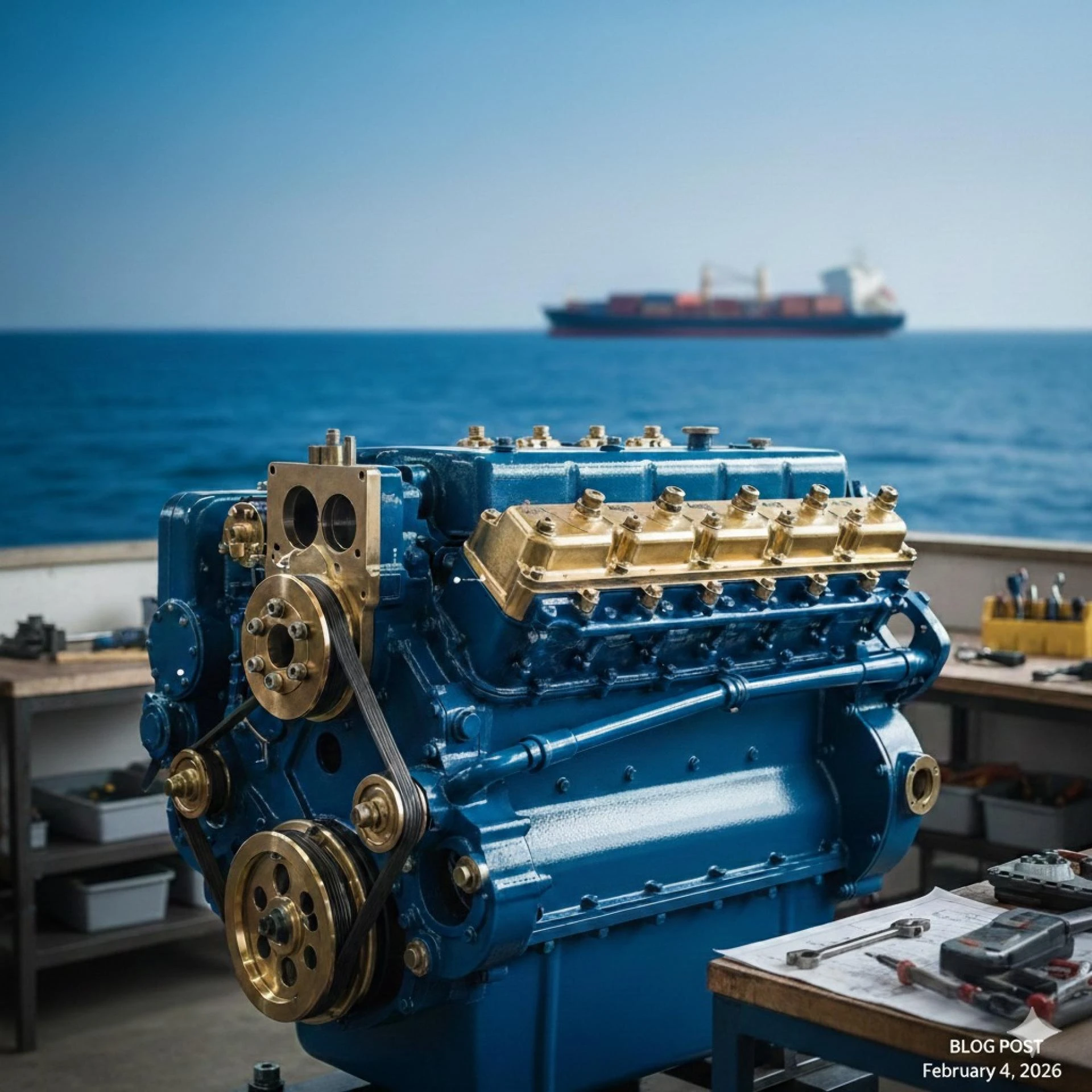

Buying refurbished marine machinery is often described as "giving a giant a second life." For shipowners and operators, it’s a high-stakes balancing act between saving 40% to 60% on costs and ensuring the vessel remains seaworthy in the middle of an ocean.
If you are considering a refurbished engine or major component, here is a comprehensive look at the process, the rigorous standards involved, and exactly what you should expect from a professional overhaul.
1. The Decision: Rebuild vs. Repower
Before the first bolt is turned, engineers must decide if a machine is actually "refurbish-able."
- The 40% Rule: Industry experts generally suggest that if a rebuild costs more than 40% of a brand-new engine, "repowering" (buying new) might be the smarter financial move.
- Compatibility: One of the biggest reasons to refurbish is form factor. A new engine might require changing engine mounts, fuel lines, and exhaust configurations. Refurbishing the existing unit means everything still fits perfectly.
2. Phase One: The "Autopsy" (Disassembly & Cleaning)
A professional refurbishment starts with a complete teardown. The engine is reduced to its barest components—from the massive bedplate to the smallest fuel injector nozzle.
- Decarbonizing: Parts like pistons and cylinder heads accumulate heavy carbon deposits. These are cleaned using specialized solvents or ultrasonic baths to reveal the bare metal.
- Contaminant Removal: In a marine environment, salt and sludge are the enemies. Every lubrication passage and cooling gallery must be flushed to ensure no hidden blockages remain.
3. Phase Two: The Scientific Inspection
Once clean, every part undergoes a "physical" using advanced diagnostics. You should expect reports on the following:
- Magnetic Particle & Dye Testing: These tests find "invisible" hairline cracks in the cylinder heads or crankshafts that could lead to catastrophic failure under pressure.
- Calibration: Using micrometers, technicians measure wear on cylinder liners and journals. If a liner is worn beyond OEM (Original Equipment Manufacturer) specs, it is replaced or honed back to a perfect circular bore.
- Crankshaft Deflection: This checks if the engine’s "spine" is perfectly straight. Even a fraction of a millimeter of misalignment can cause the engine to vibrate itself apart.
4. Phase Three: Precision Machining & Replacement
"Refurbished" does not mean "used." It means a combination of original structural parts and brand-new "wear" parts.
- The "New" List: In a quality refurbishment, certain parts are always replaced with new OEM components: piston rings, bearings, gaskets, seals, and fuel filters.
- Machining: Critical surfaces, like the top of the engine block or the valve seats, are "resurfaced" to ensure a gas-tight seal. Crankshaft journals are polished to a mirror finish to reduce friction.
5. Phase Four: Reassembly & "The First Breath"
Reassembling a marine engine is a clinical process. It happens in a dust-free environment where every bolt is tightened to a specific "torque" to ensure even pressure across the machine.
- Timing & Alignment: The relationship between the valves and the pistons is set with surgical precision.
- Priming: Before the engine is ever started, oil is pumped through the system (priming) to ensure that the first time the metal parts move, they are already floating on a thin film of oil.
6. Phase Five: Testing (The Moment of Truth)
You should never accept a refurbished engine that hasn't been "Bench Tested" or "Load Tested."
- The Run-In: The engine is run at low RPMs to let the new rings and bearings "seat" properly.
- Load Testing: The engine is pushed to simulate real-sea conditions. Technicians monitor exhaust temperature (to ensure even combustion), oil pressure, and cooling efficiency.
- Sea Trials: Once installed back in the ship, a final trial is conducted to ensure the engine works in harmony with the propeller and the ship’s hull.
7. What to Expect: The "Red Flags" vs. "Green Flags"
When browsing for refurbished machinery, use this checklist to separate the professionals from the "paint-and-polish" shops.
Green Flags (What to Look For):
- Full Service Records: A detailed log of what was replaced, what was machined, and the final measurements.
- Warranty: Most reputable refurbishers offer a 6 to 12-month warranty.
- OEM Parts: Documentation proving that high-quality, genuine parts were used rather than "grey market" alternatives.
- Emission Compliance: Confirmation that the engine still meets IMO (International Maritime Organization) standards for NOx and SOx emissions.
Red Flags (When to Walk Away):
- "Runs Great": Beware of vague descriptions. You need data (compression sets, oil analysis), not opinions.
- Fresh Paint on Dirty Bolts: If an engine looks beautiful on the outside but has grime in the hard-to-reach crevices, the "refurbishment" might only be skin-deep.
- No Load Test Video/Report: If they won't show you the engine running under a load, they haven't verified its heart.
Summary for the Shipowner
Refurbished machinery is the "sustainable" choice. It reduces industrial waste and keeps your vessel operational without the massive lead times of new manufacturing. By following these steps—Dismantle, Inspect, Replace, Reassemble, and Test—you ensure that your ship's "giant" is ready for another 20,000 hours of service.
If you’re interested in reliable refurbished marine machinery backed by a proven process, contact Labdhi Marine for expert guidance and quality solutions.
























Sign in to leave a comment.