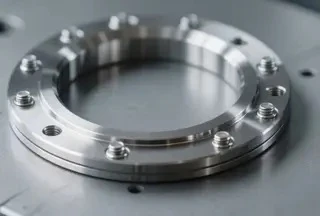
The Role of Gasket Dimensions in Sealing Performance
In industrial production, gaskets are critical sealing elements used in pipe and flange connections. Their dimensional parameters—such as thickness, width, inner diameter, and outer diameter—directly influence sealing effectiveness. This article examines how each dimensional factor impacts performance and provides guidance on selecting gasket sizes to ensure safe and reliable sealing.
Effect of Gasket Thickness
Gasket thickness is one of the most important parameters influencing sealing behavior.
- Thicker gaskets generally reduce leakage rates under the same clamping load and medium pressure because they offer greater compression and elastic recovery. This helps compensate for surface separation caused by pressure and maintains residual stress for longer.
- Excessive thickness, however, can be counterproductive. The central portion of the gasket may deform plastically more easily than the edges, making it harder to establish a tight seal. In addition, a larger cross-sectional area increases the risk of permeation leakage. Thus, “thicker” does not always mean “better.”
Effect of Gasket Width
Gasket width also plays a key role:
- Within limits, a wider gasket creates a longer leakage path, which increases leakage resistance.
- However, a wider gasket also demands more bolt force to achieve sufficient clamping stress. If bolt load is inadequate, sealing performance suffers.
- Therefore, the gasket width must be optimized—not maximized—to balance resistance and bolt load requirements.
Influence of ID, OD, and Other Dimensions
1. Inner Diameter (ID)
The ID should never be smaller than the material thickness, as this risks tearing during manufacturing. An incorrectly sized ID—too small or too large—can result in poor sealing or material failure.
2. Outer Diameter (OD)
The OD must correspond to the flange sealing surface. Typically, it is 1–2 mm larger than the sealing face to ensure full coverage. For instance, if the flange sealing face is 100 mm, the gasket OD should be 101–102 mm.
3. Flange Size
Flange width (OD – ID) must not be less than the gasket thickness. For example, with a 5 mm thick gasket and 5 mm ID, the OD must be at least 15 mm. Proper flange sizing ensures a secure seal.
4. Pitch Circle Diameter (PCD)
PCD refers to the circle on which bolt holes are positioned. It must fall between the gasket’s ID and OD, with sufficient material left on both sides equal to or greater than the gasket thickness. Correct PCD ensures both manufacturability and performance.
Guidelines for Selecting Gasket Dimensions
- Consider Medium Properties
- For corrosive media, choose materials with chemical resistance and increase thickness for durability. For high-temperature applications, select heat-resistant materials with good elastic recovery.
- Factor in Pressure and Temperature
- Higher pressures and temperatures demand stronger materials and thicker designs. For example, high-pressure steam systems often require spiral wound gaskets with carefully matched IDs and ODs.
- Match Flange Dimensions
- ID should match or slightly exceed the flange bore, while OD should extend slightly beyond the sealing surface. PCD must align with bolt hole placement to ensure uniform loading.
- Follow Standards
- Refer to ISO, DIN, ANSI, and other relevant standards. These provide proven dimensional guidelines that ensure compatibility and reliability.
Conclusion
Gasket dimensions—thickness, width, ID, OD, flange size, and PCD—are decisive in sealing performance. Proper dimension selection requires considering operating conditions such as medium, pressure, temperature, and flange size, alongside industry standards. By optimizing gasket dimensions, operators can significantly improve sealing reliability, reduce leakage, and ensure safe industrial operation.Discover everything you need to know about Google SEO.
Frequently Asked Questions (FAQ)
Q1: How do I choose the right gasket thickness?
A: Thickness depends on the medium, operating pressure and temperature, and flange design. While thicker gaskets can handle higher loads, they may also increase leakage risk if not properly compressed. Always refer to relevant standards for guidance.
Q2: How does gasket width affect sealing?
A: Wider gaskets increase the leakage path but require greater bolt force for the same clamping stress. Too wide a gasket without adequate bolt load will result in poor sealing.
Q3: Why is the inner diameter important?
A: The ID must be large enough to prevent tearing during production but correctly matched to the flange to avoid sealing failure. A poorly sized ID can cause either leakage or material damage.



























Sign in to leave a comment.