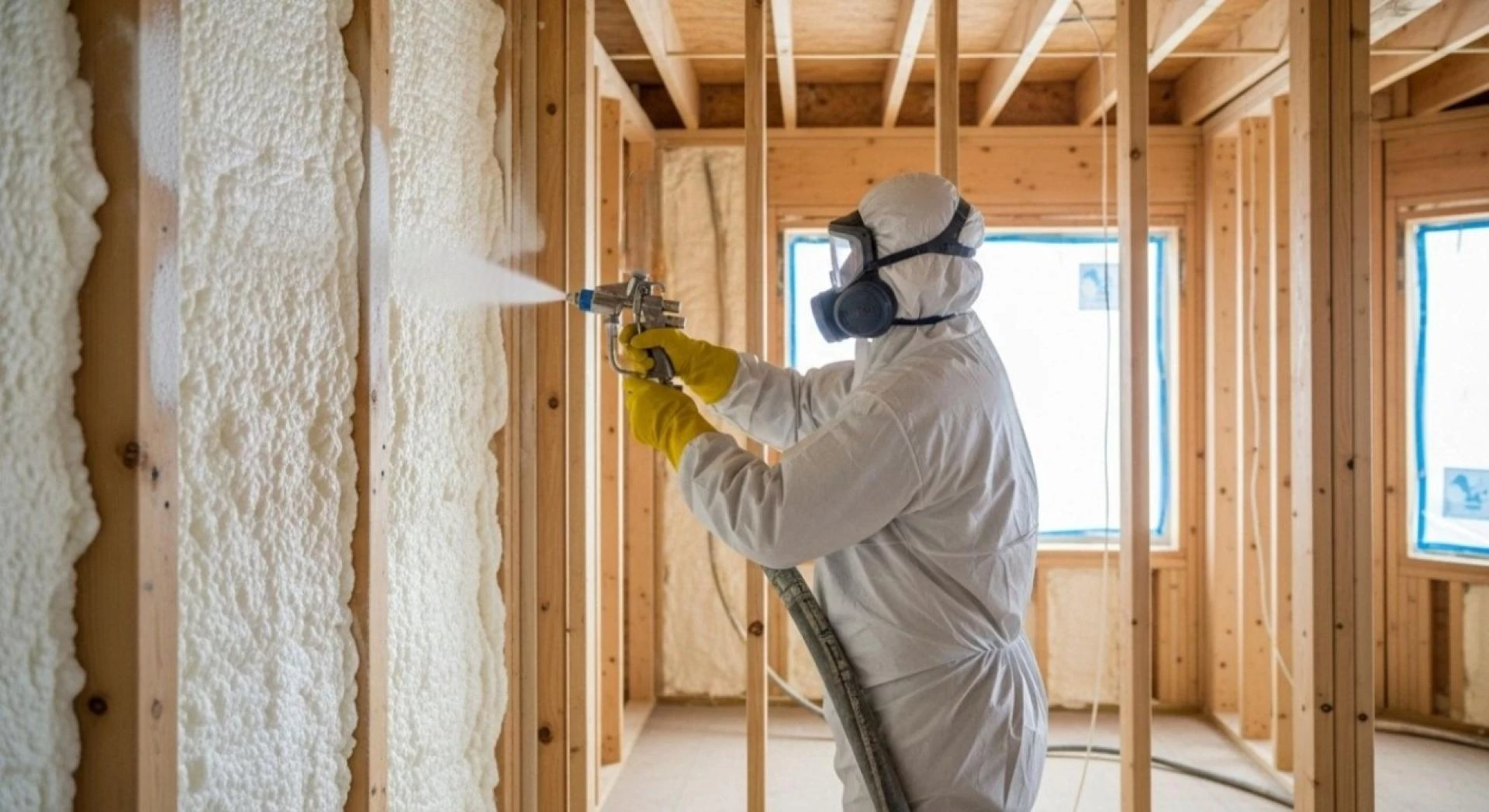

The science behind how residential spray foam insulation controls humidity is based on two fundamental principles: stopping moisture-laden air from entering the home and preventing water vapor from passing through the building materials themselves. Most of a home's humidity problems are caused by air leakage, where humid outdoor air is pulled inside through countless small gaps. Spray foam expands to create a near-perfect air seal, stopping this infiltration. Additionally, closed-cell spray foam acts as a vapor barrier, blocking the slower process of moisture diffusion. By managing both air and vapor, spray foam keeps the building structure dry and the indoor humidity at a comfortable, healthy level.
This article breaks down these scientific concepts into practical terms, explaining the mechanics of moisture movement and how spray foam offers a comprehensive solution. The information is drawn from established building science, providing a clear understanding of how to create a drier, more durable home. It’s a look at the physics that makes a properly insulated home feel so much better.
The Two Ways Moisture Enters a Home
To control humidity, you first have to understand how it gets into a building. Moisture moves in two distinct ways, and an effective solution must address both.
Air Leakage The Moisture Superhighway
The vast majority of moisture that enters a home's structure does so by hitching a ride on leaking air. Air contains a certain amount of water vapor, and when that air moves, the water vapor moves with it. A typical home has countless small holes, cracks, and gaps that add up to the equivalent of leaving a window open all year. This allows huge volumes of humid outdoor air to infiltrate the building, overwhelming the HVAC system's ability to dehumidify it. This is by far the fastest and most significant source of unwanted humidity.
Vapor Diffusion The Slow and Steady Path
A much smaller amount of moisture moves through a process called vapor diffusion. This is where water vapor passes directly through solid materials, driven by a difference in vapor pressure between the inside and outside. Think of it as moisture slowly soaking through a piece of wood or drywall. While this process is much slower than air leakage, over time it can still introduce a significant amount of moisture into a wall or roof assembly, especially in persistently damp climates.
How Spray Foam Creates a Multi-Faceted Barrier
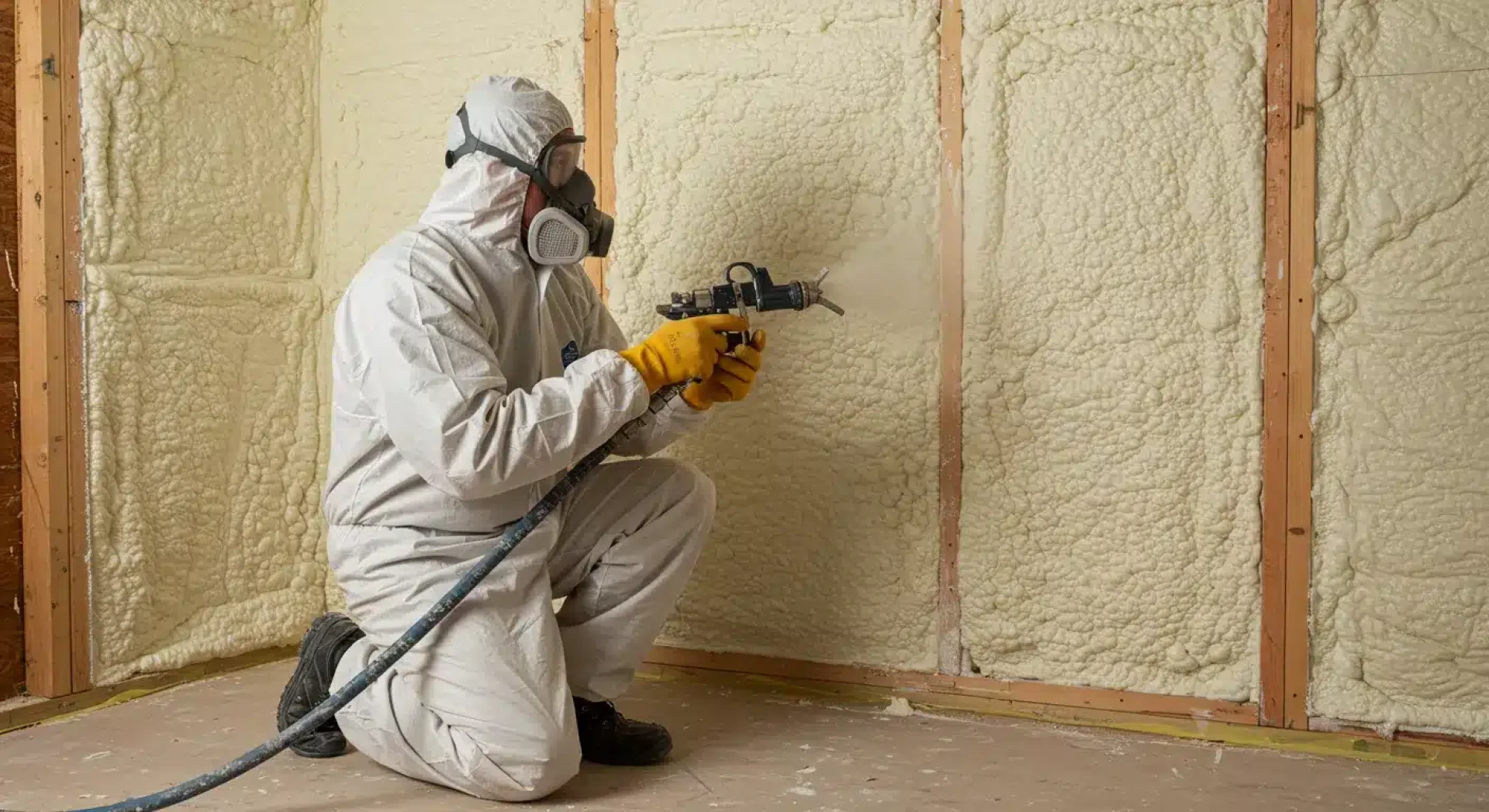
Spray foam insulation is uniquely equipped to combat both air leakage and vapor diffusion, which is why it's so effective at humidity control.
The Critical Importance of an Air Seal
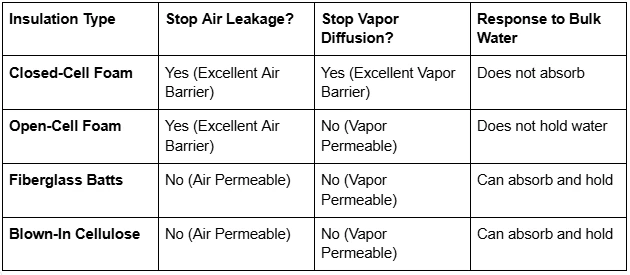
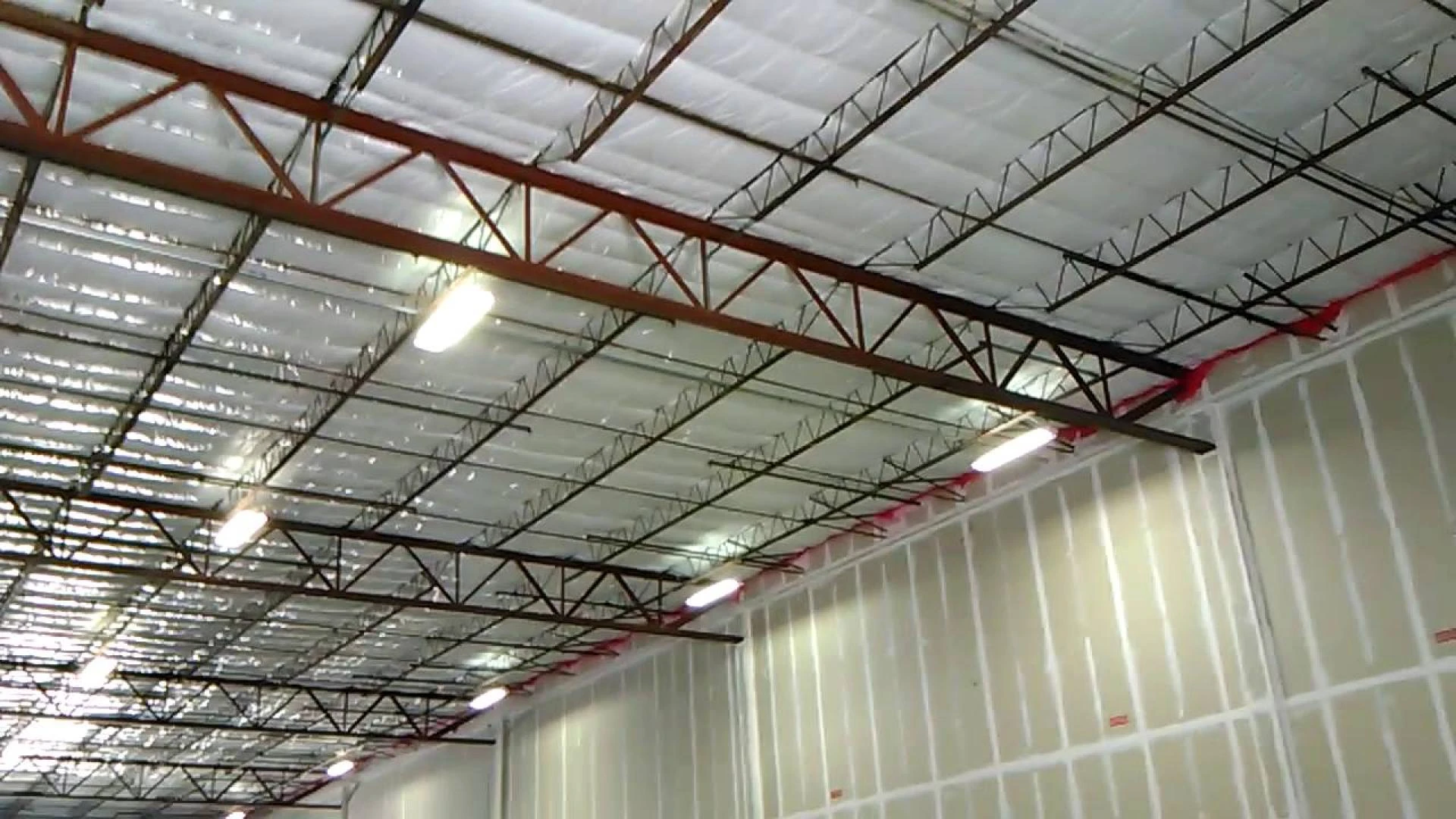
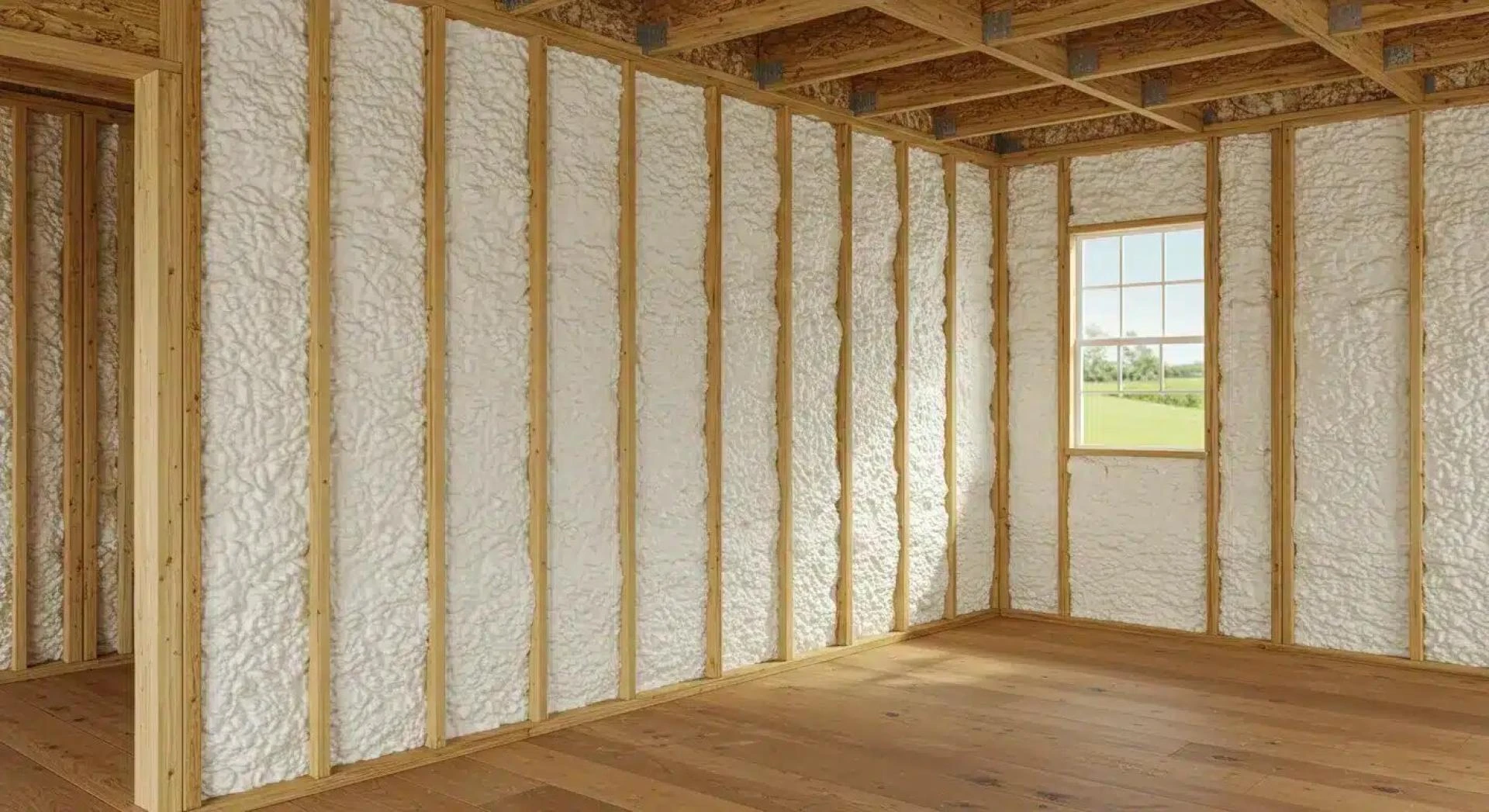
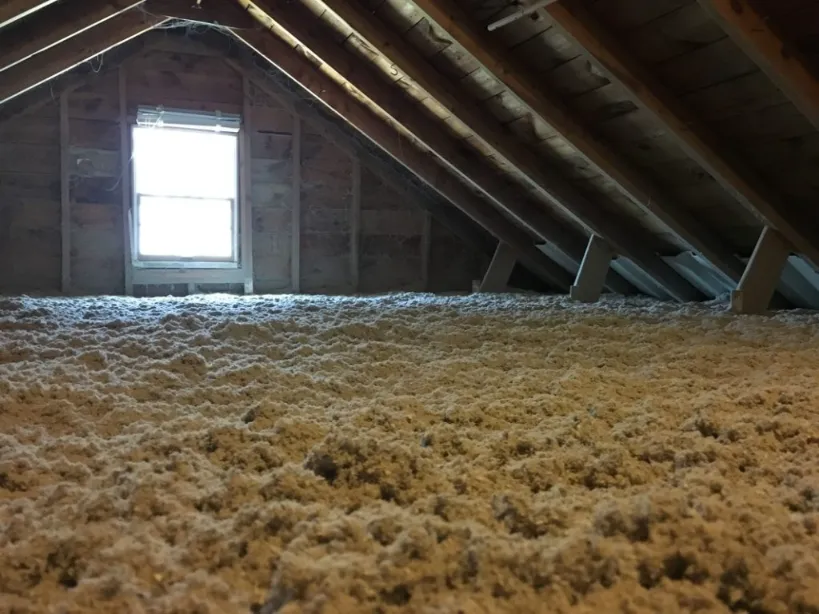
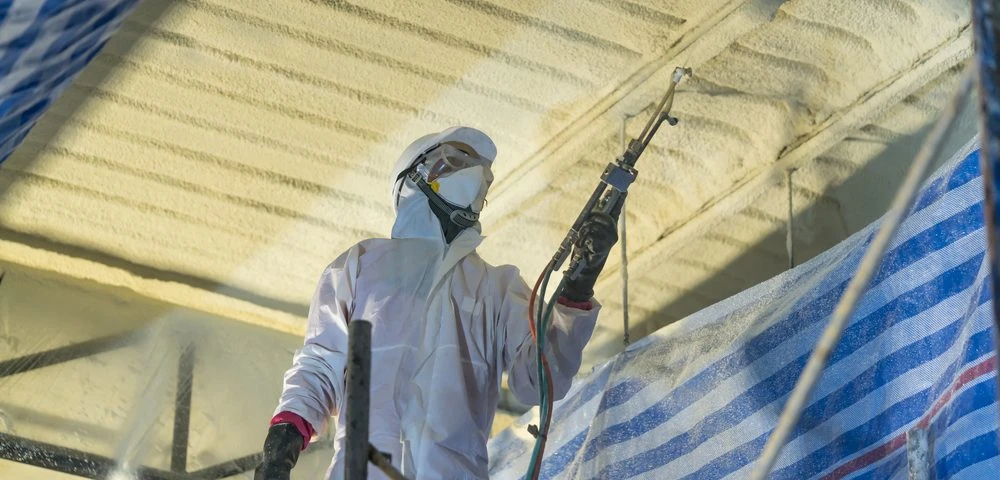
The most powerful feature of any spray foam, whether open-cell or closed-cell, is its ability to create a monolithic air barrier. When applied as a liquid, it expands to fill every void, no matter how small or irregularly shaped. This seals off the pathways for air infiltration, effectively shutting down the moisture superhighway. Stopping uncontrolled air movement is the single most important step in managing indoor humidity. Traditional insulation, like fiberglass batts, simply can't do this, as air can still move freely through and around it.
The Power of a Vapor Barrier
This is where closed-cell spray foam provides an additional, powerful layer of protection. Its very structure is made of tiny, sealed bubbles that are packed tightly together. This makes the foam "vapor impermeable," meaning water vapor cannot pass through it. It functions as a true vapor barrier, stopping the slow-but-steady process of vapor diffusion. This is a critical feature for areas like basement walls, crawl spaces, and roof decks, where there is a constant pressure of moisture trying to get in.
- Bonus Tip: A material's resistance to vapor diffusion is measured by its "perm rating." Materials with a perm rating of 1.0 or less are considered vapor barriers. Closed-cell spray foam typically has a perm rating of less than 1.0 at just one inch of thickness.
A Quick Look at Moisture Handling in Insulation
Preventing Condensation Within the Building Structure
Another key scientific principle at play is the prevention of condensation. Condensation occurs when warm, moist air comes into contact with a surface that is cooler than the air's "dew point."
Think of a cold glass of iced tea on a summer day. The moisture that forms on the outside of the glass isn't leaking through; it's water vapor from the surrounding air that has cooled and condensed into a liquid. The same thing can happen inside your walls. In the winter, the inside surface of your exterior sheathing can get very cold. If warm, moist indoor air leaks into the wall cavity and touches that cold surface, it will condense, leading to trapped moisture, mold, and rot.
Spray foam prevents this in two ways. First, its air seal stops the warm, moist indoor air from getting into the wall cavity in the first place. Second, its high R-value keeps the temperature of the surfaces within the wall assembly from getting cold enough to reach the dew point. By managing both air movement and surface temperatures, it keeps the inside of your walls dry.
Things to Consider Before Making a Decision
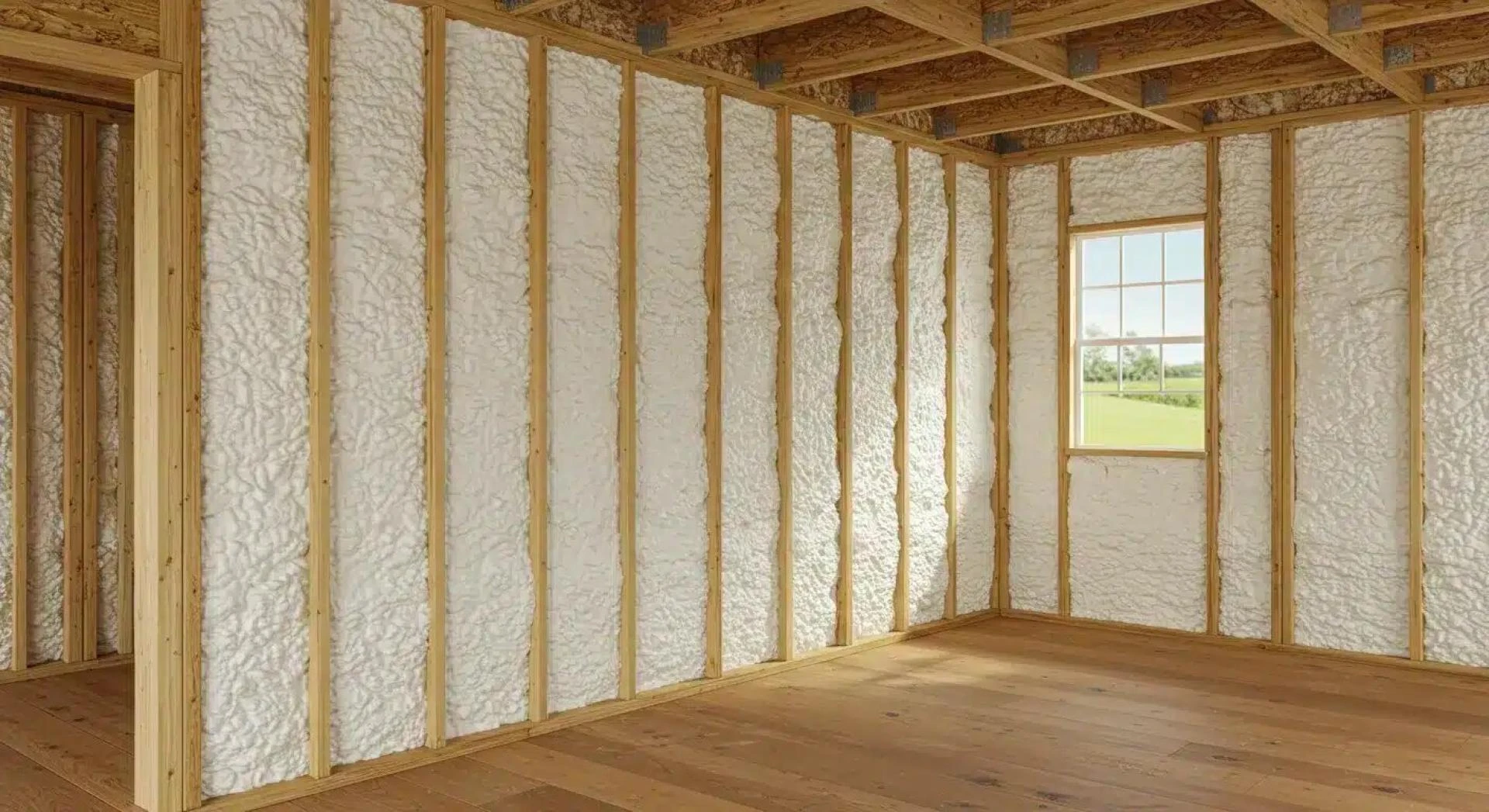
Applying building science correctly is essential for successful humidity control. Here are some factors to evaluate.
The Local Climate
Your climate zone is a major factor in designing a proper insulation and moisture management strategy. In a cold, damp climate like the Pacific Northwest, preventing moisture from entering the home is the top priority, making a vapor-impermeable insulation like closed-cell foam a very strong choice, especially in foundations. In a hot, humid climate, the strategy might be different.
The Building Assembly as a System
An insulation professional doesn't just look at the insulation; they look at the entire wall or roof as a system. The goal is to create an assembly that not only stops moisture from getting in but also has the ability to dry out if it ever does get wet from an unforeseen leak. The choice between vapor-permeable open-cell foam and vapor-impermeable closed-cell foam is a critical part of this system design.
The Need for Mechanical Ventilation
When you make a home very airtight with spray foam, you take control of its air exchange. This is a good thing, but it means you also have to provide a way to get rid of the moisture generated inside the home from cooking, showering, and breathing. A properly sized ventilation system, such as high-quality bathroom fans or an energy recovery ventilator (ERV), is a necessary partner to a high-performance insulation system.
- Bonus Tip: A simple tool called a hygrometer can measure the relative humidity inside your home. They are inexpensive and can help you monitor your indoor environment and know when to run a ventilation fan.
Common Questions About Humidity and Spray Foam
Will spray foam make my house feel stuffy?
No. An airtight home with proper mechanical ventilation will feel much fresher than a drafty home that is leaking uncontrolled, unfiltered air from the attic, crawl space, and outside. You are controlling the source and amount of fresh air.
Can spray foam solve a musty smell in my basement?
Yes, in many cases, it can. Musty smells are often caused by moisture seeping through the concrete foundation walls. Applying closed-cell spray foam to the interior of these walls creates a waterproof barrier that can stop this moisture intrusion and eliminate the resulting odors.
Is open-cell or closed-cell better for humidity control?
It depends on the location. Closed-cell foam is the superior choice for any area that needs a vapor barrier, such as a foundation. Open-cell foam is an excellent air barrier and, because it's vapor permeable, it can be a good choice for above-grade walls in certain climates where the ability to dry is prioritized.
Do I need a separate vapor barrier with spray foam?
With closed-cell spray foam, no. It acts as the insulation, air barrier, and vapor barrier all in one. With open-cell foam, a separate vapor barrier or a vapor-retarding paint may be required by building codes, depending on the climate and application.
Can high humidity damage my home?
Absolutely. Persistent high humidity can lead to mold growth, wood rot, peeling paint, and can attract pests like dust mites and termites. Controlling humidity is essential for the long-term health of a building.
The Science of a Drier, Healthier Home
The science behind humidity control is clear. By effectively stopping air leakage and managing vapor diffusion, a professional spray foam insulation provides a robust and reliable defense against unwanted moisture. This leads directly to a home that is not only more energy-efficient but also healthier, more comfortable, and more durable. Understanding these principles helps to see insulation not just as a way to save on heating bills, but as a critical component of a high-performance building system.
Get a Professional Analysis of Your Home
To properly apply these scientific principles to your home, a professional assessment is the best starting point. An experienced insulation contractor can evaluate your home's specific humidity challenges and design a system that works. For a detailed consultation based on proven building science, companies like Cascadia Spray Foam Insulation of Seattle can provide expert guidance. Their team is available to discuss your home's needs at (425) 386-3500 or by email at [email protected].
Reviewer: Olivia Thompson has spent 10 years working in spray foam insulation, helping companies grow their visibility. She reviewed this article and provided valuable suggestions on how to better align the content with the needs and expectations of customers, ensuring it resonates with the target audience.


























Sign in to leave a comment.