It’s a fact of life that tires go flat, and usually at the worst possible time. Whether you’re commuting through traffic or hitting the road for a weekend adventure, a flat tire can mess up your plans. Thankfully, there are steps you can take to restore a tire’s structural integrity without replacing it altogether.
Knowing your options is crucial when dealing with a puncture, whether that’s a makeshift roadside repair or a more long-term solution from the professionals. This guide will assist you in making better choices, whether you require immediate assistance or long-term performance, and it begins by introducing you to some of the most common tire repair services and how they operate.
What is a Tire Plug?
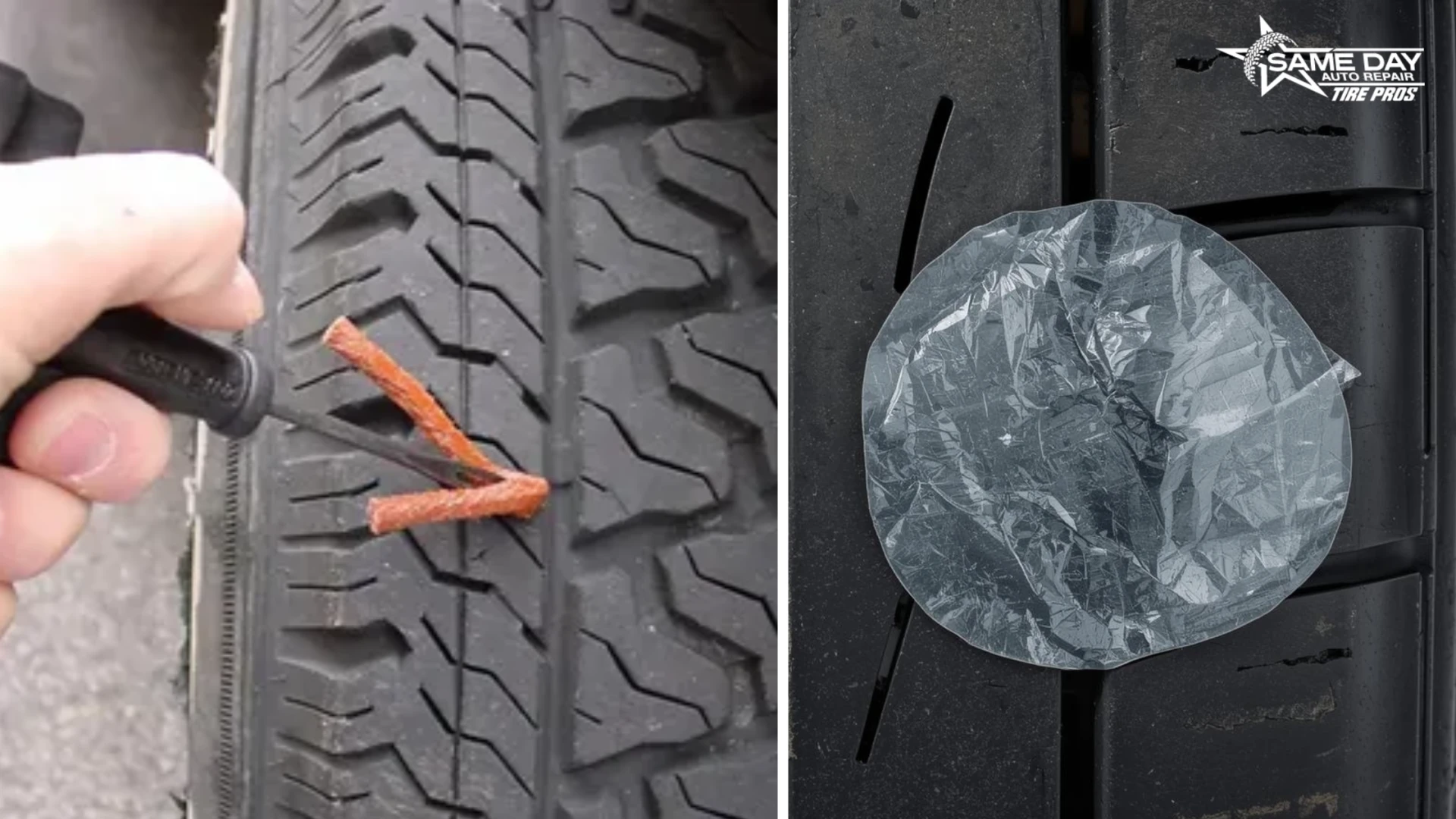
A tire plug is a quick, simple, and cost-effective way to fix a flat tire. It is essentially a rubber strip inserted through the puncture from the outside of the tire. This method works best when a nail, screw, or similar object has created a small hole in the tread area. The technician does not have to remove the tire, and it can be completed soon after the damage occurred, as a plug can be placed in the tire while you wait.
When a Plug Makes Sense
- Small Punctures Only: These typically work only on small holes (usually less than about ¼ inch) in the tire tread.
- Roadside Emergencies: A plug is ideal when you’re stranded and need a quick solution to reach a safe location or a full-service garage.
- Affordable & DIY Use: Plug-in kits are inexpensive and can be used by most drivers who are comfortable with basic hand tools.
Limitations of Plugs
- Temporary Nature: Plugs are much more convenient than replacing a tire, but they don’t solve the internal problem of the tire itself. They’re just plugging the hole, and plugs can leak or fail if not closed properly.
- Not Always Safe for All Punctures: If the puncture is close to the tire sidewall or larger than a small tread hole, we do not recommend plugs; relying on them compromises safety and tire life.
Due to these factors, many technicians view plugs as stopgap measures rather than long-term solutions.
The Role of Tire Patches
A tire patch, on the other hand, is installed on the inside of the tire. This method requires removing the tire from the wheel so the interior surface can be prepared and a patch applied over the puncture. This creates a more secure, airtight seal and reinforces the damaged area.
Why Patches Are More Durable
- Permanent Seal: Patches bond to the tire’s inner liner, providing a repair that can last throughout much of the tire’s life under typical driving conditions.
- Better Fit for Repairable Damage: For properly sized punctures within the repairable tread area, a patch provides stronger long-term reliability than a plug alone
- Professional Installation: Because tires must be dismounted and prepped before patching, this work is often handled by skilled tire-puncture repair technicians at a service facility.
Considerations with Patches
- Time and Cost: Removing the tire and properly preparing the interior surface takes more time and usually costs more than a plug.
- Experience Needed: For this type of repair, a patch must be laid evenly and tightly to prevent leaks or weak points.
A patch is often the best option for drivers who want a lasting tire repair, one that will keep them safe and their tires reliable.
Which Will Work Best for You?
Deciding between a plug and a patch is not based solely on convenience, but on the nature of the puncture itself. Here’s how the professional generally balances these choices:
Size and Location of the Puncture
- Small Holes in the Tread Area: You can often plug these right away, especially if you’re on the side of the road.
- Large or Irregular Damage: Holes and flared tears will likely need a patch to be done well.
- Sidewall Damage: Sidewall punctures are not effectively repaired with plugs or patches, so a replacement is the best option.
Long‑Term Reliability vs Immediate Needs
- Quick Fix: Plugs are quick and cheap, but should be considered a short-term solution until a more permanent repair or examination can be performed.
- Want Long‑Lasting Results: A patch creates a stronger seal and, if installed properly, can deliver a repair for the rest of the tire’s life.
There’s also a hybrid method that combines both plugging and patching to achieve maximum seal strength and puncture reinforcement on both sides. Professional tire repair generally considers this method the best option, provided conditions allow.
Safety First: When to Replace Instead of Repair
In some cases, replacement is the safer option than attempting a repair. Not all punctures are repairable. If you see:
- Fractured cords, oversized cuts, or sidewall separations.
- Multiple closely spaced punctures.
- Damage beyond the specified repair zone
It is better to replace the tire than try to repair it. Driving on a damaged tire increases the risk of blowouts, air loss, and handling instability.
Final Thoughts: Choosing the Safer Option
A patch and a plug are different tire repair methods, depending on how long you’d like the repair to last and how serious the issue is. In the short run, a plug fix may work, but a properly installed patch will guarantee better results. If you experience a flat in Tulsa or nearby areas, having a professional inspect the damage ensures the repair is done safely and correctly
Choosing a repair method is part of the process. For tire repair, proper tire maintenance, such as checking air pressure, rotating tires, and addressing uneven wear, will also help tires last longer and prevent sudden breakdowns.
A little care goes a long way to make every mile of your journey as safe and smooth as possible.





























Sign in to leave a comment.