

Sleep apnea used to be discussed in a narrow, almost gloomy way: a snoring problem, a bulky CPAP machine, and a patient trying to adapt in the dark. That picture is changing fast. Across sleep clinics, dental practices, cardiology offices, and even smartphone apps, technology is widening the menu of treatment options for a condition that affects millions and raises the risk of hypertension, stroke, atrial fibrillation, daytime accidents, and poor metabolic health. The shift feels a bit like walking through Barcelona’s Eixample at dusk: what once looked rigid and repetitive suddenly reveals curves, color, and hidden pathways, very much in the spirit of Gaudí. Sleep medicine is becoming more personalized, more data-driven, and, crucially, more humane.
The core condition remains serious. Obstructive sleep apnea happens when the upper airway repeatedly collapses during sleep, reducing or stopping airflow. Central sleep apnea involves impaired breathing signals from the brain. For years, continuous positive airway pressure, or CPAP, has been the gold standard for many patients with obstructive sleep apnea because it works when used consistently. Yet real-world adherence has long been a stumbling block. Reports from clinicians and device makers have repeatedly shown that comfort, mask fit, noise, claustrophobia, and travel inconvenience can all undermine nightly use.
That is why the current wave of innovation matters. According to Wired’s reporting on sleep apnea treatment technology, new devices and digital tools are moving the field beyond the old one-size-fits-all model. Yale Environment 360, in its 2026 look at the future beyond CPAP, also highlights how treatment is becoming more targeted to anatomy, severity, and patient preference. On WriteUpCafe, related explainers such as Technology Is Reshaping Sleep Apnea Treatment with Innovation and Precision and How Technology Is Reshaping Sleep Apnea Treatment capture the same broad trend. The real story, though, is not that CPAP is disappearing. It is that sleep apnea care is finally branching into a richer ecosystem.
Sleep apnea treatment is no longer a single-device story. It is becoming a platform story built around personalization, monitoring, and long-term adherence.
1. Smarter CPAP systems are turning a blunt tool into a responsive therapy
CPAP still sits at the center of sleep apnea care for a reason: when patients tolerate it, it can dramatically reduce apneas, improve oxygenation, and relieve daytime sleepiness. What has changed is the intelligence around the machine. Today’s devices are far more adaptive than their predecessors, using auto-adjusting pressure algorithms, expiratory pressure relief, humidification controls, leak detection, and cloud-based compliance tracking. That matters because comfort is not a luxury in sleep medicine; it is the difference between therapy used for years and therapy abandoned after three difficult weeks.
Manufacturers have spent the last decade refining masks as much as motors. Nasal pillows, under-the-nose cushions, quieter blowers, and lighter headgear are all attempts to solve the same stubborn problem: nightly usability. Sleep clinicians now have better data to troubleshoot issues remotely, including mask leak patterns, residual apnea-hypopnea index readings, and usage time. Instead of waiting for a follow-up visit, providers can often intervene earlier when they see a patient struggling.
There is also a subtle but important cultural shift. CPAP is increasingly being framed not as a punishment for snoring but as a precision respiratory tool. According to MSN’s coverage of new technology beyond traditional CPAP, the category is evolving alongside alternatives rather than being replaced outright. That is healthy for patients. A person who does well on modern auto-CPAP should not be pushed away from it simply because newer therapies are fashionable.
- Auto-titration: pressure adjusts during the night as airway resistance changes.
- Connected care: cloud dashboards allow clinicians to monitor adherence and efficacy remotely.
- Comfort engineering: quieter motors, better humidification, and more mask choices reduce dropout risk.
- Data feedback: patients can often view sleep reports in companion apps, strengthening engagement.
The result is less dramatic than a surgical implant, perhaps, but often more consequential. Incremental engineering improvements can keep a proven therapy viable for a much larger share of patients.
2. Home sleep testing and wearable sensors are speeding diagnosis and follow-up
One of the biggest barriers in sleep apnea care has never been treatment alone. It has been diagnosis. Traditional in-lab polysomnography remains the most comprehensive test, measuring brain waves, eye movements, muscle tone, airflow, oxygen saturation, respiratory effort, and more. But lab studies can be expensive, inconvenient, and geographically uneven. Many people with symptoms simply never make it to the testing stage.
That bottleneck is easing thanks to home sleep apnea testing and a new generation of wearables. Portable testing kits can now capture airflow, oxygen levels, heart rate, and respiratory effort in a patient’s own bed. These tests are not appropriate for every case, especially when complex sleep disorders or certain cardiopulmonary conditions are suspected, but they have expanded access enormously. For a patient in a busy city or a rural area alike, being able to test at home can shorten the path from suspicion to treatment.
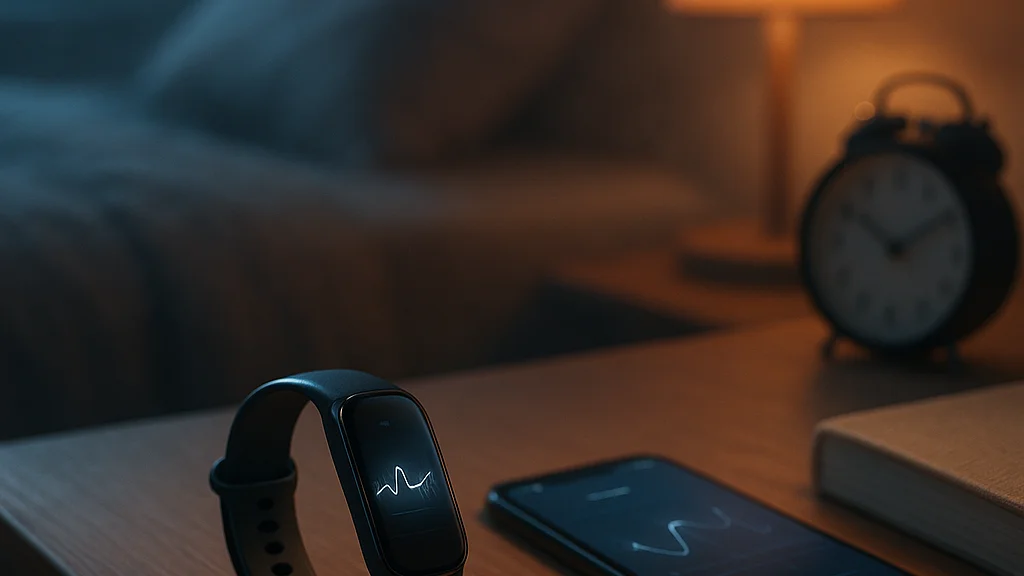
Wearables add another layer. Consumer devices are not diagnostic replacements for clinical testing, yet they are increasingly useful as screening prompts and adherence companions. Repeated overnight oxygen dips, heart-rate variability changes, loud snoring detection, and fragmented sleep patterns can nudge users toward formal evaluation. In wellness culture, that is significant. The same person who tracks steps or recovery scores may now ask a doctor about possible sleep-disordered breathing before years of fatigue accumulate.
Clinicians are also using remote monitoring after diagnosis. A patient starting therapy can be reviewed based on transmitted usage data and symptom changes rather than waiting months. That is especially important because the first 30 to 90 days often determine whether treatment becomes a habit.
- Symptoms such as snoring, witnessed pauses, headaches, or sleepiness trigger suspicion.
- Home testing or lab testing confirms whether obstructive or central events are present.
- Digital follow-up tools track response, adherence, and the need for pressure or device changes.
- Long-term data help clinicians reassess risk as weight, age, and health status change.
For patients, this creates a smoother journey. Diagnosis no longer has to feel like waiting in a long corridor with no windows. It can be faster, more comfortable, and more continuous.
3. Oral appliances and digital dental workflows are making treatment more tailored
Not every patient needs or wants positive airway pressure. For people with mild to moderate obstructive sleep apnea, or for those who cannot tolerate CPAP, mandibular advancement devices have become an increasingly important option. These oral appliances work by repositioning the lower jaw and tongue to help keep the airway open during sleep. The concept is not new. The execution is getting much better.
Digital dentistry has transformed how these devices are designed and fitted. Instead of relying only on traditional impressions, many practices now use intraoral scanning, 3D modeling, and computer-guided fabrication. This can improve precision, comfort, and turnaround time. A better fit often means better adherence, and adherence is the heartbeat of any sleep therapy.
What makes this development especially promising is the move toward phenotype-based treatment. Sleep apnea is not one uniform disorder. Some patients have jaw structure issues, some have obesity-related airway narrowing, some have positional collapse, and others have mixed contributors. A custom oral appliance can be ideal in the right anatomical setting, particularly when paired with follow-up sleep testing to confirm effectiveness.
There is also a broader care-team effect. Dentists trained in dental sleep medicine are becoming more integrated with sleep physicians, ENTs, and primary care clinicians. That multidisciplinary model is overdue. Sleep apnea touches cardiovascular risk, mental sharpness, driving safety, and quality of life, so it should not sit in a silo.
The best sleep apnea technology is not the newest gadget. It is the option a patient can use consistently, comfortably, and safely over time.
For readers looking for a more foundational overview, What You Need to Know About Technology Reshaping Sleep Apnea Treatment offers a useful companion perspective. The larger point is simple: digital manufacturing is helping oral appliance therapy move from a niche alternative to a more mainstream personalized pathway.
4. Positional therapy is getting a high-tech revival after years on the margins
For some people, sleep apnea is strongly position-dependent, with breathing events worsening when they sleep on their back. Old advice in this area could sound almost folkloric, from sewing a tennis ball into the back of a pajama shirt to using improvised wedges. The modern version is far more elegant. Positional therapy devices now use small wearable sensors, gentle vibrations, and app-based tracking to train sleepers away from supine positions without fully waking them.
This matters because positional obstructive sleep apnea is common enough to deserve more attention, especially in milder cases or as part of combination therapy. A patient may use positional therapy alongside weight loss efforts, an oral appliance, or lower-pressure PAP support. Not every innovation needs to be dramatic to be effective. Sometimes the most useful technology is the one that works quietly and respects the sleeper’s natural rhythm, much like a late-night Mediterranean breeze moving through a narrow street during Festa Major.
Recent reporting from Wired and Yale points to this broader diversification of treatment choices. Positional therapy fits that trend perfectly. It is not a universal answer, but it is a strong example of how sensors and behavioral design can turn a once-clumsy intervention into a clinically relevant tool.
- Best suited for patients whose apnea is significantly worse on their back.
- Often used in mild to moderate cases or in combination with other therapies.
- Can improve comfort compared with fixed-pressure solutions for selected patients.
- Requires follow-up testing to verify that position changes actually reduce events.
The caution here is important. Position dependence should be documented, not assumed. Yet when properly matched, this category shows how technology can make treatment less invasive while still grounded in measurable outcomes.
5. Hypoglossal nerve stimulation is redefining what an implant can do
One of the most talked-about advances in sleep apnea care is hypoglossal nerve stimulation, an implanted therapy designed for certain patients with obstructive sleep apnea who cannot tolerate CPAP. The basic idea is elegant: stimulate the nerve that controls tongue movement so the airway remains more open during sleep. Rather than pushing air through a mask, the therapy works from within the body’s own mechanics.
This approach has gained attention because it addresses a specific physiological problem in a very targeted way. Patients are typically evaluated carefully for eligibility, including body habitus, apnea severity, and airway collapse pattern. Drug-induced sleep endoscopy has become an important part of that selection process, helping clinicians determine whether the pattern of airway obstruction is suitable for this type of therapy. That is precision medicine in action.
By 2026, awareness of implanted options is far higher than it was even a few years earlier. Yale Environment 360’s reporting underscores how these alternatives are moving from curiosity to a serious part of the treatment conversation. Wired similarly notes that the field is broadening beyond the old CPAP-or-nothing binary. For patients who have failed conventional therapy, that can feel revolutionary.
Still, this is not a casual upgrade. Implantable therapy involves surgery, cost considerations, and careful follow-up. It is also not right for every anatomy or every severity pattern. Yet its existence changes the psychology of care. Patients who once felt trapped between suffering and nonadherence now have another lane to consider, and that alone can improve engagement with the sleep medicine process.
What stands out most is the sophistication of candidate selection. The future of sleep apnea is not merely more devices. It is better matching of device to patient. Hypoglossal nerve stimulation embodies that shift beautifully.
6. Artificial intelligence is helping clinicians classify risk and personalize therapy
Artificial intelligence in sleep medicine is still maturing, but its practical uses are already visible. Algorithms can assist with sleep study scoring, identify respiratory event patterns, flag poor adherence trajectories, and help segment patients into subgroups that may respond differently to treatment. That is important because the classic apnea-hypopnea index, while useful, does not tell the whole story. Two patients with the same index can have very different symptom burdens, cardiovascular profiles, airway anatomy, and treatment tolerance.
AI’s real promise is not replacing clinical judgment. It is helping clinicians see patterns at scale. A machine-learning model might detect that a patient with certain oxygen desaturation characteristics and positional sensitivity is likely to benefit from one pathway over another. Another system may identify who is at high risk of abandoning CPAP in the first month and trigger early outreach. These are practical, patient-centered improvements, not science fiction.
There is also momentum in combining multi-source data: home sleep tests, wearable signals, PAP adherence logs, electronic health records, and symptom questionnaires. When integrated responsibly, these streams can support more nuanced care plans. A patient with obesity, resistant hypertension, and severe nocturnal desaturation may need a very different level of urgency and follow-up than someone with mild positional apnea and minimal daytime symptoms.
That said, caution is healthy. AI systems are only as good as the data used to train them, and sleep medicine cannot afford opaque tools that embed bias or overpromise accuracy. Regulation, validation, and transparency remain essential. Yet the direction is clear. Sleep apnea care is moving from broad categories toward individualized prediction, and AI is one of the engines pushing that change.
Readers interested in the most current framing can compare this trend with Technology Is Reshaping Sleep Apnea Treatment in 2026. The through line is unmistakable: data are no longer just being collected; they are being translated into more tailored decisions.
7. Telemedicine and remote coaching are improving the hardest metric of all: adherence
In sleep apnea treatment, success is not defined by what a prescription says. It is defined by what happens at 2:13 a.m. on a Tuesday when a patient decides whether to keep the mask on, charge the device, or give up. That is why telemedicine and remote coaching may be among the most underrated technological shifts in the field. They target the human friction points that sabotage otherwise effective therapies.
Virtual sleep clinics now handle initial consultations, test reviews, mask troubleshooting, compliance checks, and long-term follow-up. For many patients, especially those balancing work, caregiving, or mobility challenges, this reduces drop-off dramatically. Remote respiratory therapists and sleep coaches can intervene quickly when data show low usage, persistent leak, or residual symptoms. Instead of a patient silently struggling for months, support can arrive within days.
The economics matter too. Untreated sleep apnea is associated with downstream costs tied to cardiovascular disease, metabolic dysfunction, workplace errors, and motor vehicle crashes. Earlier intervention and better adherence may reduce that burden, though the exact savings depend on population, severity, and healthcare system design. What is clear is that digital follow-up makes treatment more continuous and less episodic.
Telemedicine also helps normalize care. A patient can discuss snoring, fatigue, libido changes, blood pressure, or mask anxiety from home rather than waiting nervously in a specialist’s office. That may sound small, but stigma has long delayed diagnosis, especially among people who do not fit the stereotype of the loud middle-aged snorer.
- Remote setup shortens the time between diagnosis and first treatment night.
- Usage dashboards allow rapid troubleshooting before frustration hardens into abandonment.
- Virtual coaching improves education around cleaning, fit, side effects, and expectations.
- Longitudinal follow-up supports therapy changes as weight, age, or symptoms evolve.
When technology reduces shame and inconvenience, medicine becomes more livable. That is a lesson every digital health sector could borrow.
8. Combination therapy and precision pathways are becoming the real future
If there is one idea that captures 2026, it is this: the future of sleep apnea treatment is not a battle between CPAP and everything else. It is a move toward combination therapy and precision pathways. A patient may use weight-management tools, positional therapy, a custom oral appliance, and remote monitoring together. Another may begin with auto-CPAP, transition to an implant after intolerance, and continue with telehealth follow-up and wearable-based symptom tracking. The point is no longer to defend one modality as universally superior. The point is to build a treatment architecture that fits real life.
That architecture is being shaped by better phenotyping, stronger digital diagnostics, and a more collaborative clinical ecosystem. ENTs, dentists, sleep physicians, pulmonologists, cardiologists, obesity specialists, and digital health companies are increasingly working across boundaries. That multidisciplinary approach is especially important because sleep apnea rarely travels alone. It intersects with obesity, diabetes, hypertension, mood disorders, and cognitive performance.
Current 2026 developments suggest the field is moving in three clear directions:
- Earlier detection: more screening through home testing and consumer health platforms.
- Better matching: therapy chosen according to anatomy, severity, tolerance, and comorbidities.
- Continuous optimization: remote data and AI-assisted review refining treatment over time.
For patients and families, the practical takeaway is encouraging. If one treatment has failed, that does not mean the condition is untreatable. It may simply mean the fit was wrong. Ask about home testing, oral appliances, positional options, implant candidacy, mask alternatives, and digital follow-up. Ask whether your apnea is positional, anatomically driven, weight-related, or mixed. Better questions now lead to better sleep later.
Sleep is foundational, but it is also intimate. The best technologies are those that respect that intimacy while delivering measurable benefit. Like the mosaic patterns in Park Güell, the future is being assembled piece by piece: sensors here, algorithms there, a more comfortable mask, a smarter implant, a better follow-up system. On their own, each innovation matters. Together, they are reshaping sleep apnea treatment into something more flexible, precise, and hopeful than the field has seen in decades.



























Sign in to leave a comment.