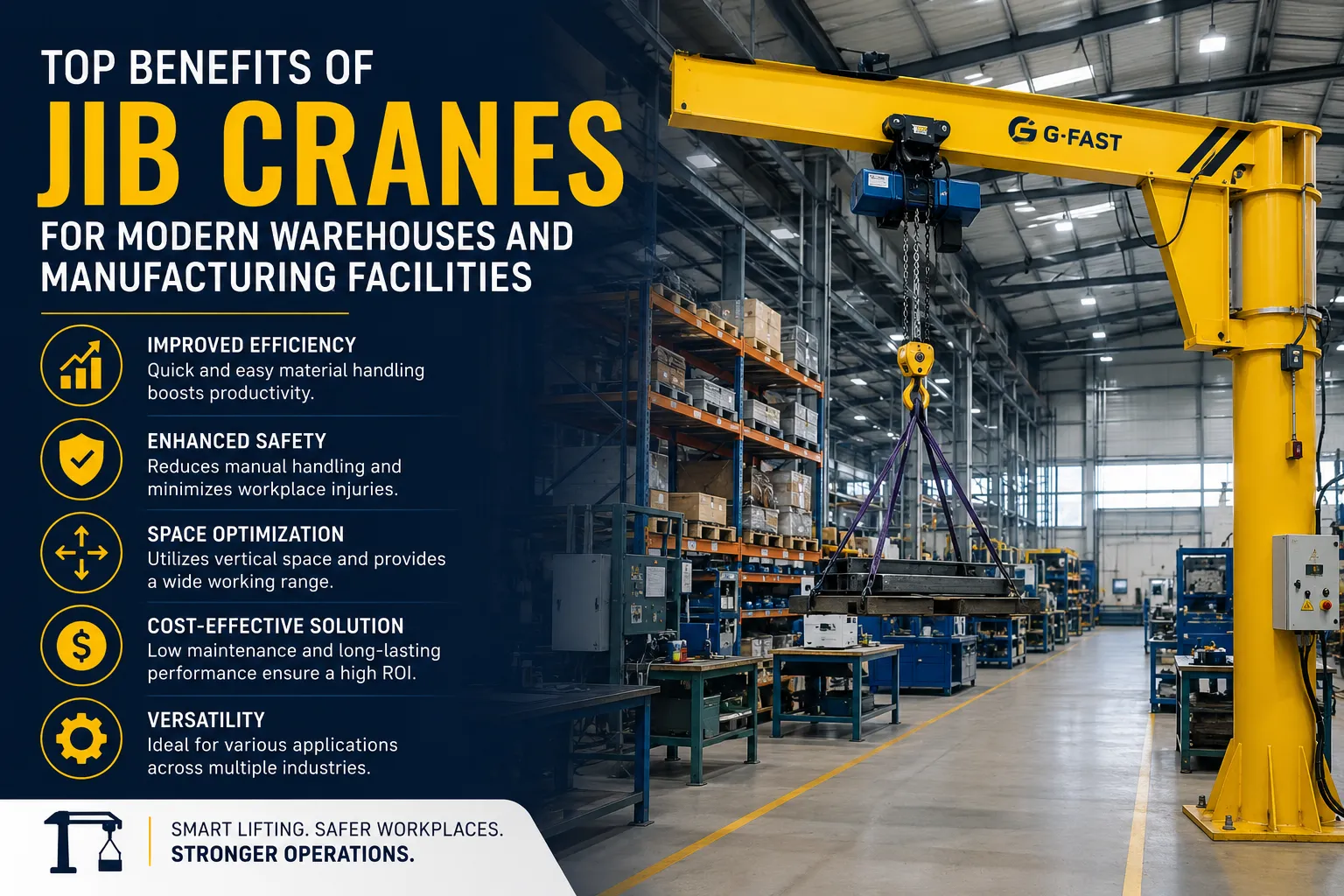

Modern warehouses and manufacturing facilities operate in fast-paced environments where material movement, worker safety, and operational efficiency directly impact productivity. As production demands increase and facilities handle heavier loads more frequently, companies need lifting solutions that improve workflow without slowing down daily operations.
After working with industrial material handling systems across warehouses, assembly plants, and manufacturing facilities, one thing becomes clear. Efficient lifting equipment plays a major role in reducing downtime, improving safety, and streamlining material handling processes.
This is where jib crane systems provide significant advantages.
Jib cranes are designed to support repetitive lifting tasks, improve workstation efficiency, and reduce the physical strain associated with manual material handling. Whether installed in loading areas, production lines, maintenance departments, or storage zones, these systems help operators move materials safely and efficiently within a controlled work area.
In this guide, we will explore the top benefits of jib cranes for modern warehouses and manufacturing facilities, including how they improve productivity, enhance workplace safety, reduce forklift dependency, and support better overall material handling operations.
How Jib Crane Systems Improve Warehouse Efficiency
A jib crane system is built to lift and move materials within a specific work area. Unlike large overhead crane systems that cover an entire building, a jib crane focuses on a smaller workstation or operational zone.
In real warehouse environments, this makes a major difference.
We often see warehouses where employees waste time waiting for forklifts to move pallets, components, or heavy equipment. In many cases, forklifts are being used for short-distance lifting tasks that could be handled faster with a workstation jib crane.
With a jib crane installed directly at the workstation, operators can:
- Lift materials quickly without waiting for shared equipment
- Move loads with better control in tight spaces
- Reduce unnecessary walking and material handling steps
- Improve workflow between production and storage areas
- Handle repetitive lifting tasks with less physical strain
This creates a smoother operation and reduces downtime during busy warehouse shifts.
Why Warehouse Safety Improves with Jib Crane Systems
Safety is one of the biggest reasons companies invest in jib crane systems.
In warehouses, injuries often happen during repetitive lifting or when workers try to manually reposition heavy materials. We have visited facilities where employees were lifting steel parts, containers, and machine components without proper support equipment. Over time, this creates serious strain injuries and increases accident risks.
A jib crane system helps reduce these problems by giving workers controlled lifting support exactly where they need it.
With the right lifting equipment in place, operators can:
- Lift heavy materials safely
- Position loads with better accuracy
- Reduce back and shoulder strain
- Lower the risk of dropped materials
- Improve safety in crowded work areas
Many warehouse managers also notice improved employee confidence after installing ergonomic lifting solutions like jib cranes.
Types of Jib Crane Systems Used in Warehouse Operations
Different warehouse operations require different types of jib crane systems. Choosing the correct system depends on available floor space, lifting capacity, workflow requirements, and building structure.
As industrial material handling equipment manufacturers, we typically recommend the following options based on operational needs.
Free Standing Jib Cranes for Flexible Warehouse Layouts
Free standing jib cranes are commonly used in warehouses where independent lifting coverage is needed.
These cranes are mounted to their own support structure and do not rely on the building columns for support. This makes them ideal for:
- Shipping and receiving areas
- Packing stations
- Maintenance departments
- Production support areas
- Heavy component handling
Many warehouse facilities prefer free standing jib cranes because they can rotate fully and cover larger work zones.
Wall Mounted Jib Cranes for Space Saving Operations
In facilities where floor space is limited, wall mounted jib cranes are often the better option.
These systems attach directly to building columns or walls, helping preserve open floor space for forklifts and pallet movement.
We often install wall mounted jib cranes in narrow warehouse aisles, assembly stations, and storage areas where floor congestion is already a challenge.
Jib Crane Systems Reduce Forklift Traffic in Warehouses
One issue we regularly see in warehouse operations is excessive forklift traffic.
Forklifts are important for moving large loads across the facility, but using them for every lifting task creates congestion and increases accident risks.
By installing jib crane systems at key workstations, warehouses can reduce unnecessary forklift movement.
For example, instead of calling a forklift operator every time a heavy part needs repositioning, workers can use a jib crane directly at their station.
This improves workflow and also creates safer warehouse traffic patterns.
In many facilities, this change alone improves operational efficiency significantly.
How Custom Jib Crane Systems Support Warehouse Operations
Not every warehouse has the same workflow or layout. Standard lifting equipment does not always solve operational problems efficiently.
This is why custom jib crane systems are important.
At Air Technical Industries, we work closely with warehouse operators and facility managers to understand how materials move throughout the operation. Real-world lifting conditions matter.
Factors we evaluate include:
- Load weight and dimensions
- Frequency of lifting cycles
- Operator movement patterns
- Ceiling height restrictions
- Floor space limitations
- Required rotation range
- Future production growth
A properly planned jib crane system should fit naturally into the warehouse workflow instead of creating obstacles.
Why Modern Warehouses Need Ergonomic Material Handling Solutions
Warehouse operations today focus heavily on efficiency and worker retention.
Employees who repeatedly handle heavy materials manually often experience fatigue during long shifts. This affects productivity and increases turnover in physically demanding work areas.
Jib crane systems support better ergonomic material handling by reducing repetitive lifting stress.
In many warehouses we have worked with, operators immediately notice the difference after a jib crane installation. Tasks that previously required two or three workers can often be handled safely by one trained operator.
This helps companies improve labor efficiency while maintaining safer working conditions.
Choosing the Right Jib Crane Manufacturer
Selecting the right jib crane system is important, but choosing the right material handling equipment manufacturer matters just as much.
An experienced manufacturer understands real warehouse operating conditions and can recommend solutions based on actual application requirements.
At Air Technical Industries, we manufacture custom material handling equipment for industrial facilities that require dependable lifting systems for demanding operations.
For warehouses looking to improve lifting efficiency, reduce worker strain, and improve material flow, our custom jib crane solutions are built around real operational needs.
You can also explore our custom material handling solutions and lifting systems at link title material handling equipment solutions.
Final Thoughts
Modern warehouse operations require faster material movement, safer lifting practices, and better workflow control.
A well-designed jib crane system helps warehouses improve productivity while reducing workplace injuries and unnecessary equipment movement.
From loading stations to production support areas, jib cranes continue to be one of the most practical lifting solutions for warehouse operations.
When properly selected and installed, these systems improve efficiency, support worker safety, and help warehouses maintain smoother day-to-day operations.
For facilities handling repetitive lifting tasks or dealing with crowded work areas, investing in the right jib crane system can make a measurable difference in overall warehouse performance.








![The Benefits of Using a CNC Touch Probe [Infographic]](https://writeupcafe.com/data/post/1677697/bfdf3e040e67936848aa232d2dfe3d03.jpg.webp)







Sign in to leave a comment.