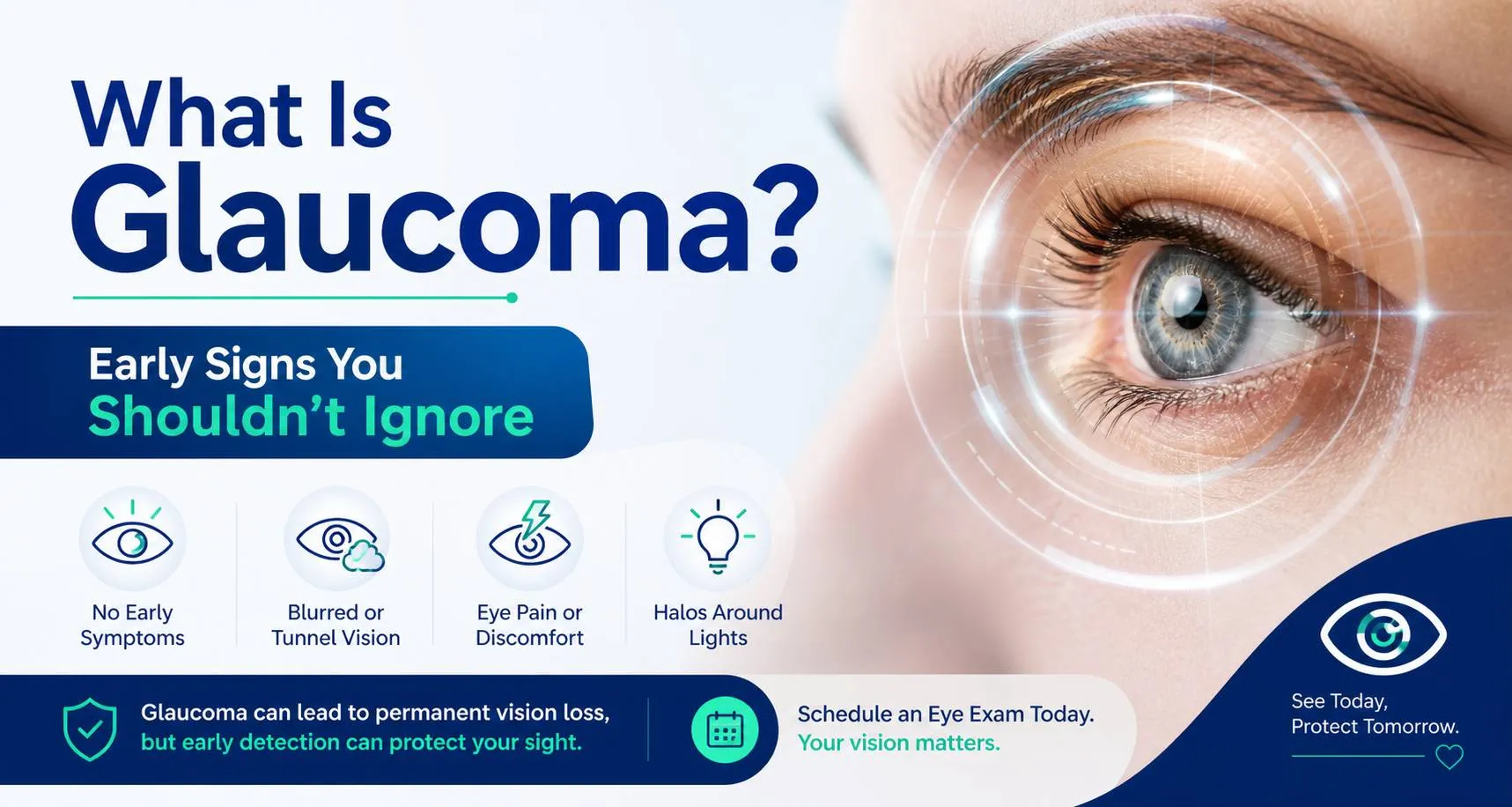

Let's talk about glaucoma, which most people don't think about until it gets bad. A lot of people call it the "silent thief of sight," and for good reason. Glaucoma usually gets worse slowly, without any clear signs. By the time you notice a problem, some of your vision may already be gone for good. That is why it is very important to understand it and catch it early.
So, What Exactly Is Glaucoma?
In simple terms, glaucoma is a group of eye conditions that damage the optic nerve—the part of your eye that sends visual information to your brain. This damage is often caused by increased pressure inside the eye, also known as intraocular pressure. Get the best prescription eyeglasses san castle fl and get your eyes checked from the top optometrist coral spring only at Modern Optical.
Think of it like this: your eye constantly produces fluid, and when that fluid doesn’t drain properly, pressure builds up. Over time, that pressure can harm the optic nerve, affecting your ability to see clearly.
Left untreated, glaucoma can lead to permanent vision loss and even blindness. But here’s the key point—it’s manageable if caught early.
Why It’s So Easy to Miss
One of the biggest challenges with glaucoma is that it doesn’t usually come with dramatic symptoms in the early stages. There’s no pain, no redness, and often no noticeable change in vision at first.
That’s why many people don’t realize they have it until it has already progressed.
Early Signs You Shouldn’t Ignore
Even though glaucoma is often symptomless at first, there are subtle clues your eyes might be giving you. Pay attention to these:
1. Gradual loss of peripheral vision
You might not notice it right away, but over time, your side vision can start to narrow. It’s like looking through a tunnel instead of having a full field of view.
2. Frequent headaches or eye pressure
While not always linked to glaucoma, recurring pressure or discomfort around the eyes can be a sign worth checking out.
3. Blurred or patchy vision
If your vision occasionally seems unclear or inconsistent, it could point to underlying issues.
A More Sudden Type: Don’t Ignore These Symptoms
There’s also a less common but more urgent form called angle-closure glaucoma. This one doesn’t stay quiet.
Symptoms can include:
- Severe eye pain
- Sudden blurred vision
- Nausea or vomiting
- Red eyes
If you ever experience these, it’s not something to wait on—you need immediate medical attention.
Who is at Risk?
Anyone can get glaucoma, but some things make you more likely to get it:
- Being older than 40
- A family history of glaucoma
- High blood pressure or diabetes
- Taking steroids for a long time
- Past injuries to the eye
If any of these things apply to you, it's even more important to get your eyes checked regularly.
The good news is that it can be found quickly.
A full eye exam can find glaucoma early, which is good news. Your eye doctor can check your eye pressure, field of vision, and optic nerve. And with today's imaging tools, it's easier than ever to spot even the tiniest changes before they do a lot of damage.
Why Early Detection Matters
Vision loss from glaucoma is permanent. That’s the reality. But progression can be slowed or even stopped with the right treatment, usually in the form of eye drops, medication, or in some cases, minor procedures.
The earlier it’s caught, the more vision you can protect.
Key Takeaways
Glaucoma doesn't usually make a big deal about itself. It works quietly in the background, which is why you should pay attention to it. Don't ignore it if you haven't had an eye exam in a while or if you've noticed even small changes in your vision. A quick check-up could change your life for the better. When it comes to your eyesight, what you don't see can hurt you, but what you do see early can save your vision.

























Sign in to leave a comment.