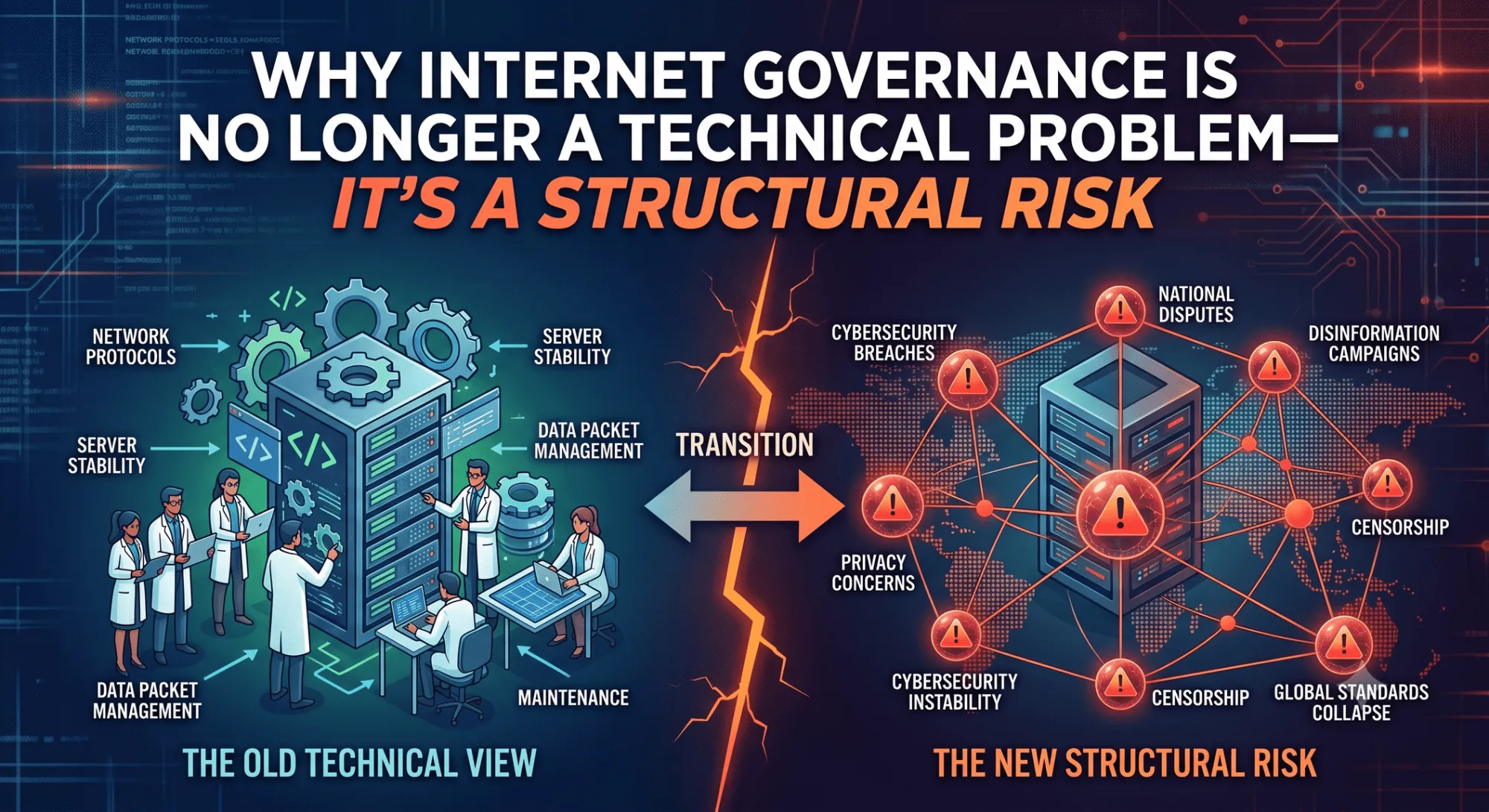

For much of the internet’s early history, “internet governance” sounded like a niche engineering concern—routing protocols, domain name systems, bandwidth allocation, and infrastructure uptime. In that framing, it belonged to network engineers, standards bodies, and a handful of technical institutions.
That framing no longer holds.
Today, internet governance has become a structural risk domain—one that shapes geopolitics, economic stability, information integrity, and even social cohesion. The shift is subtle in terminology but profound in consequence: we are no longer just managing how the internet works, but how power, control, and dependency are distributed across society.
From Infrastructure Problem to Power System
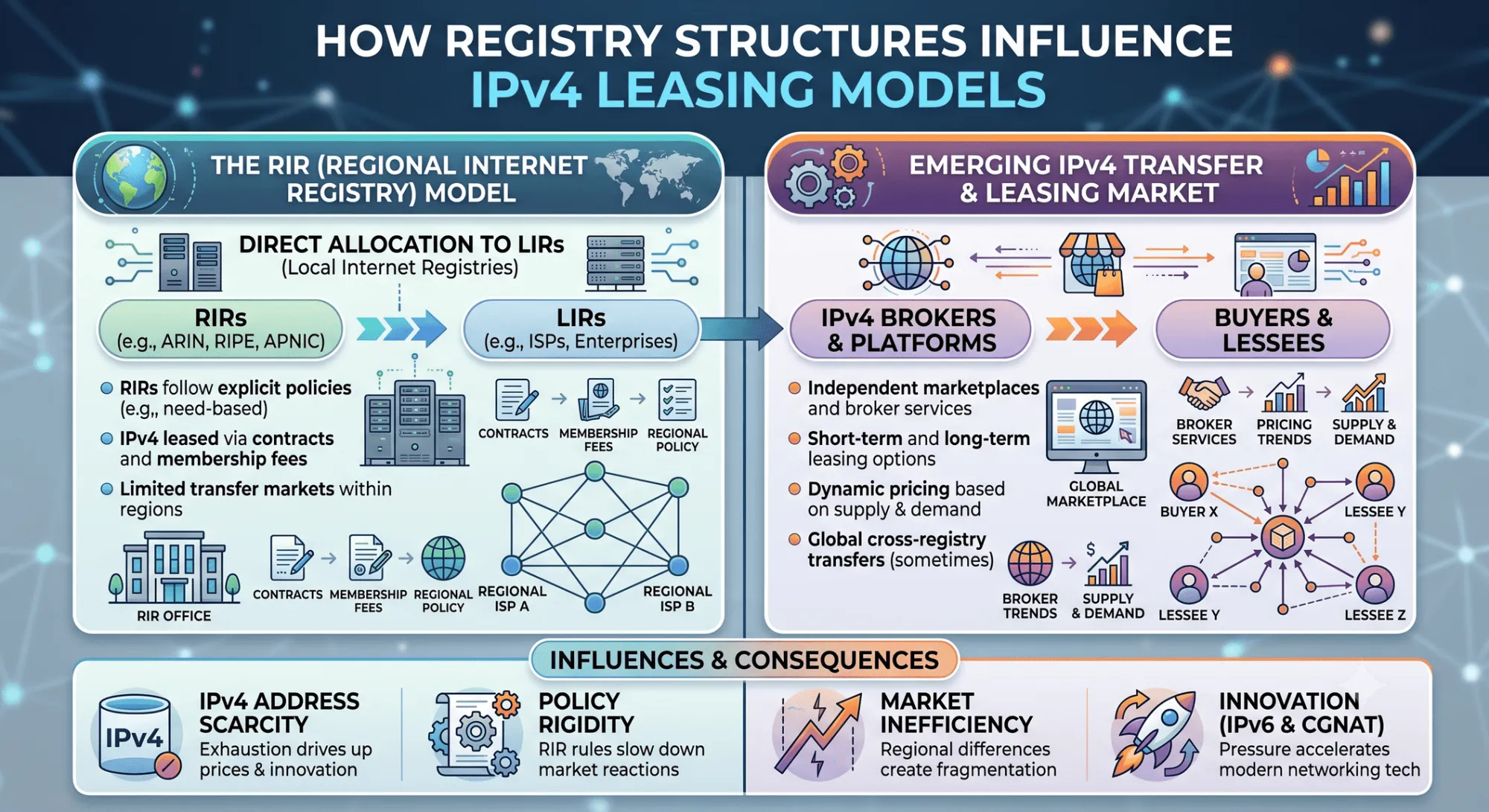
The early internet was designed around decentralization. No single entity was meant to fully control it. Governance mechanisms such as ICANN, IETF standards, and regional internet registries were built to maintain coordination, not control.
But over time, three structural shifts changed the nature of the system:
- Centralization of digital infrastructure
- A small number of cloud providers, content delivery networks, and platforms now handle a large share of global traffic.
- “The internet” is increasingly experienced through a handful of intermediaries rather than open protocols.
- Platform dominance over protocols
- User experience is now shaped more by platform policies than by internet standards.
- Moderation rules, recommendation systems, and algorithmic ranking determine visibility and access.
- State involvement and fragmentation
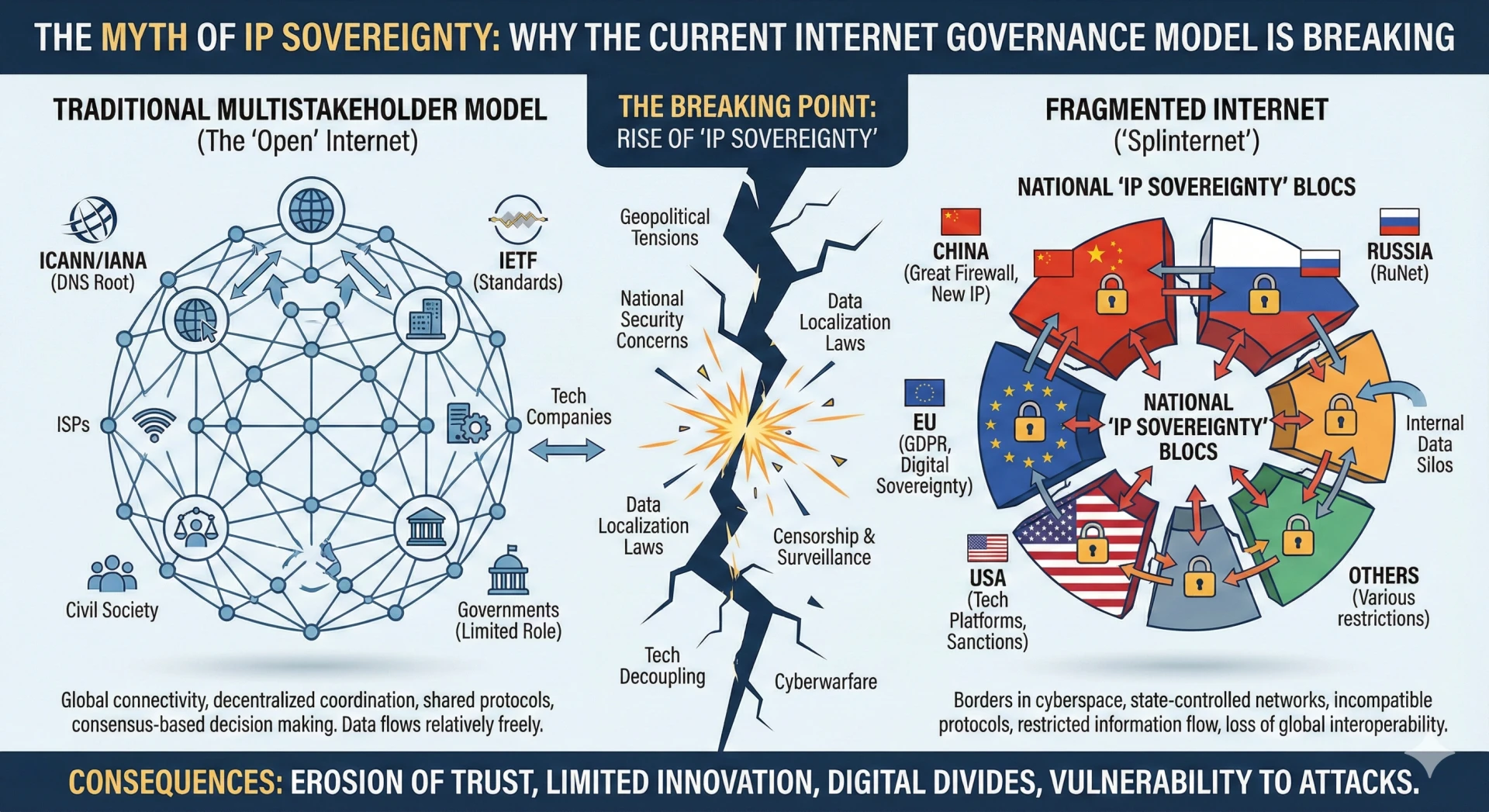
- Governments increasingly assert sovereignty over data, content, and infrastructure.
- This leads to regulatory fragmentation—what some call the “splinternet.”
These changes shift internet governance from a coordination problem into a control and dependency problem.
Why This Becomes a Structural Risk
A structural risk is not a single point of failure. It is a system-wide vulnerability that emerges from how components are connected.
Internet governance now exhibits several structural risk characteristics:
1. Single Points of Failure in a “Decentralized” System
Although the internet appears distributed, critical choke points exist:
- Major cloud providers hosting vast portions of services
- A small number of submarine cable landing hubs
- Centralized app stores controlling software distribution
When governance decisions affect these points, the impact cascades globally.
Read more: https://heng.lu/what-is-internet-governance-risk/
2. Policy Becomes Infrastructure
Content moderation policies, encryption standards, and data localization laws are no longer “soft” decisions. They function as infrastructure constraints.
For example:
- A platform’s moderation policy can effectively determine political speech visibility in multiple countries.
- Regulatory environments increasingly shape infrastructure design choices and operational continuity.
For organizations navigating these shifts, frameworks like those discussed in the NRS Internet Governance resources highlight how policy decisions are now deeply embedded in infrastructure outcomes.
3. Geopolitical Fragmentation of the Internet
Different jurisdictions increasingly impose incompatible requirements:
- Data must stay within borders
- Content must be filtered differently by region
- Platforms must maintain separate compliance systems
This leads to duplicated infrastructure, reduced interoperability, and higher systemic fragility.
The result is not one internet, but multiple partially overlapping internets.
4. Algorithmic Governance Without Accountability
A large portion of modern internet governance is now embedded in algorithms:
- Search ranking systems
- Recommendation engines
- Automated moderation tools
These systems govern what people see, believe, and engage with—but they are often opaque, proprietary, and continuously changing.
The Hidden Dependency Problem
One of the most important shifts is the rise of hidden dependencies.
A country’s digital services may depend on:
- Foreign cloud infrastructure
- Foreign-developed AI systems
- External identity providers
- Global payment rails
- Third-party cybersecurity tools
This means governance decisions in one jurisdiction can produce second-order systemic effects globally, even without direct political intent.
In practice, these dependencies create exposure similar to the risks highlighted in NRS Shield analyses of RIR and resource risk, where underlying infrastructure control can become a board-level continuity issue.
This is no longer just a question of sovereignty. It is a question of resilience under interdependence.
Why Traditional Internet Governance Models Fall Short
Traditional governance models assume:
- Clear institutional boundaries
- Stable technical layers
- Predictable stakeholder roles
But modern internet systems violate these assumptions.
Instead, we see:
- Blurred lines between state, corporate, and technical authority
- Rapidly evolving platform ecosystems
- Continuous deployment of infrastructure-level software changes
Regulatory approaches that treat internet governance as static or purely technical tend to lag behind reality.
What a Structural Risk Lens Changes
Viewing internet governance as a structural risk leads to different priorities:
1. Resilience over control
Instead of asking “who governs the internet,” the question becomes:
How do we prevent systemic collapse or coercive dependency?
2. Diversity of infrastructure
Encouraging multiple providers, protocols, and routing paths reduces systemic fragility.
3. Transparency in algorithmic systems
Governance must extend to recommendation systems and automated decision layers, not just network protocols.
4. Cross-border coordination mechanisms
Since fragmentation is already happening, coordination frameworks become essential to avoid incompatible digital ecosystems.
The Core Insight
The internet is no longer just a communication network. It is:
- A financial infrastructure layer
- A political communication environment
- A cultural distribution system
- A critical dependency for public services and private industry
That means internet governance is no longer about keeping packets flowing efficiently.
It is about managing systemic risk in a deeply interconnected global structure where technical design, corporate strategy, and state policy are inseparable.
Conclusion
Calling internet governance a “technical problem” is increasingly misleading. The underlying infrastructure is still technical—but the consequences are now structural.
And structural systems don’t fail like software bugs. They fail like ecosystems: gradually, interdependently, and often only visibly when recovery becomes difficult.
The challenge ahead is not just to make the internet work.
It is to ensure that the way it works does not quietly become a source of global instability.





























Sign in to leave a comment.