
Introduction
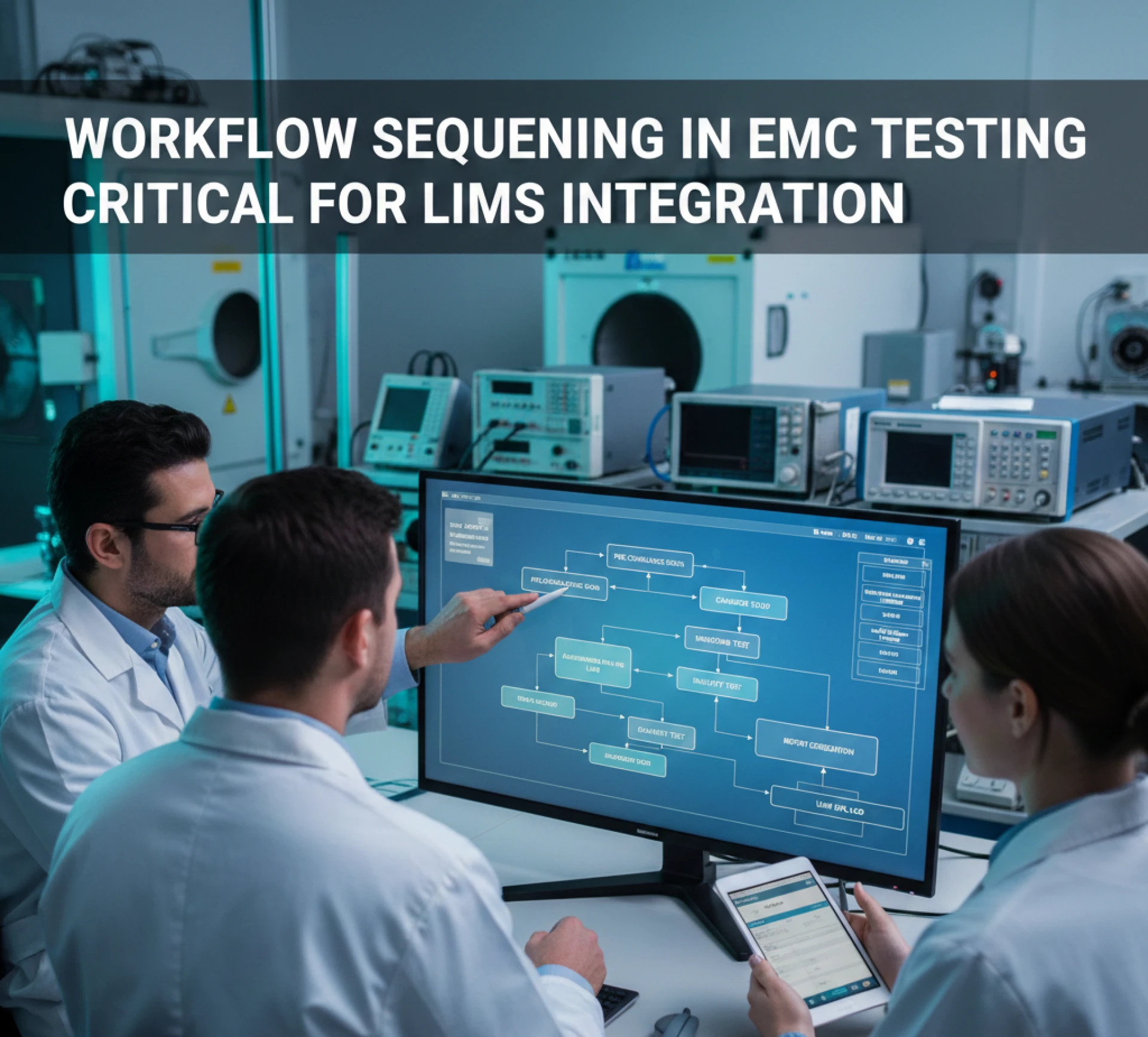
Electromagnetic Compatibility (EMC) testing is a critical aspect of ensuring that electronic devices operate reliably without causing or suffering from electromagnetic interference (EMI). However, the accuracy and reliability of EMC test results depend not only on equipment and procedures but also on workflow sequencing—the systematic order in which tests, validations, and data collection are conducted.
In 2025, as testing becomes more complex with high-frequency devices, multi-standard compliance, and integrated systems, proper workflow sequencing has become a fundamental requirement in EMC laboratories.
1. Ensures Accurate and Reproducible Results
The sequence of testing steps directly affects measurement accuracy:
- Proper Calibration First: Instruments must be calibrated before measurements to avoid errors.
- Controlled Environment Setup: Ensures EMI-free test conditions before device testing begins.
- Sequential Test Execution: Emissions and immunity tests conducted in the correct order prevent interference from affecting subsequent tests.
By adhering to a defined sequence, labs can produce reproducible results and maintain consistency across multiple test sessions.
2. Minimizes Test Errors and Re-Runs
Incorrect sequencing can result in failed tests, re-runs, or invalid data:
- Pre-Test Checks: Verifying power supply, grounding, and connections before testing reduces setup errors.
- Sample Handling Order: Ensures devices are correctly prepared and oriented for each test.
- Stepwise Verification: Intermediate validations catch issues early, preventing wasted time and resources.
A well-planned workflow reduces human errors and unnecessary repeat testing.
3. Facilitates Compliance with Standards
EMC testing is governed by strict international and regional standards:
- IEC 61000 Series: Requires specific test sequences for emissions and immunity.
- CISPR and FCC Regulations: Mandate adherence to defined procedures to validate compliance.
- Documentation: Accurate sequencing ensures traceability and audit readiness.
Proper workflow sequencing aligns laboratory operations with regulatory expectations and reduces the risk of non-compliance.
4. Optimizes Lab Resource Utilization
Sequencing tests efficiently allows for better use of personnel, instruments, and time:
- Parallel vs. Sequential Tasks: Identify tasks that can be done simultaneously without interference.
- Equipment Scheduling: Ensures high-demand instruments are used effectively without downtime.
- Staff Assignment: Allocate personnel to tasks according to the workflow sequence for maximum efficiency.
Optimized sequencing reduces bottlenecks and improves overall lab productivity.
5. Supports Multi-Device and Multi-Standard Testing
Modern EMC labs often test multiple devices or products simultaneously against different standards:
- Device Grouping: Arrange similar devices in sequence to reduce setup changes.
- Standard-Specific Procedures: Ensure each device undergoes the correct series of tests.
- Result Correlation: Sequence allows easier comparison of results across devices and standards.
Structured workflows improve testing throughput while maintaining accuracy and compliance.
6. Enhances Data Integrity and Traceability
Correct sequencing ensures that all data is captured accurately and can be traced to specific test steps:
- Sequential Logging: Each test stage is documented in order, creating a clear audit trail.
- Error Identification: Problems can be traced back to specific workflow steps for corrective actions.
- Digital Integration: Linking test sequence data to laboratory information management systems (LIMS) improves transparency and traceability.
Maintaining sequence integrity is key for reliable reporting and regulatory audits.
7. Reduces Risk of Instrument Overuse and Damage
EMC testing involves expensive and sensitive equipment:
- Prevent Overheating: Proper sequencing allows instruments to rest between high-demand tests.
- Avoid Conflicts: Prevents multiple high-power tests from being conducted simultaneously, which could cause interference or damage.
- Maintenance Scheduling: Sequenced workflows can incorporate instrument checks and calibration intervals.
Following a structured workflow protects lab assets and reduces downtime.
Conclusion
Workflow sequencing in EMC testing is essential for accurate, reliable, and compliant results. It minimizes errors, prevents re-runs, optimizes resource usage, and ensures traceable documentation. In modern laboratories handling complex devices and multiple standards, structured sequencing becomes critical to maintain operational efficiency and regulatory adherence.
In 2025, adopting a disciplined approach to workflow sequencing not only improves testing accuracy but also supports the broader goals of laboratory productivity, cost-efficiency, and quality assurance.






















Sign in to leave a comment.