

Global finance is undergoing a structural transformation driven by blockchain innovation, distributed ownership models, and digitized investment ecosystems. Among the most influential developments is asset tokenization platform development, a process that converts physical and intangible assets into digital tokens that can be securely issued, traded, and managed on blockchain networks. This evolution is not simply a technological upgrade but a redefinition of how liquidity is created, accessed, and sustained across markets.
For decades, liquidity remained concentrated within traditional financial instruments such as publicly traded equities and government bonds. Assets like commercial real estate, private equity, infrastructure projects, and collectibles often suffered from limited accessibility and long holding periods. Tokenization introduces a mechanism that allows these historically illiquid assets to participate in fluid digital markets.
As enterprises, institutional investors, and technology innovators embrace this transformation, the concept of liquidity is being rewritten. Ownership is becoming fractional, settlement cycles are shrinking, and investment participation is expanding beyond geographic boundaries.
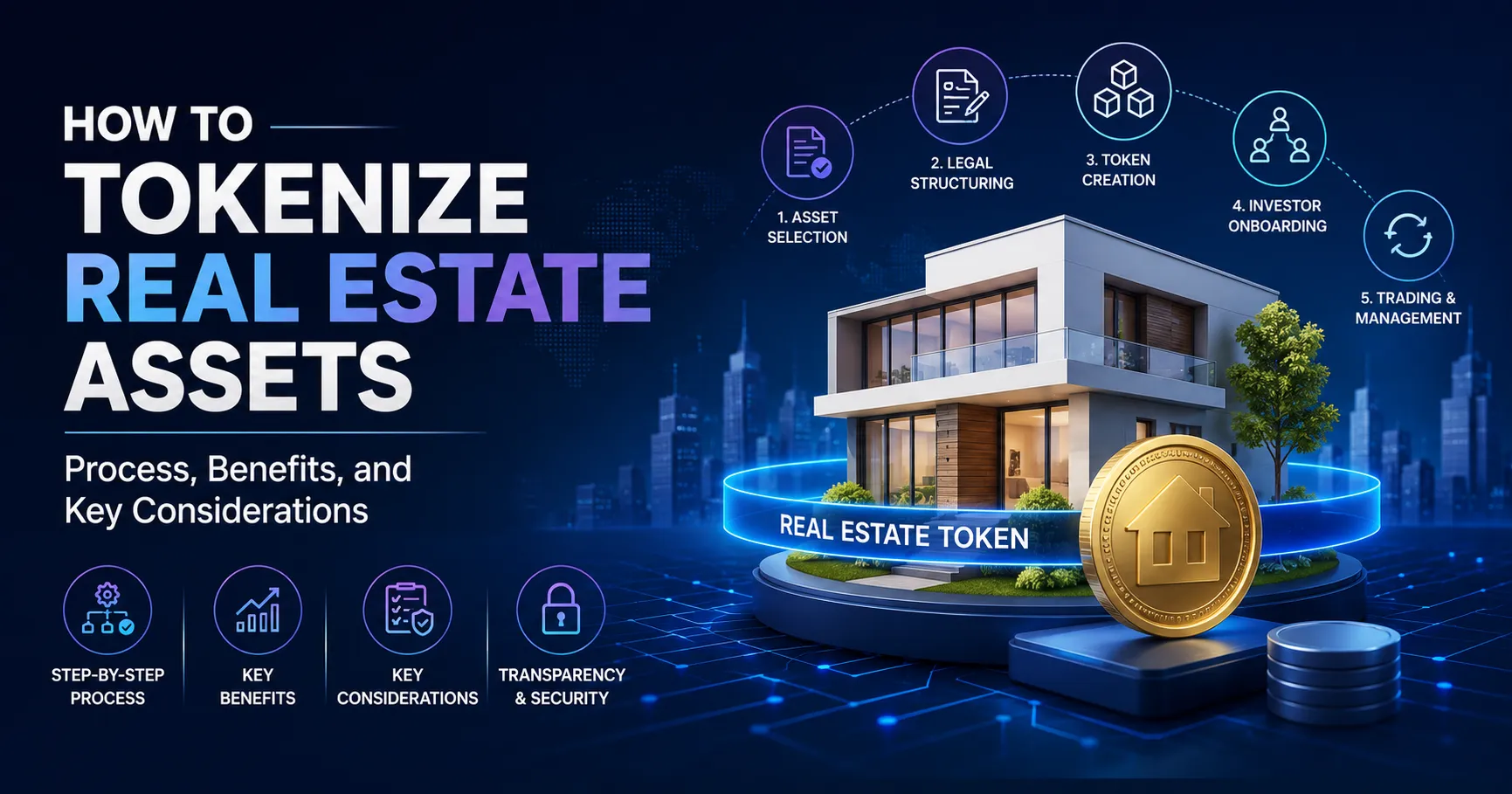
Within this rapidly expanding ecosystem, the rise of the Real Estate Tokenization Platform has become particularly significant, enabling property assets to evolve from static investments into dynamic financial instruments.
Understanding Asset Tokenization Platform Development
Asset tokenization platform development refers to the creation of digital infrastructures that facilitate the representation of ownership rights through blockchain based tokens. These platforms integrate smart contracts, compliance protocols, investor management tools, and marketplace functionalities to enable seamless asset lifecycle management.
At its core, tokenization transforms the way value is recorded and exchanged. Instead of relying on paper based documentation or centralized databases, ownership is embedded into programmable tokens that carry immutable records.
This development supports several critical functions:
• Digital issuance of asset backed tokens
• Automated compliance and identity verification
• Transparent transaction histories
• Secondary market enablement
• Fractional ownership capabilities
When these capabilities converge, liquidity is no longer dependent solely on traditional exchanges. Instead, it becomes programmable and accessible.
The growing involvement of every major Real Estate Tokenization company demonstrates how quickly enterprises are recognizing the strategic importance of this infrastructure.
Why Liquidity Needed Reinvention
Liquidity has traditionally been associated with ease of buying and selling without significantly affecting price stability. However, many high value assets remained locked due to structural barriers such as regulatory friction, limited buyer pools, and operational inefficiencies.
Real estate provides a clear example. Property transactions often take weeks or months to finalize. High capital requirements exclude smaller investors, and cross border participation introduces additional complexity.
Tokenization changes this paradigm by enabling fractional units that lower investment thresholds while simultaneously increasing the number of potential participants.
The impact of Real Estate Tokenization Services illustrates this shift clearly. Investors who once needed millions to access premium properties can now participate with significantly smaller allocations, broadening market depth and strengthening liquidity.
The Technology Backbone Behind Tokenized Liquidity
Modern tokenization platforms rely on a layered technology architecture designed to support scalability, transparency, and regulatory adherence.
Blockchain acts as the foundational ledger, ensuring that ownership records cannot be altered without consensus. Smart contracts automate processes such as dividend distribution, voting rights, and transfer restrictions.
Meanwhile, integrated compliance engines help platforms align with evolving regulatory frameworks, making tokenized markets more credible in the eyes of institutional stakeholders.
Key technological components typically include:
• Smart contract frameworks that govern token behavior
• Secure custody solutions for digital assets
• Integrated KYC and AML verification layers
• Investor dashboards for real time asset tracking
• Marketplace modules supporting peer to peer trading
These elements collectively empower Real Estate Tokenization Development Services to deliver platforms that mirror the sophistication of traditional financial infrastructure while improving operational efficiency.
Fractional Ownership: The Engine Driving Liquidity
One of the most transformative features of tokenization is fractional ownership. By dividing an asset into smaller digital units, platforms unlock participation from a broader investor base.
Instead of waiting for a single buyer capable of purchasing an entire building, tokenization enables hundreds or even thousands of investors to collectively own portions of the property.
This structure creates a natural liquidity engine because smaller ticket sizes attract higher transaction volumes.
Real Estate Tokenization is particularly well suited for this model due to the high intrinsic value of property assets. Through tokenized structures, capital flows more freely, allowing investors to rebalance portfolios without the traditional friction associated with property transactions.
Fractionalization also enhances price discovery. Continuous trading environments help markets determine fair value more efficiently than sporadic private sales.
New Rules Defining Asset Liquidity
As tokenization matures, a new framework is emerging that reshapes how liquidity is defined and measured.
Accessibility Over Exclusivity
Liquidity is no longer reserved for institutional participants. Tokenized ecosystems welcome retail investors, family offices, and global participants.
Speed as a Competitive Advantage
Settlement times are shifting from days to near real time execution. Faster settlement reduces counterparty risk and improves capital efficiency.
Transparency Builds Trust
Blockchain visibility provides investors with clear insights into ownership distribution and transaction activity, strengthening confidence in market operations.
Programmable Markets
Liquidity is becoming algorithmic. Smart contracts enforce trading rules, automate distributions, and reduce manual oversight.
These principles are guiding every forward thinking Real Estate Tokenization Development company as they design platforms capable of supporting next generation financial ecosystems.
Strategic Benefits for Enterprises
Organizations entering the tokenization space are discovering that improved liquidity is only one aspect of a broader strategic advantage.
Tokenized assets often attract global capital pools, allowing enterprises to diversify funding sources beyond traditional lenders.
Operational processes also become more efficient as automation reduces administrative burdens associated with investor management and reporting.
Major advantages include:
• Expanded investor reach across international markets
• Reduced dependency on intermediaries
• Enhanced asset visibility
• Faster capital formation
• Improved portfolio flexibility
These benefits explain why real estate tokenization development is increasingly viewed as a cornerstone of digital transformation strategies within asset heavy industries.
Real Estate Leading the Tokenization Movement
While tokenization spans multiple asset classes, real estate continues to dominate adoption narratives. The sector combines high value assets with persistent liquidity challenges, making it an ideal candidate for digital transformation.
A sophisticated Real Estate Tokenization Platform allows property developers to unlock trapped capital while offering investors structured exposure to income generating assets.
Additionally, tokenized real estate introduces diversification opportunities. Investors can distribute capital across multiple properties rather than concentrating funds in a single location.
The involvement of specialized providers ensures that each Real Estate Tokenization company can tailor solutions to accommodate regulatory requirements, investor preferences, and asset structures.
How Tokenization Platforms Strengthen Secondary Markets
Secondary trading has historically been one of the weakest aspects of private asset investment. Tokenization addresses this gap by enabling regulated digital marketplaces where investors can buy or sell tokens without waiting for asset liquidation events.
Stronger secondary markets contribute directly to liquidity by increasing transaction frequency and reducing holding constraints.
Several platform features support this capability:
• Built in trading portals
• Automated transfer approvals
• Liquidity pools
• Pricing analytics
• Investor matching tools
Real Estate Tokenization Services increasingly prioritize secondary market infrastructure because it transforms static ownership into a dynamic investment experience.
Regulatory Alignment and Institutional Confidence
Regulatory clarity plays a decisive role in determining how quickly tokenized markets scale. Platforms must integrate compliance mechanisms that address securities laws, investor protections, and reporting requirements.
Institutional investors are more likely to participate when governance frameworks mirror those of traditional finance.
A mature Real Estate Tokenization Development company typically embeds compliance into platform architecture rather than treating it as an external process.
This approach enhances credibility while reducing operational risk.
As governments gradually refine digital asset regulations, tokenized platforms are expected to become even more aligned with mainstream financial systems.
Methods for Building a High Impact Tokenization Platform
Developing a successful platform requires a strategic blend of technology, regulatory awareness, and market insight.
Conduct Comprehensive Asset Evaluation
Not every asset is suitable for tokenization. Evaluating factors such as revenue potential, ownership structure, and investor demand ensures long term viability.
Prioritize Compliance From the Start
Integrating regulatory workflows early prevents costly redesigns and builds investor trust.
Design for Scalability
Platforms should support growing transaction volumes without compromising performance.
Focus on User Experience
Investor interfaces must simplify complex processes such as onboarding, subscription, and trading.
Establish Secure Custody Frameworks
Protecting digital assets is essential for sustaining confidence.
These methods guide Real Estate Tokenization Development Services in delivering platforms that remain resilient as adoption accelerates.
Investor Perspective: A More Flexible Financial Future
From an investor standpoint, tokenization introduces unprecedented flexibility. Portfolios can now include fractions of commercial buildings, hospitality projects, or mixed use developments.
Liquidity options allow investors to adjust exposure in response to market conditions rather than remaining locked into multi year holding cycles.
Additional advantages include:
• Lower capital entry points
• Access to previously restricted assets
• Transparent ownership records
• Automated income distributions
• Improved diversification
These capabilities reinforce the growing appeal of Real Estate Tokenization as a pathway toward more adaptive wealth strategies.
Challenges That Still Shape the Landscape
Despite strong momentum, tokenization remains an evolving domain with several hurdles that must be addressed.
Market education continues to be a priority. Many investors and asset owners are still unfamiliar with tokenized structures.
Interoperability between blockchain networks also presents a technical challenge. Platforms must ensure seamless asset transfers without creating fragmented liquidity pools.
Other concerns include valuation consistency, cybersecurity preparedness, and regulatory variations across jurisdictions.
However, as more Real Estate Tokenization companies collaborate with financial institutions and regulators, these barriers are steadily diminishing.
The Role of Automation in Liquidity Expansion
Automation is quietly redefining operational efficiency within tokenized ecosystems. Smart contracts eliminate repetitive administrative tasks while ensuring that transactions follow predefined rules.
Dividend payments, compliance checks, and governance voting can all occur automatically, reducing both cost and error rates.
Automation not only enhances liquidity but also makes markets more predictable. Investors gain confidence when processes operate transparently without excessive manual intervention.
This is why real estate tokenization development increasingly emphasizes intelligent workflows that support continuous market activity.
Global Capital Without Geographic Limits
Traditional investment models often constrained participation based on geographic proximity. Tokenization dissolves many of these limitations by enabling cross border ownership through digital infrastructure.
An investor no longer needs to reside in the same country as the asset to participate, provided regulatory conditions are satisfied.
This globalization of capital significantly deepens liquidity pools, making markets more resilient during periods of economic volatility.
Platforms built by an experienced Real Estate Tokenization Development company are especially adept at supporting multi jurisdiction participation while maintaining compliance.
Future Outlook: Liquidity as a Built In Feature
The future of finance points toward a world where liquidity is embedded into asset design rather than treated as an afterthought. Tokenization platforms are evolving into comprehensive ecosystems that combine issuance, trading, governance, and analytics within unified environments.
Artificial intelligence is expected to enhance these platforms further by improving risk modeling, investor targeting, and predictive pricing.
Meanwhile, institutional adoption is accelerating as large financial entities explore tokenized funds and hybrid investment vehicles.
The continued advancement of Real Estate Tokenization Services suggests that property markets may soon operate with the same fluidity as digital securities.
Conclusion: A Permanent Redefinition of Asset Mobility
Asset Tokenization Platform Development represents more than a technological trend. It signals a permanent shift in how ownership is structured, how capital moves, and how investors interact with markets.
Liquidity, once limited by structural inefficiencies, is becoming programmable, inclusive, and globally accessible.
Real estate stands at the forefront of this transformation, demonstrating how traditionally rigid assets can evolve into flexible financial instruments. Through advanced platforms, strategic compliance integration, and investor centric design, the industry is unlocking opportunities that were previously unimaginable.
As innovation continues, the influence of the Real Estate Tokenization Platform will likely expand beyond property into a broad spectrum of asset classes, shaping a financial future where liquidity is not a privilege but a standard feature of modern investment ecosystems.


























Sign in to leave a comment.