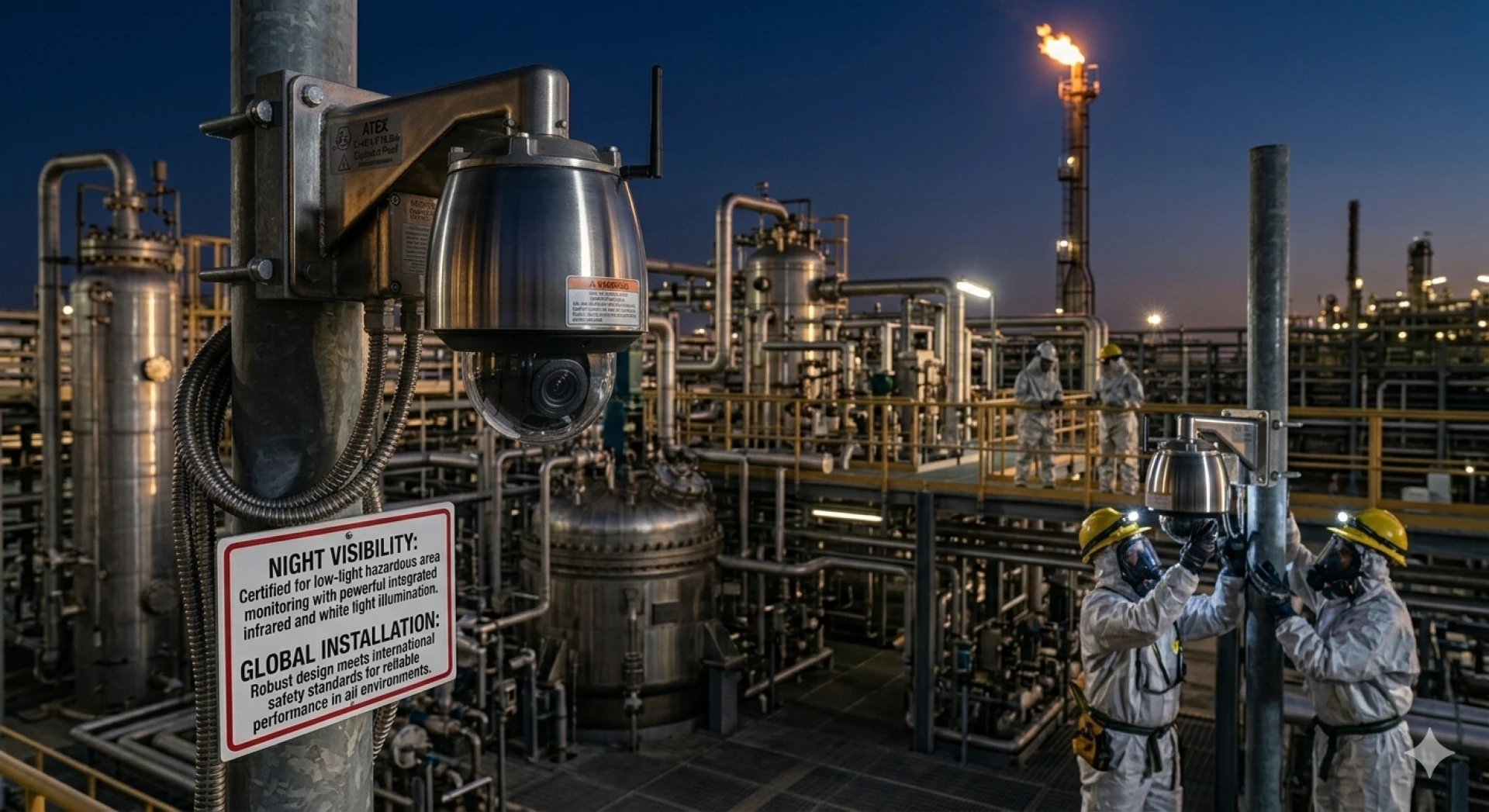

Across the world's most demanding industrial environments, one operational truth holds constant — you cannot manage what you cannot see. Whether it is a deep-level mining operation, a busy international port handling flammable cargo, or a chemical processing plant managing hazardous substances around the clock, the ability to monitor critical areas continuously and reliably is fundamental to both safety and operational efficiency.
The challenge in these environments is not simply one of scale or complexity, although both factors are significant. It is the fundamental incompatibility between the explosive atmospheres present in these locations and the standard surveillance equipment that serves most other industries perfectly well. Conventional cameras carry ignition risk in classified hazardous zones, making them not just inadequate but potentially dangerous. This is the precise operational gap that the Explosion Proof PTZ Camera was engineered to fill — and across mining, ports, and chemical plants, the applications are both numerous and mission-critical.
Mining Operations: Visibility Where It Matters Most
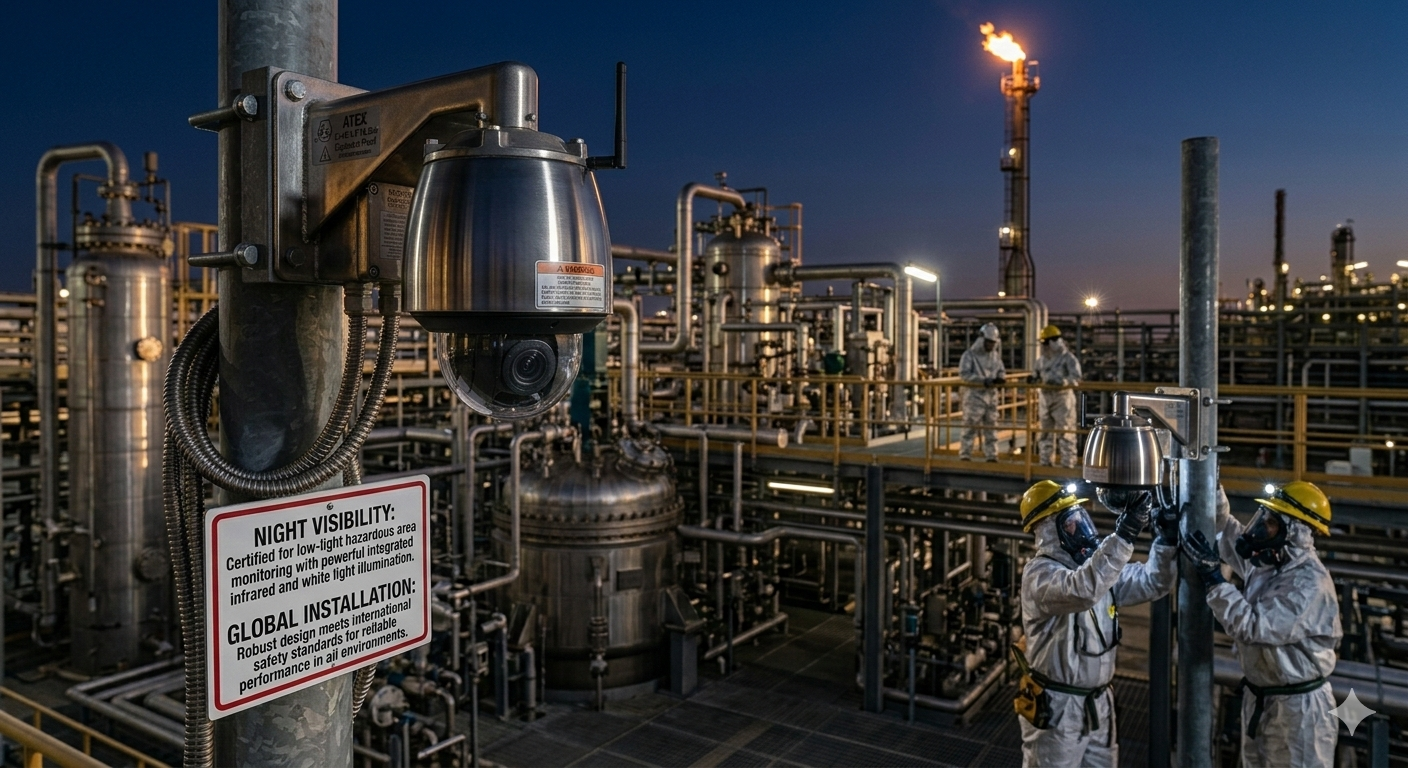
Mining environments present a uniquely severe combination of hazards for surveillance technology. Underground coal mines, in particular, are classified as some of the most dangerous working environments on earth, with methane gas accumulation and coal dust creating persistent explosive atmosphere conditions across wide areas. Surface mining operations handling coal, sulphur, and other combustible materials face similar classified zone requirements in processing and storage areas.
In these settings, a standard PTZ camera would represent an unacceptable ignition risk. The ATEX PTZ Camera, by contrast, is certified to operate safely in the precise gas groups and temperature classes associated with mining atmospheres, making it the only appropriate surveillance choice for classified mining zones.
The applications within mining are extensive. Conveyor belt systems — often stretching for kilometres underground or across surface processing facilities — require continuous monitoring to detect belt misalignment, material spillage, overheating, and blockages before they escalate into fires or mechanical failures. A single PTZ unit positioned at strategic intervals along a conveyor system can pan across wide sections, zoom in on specific components, and trigger automated alerts when abnormal conditions are detected.
Crusher stations, screening plants, and material transfer points generate significant dust concentrations that create Zone 21 and Zone 22 classified areas. Deploying an Explosion Proof PTZ Camera at these locations allows operations teams to monitor material flow, detect dust suppression system failures, and oversee worker activity in areas that are difficult and dangerous to access physically. Entrance and egress monitoring at shaft head frames and tunnel portals further extends the safety value — providing real-time visibility of personnel movements in and out of the most hazardous sections of the operation.
Port Facilities: Monitoring Flammable Cargo and High-Risk Operations
Modern ports are far more than cargo transit points. They are complex industrial ecosystems handling everything from liquid petroleum products and LNG to bulk chemicals and compressed gases. Terminals dedicated to flammable liquid or gas cargo operate under strict hazardous area classifications, with tankage areas, loading arms, berth infrastructure, and pipelines all falling within defined explosive atmosphere zones.
The operational demands at these facilities are intense. Vessel loading and unloading operations are time-pressured, involve large volumes of hazardous product, and require precise coordination between shore-based teams, vessel crew, and control room operators. A single Ex Proof PTZ Camera with high-powered optical zoom can provide the control room with a clear, close-up view of loading arm connections, emergency release coupling positions, and bund valve status — all from a safe, centralised vantage point.
Perimeter surveillance at port facilities presents another critical application. The combination of high-value assets, 24-hour operations, and hazardous materials makes unauthorised access a serious concern. PTZ cameras with auto-tracking capability and infrared illumination can patrol extended perimeter fencing autonomously, locking onto detected intrusions and delivering immediate visual confirmation to security teams — without any operator needing to manually monitor camera feeds at all times.
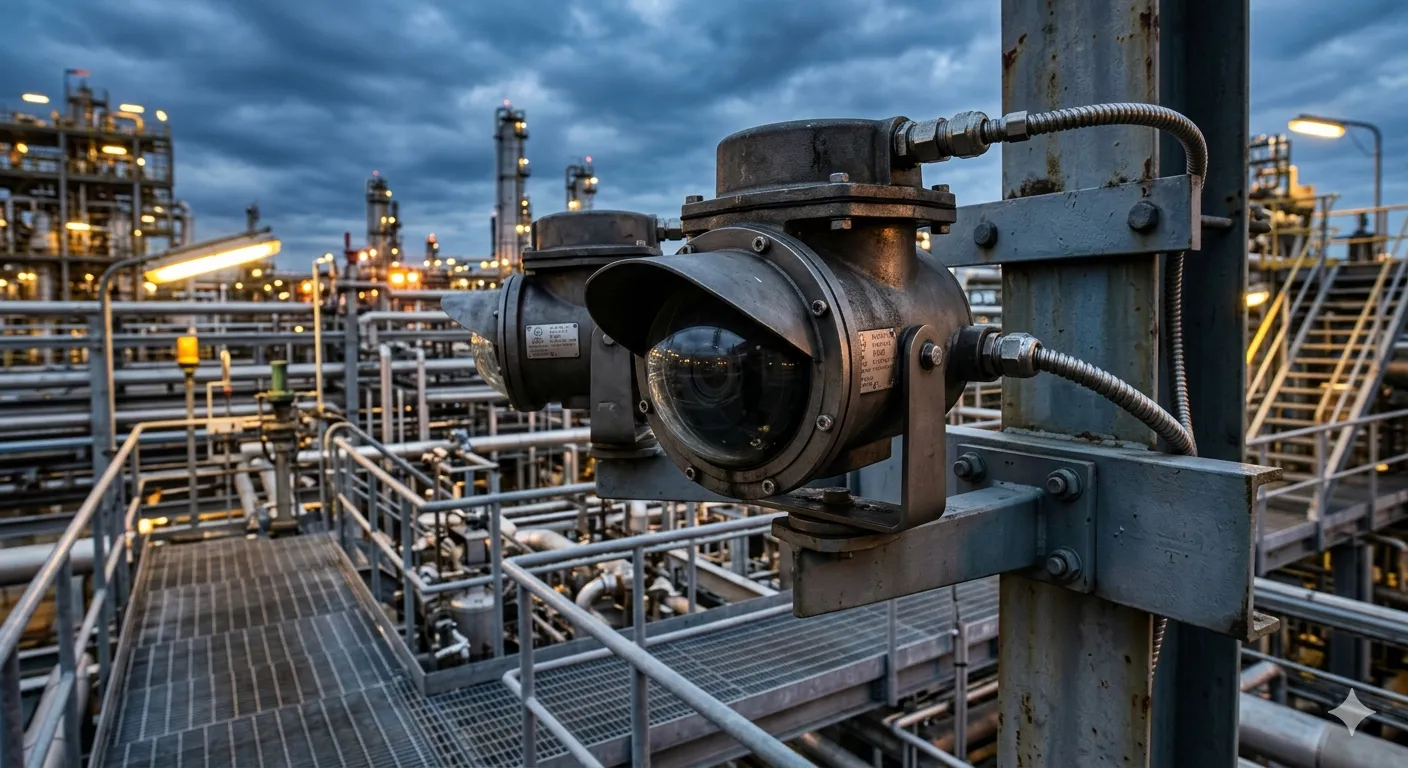
Tank farm surveillance at port terminals is perhaps the most directly safety-critical application. Storage tanks holding crude oil, refined products, or liquid chemicals require constant visual oversight to detect overfill events, seal failures, bund wall breaches, and early signs of fire or vapour release. An ATEX PTZ Camera deployed at elevated positions around a tank farm can conduct automated patrol tours of the entire asset cluster, ensuring that no area goes unmonitored during any shift.
Chemical Plants: Precision Monitoring in Complex Process Environments
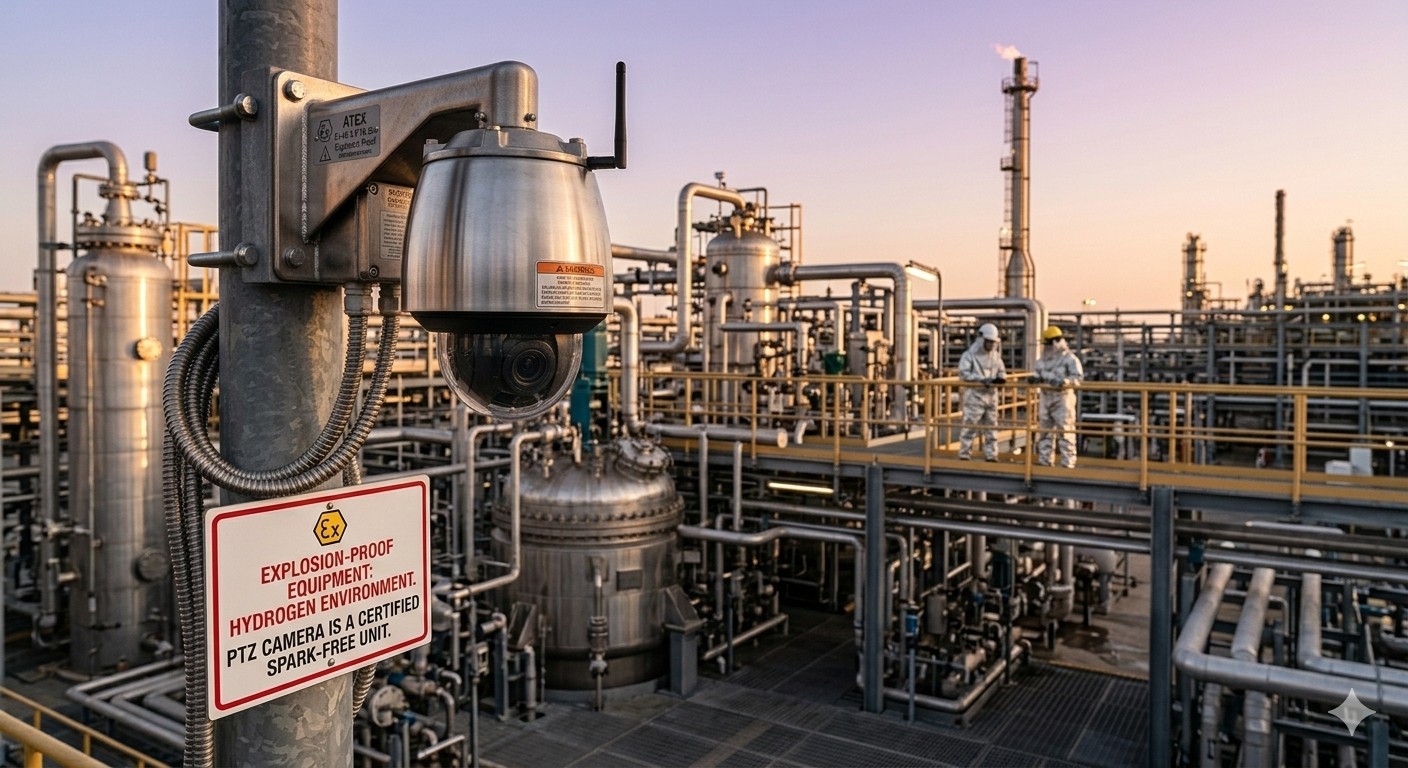
Chemical manufacturing and processing facilities operate with an extraordinary diversity of hazardous substances — from highly flammable solvents and reactive gases to combustible fine powders and toxic vapours. The classified zone maps of large chemical plants are correspondingly complex, with Zone 0, Zone 1, and Zone 2 areas often in close proximity to one another across reactor buildings, distillation columns, storage areas, and loading facilities.
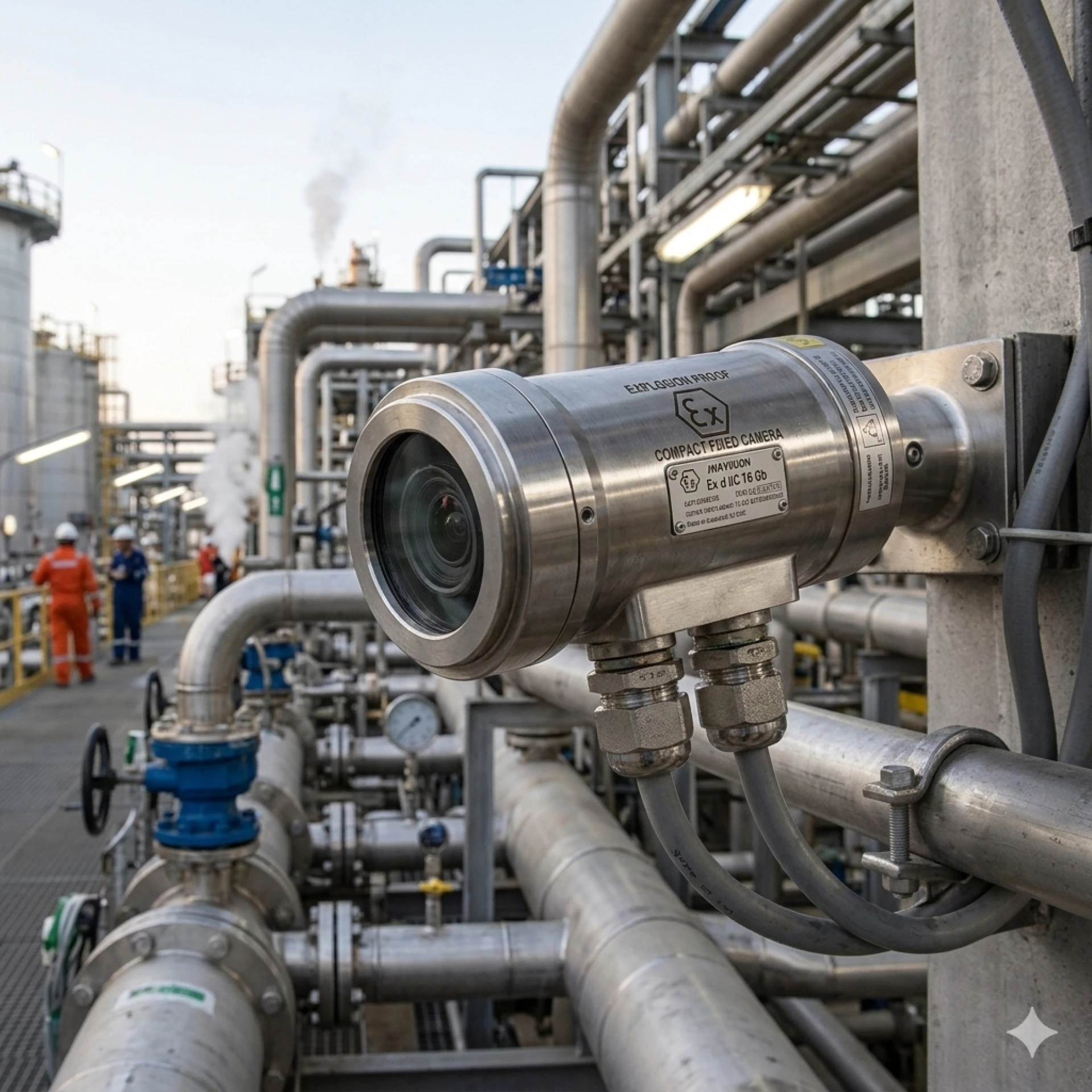
In this environment, the versatility of the Explosion Proof PTZ Camera becomes particularly valuable. Process vessels and reactor units often require monitoring from multiple angles to assess conditions across different elevation points and connection interfaces. A PTZ camera's pan, tilt, and zoom capabilities allow a single unit to serve as the visual guardian of an entire process skid — scanning valve positions, gauging pipeline conditions, checking agitator seal areas, and monitoring relief vent discharge points, all within a single automated patrol sequence.
Bulk chemical loading and unloading bays at chemical plants are among the highest-risk operational areas on site. Road tanker and rail car loading operations involve the transfer of large quantities of flammable or toxic product through connection interfaces that are susceptible to leaks, overfill, and human error. Real-time visual monitoring via a certified PTZ camera at these locations provides operations and safety teams with immediate awareness of any departure from normal procedure — enabling rapid intervention before a minor incident escalates into a major emergency.
Control building approaches and emergency assembly areas, while not always within classified zones themselves, benefit significantly from PTZ surveillance during emergency scenarios. When a process upset or alarm condition occurs, the ability to visually confirm the status of personnel, track evacuation progress, and assess conditions in adjacent process areas is invaluable to emergency response coordinators managing the situation from a central command point.
Shared Advantages Across All Three Industries
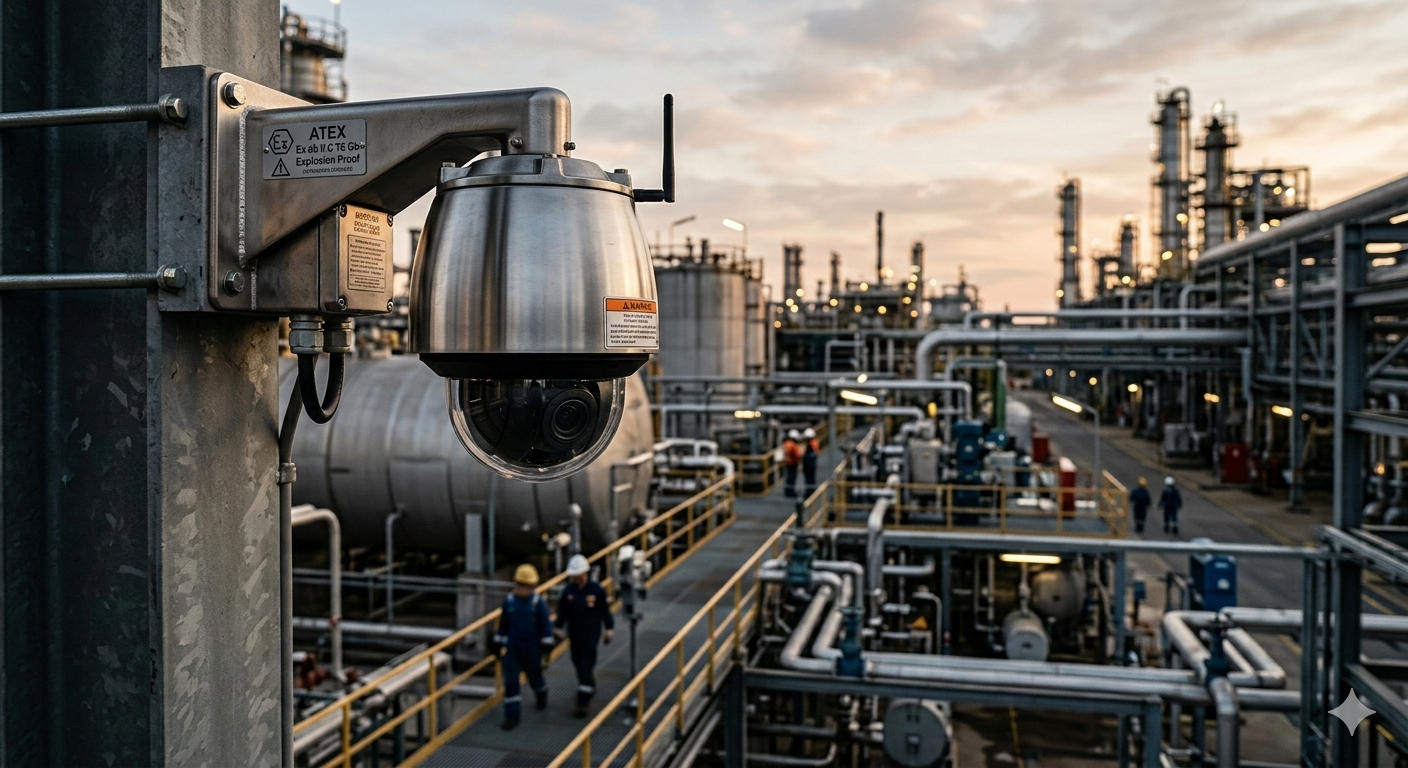
Despite the operational differences between mining, ports, and chemical plants, the core benefits of deploying certified explosion-proof PTZ surveillance are consistent across all three sectors. Wide-area coverage from a reduced number of installation points lowers the complexity and cost of hazardous area electrical installations significantly. Automated patrol and alarm-linked positioning reduces the dependency on continuous human monitoring, allowing lean control room teams to maintain genuine situational awareness across large and complex sites. And ATEX and IECEx certification provides the documentary evidence that regulators, insurers, and auditors require to confirm that surveillance equipment meets the legal standard for the zones in which it is installed.
Thermal imaging integration — available across many Ex Proof PTZ Camera product ranges — adds a further dimension of value in all three industries, enabling the detection of heat anomalies, gas leak signatures, and hotspots that are invisible to standard optical cameras, particularly during night operations or in low-visibility atmospheric conditions.
Conclusion
Mining operations, port facilities, and chemical plants share a common requirement — comprehensive, reliable, certified visual monitoring in environments where the stakes of inadequate surveillance could not be higher. The Explosion Proof PTZ Camera addresses that requirement with a combination of flexible coverage, intelligent automation, certified explosion protection, and seamless integration with modern safety management systems. Across each of these industries, it is not a question of whether explosion-proof PTZ surveillance adds value — the evidence from real-world deployments is unambiguous on that point — but rather whether the facilities that have yet to upgrade their surveillance infrastructure fully appreciate the operational and regulatory risk they are carrying every day they continue without it?












Sign in to leave a comment.