Offshore oil and gas platforms, floating production storage and offloading vessels, and LNG carriers occupy a unique position in the hierarchy of industrial hazard environments. They combine the explosive atmosphere risks of onshore hydrocarbon processing with the additional physical stresses of a marine operating environment — saltwater corrosion, constant structural vibration, extreme temperature cycling, high-velocity winds, and the simple but fundamental reality that when something goes wrong offshore, emergency response is measured in hours and kilometres rather than minutes and metres.
In this context, the quality and reliability of a facility's surveillance infrastructure is not a peripheral operational concern. It is a central pillar of the safety management system. Every camera deployed on an offshore platform, FPSO deck, or LNG carrier must perform consistently across years of continuous operation in conditions that would rapidly degrade or destroy equipment designed for less demanding environments. For offshore operators, platform safety managers, and marine HSE teams working in the UK North Sea, the Arabian Gulf, and Kuwaiti territorial waters, understanding what makes an explosion proof camera genuinely fit for offshore service is essential knowledge.
The Offshore Environment: Why Standard Industrial Cameras Simply Fail
The physical challenges that offshore environments impose on installed equipment are cumulative and relentless. Marine-grade saltwater spray does not merely cause surface corrosion — it penetrates seal interfaces, degrades enclosure materials, and accelerates the oxidation of electrical connections over time. On an FPSO operating year-round in the Arabian Gulf, the combination of high ambient temperatures, humidity, and salt loading creates a corrosion environment that is among the most aggressive encountered anywhere in the industrial world.
Structural vibration compounds this challenge significantly. Offshore platforms and vessels are dynamic structures. Compressor trains, pump skids, and drilling equipment generate continuous mechanical vibration that transmits through structural steelwork to every piece of equipment mounted on it. Camera housings, mounting brackets, and cable glands that are not specifically engineered for vibration resistance will progressively loosen, crack, or fail — creating not only a surveillance gap but potentially an ignition risk in a classified hazardous zone.
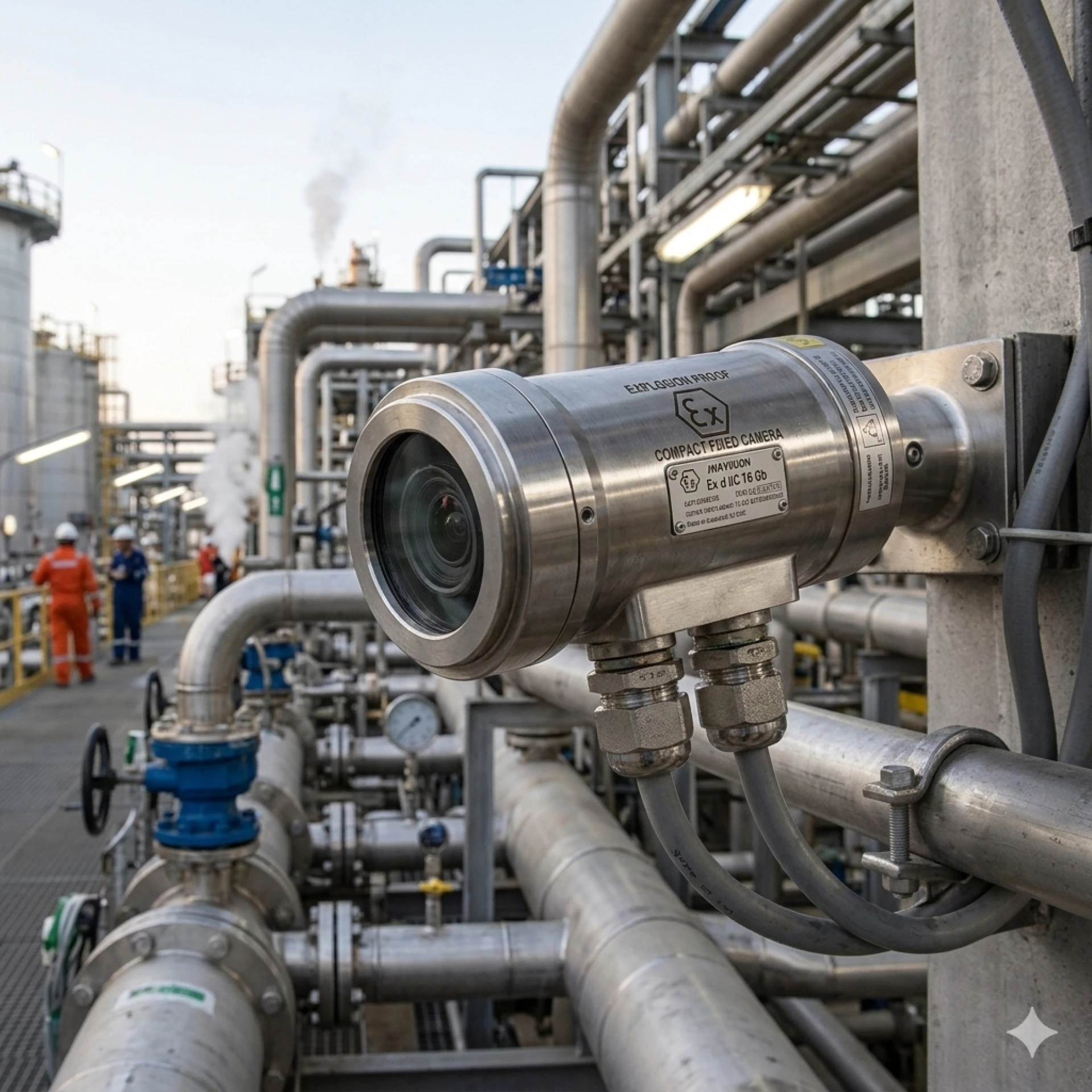
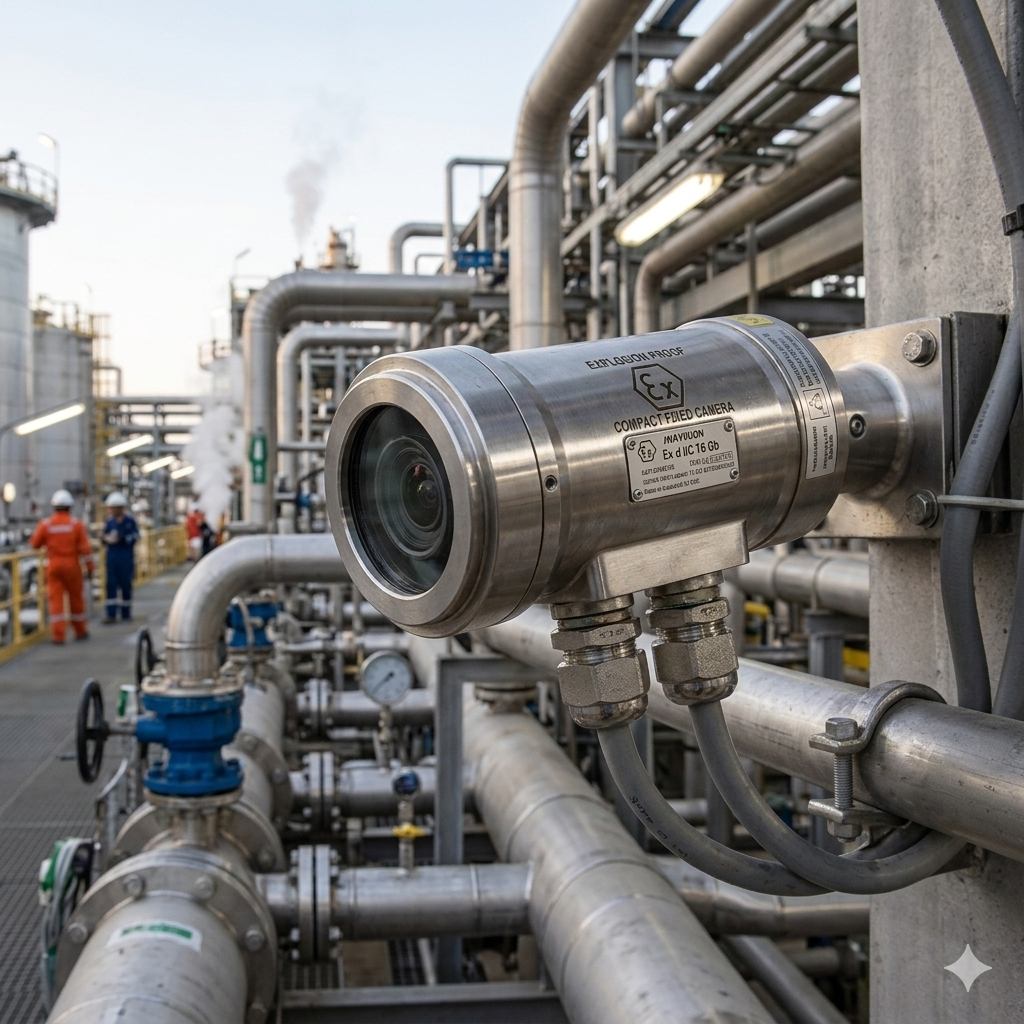
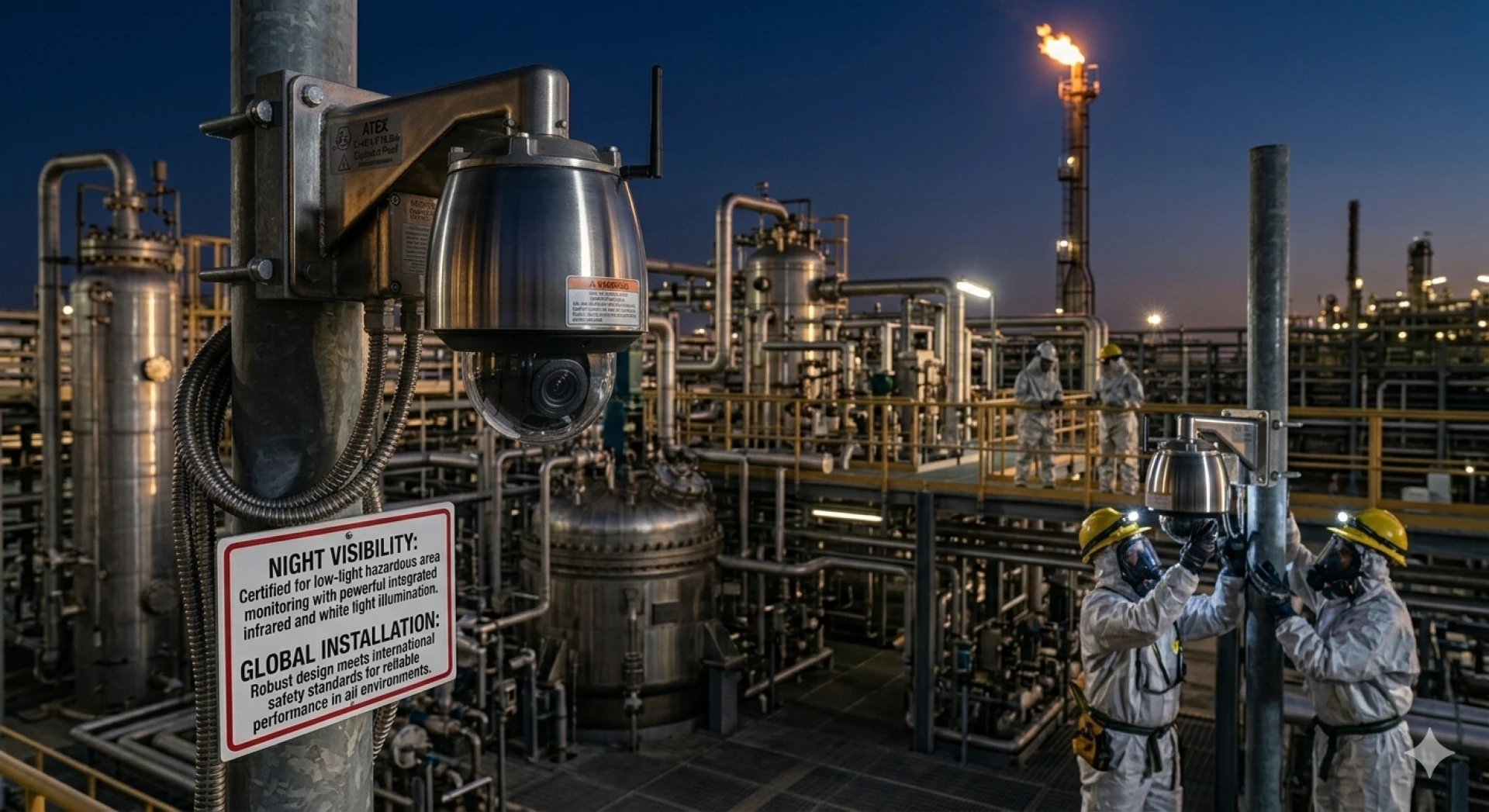
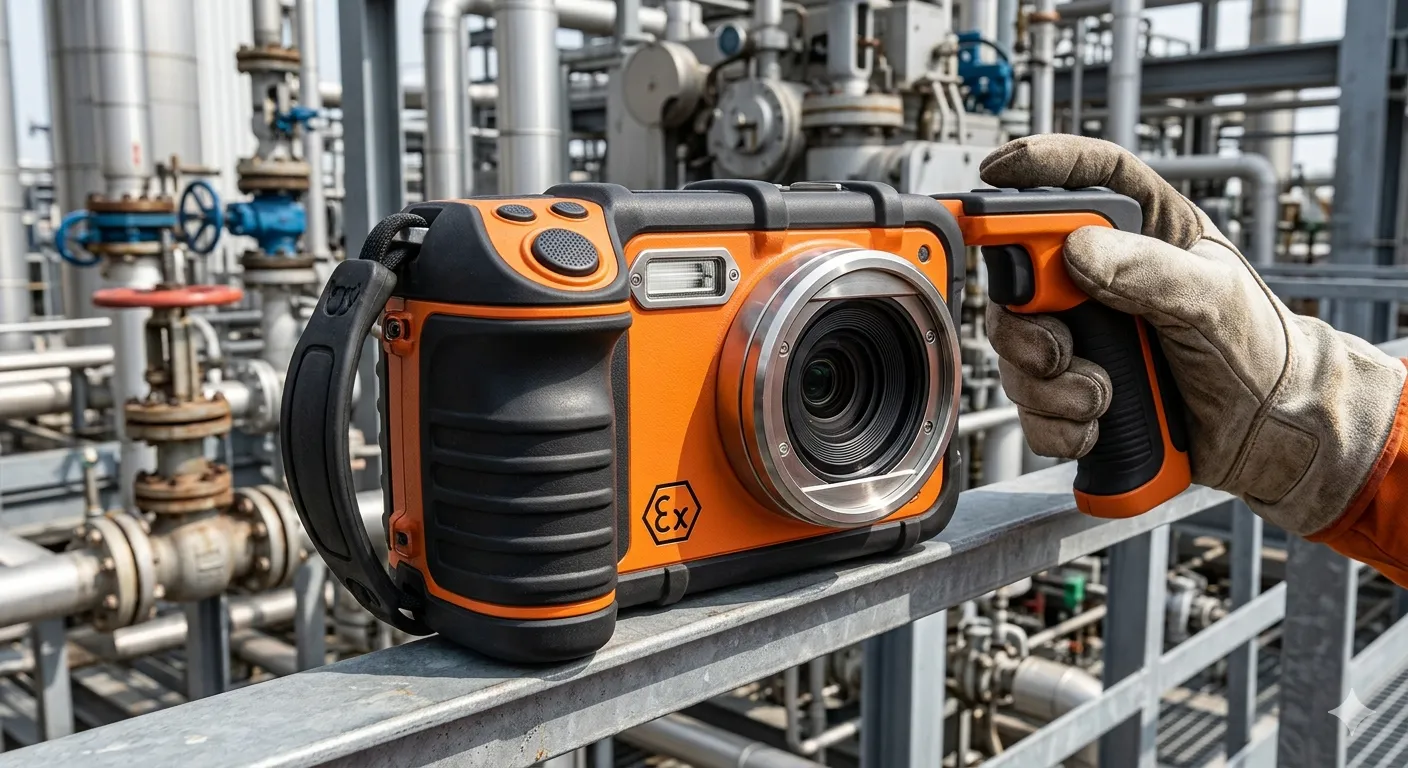
Extreme weather events — storm seas, temperature extremes, and high-velocity winds — add the final layer of environmental stress that offshore camera systems must be designed to withstand. An Explosion proof Fixed Camera built for offshore deployment addresses all of these challenges through its material specification, sealing standard, enclosure design, and mounting hardware — not as optional enhancements but as fundamental engineering requirements.
Recommended Camera Placements on Offshore Rigs and Platforms
Effective surveillance design on an offshore drilling rig or fixed platform begins with a structured assessment of the facility's hazardous area layout and the operational activities that take place within each zone. Several process and operational locations consistently represent the highest-priority camera placement points across offshore facility types.
The wellhead area and christmas tree assembly represent the most critical process monitoring point on any producing platform. Continuous visual oversight of wellhead valve positions, annulus monitoring points, and the surrounding deck area allows control room operators to identify early indicators of well integrity issues — fluid seepage, unusual deposits, or equipment anomalies — without requiring personnel to enter a Zone 1 classified area for routine verification.
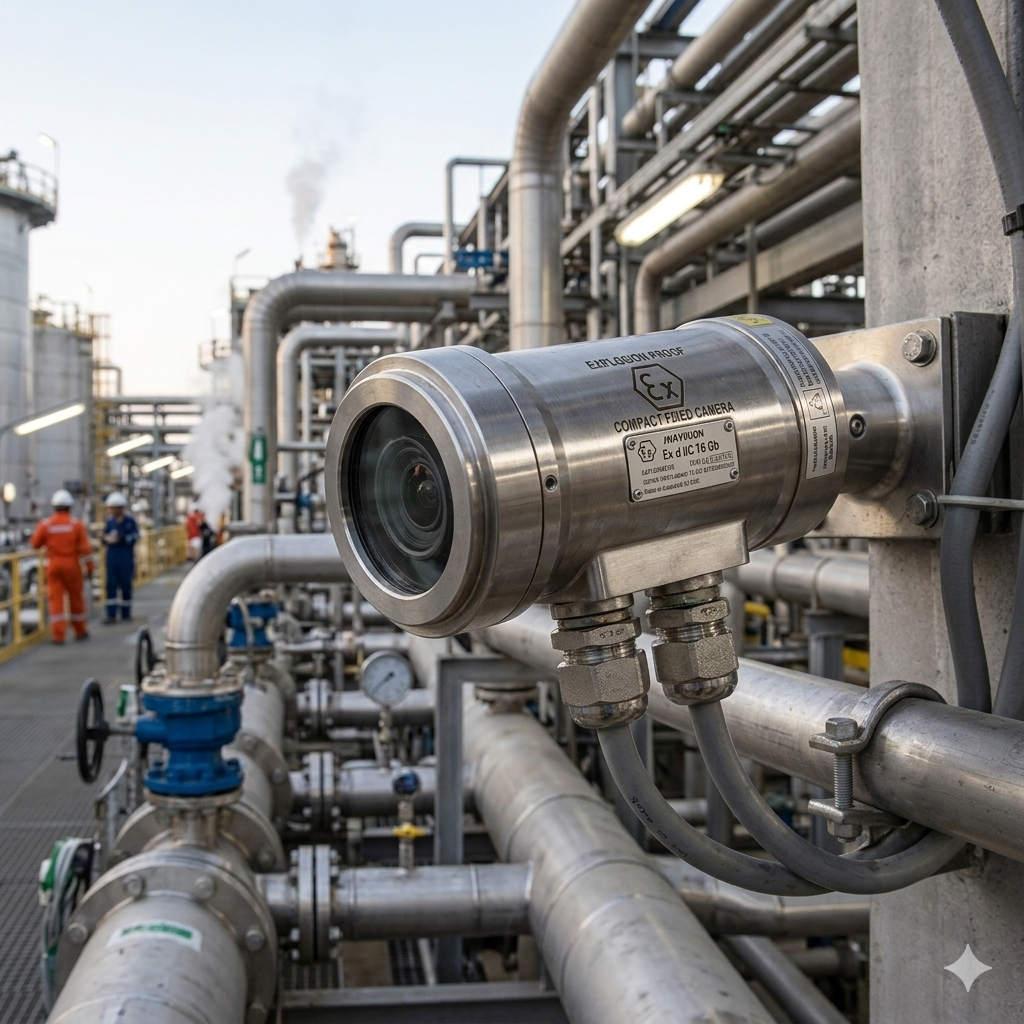
Compressor and gas compression modules are equally critical monitoring points. The combination of high-pressure rotating equipment, hydrocarbon process streams, and confined module geometry creates a high-consequence zone where early detection of seal failures, vibration anomalies, or process leaks can prevent escalation to a major incident. A fixed camera positioned to cover both the compressor unit and its associated pipework connections provides the continuous visual intelligence that process operators need to support safe and efficient compressor management.
Flare booms, pig launchers and receivers, and chemical injection skids round out the primary list of fixed camera monitoring locations on most offshore platforms. Each represents a distinct process hazard profile, and each benefits from the uninterrupted visual coverage that a permanently positioned, certified explosion proof camera delivers.
FPSO and FSO Vessels: Compact Units for Complex Topsides Layouts
Floating production storage and offloading vessels present a surveillance design challenge that differs meaningfully from fixed platforms. The topsides of an FPSO — the processing modules, separator trains, water injection equipment, and offloading infrastructure — are arranged across a hull structure that was originally designed as a tanker. The resulting layout is frequently congested, with equipment packed into available deck space and structural elements creating visual obstructions that standard camera placements cannot always overcome.
The Explosion proof Compact Fixed Camera is the tool of choice for these environments. Its reduced physical dimensions allow installation in the confined spaces between equipment skids, within structural steelwork, and at low-clearance monitoring points where a full-sized explosion proof housing would require structural modification to mount effectively. On FPSO topsides operating in Zone 1 and Zone 2 classified areas, compact cameras certified to the appropriate ATEX category provide the same level of protection as larger units while solving the spatial constraints that characterise floating production vessel layouts.
FSO vessels — used primarily for storage and offloading rather than active production — present a somewhat different but related challenge. Their large cargo tank areas, loading manifolds, and offloading hose management zones all require classified-area surveillance, and the extended periods between crew inspections that characterise FSO operations make continuous camera monitoring particularly valuable for maintaining situational awareness of conditions across the vessel.
LNG Carriers: Addressing Cryogenic Hazards and Zone Classifications
LNG carriers introduce a set of hazard characteristics that are distinct from conventional hydrocarbon platforms and vessels. Liquefied natural gas is stored at cryogenic temperatures — approximately minus 162 degrees Celsius — and any release creates an immediate vapour cloud that is both flammable and capable of causing cryogenic contact injuries to personnel. The cargo containment system, vapour handling equipment, and loading and unloading manifolds are all Zone 1 or Zone 2 classified areas requiring fully ATEX-certified surveillance equipment.
An Explosion proof Fixed Type Camera deployed on an LNG carrier must be specified not only for its zone certification but for its operational temperature range. Cameras positioned near cryogenic pipework or in areas where cold venting may occur must be rated to withstand the extreme low temperatures they may encounter during abnormal operating conditions, in addition to the high-temperature and corrosive environment that characterises normal marine service.
Camera placement on LNG carriers prioritises the cargo manifold area during loading and discharging operations, the compressor room for boil-off gas management equipment, and the mast riser areas where vapour return lines create a persistent Zone 1 environment. Continuous visual coverage of these locations supports the vessel's officer of the watch in maintaining cargo operational awareness and provides the documentary evidence base that voyage records and incident investigations require.
Conclusion
Offshore platforms, FPSO and FSO vessels, and LNG carriers demand surveillance infrastructure that meets the explosive atmosphere certification requirements of hazardous zone classifications while simultaneously withstanding the physical punishment of continuous marine service — corrosion, vibration, temperature extremes, and the geographic isolation that makes equipment reliability a matter of genuine operational consequence. ATEX explosion proof fixed cameras, compact units engineered for congested topsides layouts, and temperature-rated fixed type cameras for cryogenic environments collectively provide the coverage, compliance, and resilience that offshore safety management systems depend on to protect personnel and assets in some of the world's most challenging operating environments. For offshore operators, marine HSE managers, and facility safety teams responsible for platforms and vessels operating across the UK North Sea, the Arabian Gulf, and Kuwaiti waters, the question that deserves careful consideration is: does your current offshore surveillance infrastructure genuinely meet the combined demands of ATEX zone compliance, marine environmental resilience, and continuous operational reliability — or has equipment degradation quietly created monitoring gaps in your highest-risk classified areas?


















Sign in to leave a comment.