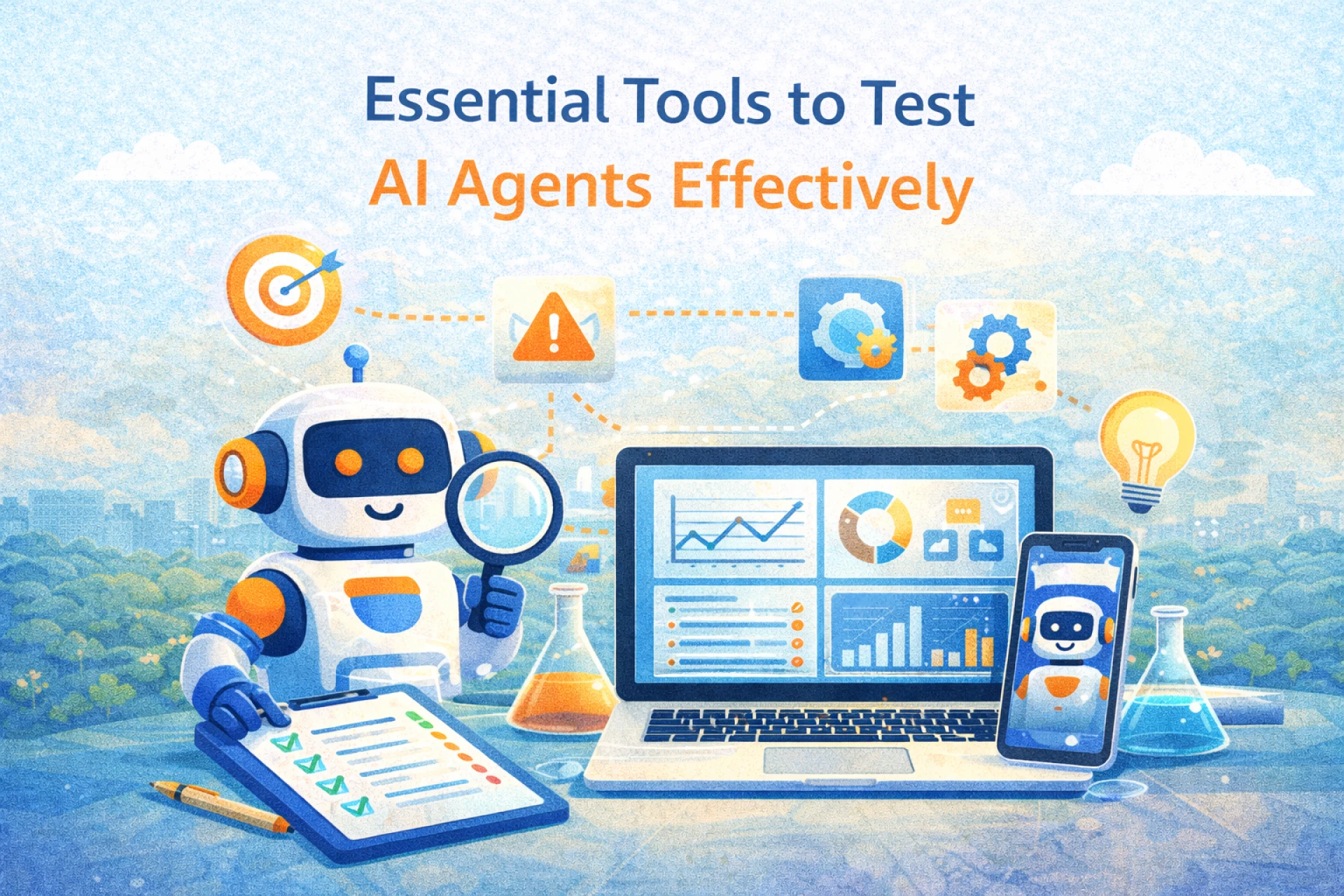

The use of AI agents in testing is a new trend that can significantly increase test coverage, reduce human error, and boost QA teams' productivity.
Many organizations are utilizing AI agents because of their potential and the substantial improvements they can provide. There are various tools to test AI agents that provide users with logical features, which promote industry development and are anticipated to continue in the coming decades.
Understanding AI Agent
AI agents are simple tools or complex systems that have been built to use artificial intelligence technology to perform tasks and meet user needs. An AI-backed assistant can make decisions, learn, and react to changes instantly since it can exhibit logical thinking and comprehend context. They can even take the place of the entire QA team and execute expert or repetitive tasks. When it comes to achieving specific objectives, they can operate independently, often without regular human intervention.
AI agents strive to achieve particular objectives, which are represented by an "objective function." Once they have determined the goal, the agents will generate a task list and begin working on it, utilizing data learning, pattern recognition, decision-making, and progressing toward particular objectives. Recent innovations in generative AI have now made it easy for AI to comprehend human languages. Therefore, AI agents are the bridges that integrate AI into the real world and enable it to execute necessary tasks on its own without intervention.
Features of AI Agents
Some of the strong features AI testing agents provide to assist teams to move quicker and smarter in the QA process include:
- Natural Language Processing (NLP): Even those without expertise in programming can use test automation since test cases can be built in simple English.
- AI-Driven Reporting: The AI test agent provides real-time reporting with insights such as failure patterns, underlying causes, and quality trends. This enables teams to take action faster.
- AI-powered insights: Teams can promptly find and fix issues by using real-time analysis to detect flaky tests, failure trends, and underlying explanations.
- Adaptability and Self-learning: Agents update scripts automatically as applications grow, decreasing the need for regular maintenance.
- Expanded test coverage: Untested user flows and edge cases are identified based on use statistics and application structure, resulting in improved overall coverage. AI agents uncover untested regions and develop edge scenarios that would otherwise be neglected.
- Autonomous Bug Detection: Multiple user pathways, edge cases, and combinations that are challenging to cover manually can be investigated using AI testing agents. Teams may take prompt action when bugs are found, categorized by severity, and packed with screenshots and logs.
- Self-Learning: AI agents can predict future test results by analyzing trends and patterns from previous testing cycles because of their capacity to learn from past test findings. Agents are becoming more adept at recognizing possible faults and quickly deciding how to proactively fix them as they learn and adapt.
- Reduced Test Maintenance: AI testing agents minimize manual maintenance by using self-healing capabilities to identify UI changes and stop test scripts from malfunctioning.
- Creating Test Cases Based on Requirements: AI testing agents create pertinent test cases by analyzing user flows, past defects, and code change data.
The Role of AI Agents in Effective Test Automation
AI agents enhance test automation by reducing manual effort in test creation, execution, and maintenance through intelligent decision-making. They adapt to application changes, improve test reliability, and help teams scale automation efficiently across complex environments.
- Effective Automation: AI testing agents automate tedious tasks, identify testing trends, adjust and learn from past test outcomes, and enhance their performance. The entire testing process is accelerated by this level of efficiency. To guarantee that high-priority areas are always checked first, these agents automatically perform tests that are prioritized according to risk, code changes, and impact.
- Analysis of Test Results: AI agents are capable of independently analyzing test data to identify errors and classify related flaws. Additionally, they highlight patterns in the data that enable them to focus on what really matters, finding patterns that could result in system vulnerabilities, and pinpoint the main cause more quickly.
- Shift-Left Testing: In shift-left testing, AI-based agents execute quickly and find errors more rapidly, allowing developers to tackle issues quickly. AI-powered agents may also adapt to changing project needs, recommending suitable tests to perform based on code changes.
- Faster Test Cycles: When AI agents are employed for software testing or test automation, they develop, execute, and evaluate tests quickly and with fewer mistakes, resulting in much shorter release times.
- Smarter Test Case Prioritization- AI agents may assess and identify high-risk locations, prioritize testing on essential pathways, and detect major flaws earlier.
- Self-Healing Test Scripts: AI agents detect UI or other changes to the application and update test scripts accordingly. This keeps tests from failing and reduces test maintenance.
- Visual Testing: Agents equipped with computer vision may identify UI incompatibilities across several devices and screen sizes. They check the aesthetic correctness of the visible components that users interact with. AI-powered agents seek visual 'bugs' such as misaligned buttons, overlay graphics (pictures, words), and partially visible features that might otherwise go undetected during traditional functional testing.
Key Tools to Test AI Agents Effectively
Testing AI agents requires tools that can validate behavior, reliability, integrations, and performance across real-world scenarios. The right tools help you simulate complex interactions, monitor outcomes, and ensure AI agents behave consistently and safely at scale.
TestMu AI’s KaneAI
TestMu AI’s KaneAI is a GenAI-native testing agent designed to help teams create, manage, and evolve tests using natural language. It supports high-speed quality engineering workflows and integrates with planning, execution, orchestration, and analysis tools for end-to-end test management.
Features:
- Uses a number of AI agents to communicate with AI, imitating complicated dialogues and actual user behavior.
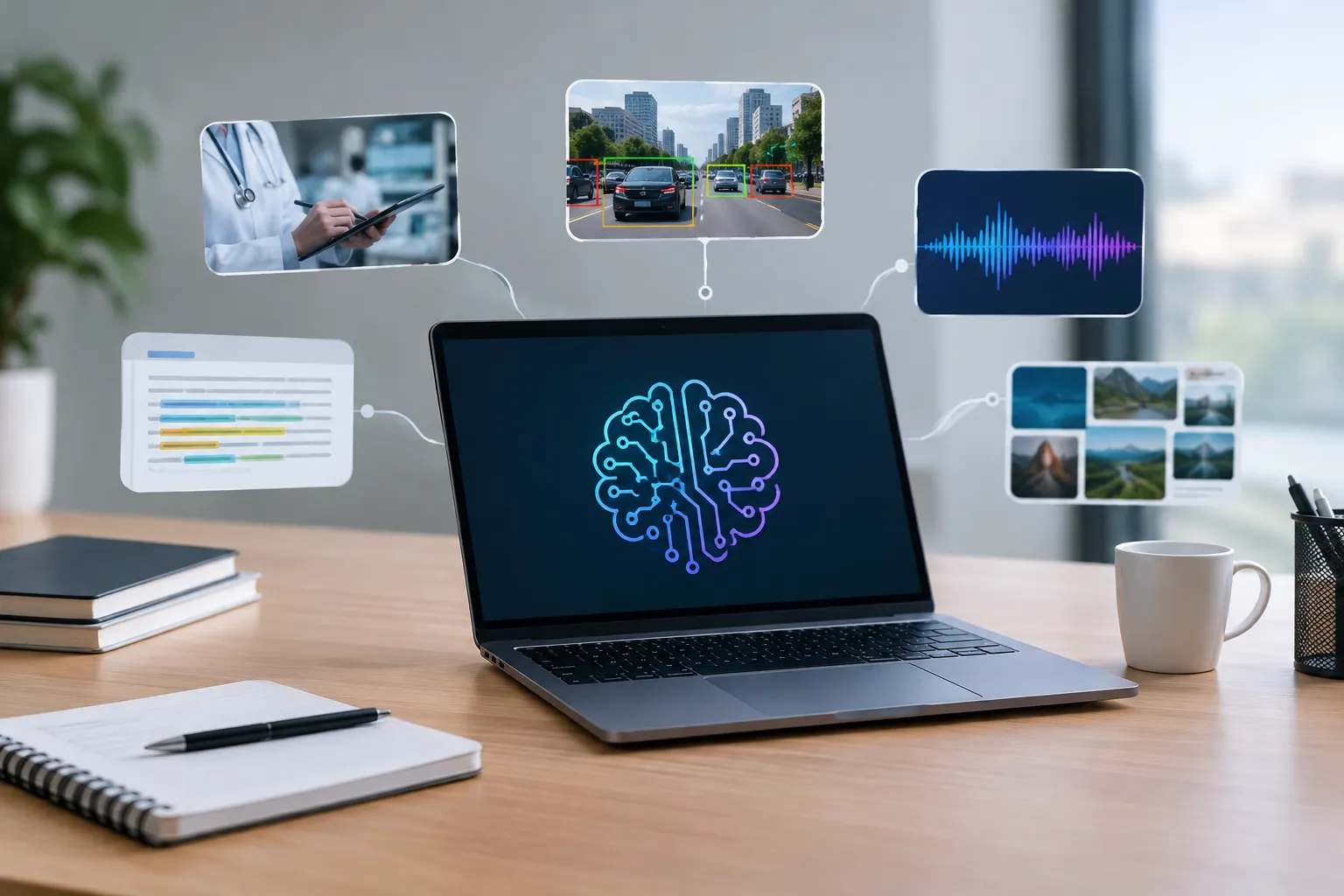
- Creates tests to evaluate the performance of multi-modal AI using documents, photos, audio, and video.
- Assesses for accuracy, adverse effects, bias, and illusions.
- Reduces manual labor by using objectives to generate intelligent, context-aware test scenarios.
- Uses a robust cloud to run tests for quicker execution and wider coverage.
- Uses agents like KaneAI to integrate with pre-existing tools like Slack, Jira, and GitHub for a smooth workflow.
Worksoft
Worksoft is a no-code test automation platform that incorporates a GenAI-powered assistant. QA teams can create test cases from many sources by using advanced LLMs. With an emphasis on organizational validation, it is built around intricate enterprise applications. Worksoft automates functional testing for extremely complicated workflows by utilizing artificial intelligence. It contains built-in intelligent AI automation features like test optimization and self-healing.
Features:
- Enables testers to update and modify tests graphically without having to write any code.
- Reduces maintenance time by using AI to graphically compare tests side by side and identify and eliminate unnecessary tests.
- Helps find duplicate processes and keep automation libraries clear by offering an AI-powered process search.
- Allows for the use of natural language input when developing test scripts.
Waldo
Waldo tools are intelligent assistants with AI capabilities that help QA and development teams test data, procedures, and applications. Any tester can create dependable automated tests with Waldo, a no-code automation testing solution. To speed up the QA testing procedures, it repeats the same tests that testers have already recorded on a variety of software and hardware models each time they make a new release and notifies them of any faults, crashes, or UI issues that occur.
Features
- This scriptless platform can be used to integrate continuous end-to-end testing into the software development process.
- It is readily integrated with Circle CI, Jenkins, Travis, Slack, GitHub, and other technologies.
- Requires less work and has fewer prerequisites for writing scripts.
- Strong integration capabilities with external tools such as Git, Jenkins, Jira, etc., and mobile testing platforms.
AskUI
AskUI offers AI-driven test analysis in real-time to detect errors, security flaws, and inconsistencies. AskUI is based on contemporary large language models (LLMs). This platform makes it possible to create, debug, and develop natural language end-to-end tests. AskUI communicates with applications using a Vision Agent. It uses pixel-level automation rather than just code to recognize and click UI elements. This reduces dependency on code-based selectors, which often break when developers change the application's layout or underlying code, and improves test resiliency across platforms.
Features
- The tool provides built-in keyword libraries and frameworks that can be used without the need for further configurations.
- AskUI works well for UI automation where forms, calendars, and media interactions are common.
- Makes testing less fragile across application upgrades.
Momentic
Momentic is an AI-powered software testing automation tool. The platform creates executable test scripts from plain English. This tool can run numerous test cases with a single click once it has been trained on the application. By incorporating UI automation, production monitoring, and regression testing into a single, user-friendly platform, Momentic simplifies software testing. It is easy to set up and maintain, and accelerates development and quality assurance cycles with its low-code editor and automated test maintenance.
Features:
- Makes logical or visual claims using plain language.
- Finds out elements without the need for XPath.
- Uses logs and real-time modifications to create and debug tests.
- Adapts to changes by automatically fixing flaky tests.
Virtuoso QA
One of the generative AI technologies for software testing is Virtuoso QA. To expedite the testing process, this tool has been pre-trained on the testing infrastructure. An enterprise-scale web and mobile quality assurance tool that creates tests without the need for coding by using natural language programming (NLP). It is a powerful tool for scheduling the execution of and automating end-to-end tests. It supports functional UI testing, API testing, and visual regression testing.
Features
- Dual-panel view for creating test logic and a real-time preview of the tested application
- Keeps tests stable by automatically adapting to frequent application changes.
- Use TestOps to arrange designed tests into dynamic test suites.
- Create reports on things like requirement coverage and release readiness.
Firebase
Firebase empowers GenAI throughout the automation lifecycle.
Teams can automate UI testing on Android and iOS applications with Google Firebase's App Testing Agent capability. It makes use of a natural-language agent, which converts test objectives (such as "check login with valid credentials") into user interface actions. With an emphasis on data integrity, performance, and fairness, Firebase provides an open-source toolset for automated machine learning model testing.
Features
- AI-driven test suite creation, scripting, and complete automation process
- Identifies the line of code where the bug is hidden, together with the stack trace and crushing input, making root cause analysis easier.
- Encourages teamwork in the workplace
- Democratizes the testing of web applications
Conclusion
In conclusion, AI in software testing truly improves the process to make it easier with the highest level of automation and AI-powered predictive features. AI-powered test generation, comprehensive reporting, and analytics also improve the stability of the testing process. These features enhance the relevance and dependability of testing as well.
The need for AI agents is growing as software complexity and new functionalities both reach unprecedented heights. Therefore, modern organizations must be prepared for the challenges of the contemporary environment. These challenges include less maintenance, faster release cycles, automatically created test cases, increased accuracy, and so on. In this demanding future, AI-based test automation could potentially make their efforts achievable.
































Sign in to leave a comment.