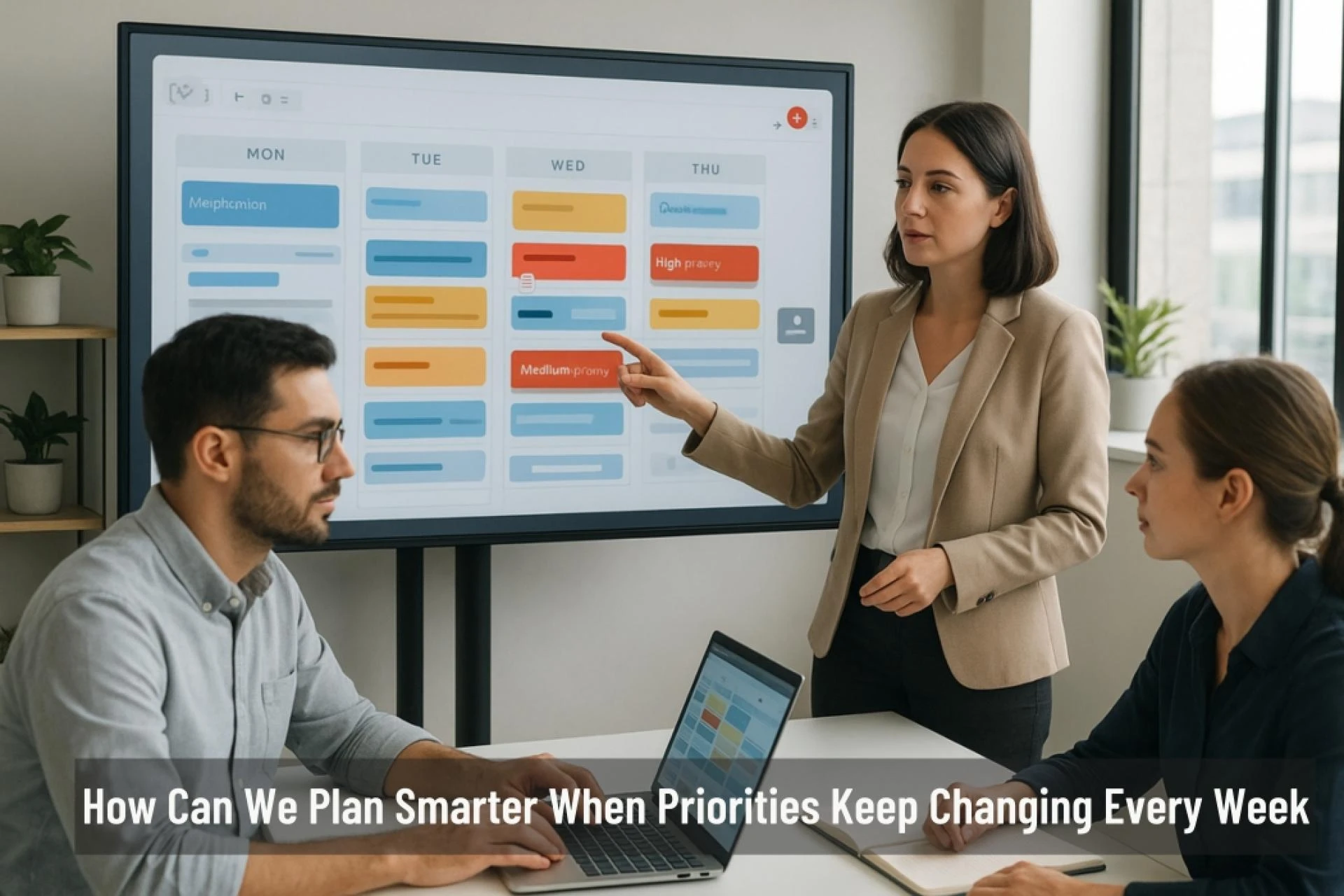

A question that keeps popping up on project floors and boardrooms alike is simple. How do leaders plan when nothing stays still long enough to plan around it. The root of the challenge is a lack of real-time visibility. Without it, even the best resource management application feels like a rearview mirror instead of a GPS.
Leaders who adopt a consistent resource management rhythm can respond to shifting demands without derailing active work. Technology adds another layer of resilience by surfacing utilization patterns, forecasting conflicts, and helping teams rebalance workloads in minutes instead of days.
Below is a deeper look at the strategies, shifts, and technology that help organizations stay steady amid constant change.
Why Do Weekly Priority Shifts Break Planning Rhythms
These fast shifts usually hit teams in the same painful places. Short deadlines. Competing deliverables. Leaders pull people from one initiative to another, and teams work blind because they don’t know who is already overloaded.
Common triggers include:
- Sudden sales wins
- Leadership-driven pivots
- Client escalations
- Delayed tasks cascading into other projects
- Regulatory or compliance changes
When these pile up, resource conflicts become the norm. The real cost shows up in overtime, burnout, and slipping delivery timelines. What project managers often ask at this stage is: How can we build a plan that survives weekly changes without starting from scratch?
The answer usually lies in how consistently an organization updates resource availability and workload data. Teams with real-time data recover faster.
What Does “Smarter” Planning Look Like In A Fast-Paced Environment
Smarter planning is less about creating the perfect plan and more about building a flexible one. A modern resource management approach focuses on resilience.
Key traits of resilient planning:
- Shorter planning cycles
- Real-time data refreshes
- Workload balance checks
- Skill visibility
- Early risk identification
This is where resource planning software becomes a backbone. When teams use a calibrated tool that centralizes availability, skills, and ongoing work, they can respond to shifting priorities without chaos. With tools like eResource Scheduler, decision-makers see the downstream impact of changes instantly instead of guessing.
How Can Visibility Reduce Chaos When Priorities Keep Shifting
One of the biggest drains on productivity is simply not knowing who is actually free. Teams often run into three blind spots:
- Hidden overwork: Someone seems available on paper but is already operating at 120% capacity. This leads to missed deadlines and quality risks.
- Skill mismatches: Teams assign work to whoever is free instead of the right person.
- Incomplete data: Leaders make decisions based on outdated spreadsheets or siloed communication.
With centralized scheduling, availability and workload data update in real time. A resource management application like eResource Scheduler provides a single operational truth. Teams see where bandwidth truly exists instead of relying on assumptions. This reduces meetings, delays, and rework.
What Role Does Forecasting Play When Weeks Are Unpredictable
Forecasting sounds like future planning, yet it carries real value in unpredictable environments. It doesn’t need long-term stability to work.
Short-range forecasting helps organizations:
- Anticipate collisions between projects
- Plan to hire or contract before the crunch hits
- Identify when demand will exceed current capacity
- Calculate the true impact of shifting priorities
The goal is not long-term certainty. It’s ensuring next month doesn’t turn into a crisis simply because a team ignored warning signs. Forecasting dashboards inside resource planning software give leaders the early visibility they need to take preventative action. This is where tools like eResource Scheduler make unpredictability less dangerous.
What Future Trends Will Shape Resource Planning For High-Change Organizations
The pace of change isn’t slowing. Teams will need more intelligent ways to stay ahead. Emerging shifts include:
- Real-time capacity insights are becoming mandatory: Static plans won’t survive weekly reshuffles.
- Skills-based routing becoming the norm: Work will increasingly match people based on evolving skills rather than generic roles.
- Integrated absence forecasting: Teams will handle PTO, mandatory training, and surprise leave more gracefully.
- Unified planning for distributed teams: Hybrid workforces require more precise visibility than traditional scheduling allowed.
Tools like eResource Scheduler are already leaning into this future with real-time data and capacity insights baked into everyday workflows.
How can leaders reduce the constant rework caused by shifting priorities
A powerful way to cut rework is to separate planning into two layers.
- Strategic allocation: This is the high-level assignment of people to major initiatives. It should remain fairly stable even if tasks shuffle week to week.
- Tactical scheduling: This is the day-to-day breakdown of tasks. This layer absorbs the weekly changes without disturbing the higher strategy.
Teams often mix these two layers, which locks them into rigid plans. A resource management application helps separate them cleanly so one change does not ripple across multiple projects.
Frequently Asked Questions
1. Why do teams struggle to stay aligned when priorities change so often?
Teams struggle because availability data is usually outdated and scattered. Using a resource planning software like eResource Scheduler gives leaders a real-time view of workload and skills so alignment becomes easier.
2. How can I quickly rebalance workload during a busy week?
A good starting point is reviewing utilization trends. With a resource management application, workload heatmaps and allocation data update instantly so you can shift tasks early instead of reacting late.
3. What’s the simplest way to plan when multiple projects are competing?
Prioritize by impact and complexity. Then assign resources based on capability and bandwidth. Tools like eResource Scheduler help visualize conflicts and prevent overallocation.
4. How do I know if my team is overcommitted?
Look for repeated deadline pushes or parallel high-effort tasks. A resource planning software can highlight utilization spikes and give evidence-based insights.
5. Can weekly changes still allow long-term forecasting?
Yes. Short-range forecasting works even in unpredictable environments. With a resource management application that updates data in real time, you can forecast demand and capacity more accurately.



























Sign in to leave a comment.