
Bringing innovative products to market quickly requires more than skilled engineering it demands accurate digital design, streamlined collaboration, and efficient design validation. Professional CAD design services play a critical role in reducing prototyping timelines by creating precise digital models, minimizing design iterations, and integrating engineering data across the product development lifecycle. For manufacturers in aerospace, automotive, medical devices, industrial equipment, and life sciences, investing in expert CAD services helps accelerate product development while maintaining engineering quality and compliance.
Why CAD Design Services Reduce Prototyping Timelines
Professional CAD design services accelerate prototyping by improving design accuracy before physical manufacturing begins.
Instead of relying on multiple prototype revisions to identify issues, engineering teams can validate designs digitally, assess manufacturability, and identify potential conflicts early in the development process.
This approach allows organizations to:
- Detect design issues sooner
- Improve engineering collaboration
- Reduce costly design revisions
- Streamline product approvals
- Prepare manufacturing documentation earlier
- Improve communication across engineering disciplines
The result is a more predictable and efficient product development process.
How CAD Design Services Support Modern Product Development
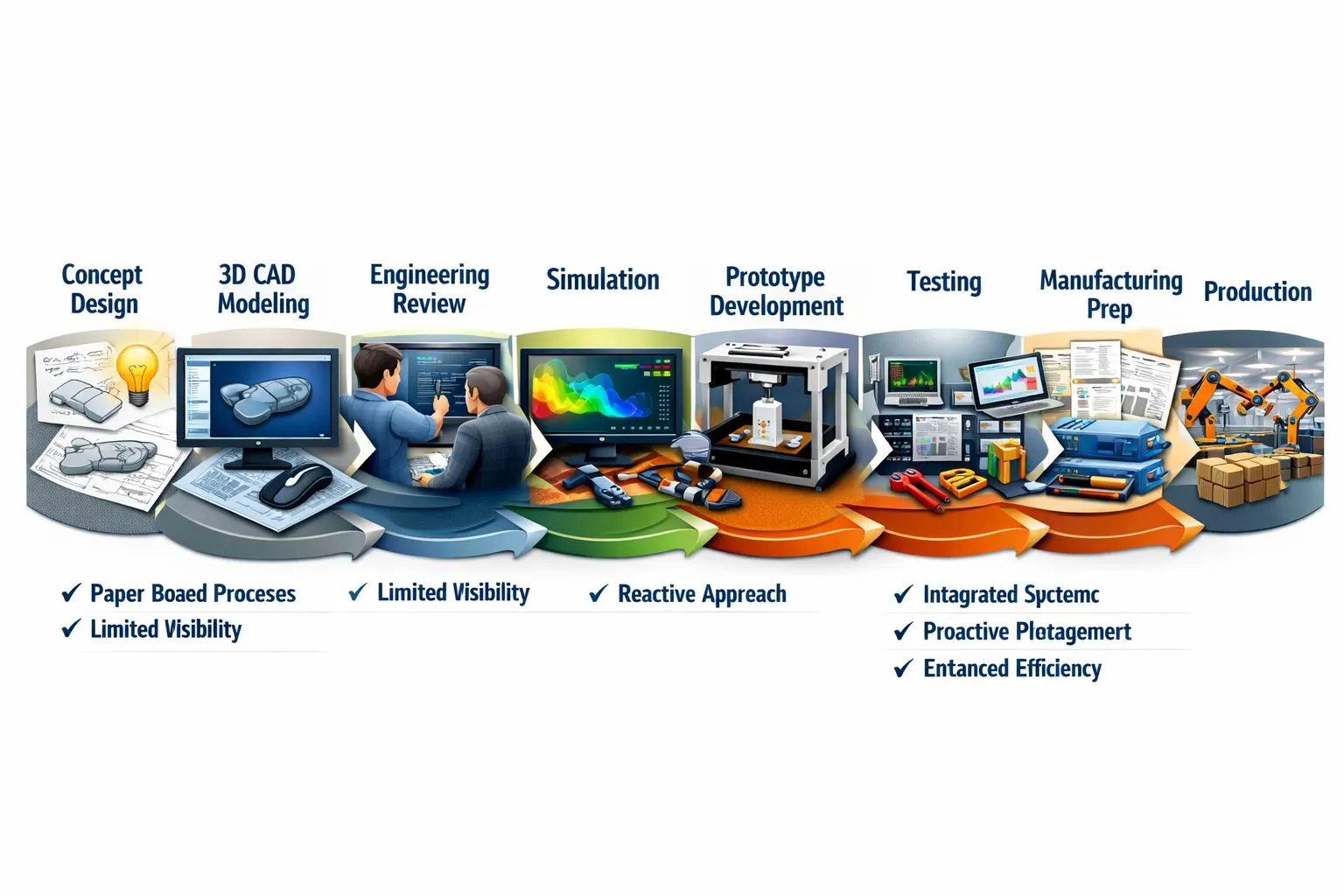
Professional CAD design services extend beyond creating engineering drawings. They support every stage of product development, from concept through production.
Typical capabilities include:
- Concept design
- Parametric modeling
- Assembly design
- Mechanical design
- Design optimization
- Engineering documentation
- Tolerance analysis
- Design for Manufacturability (DFM)
- Design reviews
- Revision management
When integrated into broader engineering workflows, CAD becomes a central component of digital product development.
The Role of 3D CAD Modeling Services
3D CAD modeling services provide highly detailed digital representations of products before manufacturing begins.
These models enable engineering teams to:
- Evaluate product fit and function
- Detect assembly interference
- Validate component relationships
- Improve design communication
- Perform engineering simulations
- Support rapid prototyping
- Generate manufacturing-ready documentation
Three-dimensional models also improve collaboration between engineering, manufacturing, procurement, and quality teams by providing a single visual representation of the product.
CAD Design Services Improve Engineering Collaboration
Engineering projects often involve multiple departments working simultaneously on interconnected product components.
Professional CAD design services improve collaboration by establishing standardized design practices, centralized engineering data, and controlled revision management.
Key collaboration benefits include:
- Shared design environments
- Version-controlled engineering files
- Faster design reviews
- Better supplier communication
- Reduced engineering duplication
- Improved cross-functional coordination
For organizations managing globally distributed engineering teams, these capabilities significantly reduce communication delays during prototype development.
Integrating CAD with PLM Managed Services
CAD delivers greater business value when integrated with PLM managed services.
Rather than storing engineering files independently, Product Lifecycle Management centralizes product structures, engineering documentation, bills of materials, and revision histories.
Benefits of PLM integration include:
- Centralized engineering data
- Automated revision control
- Configuration management
- Engineering change tracking
- Improved product traceability
- Controlled document management
Organizations that combine CAD with PLM create a digital thread that connects design, manufacturing, quality, and service throughout the product lifecycle.
ALM Services Enhance Complex Product Development
Many modern products combine mechanical systems with embedded software and electronics.
ALM services complement CAD by managing software requirements, development activities, verification, validation, and release processes.
Together, CAD, PLM, and ALM create an integrated engineering ecosystem where:
- Mechanical engineering
- Software engineering
- Systems engineering
- Quality management
- Manufacturing
operate from connected engineering data instead of isolated systems.
This integrated approach is particularly valuable in regulated industries where design traceability is essential.
Practical Example
A medical device manufacturer develops a new diagnostic instrument involving mechanical assemblies, embedded software, and electronic components.
Initially, engineering teams manage designs using disconnected CAD files and manual revision tracking.
After implementing professional CAD design services integrated with PLM managed services and ALM services, the organization standardizes engineering workflows, centralizes product information, and improves design collaboration.
Prototype revisions become more efficient because design changes are automatically tracked, engineering documentation remains synchronized, and cross-functional teams work from a shared digital product definition.
Choosing Professional CAD Design Services
Organizations should evaluate engineering partners based on both technical expertise and business capabilities.
Important decision factors include:
Industry Experience
Engineering providers should understand industry-specific design requirements, manufacturing constraints, and regulatory expectations.
Software Expertise
Evaluate experience with enterprise CAD platforms, simulation tools, PLM systems, and digital engineering workflows.
Integration Capabilities
The greatest value comes from integrating CAD with engineering, manufacturing, quality, and enterprise systems rather than implementing isolated design solutions.
Scalability
Engineering services should support future product complexity, distributed teams, and organizational growth.
Manufacturers seeking enterprise engineering support can benefit from specialized CAD Services offered through 3HTi's engineering consulting services.
Common Challenges That Delay Prototyping
Even experienced engineering teams encounter avoidable obstacles during product development.
Common issues include:
- Poor design standardization
- Manual file management
- Inconsistent revision control
- Limited design validation
- Weak collaboration between departments
- Fragmented engineering data
- Late manufacturing involvement
- Insufficient change management
Professional CAD design services address these challenges by establishing repeatable engineering workflows supported by modern digital engineering platforms.

Future Trends in CAD-Driven Product Development
Engineering organizations continue to adopt advanced digital technologies that further improve product development efficiency.
Emerging trends include:
- Cloud-based CAD collaboration
- AI-assisted design optimization
- Generative design
- Digital twins
- Model-Based Systems Engineering (MBSE)
- Integrated simulation environments
- Connected digital thread architectures
These technologies allow engineering teams to validate more design decisions digitally, reducing dependence on repeated physical prototypes.
Conclusion
Professional CAD design services significantly improve prototyping timelines by increasing design accuracy, strengthening collaboration, and connecting engineering data across the product lifecycle. When integrated with 3D CAD modeling services, PLM managed services, and ALM services, organizations establish a digital engineering foundation that supports faster innovation, improved product quality, and more efficient manufacturing readiness.
For manufacturers pursuing digital transformation, investing in integrated CAD expertise provides long-term value that extends well beyond individual design projects.
Frequently Asked Questions
1. What are CAD design services?
CAD design services create and manage digital engineering models, technical drawings, assemblies, and documentation that support product design, validation, manufacturing preparation, and lifecycle management.
2. How do CAD design services reduce prototyping timelines?
Professional CAD design services improve design accuracy, enable virtual validation, reduce engineering revisions, strengthen collaboration, and prepare manufacturing-ready documentation before physical prototypes are produced.
3. What are 3D CAD modeling services?
3D CAD modeling services develop detailed digital product models used for visualization, simulation, engineering analysis, design validation, manufacturing planning, and product documentation.
4. Why should CAD integrate with PLM managed services?
PLM managed services centralize engineering information, improve revision control, strengthen configuration management, and ensure product data remains consistent throughout the entire product lifecycle.
5. How do ALM services support engineering teams?
ALM services manage software requirements, testing, validation, and release activities while maintaining traceability between software development and overall product engineering processes.
6. Which industries benefit most from CAD design services?
Aerospace, automotive, medical devices, industrial manufacturing, life sciences, and defense organizations benefit significantly because they develop complex products requiring precision engineering and collaborative design workflows.
7. What should companies consider when selecting CAD design services?
Organizations should evaluate engineering expertise, software capabilities, industry experience, PLM integration, collaboration tools, scalability, and long-term engineering support before selecting a CAD services provider.
8. Can CAD design services support digital transformation initiatives?
Yes. CAD design services provide the digital product foundation that connects engineering, manufacturing, quality, and lifecycle management systems, enabling broader digital transformation across product development operations.






























Sign in to leave a comment.