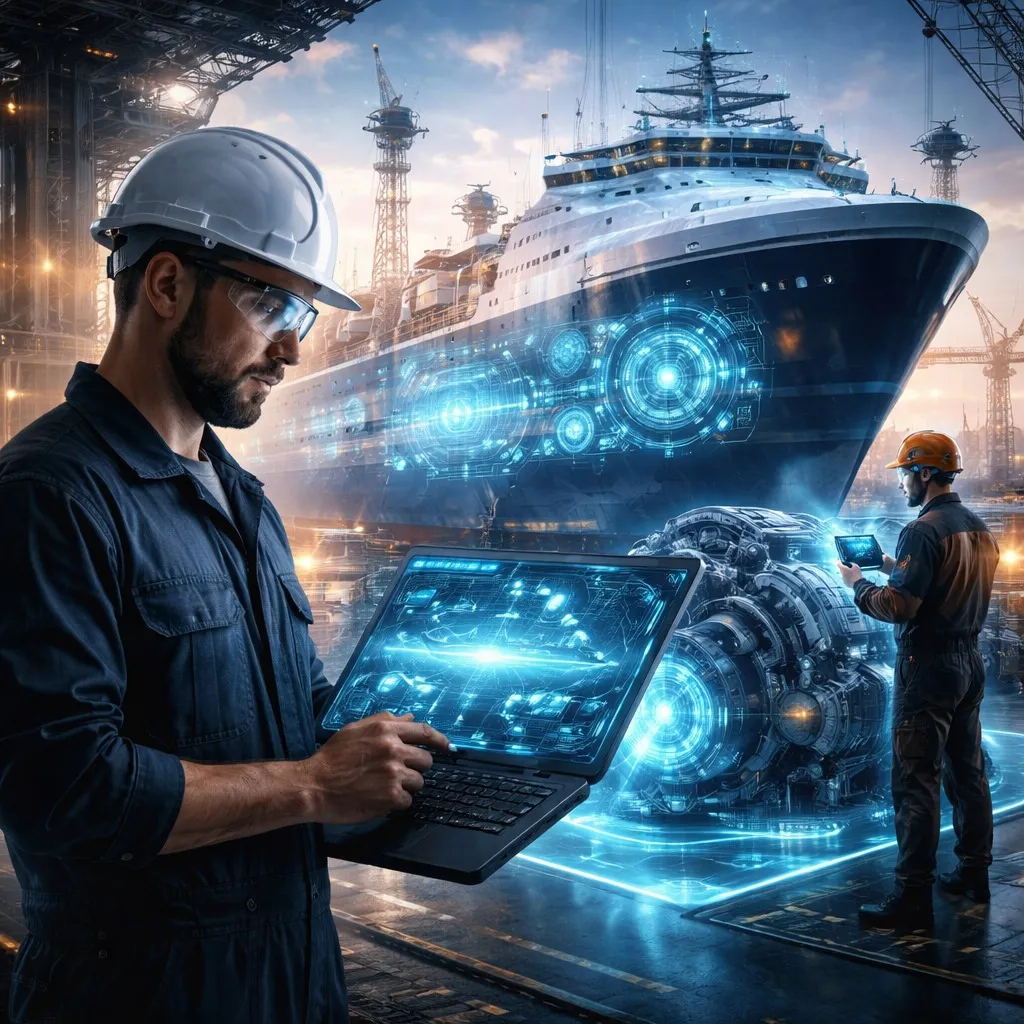

A Simple Thought to Start
If you look at how ships were maintained earlier and compare it with today, you can already see the difference. Earlier, everything depended on experience and routine checks. Today, machines are starting to “talk” through data.
AI is not something coming in the future — it has already started changing how ships are maintained and how problems are solved. The real question is not if it will change things, but how much.
What AI Is Actually Doing on Ships
AI in ship maintenance is mainly about understanding machines better.
Instead of waiting for something to fail, AI systems collect data from sensors and analyze it continuously. This helps in predicting issues before they become serious.
AI is already being used for:
- Predictive maintenance (finding faults early)
- Monitoring engine performance in real time
- Detecting unusual patterns in machinery
- Supporting troubleshooting decisions
In simple terms, ships are slowly becoming smarter about their own condition.
AI systems can analyze huge amounts of data and identify patterns that humans might miss, which helps in avoiding breakdowns and improving efficiency.
How Troubleshooting Is Changing
Earlier, troubleshooting depended mostly on human observation and experience. Engineers would inspect the system, identify the issue, and then decide what to do.
Now, AI is changing that process.
Instead of starting from zero, engineers can get:
- Early warnings before failure
- Suggested causes based on past data
- Faster identification of faults
This does not remove the engineer — it actually supports them.
AI acts like an assistant that says, “Something is not right here, check this area first.”
Why AI Is Becoming Important
There is a strong reason why the industry is adopting AI.
One major issue in shipping is machinery failure. In fact, technical failures are one of the biggest causes of maritime incidents.
AI helps reduce this risk by detecting problems early and improving maintenance planning.
At the same time, AI also improves:
- Operational efficiency
- Safety
- Fuel and energy management
- Decision-making speed
This is why AI adoption in maritime is growing very fast across the industry.
What Changes in Maintenance
AI is pushing maintenance from reactive and preventive towards predictive.
Instead of:
- Fixing after failure
- Replacing parts on schedule
AI allows:
- Fixing before failure
- Replacing parts only when needed
This reduces downtime and avoids unnecessary maintenance.
AI-based predictive maintenance is already transforming how ships manage their equipment and assets.
But It’s Not Perfect Yet
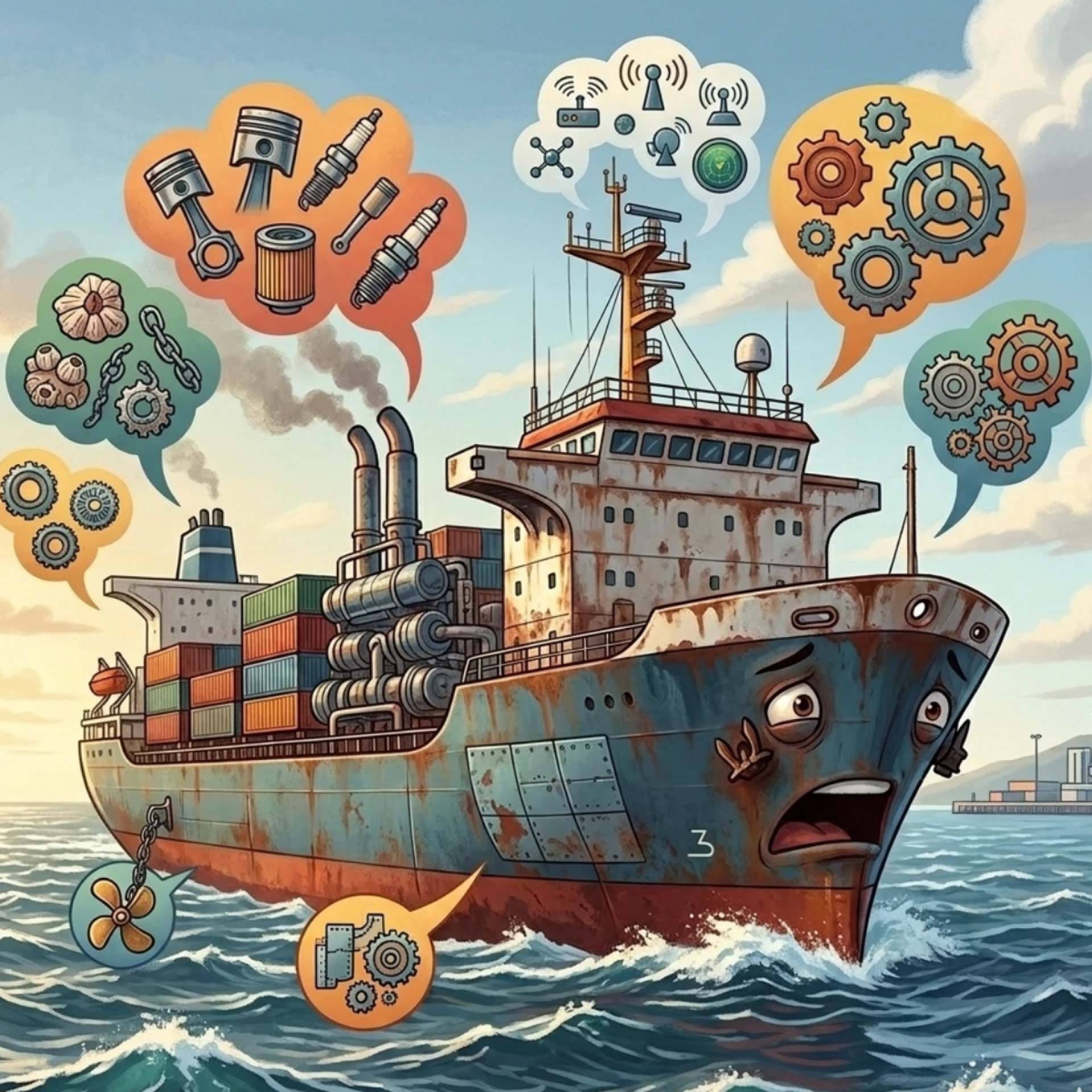
Even with all the benefits, AI is not a complete solution.
There are still challenges:
- High cost of implementation
- Need for sensors and proper data
- Integration with old ship systems
- Cybersecurity risks
- Dependence on data accuracy
Ships operate in harsh and unpredictable environments, so systems need to be extremely reliable.
Will AI Replace Marine Engineers?
This is a common concern, but the answer is simple — no.
AI will not replace engineers. It will change how they work.
Instead of spending time finding problems, engineers will focus more on:
- Decision making
- System understanding
- Managing complex situations
AI handles data. Humans handle judgment.
What the Future Looks Like
In the coming years, ship maintenance will become:
- More data-driven
- More planned than reactive
- More efficient and less wasteful
We will see more ships using AI for monitoring, troubleshooting, and maintenance planning.
But ships will still need skilled people onboard and onshore.
Role of Spare Parts Will Still Remain
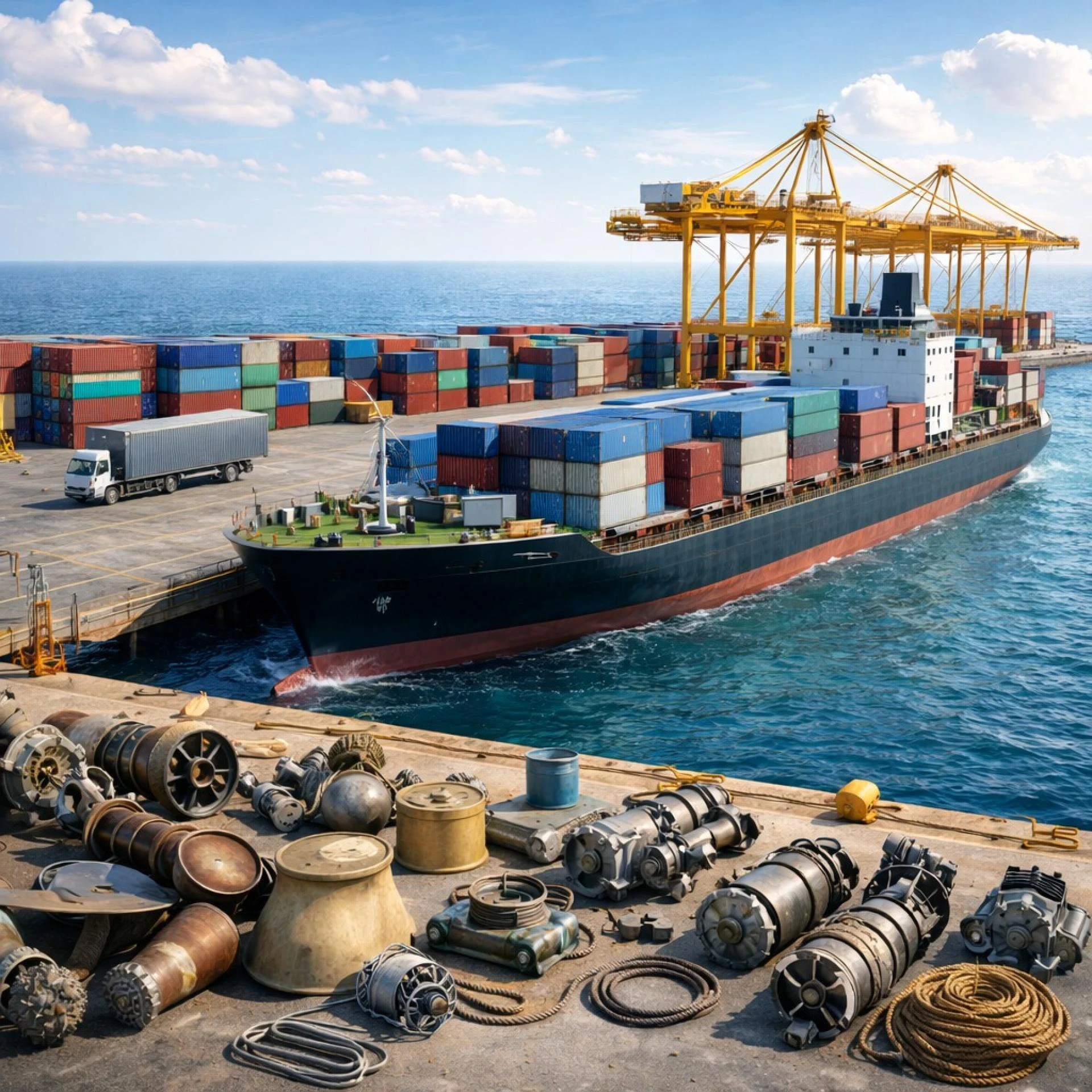
No matter how advanced AI becomes, one thing will not change — machines will still need physical parts.
If a component fails, it must be replaced with a reliable one.
That’s why companies like Labdhi Marine continue to play a key role by supplying genuine and tested marine spare parts, ensuring ships keep running smoothly without delays.
Final Thought
AI is definitely changing ship maintenance and troubleshooting. It is making systems smarter, problems easier to detect, and operations more efficient. But it is not replacing the human side of shipping. The future is not AI alone — it is AI working together with experienced marine professionals.



















Sign in to leave a comment.