The "New" Machinery Crisis
In 2026, the manufacturing sector faces a paradox. On one hand, the pressure to modernise is intense AI-driven efficiency is no longer a luxury; it is the baseline. On the other hand, the cost of capital and the regulatory burden of disposing of heavy machinery have never been higher.
We have reached a tipping point where the "buy new" default is being replaced by a more sophisticated strategy. Recent industry data suggests the global machinery retrofit market is projected to reach $1.24 billion by 2026, driven by the need to bring legacy industrial equipment up to Industry 4.0 standards without the massive capital expenditure required for total replacement.
For engineering leaders, the mandate is clear: Don't replace. Reimagine.
Strategic Retrofitting
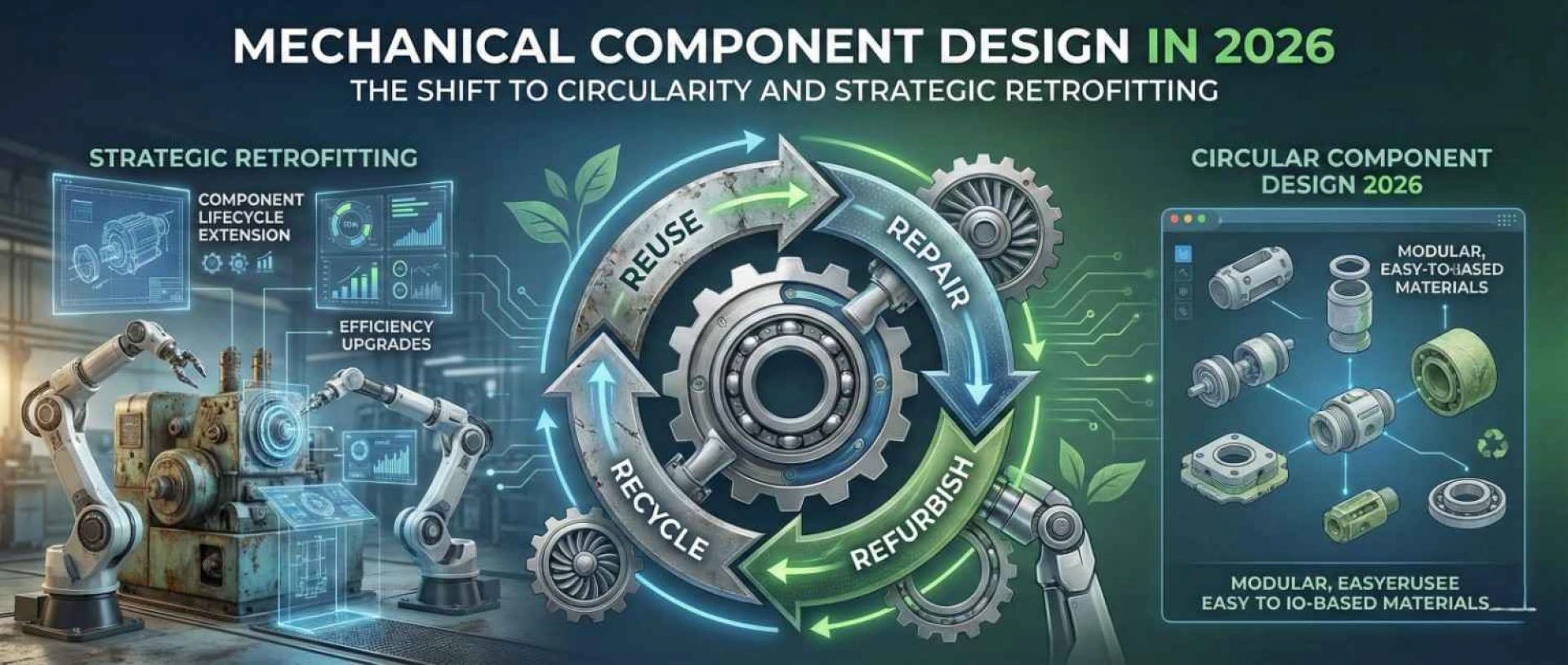
The most immediate shift in mechanical design services is moving from designing new machines to upgrading existing ones. This is "Strategic Retrofitting."
It involves taking a robust, 20-year-old mechanical chassis—which is likely over-engineered by today's standards—and integrating modern servo drives, IoT sensors, and control modules. This is not just a repair; it is a metamorphosis.
Why this matters now:
- Cost Efficiency: Retrofitting often costs 40-60% less than purchasing new OEM equipment.
- Speed: Lead times for heavy machinery can still exceed 12 months. A retrofit design project can often be deployed in a matter of weeks.
- Sustainability: Extending the life of a multi-ton steel assembly significantly reduces a company’s Scope 3 carbon emissions.
Professional mechanical engineering design services are essential here. You cannot simply bolt a new motor onto an old frame. The stress loads must be recalculated, vibration analysis (FEA) must be conducted to ensure the old frame can handle the new, higher-speed dynamics, and new mounting interfaces must be precision-drafted.
Designing for Disassembly (DfD)
If retrofitting handles the past, "Design for Disassembly" (DfD) handles the future. In 2026, regulations like the EU's "Right to Repair" and stricter Digital Product Passport (DPP) requirements are forcing engineers to consider a product's death at birth.
We are moving away from permanent adhesives and snap-fits that break upon removal. The new standard in mechanical component design prioritises:
- Modular Sub-Assemblies: Designing units that can be swapped out entirely without specialised tools.
- Standardised Fasteners: Returning to universal screws and bolts rather than custom rivets, allowing local technicians to service equipment easily.
- Material Monotony: Using fewer types of plastics and metals in a single assembly to simplify recycling streams later.
The Digital Twin as a Retrofit Tool
How do you design a perfect retrofit component part for a machine that doesn't have existing CAD data? This is where the modern mechanical engineering design services workflow shines.
Using 3D laser scanning, engineers can capture the exact geometry of a worn-out legacy machine. This "point cloud" is converted into a parametric 3D model—a Digital Twin.
Once this digital baseline is established, engineers can simulate how a new component (like a high-efficiency impeller or a lightweight gripper) will perform before it is manufactured. This "scan-to-CAD-to-simulation" workflow is the secret weapon for risk-free modernisation.
Actionable Takeaways for Asset Managers
If you are managing a fleet of ageing equipment, here is your roadmap for 2026:
- Audit Before You Buy: Before approving a PO for a new machine, ask your engineering team: "Can we achieve 90% of this performance by retrofitting our current asset?"
- Scan Your Legacy: Invest in mechanical design services to create 3D models of your critical legacy equipment now. When a part fails, you’ll be ready to print or machine a replacement instantly.
- Demand DfD: For new designs, require your vendors to demonstrate how the product can be disassembled. If it can’t be taken apart, it’s a liability.
The Future is Rebuilt
The most celebrated mechanical engineers of 2026 won't necessarily be the ones building the shiniest new robots. They will be the ones who can look at a rusting, outdated production line and see the potential for a high-performance, digitally integrated system.
Circularity is no longer just an environmental buzzword; it is a hard-nosed business strategy. By leveraging expert mechanical engineering design services, you can turn your "outdated" liabilities into your most efficient assets.
Is your machinery ready for a second life? Explore how Tesla Mechanical Designs uses advanced retrofitting and digital validation to modernise your operations.
























Sign in to leave a comment.