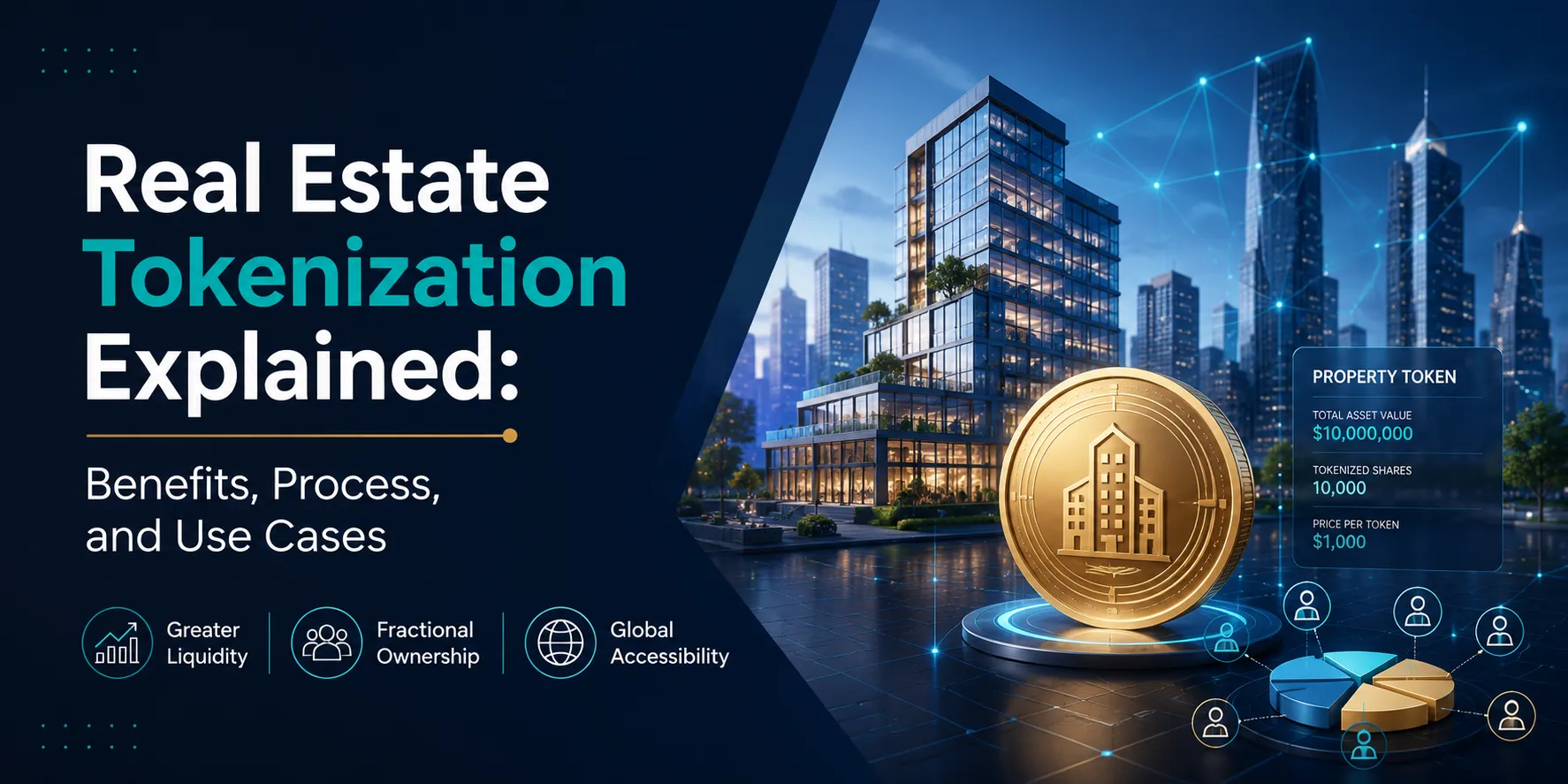

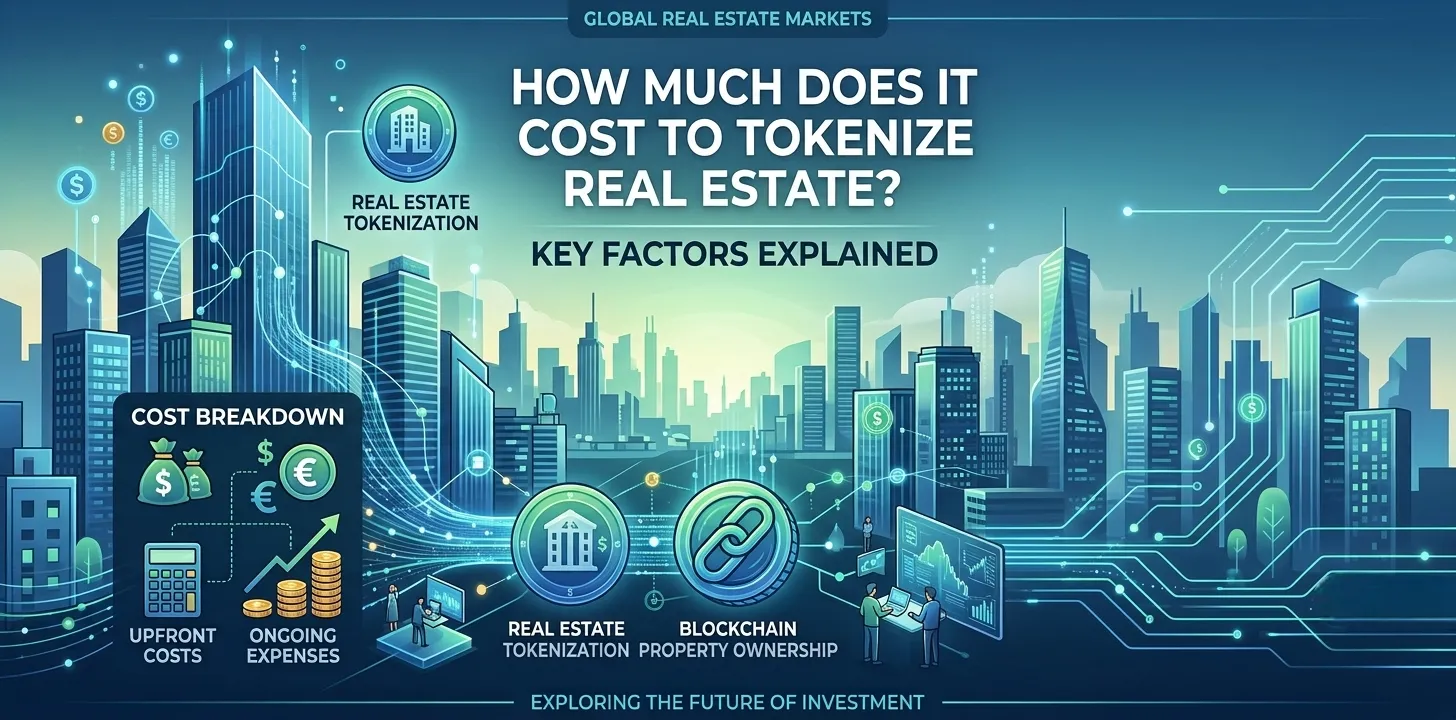
Real estate has traditionally been one of the world’s most valuable investment markets, but it has also been characterized by high capital requirements, lengthy transaction processes, limited liquidity, and significant administrative complexity. Real estate tokenization introduces a blockchain-based approach to addressing some of these limitations by representing ownership rights or economic interests in property through digital tokens. Instead of requiring investors to purchase an entire property or participate through conventional investment structures, tokenization can enable qualifying investors to hold fractional interests represented digitally on a blockchain.
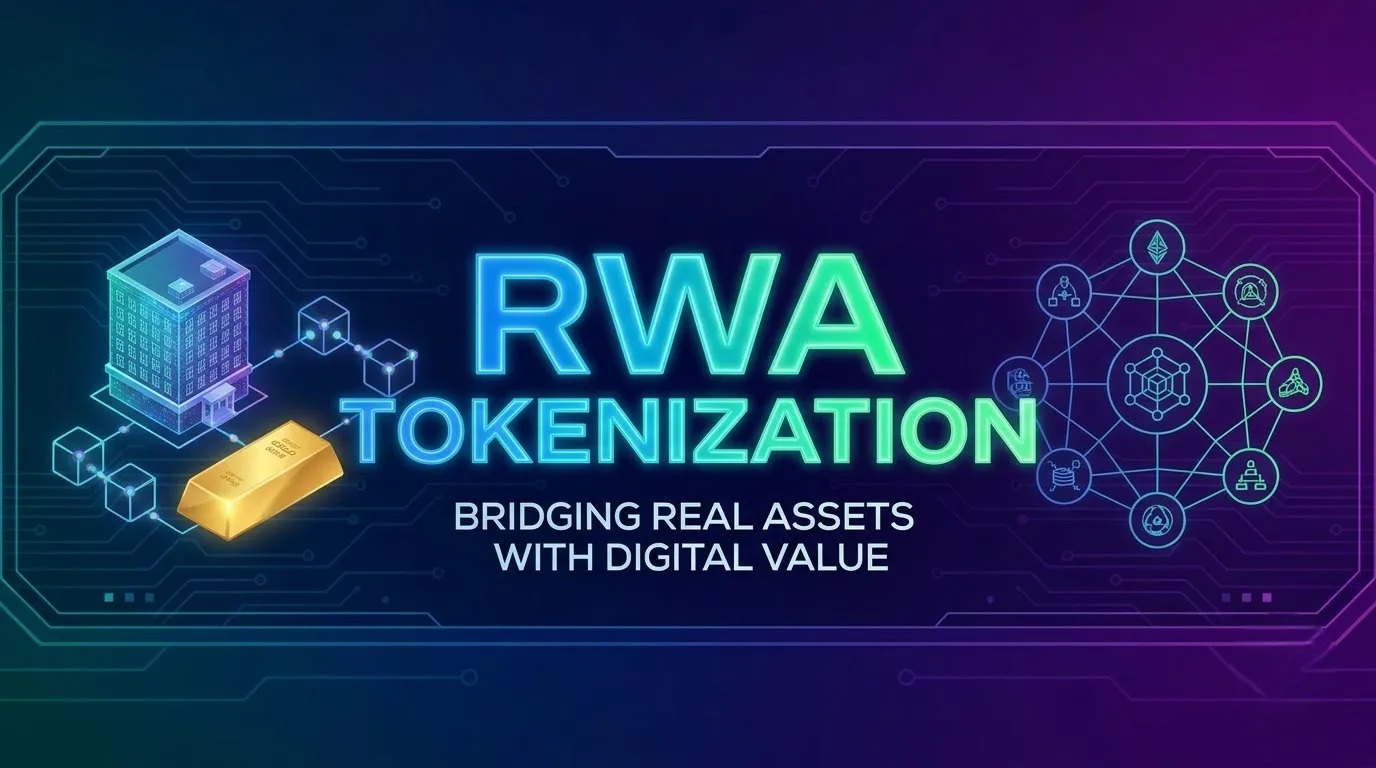
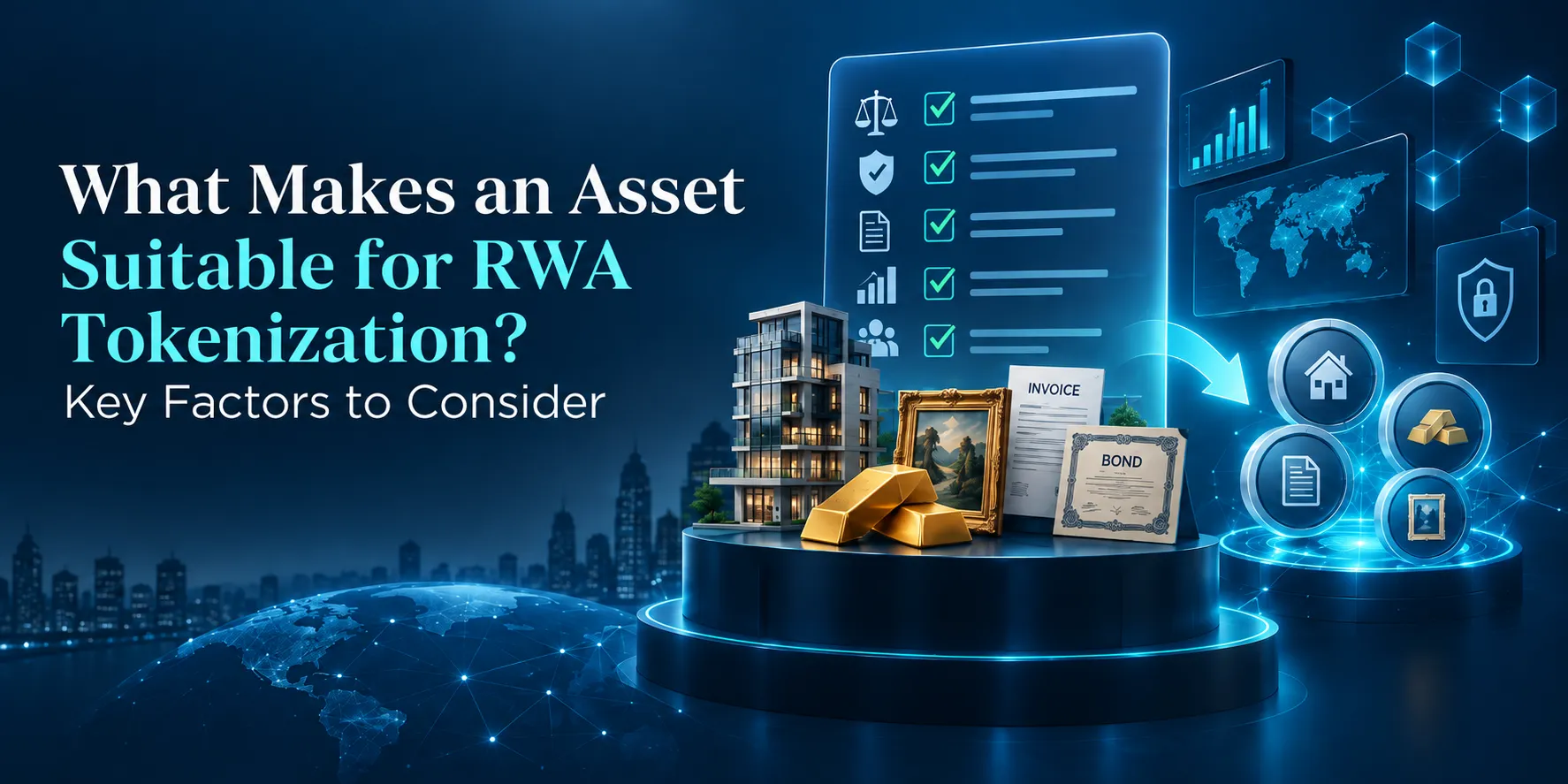
The concept is part of the broader movement toward real-world asset (RWA) tokenization, in which physical or traditional financial assets are represented digitally. Industry research has projected that the tokenized real-world asset market could grow substantially over the coming decade as financial institutions, asset managers, and blockchain companies explore blockchain-based settlement and ownership infrastructure. Real estate is particularly suited to this model because properties are expensive, relatively illiquid assets with ownership and transaction records that can benefit from greater digitization.
What Is Real Estate Tokenization?
Real estate tokenization is the process of converting ownership rights, economic interests, or claims associated with a property into blockchain-based digital tokens. Depending on the legal and technical structure, a token may represent fractional ownership of a property, an interest in a legal entity that owns the property, rights to a portion of rental income, or another legally defined economic interest.
The important distinction is that the token itself does not automatically create legal ownership. The legal framework behind the token determines what an investor actually owns and what rights they receive. A properly designed tokenization model therefore combines blockchain technology with property law, securities regulations, investor protections, custody arrangements, compliance procedures, and clearly defined contractual rights.
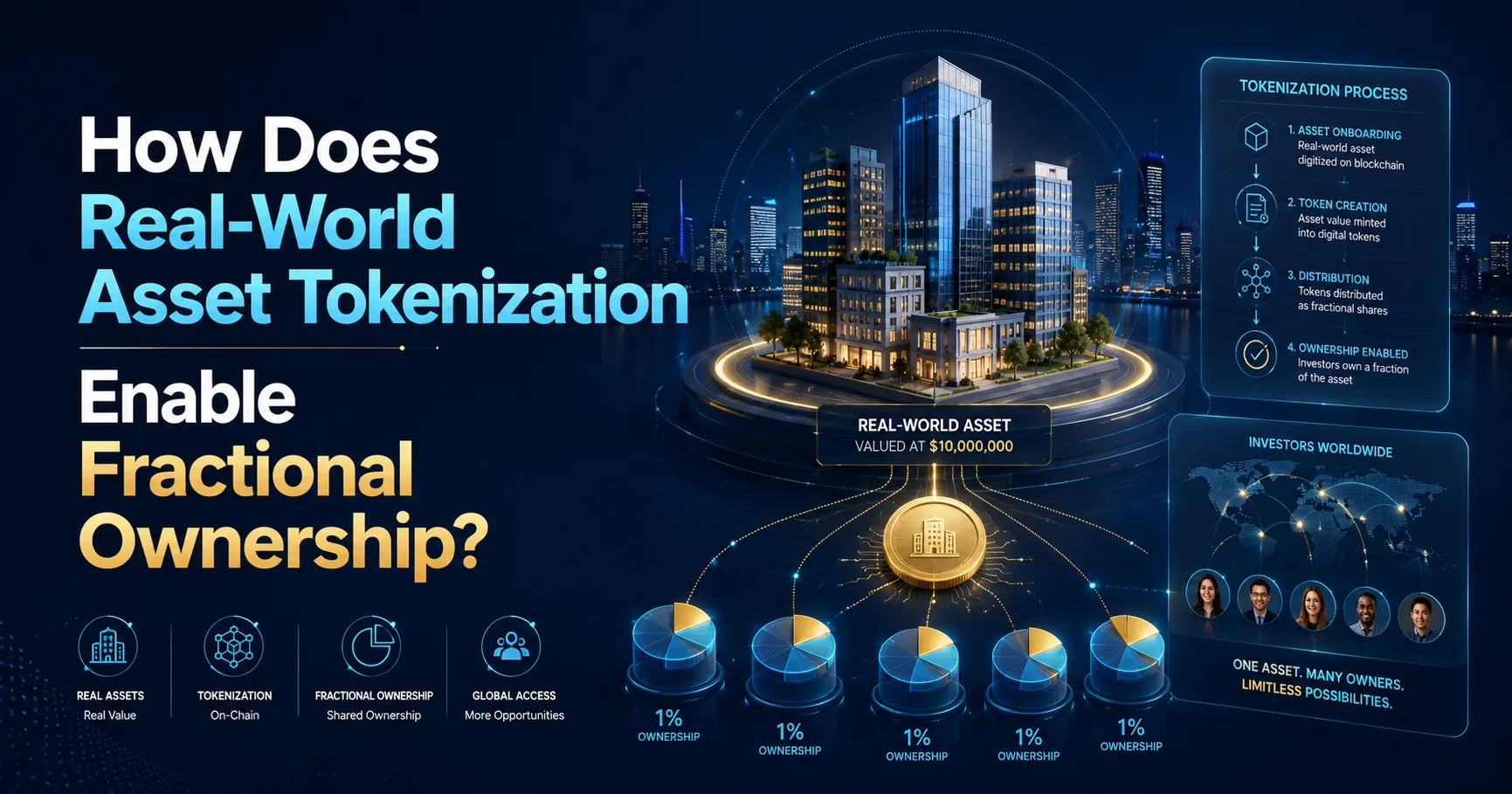
For example, suppose a commercial property is valued at $10 million. Instead of raising the entire amount from one investor, the ownership structure could potentially be divided into a large number of digital units. If legally structured as fractional interests, investors could acquire smaller positions while the underlying property remains managed as a single asset.
This structure can lower the minimum investment threshold and create a more digitally accessible investment experience, although regulatory eligibility and minimum investment requirements can still apply.
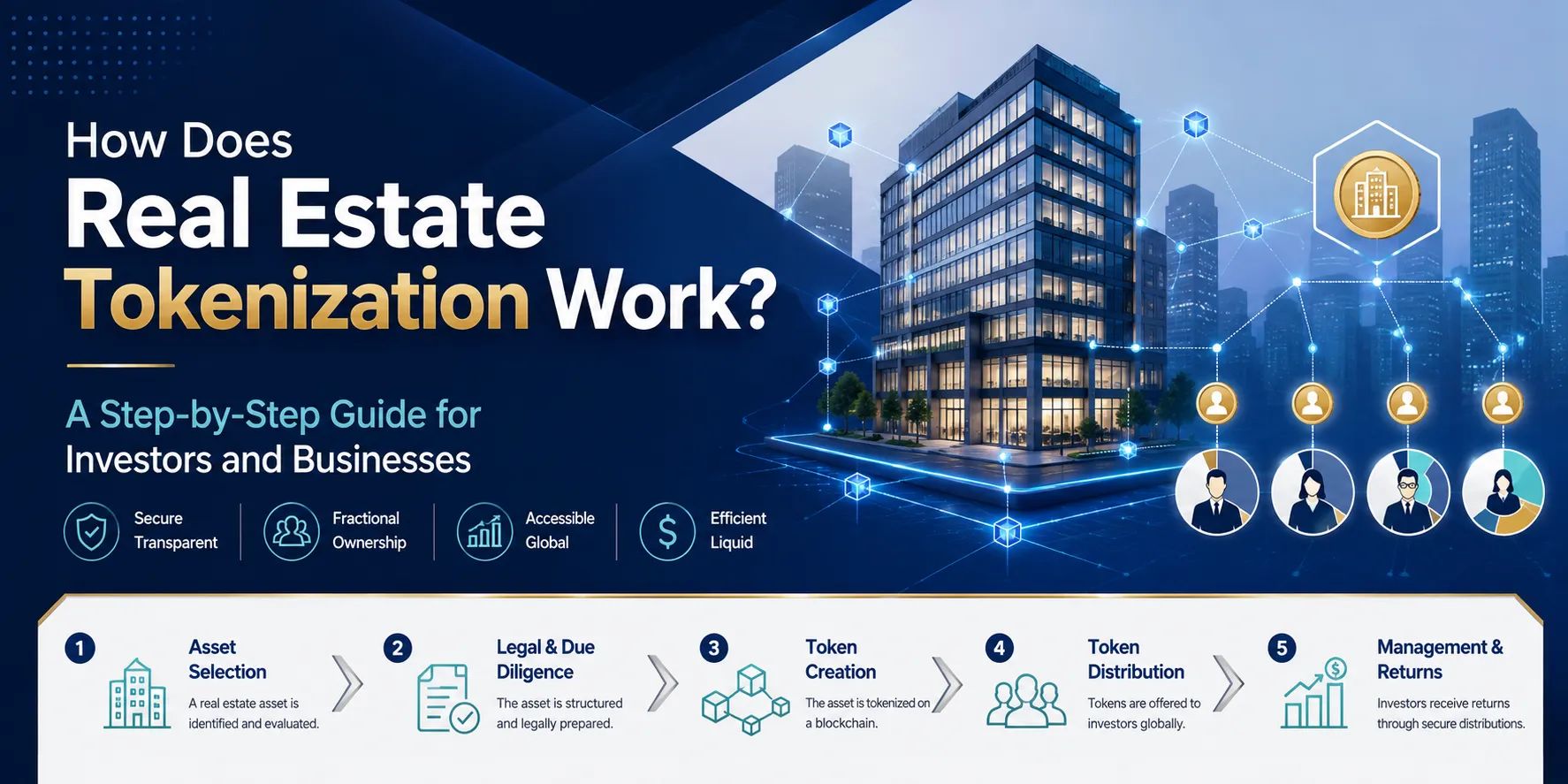
How Does Real Estate Tokenization Work?
Real estate tokenization involves considerably more than simply creating tokens on a blockchain. The process begins with identifying a suitable property and determining the legal ownership structure. Developers, property owners, lawyers, financial professionals, and technology providers then establish how investor rights will be represented.
The next stage involves due diligence. The property may undergo valuation, title verification, financial analysis, legal review, and assessment of rental income or other expected cash flows. The tokenization structure must then define exactly what the tokens represent.
Once the legal and financial framework is established, developers create the blockchain infrastructure and smart contracts governing token issuance, transfers, ownership records, distributions, and other relevant functions. Compliance mechanisms such as identity verification and know-your-customer procedures can be integrated into the platform to ensure that token transfers follow applicable regulations.
Tokens are subsequently issued to eligible investors through a primary offering or another permitted distribution mechanism. Investors may receive economic benefits such as rental income or proceeds from a future sale, depending on the investment structure.
A simplified process can therefore be understood as:
Property selection → Legal structuring → Due diligence → Token design → Smart contract development → Compliance and investor onboarding → Token issuance → Asset management and distributions
The most important element is the connection between the digital token and enforceable legal rights. Without that connection, blockchain-based representation does not necessarily provide meaningful ownership protection.
Key Benefits of Real Estate Tokenization
The strongest argument for tokenization is its potential to modernize the investment infrastructure surrounding property rather than simply placing existing ownership records on a blockchain.
Fractional Ownership
Traditional real estate often requires substantial capital. Tokenization can divide an economic interest into smaller units, potentially allowing investors to participate without purchasing an entire property. This can broaden access to certain real estate opportunities while enabling investors to allocate capital across multiple properties instead of concentrating their funds in one asset.
Greater Liquidity Potential
Real estate is traditionally illiquid because selling a property can require extensive negotiations, documentation, financing, and legal procedures. Tokenized interests can potentially support more efficient secondary transfers where legally permitted and where an appropriate trading or transfer infrastructure exists.
However, tokenization should not be confused with guaranteed liquidity. A tokenized property still needs sufficient buyers, compliant trading infrastructure, appropriate market access, and legally transferable rights before meaningful liquidity can emerge.
Improved Transparency
Blockchain networks can provide a persistent record of token transactions. Depending on the architecture, investors and authorized participants may be able to verify ownership changes, transaction histories, and other relevant information more efficiently than through fragmented traditional systems.
Automation Through Smart Contracts
Smart contracts can automate selected administrative functions, including token issuance, transfer restrictions, investor eligibility checks, and distribution calculations. For income-producing properties, automated mechanisms may help distribute rental proceeds according to predefined rules, subject to the underlying legal and financial arrangements.
Global Investment Infrastructure
Tokenization can create infrastructure capable of connecting property owners and eligible investors across jurisdictions. Nevertheless, cross-border participation remains heavily dependent on securities laws, tax requirements, investor restrictions, foreign ownership rules, and local regulations.
Real-World Use Cases
Real estate tokenization can be applied across different property categories and investment structures. Income-generating residential properties are one prominent use case, where investors may receive a proportionate economic interest in rental income.
Commercial real estate is another significant opportunity. Office buildings, retail properties, warehouses, and logistics facilities can require substantial capital, making fractional investment structures potentially attractive for certain investor groups.
Tokenization can also support property development financing. Developers may use compliant digital investment structures to raise capital for projects while providing investors with defined economic interests.
A notable example is RealT, which has used blockchain-based structures to offer fractional interests associated with rental properties. Similarly, companies such as Securitize and other digital-asset infrastructure providers have demonstrated how blockchain can be integrated with regulated asset issuance and investor management.
These examples illustrate that tokenization is increasingly being explored as financial infrastructure rather than merely as a cryptocurrency application.
Challenges and Risks
Despite its potential, real estate tokenization has significant challenges. Regulation is one of the most important. Depending on the jurisdiction and structure, tokenized real estate interests may fall under securities or other financial regulations. Issuers must therefore establish appropriate compliance procedures before offering tokens to investors.
Legal enforceability is equally important. Investors need to understand whether they own a direct fractional interest in property, shares in a property-holding company, debt, revenue rights, or another financial interest.
Technology also introduces risks. Smart contract vulnerabilities, compromised wallets, inadequate access controls, oracle failures, and poorly designed token-transfer mechanisms can expose investors and operators to financial losses.
Finally, liquidity remains a practical challenge. A token may be technically transferable while still having very few buyers. Tokenization improves the infrastructure for potential liquidity, but it does not automatically create a liquid market.
The Future of Real Estate Tokenization
The future of tokenized real estate will likely depend on the convergence of blockchain infrastructure with regulated financial markets. As institutional participants become more comfortable with digital assets, tokenization could become increasingly integrated with conventional custody, compliance, settlement, and investment systems.
The most successful platforms are unlikely to focus solely on creating tokens. Instead, they will need to provide an integrated ecosystem covering legal structuring, property management, investor onboarding, compliance, smart contracts, reporting, custody, and potentially secondary-market functionality.
This makes the quality of the underlying infrastructure more important than the token itself. A professionally designed platform must ensure that the digital representation of an asset corresponds to clearly defined legal and economic rights.
Conclusion
Real estate tokenization has the potential to reshape how property ownership and investment are structured by combining fractional ownership models with blockchain-based infrastructure. Its major advantages include potentially lower investment barriers, improved transparency, programmable transactions, and more efficient digital administration. At the same time, tokenization does not eliminate traditional real estate risks or regulatory obligations. Legal enforceability, investor protection, cybersecurity, property valuation, compliance, and actual market liquidity remain critical considerations. Businesses exploring this model should therefore approach tokenization as a comprehensive financial and technology project rather than simply a token-creation exercise. For organizations looking to build this infrastructure, Blockchain App Factory also provides best-in-class real estate tokenization development services and real estate tokenization platform development services, helping businesses design secure, scalable, and feature-rich solutions aligned with their specific tokenization requirements.



























Sign in to leave a comment.