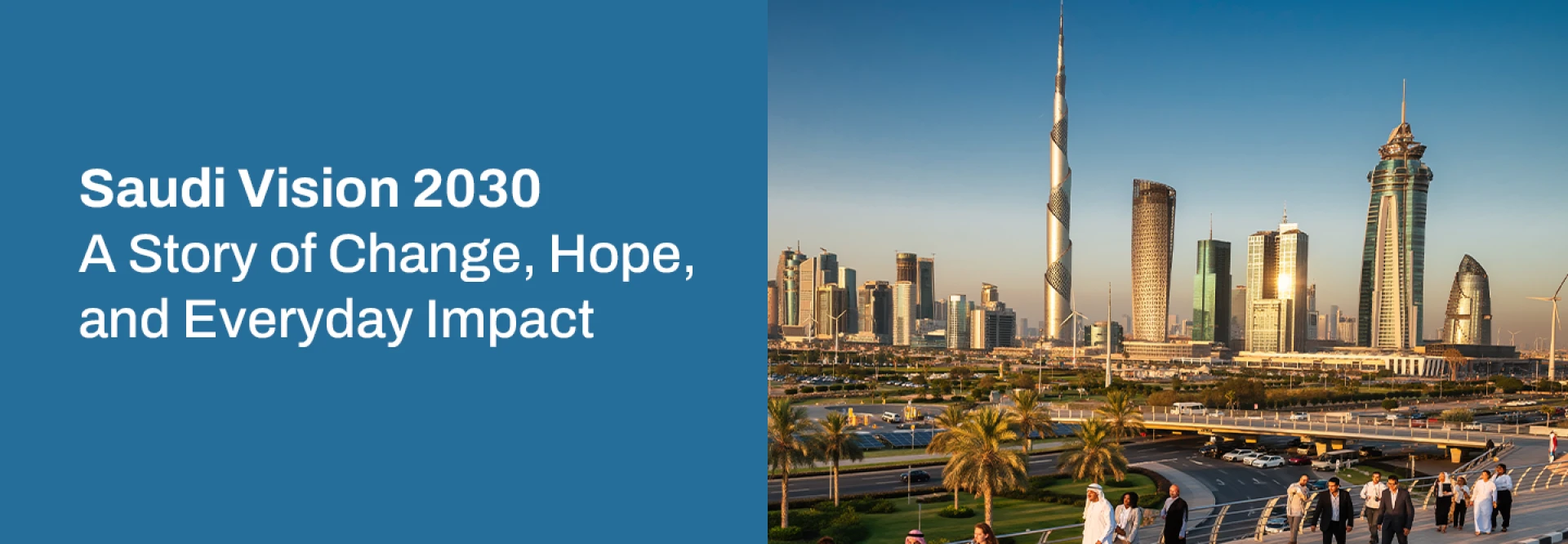
Saudi Arabia is experiencing one of the most ambitious national transformations in modern history. The impact of Saudi Vision 2030 can be felt everywhere — in the streets, workplaces, new public spaces, and even in the way people talk about their future. Beyond the global headlines and ambitious development plans, the real story lies in how everyday people experience this change.
To capture this reality, we listened to voices from different age groups, professions, and regions. Their hopes, concerns, and daily observations offer an authentic picture of what Vision 2030 KSA truly means for society. What emerges is not just an assessment of policies — but a story of a nation discovering its new identity through lived experience.
How Saudis See Themselves in This New Era
Most respondents belong to the generation actively shaping and benefiting from the transformation — adults in their mid-20s to late-40s. Men and women equally share their perspectives, giving the vision a collective tone rather than a divided one.
What stands out most is familiarity. For many, Saudi Vision 2030 is not a distant idea. It’s something they follow, discuss, and witness in their daily routines. Whether through new job roles, entertainment hubs, digital services, or emerging industries, people see the Kingdom rewriting parts of its identity while preserving its deep cultural roots.
Press enter or click to view image in full size
What Comes to Mind When People Think of Vision 2030 KSA
When Saudis think about Vision 2030 KSA, three ideas dominate:
- Modernization
- Economic growth
- Cultural reform
These ideas reflect both practical benefits and emotional aspirations. People associate the vision with progress, opportunity, and a more globally connected nation.
Many respondents believe the pace of change is fast and unmistakable. New entertainment events, improved infrastructure, expanding cities, and digital transformation have become visible markers of this momentum. At the same time, people notice a more positive global perception of Saudi Arabia — as a nation becoming more open, innovative, and future-focused.
How People Experience the Pace of Change
For many citizens, the change is not just something they hear about — it’s something they see around them. They notice it in:
- Public events and cultural festivals
- New cafés, parks, and family spaces
- Job opportunities in tourism, entertainment, and tech
- Improved government services
- More women entering leadership and new industries
- The rise of new leisure and professional activities
Some feel deeply involved in the transformation, while others observe it gradually. But overall, daily life feels more dynamic, promising, and filled with possibility.
Where Saudis See the Most Progress
Among all areas touched by Saudi Vision 2030, three stand out:
1. Entertainment & Tourism
People see cities becoming more vibrant — with concerts, sports events, cultural festivals, and global entertainment now happening within the country. What once required international travel is now easily accessible at home.
2. Job Opportunities
Many believe that Vision 2030 KSA has expanded career possibilities for young people, especially in hospitality, culture, technology, and other emerging sectors.
3. Women’s Empowerment
This is one of the most celebrated aspects of the transformation. Citizens highlight how women are now entering leadership roles, entrepreneurship, and industries once dominated by men. It represents both social progress and national confidence.
Infrastructure development and urban planning improvements, though less dominant, are also widely recognized.
Opportunities, Inclusion, and Social Change
The transformation is not only economic — it is deeply social. Many feel that Saudi Arabia has become more inclusive and participatory. Young people are discovering new paths in tech, tourism, and entrepreneurship. Women’s participation is seen as a powerful step forward. Public spaces, workplaces, and cultural events feel more open and engaging.
Of course, concerns exist, such as rising costs, cultural adjustments, or uncertainty in certain job markets. These concerns add realism to the picture without overshadowing the overall positive momentum.
Balancing Tradition and Modernity
For a nation rooted in deep traditions, modernization carries emotional weight. Yet, most people believe Saudi Vision 2030 strikes a healthy balance. They feel the country is modernizing without losing its cultural identity. Family values, traditions, and national heritage remain intact while new opportunities and lifestyles evolve around them.
Inspiration, Hope, and The Nation’s Verdict
When asked how they view the overall transformation, most respondents describe it as inspiring, impressive, and positive. They speak of innovation, national pride, and newfound opportunities for younger generations. Even those who feel progress is uneven acknowledge that the direction is hopeful and meaningful.
Ultimately, Vision 2030 KSA is shaping more than the economy — it is shaping a renewed sense of national identity based on ambition, confidence, and possibility. Saudi Arabia is changing, and its people are changing with it. Through their experiences, we see not only what is happening but what this transformation truly means for the future.



























Sign in to leave a comment.