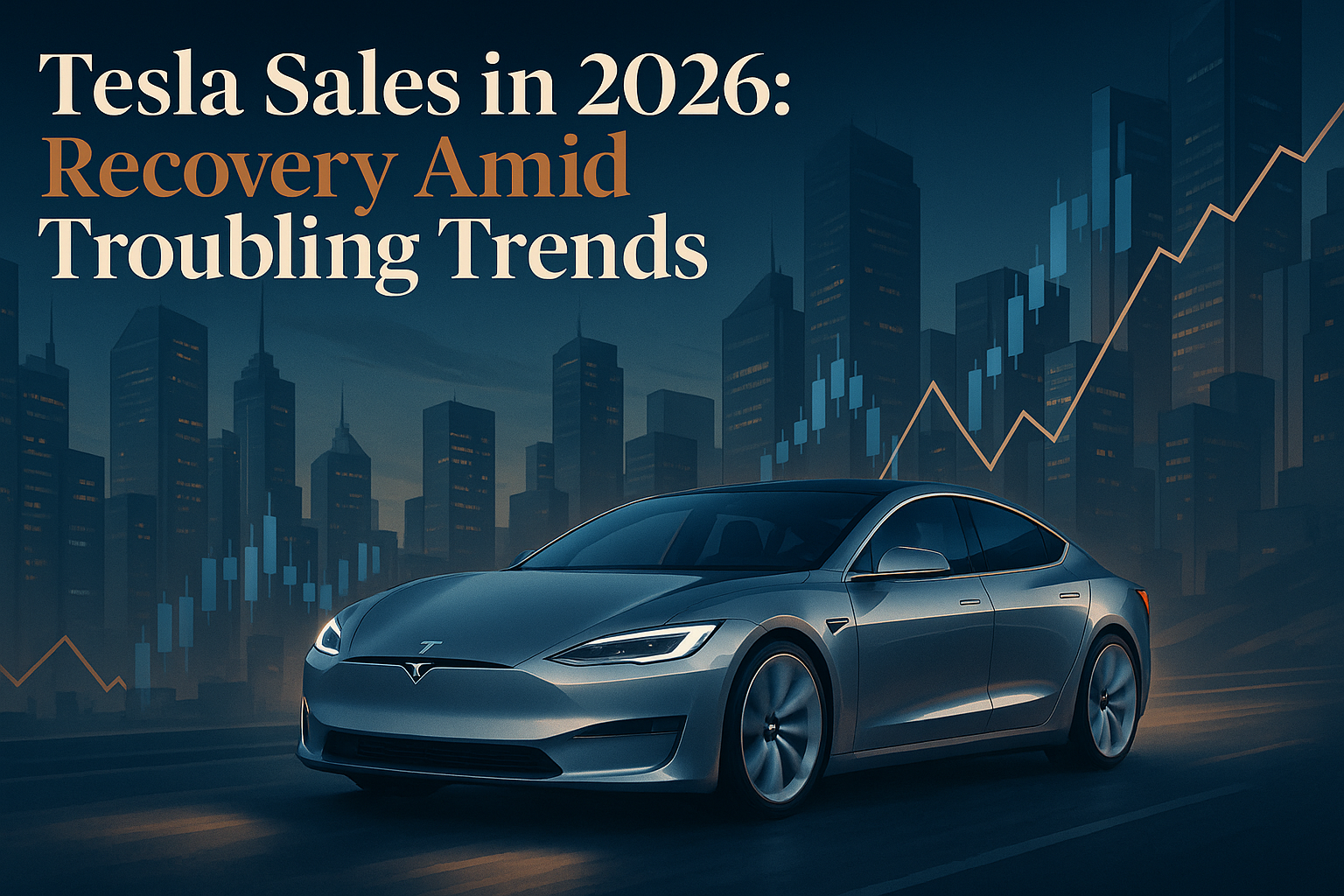

In 2026, Tesla finds itself at a pivotal crossroads. Despite a recent uptick in sales, the broader picture paints a concerning narrative. Tesla's global sales figures have shown a modest increase of 5% compared to last year's stagnant growth. However, experts caution that the underlying trend lines reveal potential challenges that could threaten its dominance in the electric vehicle (EV) market.
While Tesla has managed to boost its sales in key markets such as the United States and China, its market share has been gradually eroded by new entrants and established automakers doubling down on their EV strategies. This article delves into the factors influencing Tesla's current position and explores the complex dynamics shaping its future trajectory.
Early Beginnings: Tesla's Visionary Start
Tesla was founded in 2003 by Martin Eberhard and Marc Tarpenning, with the vision to accelerate the world's transition to sustainable energy. The company, however, truly gained momentum when Elon Musk, co-founder of PayPal, joined as chairman of the board and led the Series A funding round in 2004. Musk's involvement brought significant attention and investment, setting the stage for Tesla's ambitious goals.
The company's initial focus was on developing a high-performance electric sports car, which culminated in the release of the Tesla Roadster in 2008. The Roadster's success proved that electric vehicles could be both sustainable and desirable, marking a turning point in the automotive industry. Tesla's early years were characterized by bold innovation and a relentless pursuit of sustainable energy solutions.
Milestones and Breakthroughs
Tesla's trajectory is marked by several key milestones that have redefined the EV landscape. In 2012, Tesla launched the Model S, a luxury sedan that garnered critical acclaim and numerous awards, including Motor Trend's Car of the Year. This success was followed by the introduction of the Model X SUV in 2015 and the more affordable Model 3 in 2017, which became the best-selling electric car globally in multiple years.
In 2020, Tesla reached a significant milestone by joining the S&P 500, solidifying its status as a major player in the automotive and tech industries. The company's gigafactories, strategically located in Nevada, Shanghai, Berlin, and Texas, have revolutionized battery production and supported its global expansion. These achievements underscore Tesla's role as a trailblazer in the shift toward electric mobility.
Current Revenue Streams
As of 2026, Tesla's revenue streams are diverse, reflecting its multifaceted approach to business. The company's automotive sales remain its primary income source, accounting for approximately 75% of total revenue. In 2025, Tesla reported $95 billion in automotive revenue, driven by strong demand for its Model 3 and Model Y vehicles. Energy generation and storage solutions, including solar panels and Powerwall batteries, contribute around 15% of total revenue, underscoring Tesla's commitment to clean energy.
Tesla's software and services segment, which includes Full Self-Driving (FSD) subscriptions, generates an additional 10% of revenue. The FSD technology has faced regulatory scrutiny but continues to attract customers eager for autonomous driving features. Tesla's focus on vertical integration and its ability to monetize software upgrades have been crucial to maintaining its financial health amid growing competition.
Assets and Investments
Tesla's asset portfolio is extensive, with significant real estate holdings and investments in cutting-edge technologies. The company's gigafactories, valued at over $20 billion collectively, are its most prominent assets. These facilities not only support vehicle production but also enhance Tesla's capabilities in battery manufacturing and energy storage.
Beyond manufacturing, Tesla has invested in AI development and robotics, with its Optimus robot project aimed at transforming automation. The company's investment in Bitcoin, once valued at over $1.5 billion, has been a volatile but strategic move to diversify its financial assets. Tesla's focus on technological innovation extends beyond vehicles, positioning it as a leader in the broader tech ecosystem.
Recent Developments and Challenges
2026 has seen Tesla navigating a complex landscape of regulatory challenges and market dynamics. The company's autonomous driving technology continues to face scrutiny, with several high-profile incidents prompting calls for stricter safety standards. Despite these hurdles, Tesla has launched the Cybertruck, a highly anticipated vehicle that has generated significant consumer interest.
Moreover, Tesla's expansion into emerging markets like India has been met with mixed results, as regulatory and infrastructural challenges persist. The company's efforts to localize supply chains have been crucial in mitigating geopolitical risks, yet the competition from local automakers has intensified. Tesla's ability to adapt to these challenges will be critical to sustaining its growth trajectory.
Conclusion and Future Outlook
As Tesla faces both opportunities and challenges, its future remains a topic of intense speculation. The company's commitment to innovation and sustainability positions it well for continued influence in the evolving automotive landscape. However, the increasing competition and regulatory pressures necessitate strategic agility and operational excellence.
Looking ahead, Tesla's focus on expanding its energy solutions and enhancing autonomous driving capabilities will be pivotal. Investors and industry watchers will closely monitor Tesla's ability to sustain its growth while navigating a rapidly changing market environment. The company's journey underscores the complex interplay of innovation, competition, and regulation in shaping the future of electric mobility.



























Sign in to leave a comment.