

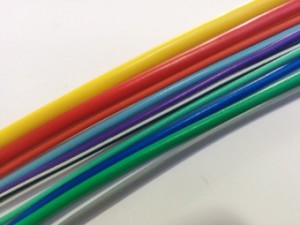
A Complete Guide to Class 5 vs Class 6 Wires
Modern appliances look sleek on the outside, but inside, the story is very different. Wiring has to bend around compact layouts, move with doors and motors and survive years of vibration and heat. As appliance designs become tighter and smarter in 2026, one small decision often makes a big difference later on. The choice of flexible wire class.
Many manufacturers still treat wire selection as a routine specification step. But is it really that simple? When failures show up at hinge points, terminals, or moving assemblies, wiring flexibility suddenly becomes a design issue, not a sourcing one. This is where the conversation around Class 5 wire, Class 6 wire and true appliance wiring wire performance begins.
This guide breaks down how flexibility actually works in real appliance environments, why flexible copper wire remains the industry benchmark and how to choose the right wire class based on movement, not assumptions.
Understanding wire classes in appliance wiring
Before comparing flexibility, it helps to understand what wire classes really mean in practice. Conductor classes are defined by the construction of the copper strands inside the wire, not by insulation or voltage rating. Standards such as those issued by the International Electrotechnical Commission clearly classify conductors based on strand diameter and arrangement.
In simple terms, a higher class number means finer strands and a higher strand count for the same cross sectional area. This structural difference directly affects how the wire behaves when bent, twisted or moved repeatedly.
Appliance environments are rarely static. Internal wiring may sit close to motors, heating elements, or moving panels. Even wires that appear fixed often experience micro movement due to vibration. This is why appliance wiring wire must handle more than just current flow.
At the center of this discussion is copper. Flexible copper wire remains the preferred conductor material worldwide because annealed copper is defined as 100 percent conductivity under the International Annealed Copper Standard. Other metals are measured against copper, not the other way around. This balance of electrical efficiency and mechanical durability is why copper dominates appliance wiring.
As we move forward, the key question becomes clearer. Which wire class matches how your appliance actually moves?
Class 5 wire as the backbone of appliance wiring
Class 5 wire is often described as flexible, but that description needs context. Class 5 conductors use multiple copper strands that are fine enough to allow bending during installation and limited movement during operation. The strands are thicker than those used in Class 6, which gives Class 5 a balance of strength and flexibility.
From a performance standpoint, Class 5 is designed for applications where the wire may be routed through tight spaces but is not expected to move continuously. This makes it a reliable choice for most internal appliance wiring.
Industry testing consistently shows that Class 5 handles normal vibration and occasional bending well. It is widely used in appliances because it offers predictable performance without adding unnecessary complexity to termination and assembly.
You will commonly find Class 5 wire inside washing machines, refrigerators, air conditioners, microwave ovens, and control panels. These are areas where wiring stays mostly in place once installed. The flexibility helps during assembly, while the strand structure maintains mechanical stability over time.
For many manufacturers, Class 5 represents a practical default. It meets safety requirements, supports efficient assembly and performs reliably in semi-static conditions. But what happens when movement increases?
Class 6 wire built for continuous motion
This is where Class 6 wire steps in. Class 6 conductors are constructed using significantly finer copper strands. For the same cross-sectional area, the strand count is higher and each strand has a smaller diameter. The result is a conductor that bends more easily and tolerates repeated motion far better.
Unlike Class 5, Class 6 is engineered for dynamic applications. Testing from certification and inspection bodies has shown that Class 6 conductors withstand tighter bend radii and a higher number of bending cycles without strand separation or fatigue related failures.
In appliance terms, this matters in very specific locations. Think of motor leads, hinged doors, retractable cords, or internal mechanisms that move every time the appliance is used. In these areas, standard flexibility is not enough.
Premium and smart appliances increasingly rely on Class 6 wire where movement is part of normal operation. Robotic functions, automated dispensing systems, and compact layouts all benefit from extra flexible conductors that reduce stress at critical points.
It is important to note that Class 6 is not about excess. It is about matching the wire to the movement profile. Using Class 6 where it is needed prevents failures that would otherwise appear months or years later.
Comparing Class 5 and Class 6 in real appliance conditions
At first glance, the comparison seems straightforward. Class 6 is more flexible than Class 5. But flexibility alone should never drive the decision.
Class 5 offers better handling during termination and crimping. The slightly thicker strands provide a firmer structure, which many assembly lines prefer. For cost sensitive, high-volume appliances, this balance matters.
Class 6, while more flexible, requires careful handling during termination. Tooling and process control become more important. However, the payoff is longer flex life in applications with continuous or repeated motion.
From a reliability standpoint, failures in appliances often occur at connection points or hinge zones. Studies on appliance safety and durability consistently link these failures to mechanical stress and conductor fatigue. Choosing the wrong flexible wire class in these zones increases warranty risk and service costs.
This comparison highlights an important insight. More flexibility is not always better. The right flexibility is what matters.
Choosing the right flexible wire class for your appliance
So how should manufacturers decide? The answer lies in asking the right questions early in the design process.
Does the wire remain fixed once installed? Or does it move during normal use? How often does it bend across the product’s lifetime? Is the movement occasional or continuous with every operation?
If the wiring is static or only experiences limited movement, Class 5 wire is often the smarter choice. It delivers reliable performance, supports efficient assembly and keeps costs under control.
If the wiring is part of a moving system, Class 6 wire becomes essential. In these cases, the extra flexibility protects against fatigue, reduces failure rates, and improves long term reliability.
In both cases, using certified flexible copper wire ensures electrical performance remains consistent while mechanical demands are met.
This approach shifts wire selection from habit to intent. It also aligns wiring decisions with how appliances are actually used.
Practical takeaways for appliance manufacturers
- Wire flexibility should match movement, not assumptions.
- Use Class 5 wire for semi-static internal appliance wiring.
- Choose Class 6 wire for dynamic and high movement zones.
- Always prioritise certified flexible copper wire.
- Evaluate bending cycles alongside current ratings.
- Standardise wire class selection across similar appliance models.
- Flexibility as a design decision for the future
Appliance reliability is no longer defined only by motors, electronics or software. Wiring plays a quiet but critical role in how products perform over time. Misunderstanding flexible wire class differences often leads to avoidable failures that show up long after production.
Class 5 wire and Class 6 wire each have a clear place in appliance design when used correctly. The challenge is not choosing the most flexible option, but choosing the most appropriate one.
As appliances continue to evolve in 2026 and beyond, smarter appliance wiring wire decisions will separate products built for durability from those prone to early failure. The real question to ask is simple. Does your wiring choice reflect how your appliance actually moves?


























Sign in to leave a comment.