

In the past decade, the financial industry has witnessed a digital transformation unprecedented in scale and impact. Among the most promising innovations is real world asset (RWA) tokenization, a process that converts tangible assets such as real estate, commodities, and even fine art into digital tokens on a blockchain. This approach promises liquidity, accessibility, and efficiency previously unseen in traditional financial markets. While blockchain technologies and digital assets have largely operated in a regulatory gray area, a noticeable shift is occurring. Regulators around the globe are now paying close attention to RWA tokenization, seeking to balance innovation with investor protection and market stability. But what is driving this sudden focus, and what does it mean for the future of finance?
Understanding Real World Asset Tokenization
Before delving into regulatory attention, it is essential to understand the mechanics and appeal of RWA tokenization. Tokenization involves creating digital representations of real-world assets on a blockchain, which can then be bought, sold, or traded in fractions. For example, a $1 million commercial property can be divided into 10,000 digital tokens, each representing a $100 share of ownership. Investors can purchase these tokens without the barriers of traditional financing, while property owners gain access to capital more efficiently.
The benefits of tokenization are numerous. First, it enhances liquidity in markets traditionally considered illiquid. Real estate, fine art, and private equity often require significant capital and are not easily divisible. Tokenization allows fractional ownership, enabling a broader range of investors to participate. Second, blockchain technology ensures transparency and traceability, reducing fraud risks and increasing confidence in asset provenance. Third, tokenized assets can be traded globally, potentially unlocking cross-border investment opportunities without the complexities of conventional financial intermediaries.
Despite these advantages, tokenization has faced regulatory scrutiny for years. Unlike cryptocurrencies or purely digital assets, RWAs have a direct tie to tangible economic value, which introduces legal, accounting, and investor protection considerations. As tokenized offerings increase in volume and value, regulators are recognizing the need to establish frameworks that ensure these innovations operate within safe, transparent, and legally enforceable parameters.
The Surge in Regulatory Interest
Regulators’ renewed attention to RWA tokenization is not coincidental. Several factors have converged to elevate the importance of these digital assets on the regulatory agenda.
Rapid Market Growth
The market for tokenized real world assets has expanded significantly in recent years. Estimates suggest that global RWA tokenization could reach hundreds of billions in market capitalization within the next decade. High-profile tokenized real estate projects, tokenized debt instruments, and fractionalized luxury assets are attracting both retail and institutional investors. This growth has made it increasingly difficult for regulators to ignore tokenization as a niche innovation, pushing it into mainstream financial oversight discussions.
Investor Protection Concerns
While blockchain technology enhances transparency, it does not inherently guarantee investor protection. Tokenized assets may be susceptible to fraud, misrepresentation, or operational risks if underlying assets are improperly managed. Regulators are concerned that without clear legal structures, investors could face challenges in asserting ownership, receiving returns, or recovering losses. In jurisdictions where traditional securities laws govern asset ownership and trading, the absence of tailored rules for tokenized assets creates uncertainty. Regulatory focus seeks to close this gap and ensure that token holders enjoy rights equivalent to traditional investors.
Integration with Traditional Finance
Another key driver is the integration of tokenized assets with existing financial infrastructure. Banks, asset managers, and institutional investors are increasingly experimenting with tokenized securities and RWA-backed investment products. This integration exposes traditional markets to risks previously isolated to the digital asset space. Regulators recognize that a lack of oversight could lead to systemic risks, especially as tokenized assets become more intertwined with mainstream financial products.
Cross-Border Complexity
Tokenized assets often transcend borders. A token representing a property in New York could be sold to investors in Asia or Europe, raising questions about jurisdiction, taxation, and legal enforceability. Regulators are concerned with ensuring compliance with both domestic and international financial laws. Cross-border trading amplifies the need for harmonized regulatory frameworks to prevent arbitrage, fraud, or conflicts of law that could destabilize global financial markets.
Technology-Driven Risks
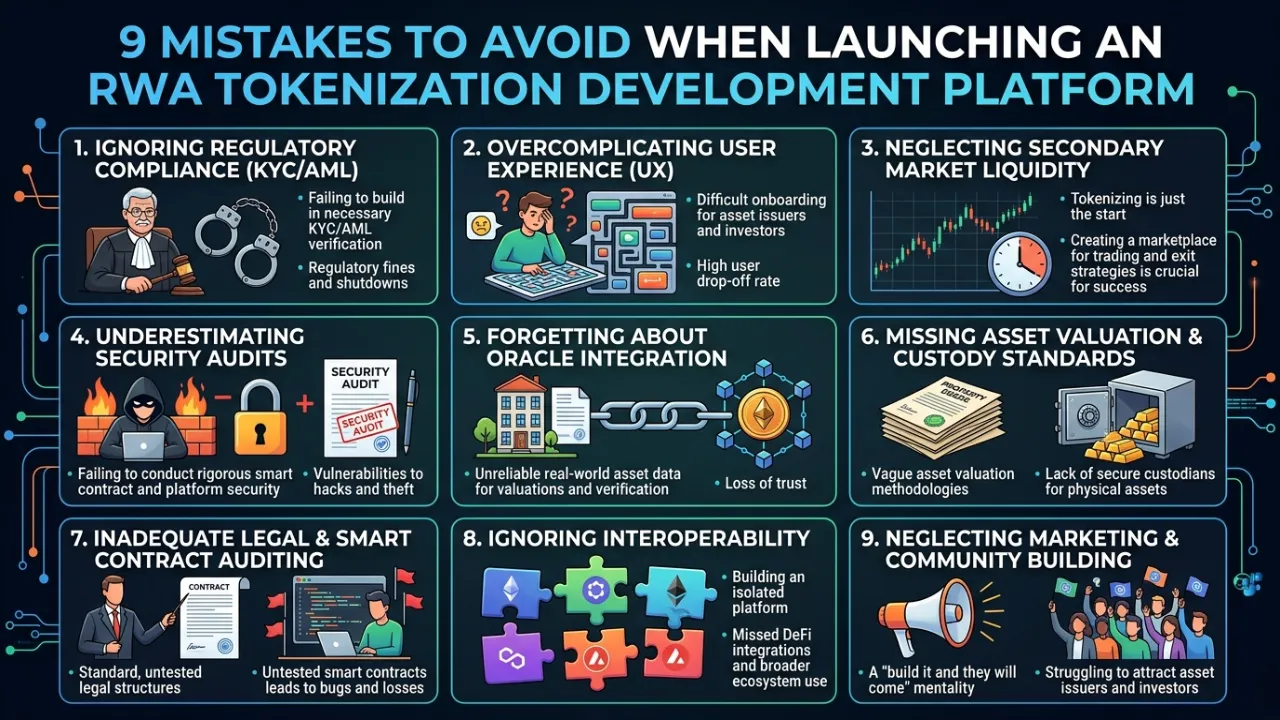
Blockchain technology offers advantages, but it also presents unique risks. Smart contracts, which automate transactions on blockchain networks, are not infallible. Coding errors, vulnerabilities, or poor governance can result in financial losses. Regulators are now exploring how to establish operational standards, auditing requirements, and security protocols for tokenized assets to prevent technological failures from affecting investor confidence or market stability.
Key Regulatory Themes
Regulators are approaching RWA tokenization with several core objectives in mind, balancing innovation and risk management. The emerging themes provide insight into why oversight is increasing.
Classification and Legal Recognition
A primary focus is defining the legal status of tokenized assets. Regulators need to determine whether tokenized shares of real estate, debt, or other tangible assets are treated as securities, commodities, or another class of financial instruments. Legal recognition is critical because it dictates investor protections, reporting requirements, taxation, and dispute resolution mechanisms. Clear classification ensures that tokenized assets have enforceable ownership rights, and it reduces ambiguity for issuers and investors.
Transparency and Reporting
Transparency is central to regulatory oversight. Authorities are increasingly considering mandates for reporting asset valuations, custodial arrangements, and smart contract audits. This ensures that tokenized assets accurately reflect the underlying real-world assets and that investors have reliable information. Regulators may also require periodic disclosure of asset performance, ownership structures, and liquidity conditions to prevent misrepresentation.
Anti-Money Laundering and Know Your Customer Compliance
Tokenized assets, especially when traded globally, could be exploited for illicit activities if not carefully monitored. Regulators are focusing on anti-money laundering (AML) and know your customer (KYC) compliance to prevent tokenized assets from being used for money laundering, terrorist financing, or other illegal purposes. Ensuring proper identification of investors, transaction monitoring, and reporting obligations is essential to align tokenized markets with existing financial safeguards.
Custody and Operational Standards
The storage and management of tokenized assets is another regulatory concern. Unlike traditional assets, digital tokens require secure digital custody solutions to prevent theft, loss, or unauthorized access. Regulators are exploring frameworks for approved custodians, multi-signature wallets, insurance coverage, and operational best practices. This attention reflects a desire to mitigate operational and cybersecurity risks while fostering market trust.
Investor Suitability and Risk Disclosure
RWA tokenization makes previously illiquid and high-value assets accessible to a broader range of investors. Regulators are emphasizing suitability standards to ensure that investors understand the associated risks. Risk disclosure requirements are being designed to educate investors on potential market volatility, illiquidity, and legal uncertainties. By imposing such standards, regulators aim to protect less-experienced investors while encouraging informed participation in tokenized markets.
Examples of Regulatory Developments
Several jurisdictions are already taking proactive steps to address RWA tokenization. In Europe, regulatory bodies are evaluating how the Markets in Crypto Assets regulation could apply to tokenized securities and real-world assets. Singapore has established frameworks for digital token offerings, with a focus on investor protection and operational standards. In the United States, the Securities and Exchange Commission and Commodity Futures Trading Commission are exploring whether tokenized assets fall under existing securities or commodities laws. These examples illustrate the global trend toward codifying rules and clarifying regulatory boundaries.
Implications for Businesses and Investors
The increased regulatory attention has wide-ranging implications for market participants.
For Businesses
Companies offering tokenized assets must adapt to evolving compliance requirements. This may include enhanced reporting, adoption of secure custody solutions, and engagement with legal frameworks for securities or other regulated instruments. Businesses that proactively align with regulatory expectations are likely to gain credibility and attract institutional investors, positioning themselves as leaders in the tokenization ecosystem.
For Investors
Regulatory clarity improves investor confidence. Clear rules regarding ownership rights, liquidity, and dispute resolution reduce uncertainty, making tokenized assets more appealing to conservative investors who were previously hesitant to engage with digital assets. Investors can benefit from the liquidity, fractional ownership, and global access offered by tokenized assets while enjoying protections comparable to traditional markets.
For the Market
Ultimately, regulatory attention contributes to the maturation of tokenized asset markets. By establishing legal certainty, operational standards, and investor protections, regulators are creating an environment conducive to sustainable growth. This formalization can attract institutional capital, facilitate cross-border trading, and promote the integration of tokenized assets into mainstream finance. Markets that operate transparently and securely are more likely to achieve long-term adoption and stability.
Challenges Ahead
Despite progress, several challenges remain. Regulatory harmonization across jurisdictions is still limited, creating potential friction in cross-border transactions. The rapid pace of technological innovation often outstrips legislative processes, resulting in gaps or ambiguities in the law. Additionally, tokenization platforms must navigate complex compliance requirements without compromising the efficiency and accessibility that make tokenized assets attractive in the first place. Balancing innovation, security, and regulatory compliance will continue to be a delicate task.
The Road Ahead
The trajectory of Real World Asset Tokenization suggests that regulatory involvement will only deepen in the coming years. Authorities are likely to expand legal frameworks, clarify definitions, and impose operational standards while encouraging responsible innovation. As regulators and market participants collaborate, tokenized assets may evolve from a niche offering into a mainstream component of global finance. Fractional ownership, enhanced liquidity, and transparent asset management could become standard features of capital markets, fundamentally reshaping how investors access and trade real-world assets.
In conclusion, regulators are finally paying attention to real world asset tokenization because the convergence of rapid market growth, investor protection concerns, technological risks, and cross-border complexity has made oversight unavoidable. By focusing on classification, transparency, custody, risk disclosure, and AML compliance, regulators aim to create a secure and transparent environment for tokenized assets. This evolving regulatory landscape presents opportunities for investors and businesses alike, while laying the foundation for the mainstream adoption of tokenization as a transformative financial innovation. As tokenized assets gain legitimacy and oversight, they are poised to redefine investment accessibility, liquidity, and efficiency, ushering in a new era of digital finance.




















Sign in to leave a comment.