

The global real estate industry has long been defined by stability, capital intensity, and physical ownership models that change slowly over time. While technology has reshaped sectors such as finance, retail, and media at a rapid pace, real estate has traditionally lagged behind in adopting transformative digital infrastructure. That reality is now shifting decisively. Real estate tokenization development is emerging as a strategic priority for property developers, institutional investors, and real estate funds seeking to modernize ownership, unlock liquidity, and future proof their portfolios.
This shift is not driven by hype alone. It is rooted in structural inefficiencies that have constrained real estate markets for decades, including illiquidity, limited access for global investors, high transaction costs, and fragmented ownership records. Tokenization introduces a fundamentally new framework for representing real estate assets as programmable digital units on blockchain networks. These tokenized representations are enabling new investment models, operational efficiencies, and capital formation strategies that were previously impractical or impossible.
As regulatory clarity improves and institutional adoption accelerates, developers and funds are increasingly recognizing that real estate tokenization development is not an optional experiment but a competitive necessity in a rapidly evolving capital market landscape.
Understanding Real Estate Tokenization Development
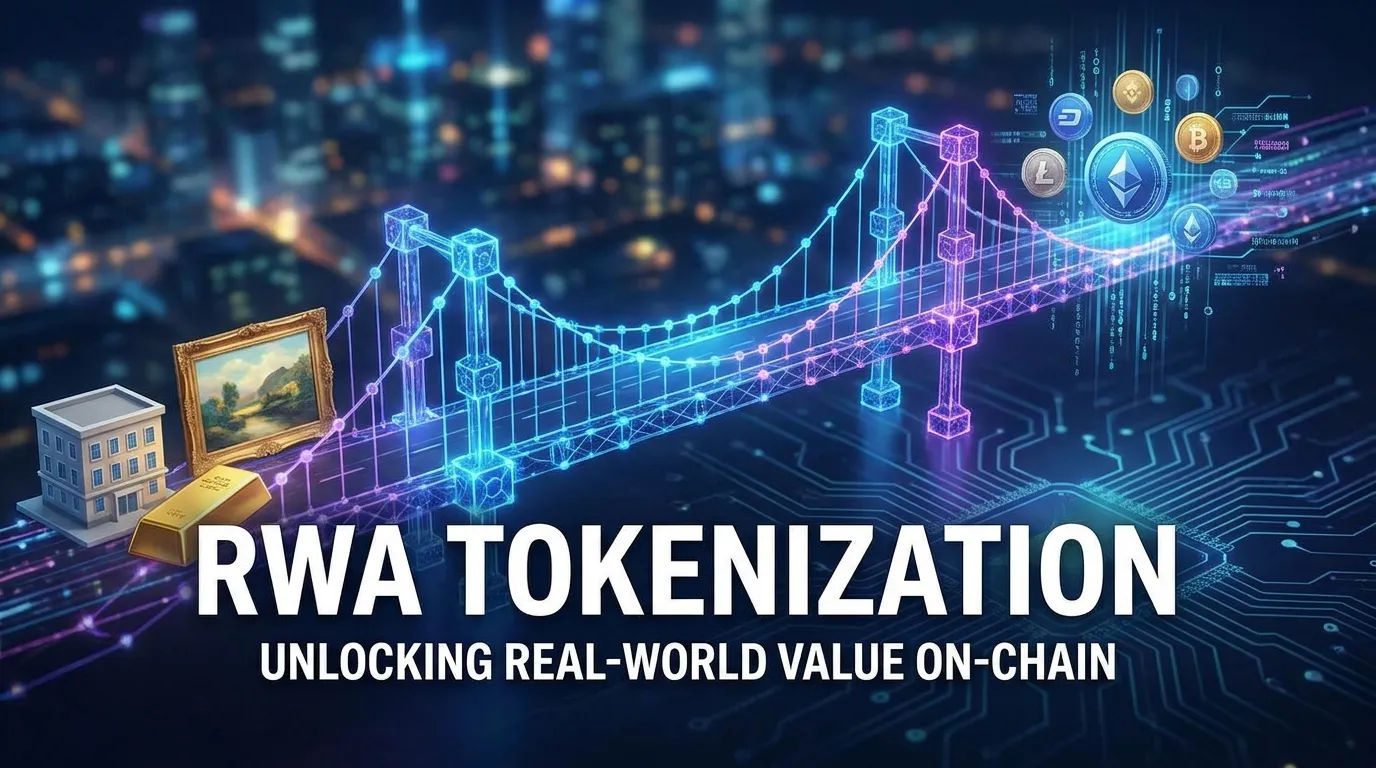
At its core, real estate tokenization development involves converting the economic value and ownership rights of a physical property into digital tokens recorded on a distributed ledger. Each token represents a fractional interest in the asset, whether equity ownership, revenue participation, or debt exposure, depending on the underlying structure.
Unlike traditional property shares or real estate investment vehicles, tokenized assets are programmable, divisible, and transferable with significantly greater efficiency. Smart contracts automate processes such as revenue distribution, compliance checks, and ownership transfers, reducing reliance on intermediaries and manual workflows.
For developers and funds, tokenization is not simply about digitizing assets. It is about reengineering how real estate capital is raised, managed, and distributed across global markets.
Liquidity as the Primary Strategic Driver
One of the most compelling reasons real estate tokenization development is gaining strategic importance is its ability to address illiquidity, a long standing constraint of real estate investing. Physical properties are inherently difficult to buy and sell quickly, particularly in large denominations. This illiquidity has traditionally forced investors to commit capital for extended holding periods, often a decade or longer.
Tokenization introduces fractional ownership at a granular level, allowing assets to be divided into smaller, tradable units. This enables secondary market participation without requiring the sale of the entire property. For developers, this opens new exit strategies that do not depend on full asset liquidation. For funds, it improves portfolio liquidity and capital recycling efficiency.
Enhanced liquidity also reduces risk premiums associated with long lock in periods, potentially increasing asset valuations and investor demand.
Expanding Access to Global Capital Pools
Traditional real estate investment structures are often limited by geography, legal complexity, and minimum investment thresholds. Cross border participation typically requires complex fund structures, local intermediaries, and significant administrative overhead.
Real estate tokenization development removes many of these barriers by enabling compliant digital access to assets for a global investor base. Tokenized offerings can be structured to allow participation from accredited or qualified investors across jurisdictions, subject to regulatory requirements.
This global reach is particularly attractive to developers seeking diversified capital sources and to funds aiming to broaden their investor base beyond traditional institutional channels. By lowering entry thresholds, tokenization allows participation from family offices, high net worth individuals, and emerging market investors who were previously excluded from premium real estate opportunities.
Capital Efficiency and Faster Fundraising Cycles
Raising capital for real estate projects is often a slow and resource intensive process. Traditional fundraising involves extensive documentation, manual due diligence, multiple intermediaries, and prolonged settlement timelines.
With real estate tokenization development, much of this process becomes automated and standardized. Smart contracts can encode investor rights, compliance rules, and distribution logic directly into the token structure. Digital onboarding and verification reduce friction, while blockchain based settlement accelerates capital deployment.
For developers, this means faster access to funding and reduced dependency on a small number of large investors. For funds, it enables more agile capital allocation strategies and shorter fundraising cycles, allowing them to respond quickly to market opportunities.
Transparency and Trust Through Immutable Records
Trust has always been a cornerstone of real estate investing, yet traditional systems rely heavily on fragmented records maintained by multiple parties. This fragmentation increases the risk of errors, disputes, and inefficiencies.
Tokenized real estate assets are recorded on immutable ledgers where ownership history, transaction data, and contractual terms are transparently verifiable. This level of transparency enhances trust among investors, regulators, and counterparties.
For funds managing complex portfolios across regions, real estate tokenization development provides a unified source of truth that simplifies auditing, reporting, and compliance. Developers benefit from increased investor confidence, which can translate into stronger demand and lower capital costs.
Strategic Alignment With Institutional Investment Trends
Institutional investors are increasingly focused on operational efficiency, data driven decision making, and scalable infrastructure. Tokenization aligns closely with these priorities by enabling programmable assets that integrate seamlessly with digital finance ecosystems.
Many funds are exploring tokenization not as a standalone initiative but as part of a broader digital transformation strategy that includes automated reporting, real time portfolio monitoring, and integration with digital custody solutions.
As more institutional players adopt blockchain based infrastructure, developers who invest early in real estate tokenization development position themselves as preferred partners in a modernized investment landscape.
Fractional Ownership and Portfolio Diversification
Fractional ownership has profound implications for portfolio construction. Instead of allocating large amounts of capital to individual properties, investors can distribute capital across multiple tokenized assets, geographies, and asset classes.
For funds, this enables more precise risk management and diversification strategies. For developers, fractionalization allows projects to attract a wider range of investors without diluting control or compromising project governance.
This flexibility is particularly valuable in volatile markets where diversification and liquidity are critical to preserving capital and maintaining investor confidence.
Automation of Revenue Distribution and Governance
Managing rental income, profit sharing, and investor communications is a complex administrative burden in traditional real estate structures. Tokenization introduces automated revenue distribution through smart contracts, ensuring timely and accurate payments based on predefined rules.
Governance mechanisms can also be embedded within tokenized frameworks, allowing investors to participate in voting processes related to asset management decisions. This creates a more transparent and efficient governance model that aligns interests between developers, fund managers, and investors.
By reducing operational overhead, real estate tokenization development allows teams to focus on asset performance and strategic growth rather than administrative complexity.
Risk Mitigation and Compliance Innovation
Regulatory compliance is a critical concern for any real estate investment vehicle. Tokenization platforms are increasingly incorporating compliance by design, embedding jurisdiction specific rules into the token lifecycle.
This includes investor eligibility checks, transfer restrictions, and reporting requirements that are enforced automatically. For developers and funds operating across multiple regions, this reduces compliance risk and operational burden.
Rather than navigating fragmented legal frameworks manually, tokenized structures offer a more standardized and scalable approach to regulatory adherence.
Enhancing Exit Strategies and Asset Valuation
Traditional exit strategies in real estate often involve selling assets to a limited pool of buyers or listing through lengthy brokerage processes. Tokenization introduces alternative exit mechanisms, including partial exits through secondary token markets.
This flexibility allows developers and funds to optimize timing and valuation, rather than being forced into full asset sales under unfavorable market conditions. Improved liquidity and transparency can also contribute to more accurate asset pricing, reflecting real time market demand rather than infrequent appraisal cycles.
As a result, tokenized assets may command valuation premiums due to their enhanced tradability and operational efficiency.
Competitive Differentiation in a Crowded Market
The real estate sector is becoming increasingly competitive, with capital flowing toward projects that demonstrate innovation, sustainability, and operational excellence. Real estate tokenization development serves as a powerful differentiator, signaling technological sophistication and forward thinking governance.
Developers who embrace tokenization can attract digitally native investors and institutional partners seeking exposure to next generation asset structures. Funds that integrate tokenized assets into their portfolios can differentiate themselves through improved transparency, liquidity, and investor experience.
In an environment where differentiation is critical to capital attraction, tokenization provides a clear strategic advantage.
Preparing for the Future of Capital Markets
Capital markets are undergoing a fundamental transformation driven by digital assets, decentralized infrastructure, and programmable finance. Real estate is increasingly viewed as a critical component of this new financial architecture.
By prioritizing real estate tokenization development today, developers and funds are positioning themselves at the intersection of traditional asset classes and digital capital markets. This forward looking approach ensures compatibility with emerging financial systems, including tokenized funds, digital exchanges, and interoperable settlement networks.
Rather than reacting to change, early adopters are shaping the future of how real estate capital flows globally.
Conclusion
Real estate tokenization development is no longer a theoretical innovation or niche experiment. It is rapidly becoming a strategic imperative for developers and funds seeking to remain competitive, efficient, and relevant in a digitized investment landscape.
By unlocking liquidity, expanding access to global capital, enhancing transparency, and automating operations, tokenization addresses long standing challenges that have constrained real estate markets for decades. It aligns closely with institutional priorities and positions assets for integration into the future of capital markets.
As adoption accelerates and infrastructure matures, those who invest early in real estate tokenization development will not only gain operational advantages but also define new standards for ownership, investment, and value creation in the global real estate ecosystem.






















Sign in to leave a comment.