

Why Document Intelligence Is a Strategic Priority Now
Enterprises today are generating more documents than ever across contracts, compliance, operations, and customer workflows. Yet, many still treat documents as passive records instead of information-rich assets. The result is slow processes, inconsistent data use, and missed opportunities.
An intelligent document strategy changes that. It helps companies actively manage, understand, and use document data across departments, systems, and formats. This blog explores what enterprises risk by not having one and what they gain when they do.
What ‘Intelligent Document Strategy’ Really Means
An intelligent document strategy refers to a company-wide approach that applies modern document processing methods such as AI, NLP, and feedback systems to classify, extract, validate, and contextualize documents in real time. This includes both structured and unstructured content.
Rising Complexity of Enterprise Content and Formats
Enterprises now work with scanned PDFs, handwritten forms, embedded tables, and multi-format files across different systems. Without an intelligent way to process this data, document workflows stay siloed, slowing down business outcomes.
Why Reactive Document Systems Fall Short in Modern Operations
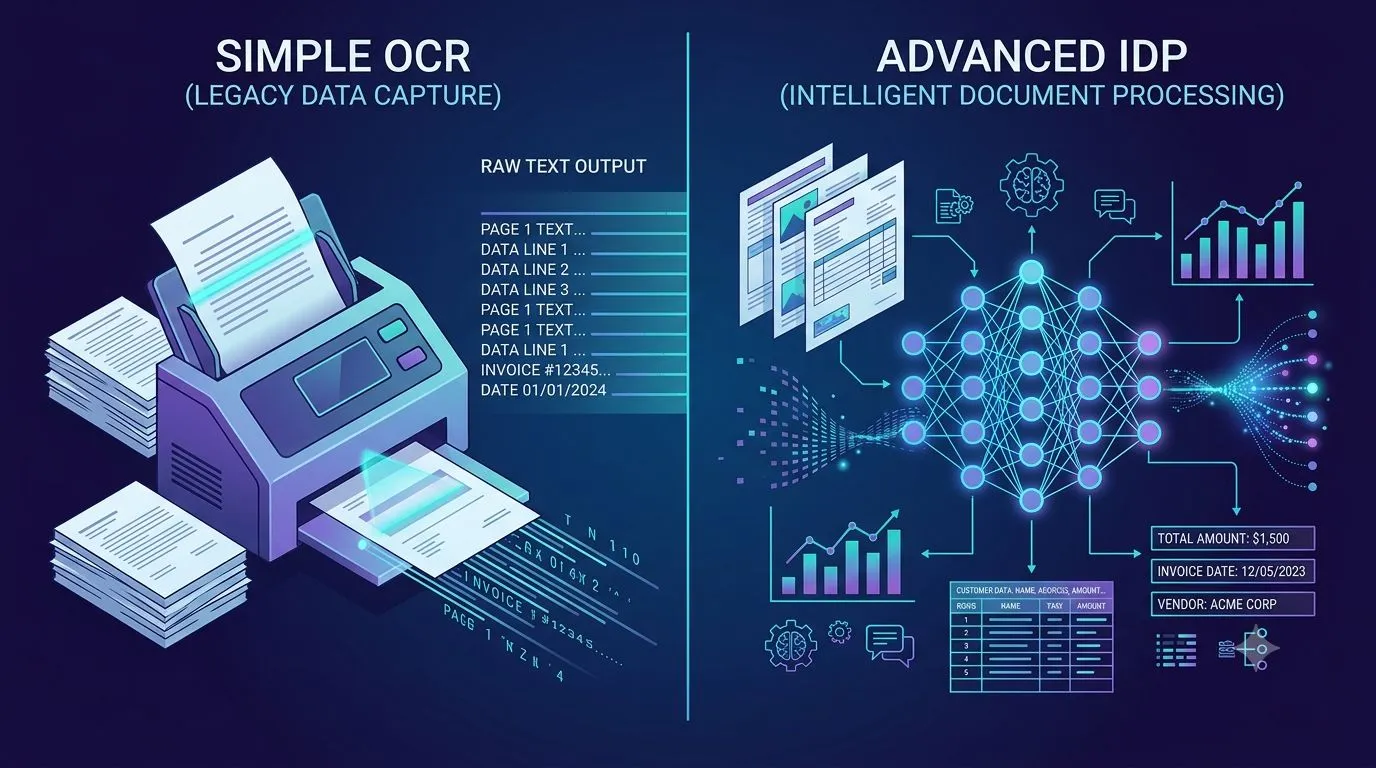
Most legacy systems only process documents after they are archived or tagged manually. This reactive approach causes delays in customer onboarding, claim approvals, audits, and credit assessments. Businesses need real-time document intelligence, not slow post-processing.
Gaps That Undermine Enterprise-Wide Productivity
Without a forward-looking document strategy, gaps start to emerge across departments that eventually disrupt performance at scale.
Disconnected Systems and Fragmented Workflows
Sales, finance, legal, and operations teams often use different systems for handling documents. The lack of centralized access and coordination leads to redundant efforts and missed updates.
Manual Classification, Indexing, and Tagging Bottlenecks
Most enterprises still rely on manual teams for document tagging, which slows down ingestion and increases the risk of human error, especially with large volumes of documents arriving daily.
Inconsistencies Across Compliance and Audit Workflows
When compliance checks rely on subjective document reviews, enterprises open themselves up to regulatory risk. A missing signature, outdated clause, or unchecked ID can derail entire operations.
Delays in Cross-Departmental Decision-Making
When data within documents is not instantly accessible, decisions that rely on multiple teams like credit, procurement, or legal slow down due to bottlenecks in document retrieval and interpretation.
The Business Cost of Not Acting Early
Waiting to implement an intelligent document strategy means piling up hidden costs that hit operations, risk, and revenue.
Missed Opportunities in Document Search and Retrieval
Basic systems depend on filenames, dates, or keyword matches. But enterprise documents often include meaning in context. Without smarter understanding, teams miss key insights during retrieval.
Read more in this blog on What Is Intelligent Document Processing.
Repetitive Rework and Overdependence on Manual Review
Documents are frequently rechecked by multiple teams for accuracy. The same form may be reviewed by onboarding, then again by compliance, then finance. This wastes hours and adds friction.
Slower Turnaround in Contracts, Claims, and Approvals
Without quick access to validated document data, even simple workflows like contract signing, claim settlement, or invoice clearance take longer, affecting both customer satisfaction and revenue realization.
Higher Risk Exposure from Unverified or Unstructured Inputs
In high-risk industries like BFSI or healthcare, an unverified document input can result in compliance violations, fraud incidents, or credit defaults. These costs far outweigh the effort of early adoption.
What an Intelligent Document Strategy Enables
Enterprises that move to document intelligence frameworks report measurable improvements across visibility, accuracy, and speed.
Contextual Document Understanding Beyond Keywords
Modern systems use AI and NLP to understand context, not just text. They know when “customer name” refers to an entity even if it is not labeled explicitly, reducing false positives.
Linking Structured and Unstructured Information Seamlessly
An intelligent document strategy connects Excel files, PDFs, scanned forms, and XML datasets into one contextual view. This enables teams to work with complete information.
Real-Time Decisions Supported by Extracted Insights
AI systems can now extract totals, classifications, and inconsistencies in real time. That means faster decisions without waiting on human review.
Unified View Across Workflows, Roles, and Regulations
Instead of having legal, finance, and compliance use separate systems, intelligent document strategies create a shared interface where insights are visible, traceable, and aligned.
Why Traditional ECM and DMS Systems No Longer Suffice
Enterprise Content Management and Document Management Systems were built to store, not interpret. That approach is no longer enough.
Limitations of Rule-Based Automation in Dynamic Environments
Static rules do not hold up in dynamic document environments. Vendors change formats, customers upload blurry scans, and each exception breaks the process.
The Gap Between Storage and Actionable Knowledge
Document management tools store PDFs. Without extracting meaning, those PDFs remain static files. Intelligence bridges this gap by making document data usable for business decisions.
Vendor Lock-In Without Insightful Capabilities
Enterprises often stay locked into DMS vendors because of historical volume. These systems lack native AI, NLP, or learning loops, leading to long-term performance tradeoffs.
Technology Shifts Enterprises Are Overlooking
Emerging technologies are becoming central to how enterprises extract value from documents.
NLP-Powered Classification vs Keyword Tagging
Natural language models now enable classification based on intent, not just tags. This allows smarter indexing that understands business meaning rather than surface-level metadata.
Role of AI Feedback Loops in Self-Improving Accuracy
Modern platforms use feedback loops to keep improving. If a user corrects a classification, the system learns and applies the correction the next time automatically.
Moving from Document Storage to Decision Intelligence
Enterprise focus is shifting from storing documents to acting on them. The value lies in the insight extracted, not the archive it sits in.
Learn more about these outcomes in this blog on Benefits of Intelligent Document Processing.
Real-World Scenarios Where Strategy Makes a Measurable Difference
Proof points across industries show how intelligent document strategies deliver results.
Loan Document Review Time Cut by 60% in BFSI
By automating classification and verification, banks reduced the time spent reviewing loan documents and shortened approval timelines.
90% Less Manual Processing in Procurement Audits
With automated matching and extraction, procurement teams reduced reliance on spreadsheets and manual review cycles.
70% Improvement in Contract Approvals in Legal Teams
Legal departments using AI-based classification and clause detection reported faster contract routing and fewer review iterations.
What to Include in a Document Strategy Framework
Building a document strategy is not just about choosing software. It requires a clear framework.
Document Intake and Preprocessing Logic
Start with how documents arrive through email, scan, or upload and set up intake workflows to normalize file types, formats, and metadata.
Classification, Tagging, and Hierarchy Recognition
Ensure the system understands document type, category, and hierarchy such as invoice, line items, and totals. This is critical for downstream processes.
Validation, Reconciliation, and Fraud Check Modules
Whether matching invoice data or checking identity validity, embed checks that verify data across systems and reduce error exposure.
Feedback and Learning Systems to Improve Over Time
Every correction should help the system get better. Feedback loops ensure continuous improvement without manual retraining cycles.
Missed KPIs Due to Lack of a Document Strategy
The absence of a document strategy becomes visible in performance metrics.
Document Turnaround Time (DTT) and Straight-Through Processing
Without automation, turnaround time increases and straight-through processing remains low, slowing revenue realization.
Manual Intervention Rate (MIR) Across Departments
High intervention rates indicate breakdowns in classification, extraction, or validation, often caused by missing intelligence layers.
Audit Readiness Score and Regulatory Consistency
Poor document classification or missing data leads to audit issues. A structured strategy ensures traceability and consistency.
Unused Document Data in Risk and Forecast Models
Without structured extraction, valuable information stays locked in static files, limiting risk analysis and forecasting accuracy.
Planning Ahead: The Case for Proactive Document Intelligence
Planning early allows enterprises to compound value over time.
Building a Strategy That Matches Department Needs
Each department faces different document challenges. A shared foundation with tailored workflows delivers broader adoption.
Scaling Intelligence Without Replacing Existing Systems
The right approach works alongside existing systems. Modern IDP platforms integrate through APIs rather than forcing replacement.
Making Documents a Strategic Asset, Not a Back-Office Burden
Documents carry business data, legal weight, and customer history. Making them actionable turns them into strategic assets instead of operational overhead



























Sign in to leave a comment.