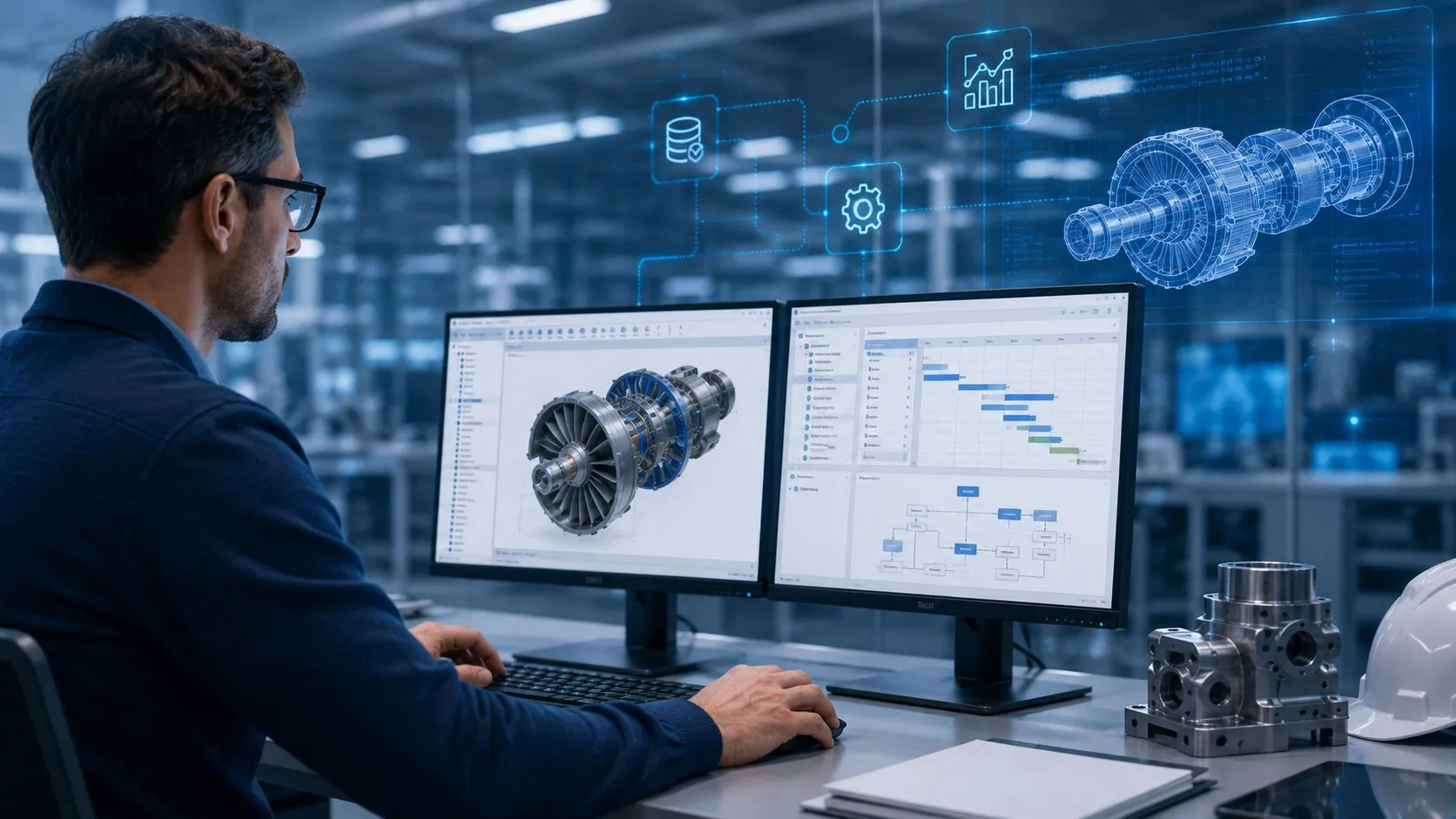

Manufacturers today face unprecedented product complexity. Engineering teams must coordinate mechanical, electrical, software, and systems development while maintaining strict configuration control, regulatory compliance, and global collaboration. Yet many organizations continue to rely on aging Product Lifecycle Management (PLM) environments that were never designed for today's connected engineering landscape.
As a result, the question is no longer whether modernization is necessary, but how to approach it strategically. Evaluating Windchill PLM software against legacy PLM systems requires more than comparing feature lists; it demands a careful assessment of business processes, organizational readiness, and long-term engineering goals.
For manufacturers in aerospace, automotive, medical devices, life sciences, and industrial manufacturing, selecting the right migration strategy can significantly influence product quality, engineering productivity, and future digital transformation initiatives.

Why Windchill PLM Software Is Replacing Legacy PLM Platforms
Short answer: Modern PLM platforms support end-to-end digital engineering, while legacy systems often struggle with today's collaborative product development requirements.
Many legacy PLM environments were designed when engineering disciplines operated independently and product data volumes were significantly smaller.
Today's engineering organizations require capabilities such as:
- Enterprise-wide product data management
- Digital thread connectivity
- Engineering change automation
- Multi-CAD collaboration
- Requirements traceability
- Real-time global access
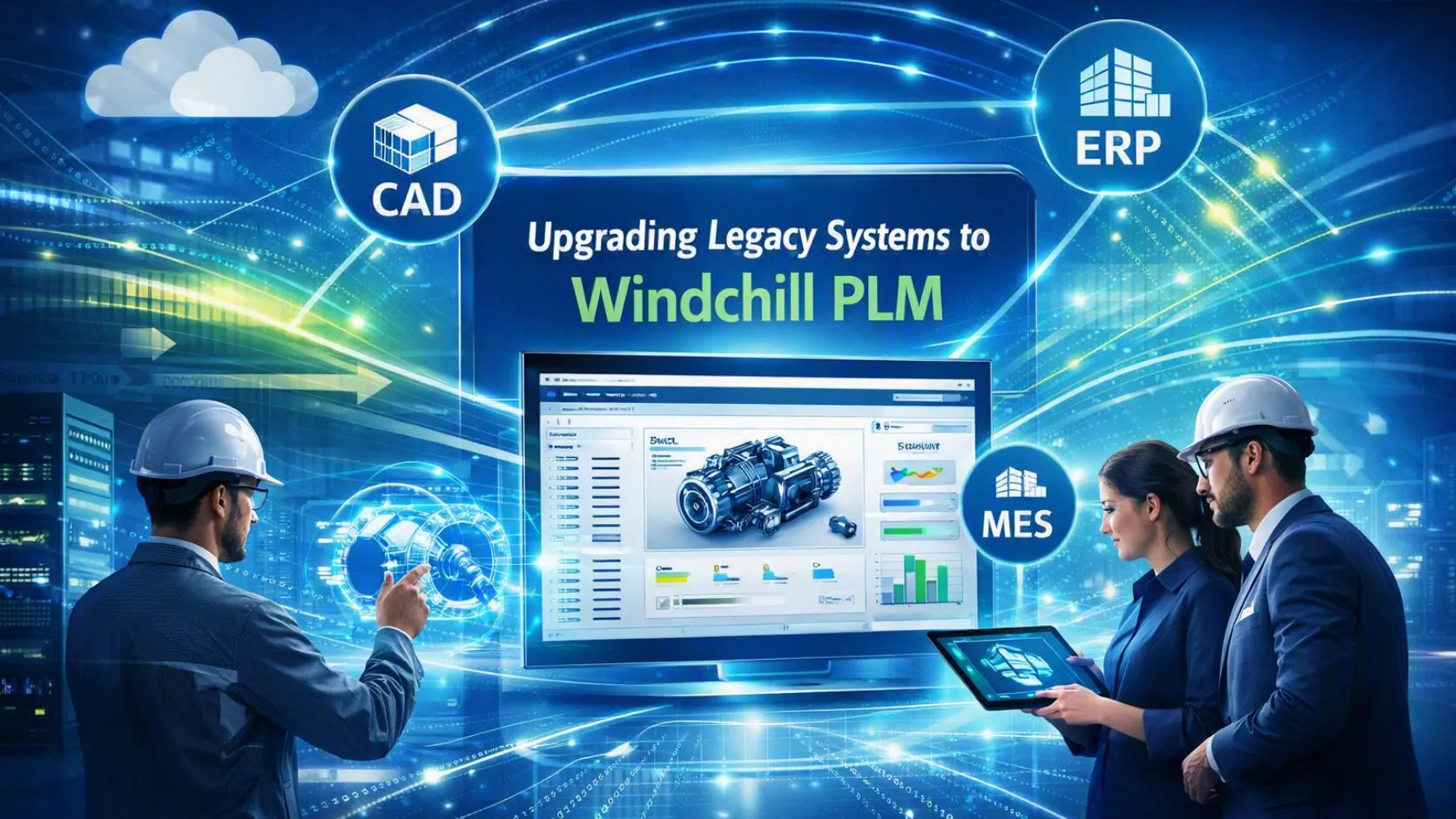
- Integration with ERP, ALM, and MES platforms
Modern Windchill PLM software addresses these needs by providing a centralized environment for managing product information throughout the entire lifecycle from concept and design to manufacturing, service, and retirement.
Evaluating Windchill PLM Software Beyond Features
Short answer: The right evaluation focuses on business outcomes rather than software functionality alone.
Organizations often begin PLM selection by comparing technical specifications. While important, successful migration depends equally on operational alignment.
Decision-makers should evaluate:
- Current engineering workflows
- Product complexity
- Integration requirements
- Regulatory obligations
- Scalability needs
- Collaboration challenges
- Long-term digital engineering strategy
For example, a manufacturer experiencing frequent engineering change delays may benefit more from workflow automation and governance improvements than from additional document management capabilities alone.
Signs That Your Legacy PLM System Is Holding You Back
Legacy systems often continue functioning for years, making modernization easy to postpone. However, several indicators suggest that migration should be considered.
Common warning signs include:
- Manual engineering change approvals
- Duplicate product data across departments
- Limited integration with ERP or CAD platforms
- Difficulty supporting distributed engineering teams
- Slow search and retrieval of engineering information
- Increasing maintenance costs
- Limited scalability for new product programs
These challenges frequently affect productivity long before they become obvious technology issues.
Why a Business Process Audit Should Come First
Short answer: Modernizing inefficient processes simply transfers existing problems into a new system.
Before selecting any PLM platform, organizations should perform a comprehensive business process audit.
An effective audit evaluates:
- Product development workflows
- Engineering change management
- Configuration control
- Data governance
- Approval processes
- Cross-functional collaboration
- Information handoffs
- Process ownership
This analysis identifies operational bottlenecks that technology alone cannot solve.
For example, if engineering delays result from unclear approval responsibilities rather than software limitations, migrating to a new PLM platform without addressing governance will produce limited improvement.
Key Benefits of Windchill Migration
When supported by optimized business processes, migration can deliver substantial operational improvements.
Enhanced Collaboration
Engineering teams gain centralized access to current product information, reducing duplicate work and version conflicts.
Improved Traceability
Connected product data supports regulatory compliance while simplifying design verification and audit preparation.
Better Engineering Change Management
Automated workflows reduce approval delays and improve visibility across engineering organizations.
Greater Scalability
Modern PLM environments can support growing product portfolios, distributed engineering teams, and expanding digital transformation initiatives.
The Importance of PLM Implementation Services
Short answer: Technology implementation is only one part of successful PLM modernization.
Effective PLM implementation services encompass much more than software installation.
Typical activities include:
- Solution architecture
- Data migration planning
- CAD integration
- Workflow configuration
- User training
- Governance development
- Performance validation
- Change management
Organizations that invest in structured implementation often experience smoother adoption and stronger long-term business outcomes.
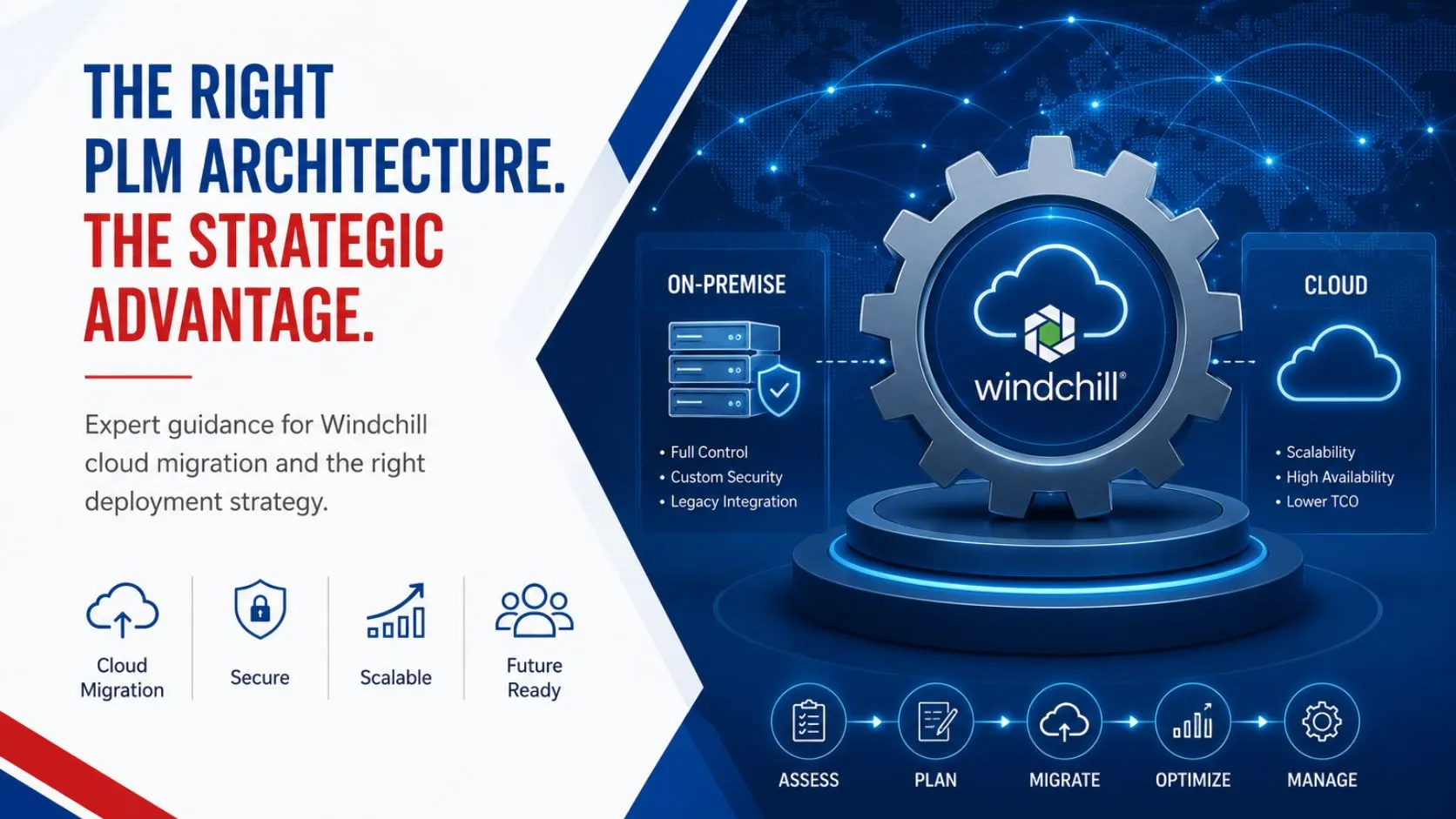
Practical Migration Strategy
Successful PLM modernization typically follows a phased approach.
Step 1: Assess Existing Systems
Document current infrastructure, integrations, customizations, and business processes.
Step 2: Prioritize Business Objectives
Identify measurable goals such as:
- Faster engineering changes
- Reduced product development cycles
- Improved compliance readiness
- Better engineering collaboration
Step 3: Prepare Data
Review legacy product information to eliminate duplicate, outdated, or inconsistent records before migration.
Step 4: Pilot Before Enterprise Rollout
Testing selected engineering teams first allows organizations to validate workflows before full deployment.
Common Migration Mistakes
Even experienced manufacturers encounter similar challenges.
Treating Migration as an IT Project
PLM affects engineering, manufacturing, quality, procurement, and service. Business stakeholders should participate throughout the project.
Migrating Every Legacy Customization
Not every historical customization should be recreated. Modern platforms often provide standard capabilities that simplify operations.
Neglecting User Adoption
Technology succeeds only when engineers understand new processes and recognize the operational benefits.
Underestimating Data Quality
Poor product data significantly increases migration complexity and can reduce confidence in the new system.
Industry Perspective: PLM Modernization as Part of Digital Engineering
Manufacturers increasingly recognize that PLM migration is not simply a software upgrade but a strategic initiative that supports enterprise-wide digital engineering. Modern PLM platforms are becoming central hubs connecting design, manufacturing, quality, supply chain, and service operations through a continuous digital thread.
Organizations with expertise in engineering transformation, such as 3HTi, support manufacturers with Windchill implementation, migration planning, and engineering process optimization. Its Windchill solutions reflect the industry's shift toward integrated PLM environments that improve collaboration while supporting long-term digital transformation objectives.
Conclusion
Choosing between a legacy PLM platform and Windchill PLM software is not simply a technology decision, it is a business transformation initiative that influences engineering productivity, collaboration, product quality, and organizational agility.
Manufacturers that begin with a thorough business process audit, establish clear business objectives, and leverage experienced PLM implementation services are better positioned to achieve successful modernization with minimal disruption. By focusing on optimized processes alongside technology, organizations can build a scalable PLM environment that supports innovation, regulatory compliance, and sustainable growth well into the future.
FAQs
1. What is Windchill PLM software?
Windchill PLM software is an enterprise Product Lifecycle Management platform that manages product data, engineering changes, configuration control, collaboration, and lifecycle processes across design, manufacturing, service, and support functions.
2. Why should manufacturers replace legacy PLM systems?
Legacy platforms often limit collaboration, scalability, integration, and process automation. Modern PLM solutions improve engineering efficiency, support digital transformation, and provide better lifecycle visibility for increasingly complex products.
3. What is included in PLM implementation services?
PLM implementation services typically include solution architecture, system configuration, data migration, CAD integration, workflow design, testing, user training, governance planning, and ongoing support to ensure successful adoption.
4. Why is a business process audit important before PLM migration?
A business process audit identifies workflow inefficiencies, governance issues, and operational bottlenecks, ensuring organizations improve processes before migrating them into a new PLM environment.
5. How long does a typical PLM migration project take?
The timeline depends on system complexity, data volume, customization requirements, and organizational readiness. Many enterprise migrations are completed in phased deployments over several months to reduce operational disruption.
6. What are the biggest risks during PLM migration?
Common risks include poor data quality, inadequate change management, excessive customization, limited stakeholder involvement, insufficient testing, and unclear business objectives that can delay implementation or reduce user adoption.
7. How can organizations measure the success of a PLM migration?
Success can be measured through improvements in engineering change cycle times, product data accuracy, collaboration, compliance readiness, user adoption, development efficiency, and overall product lifecycle visibility.






















Sign in to leave a comment.