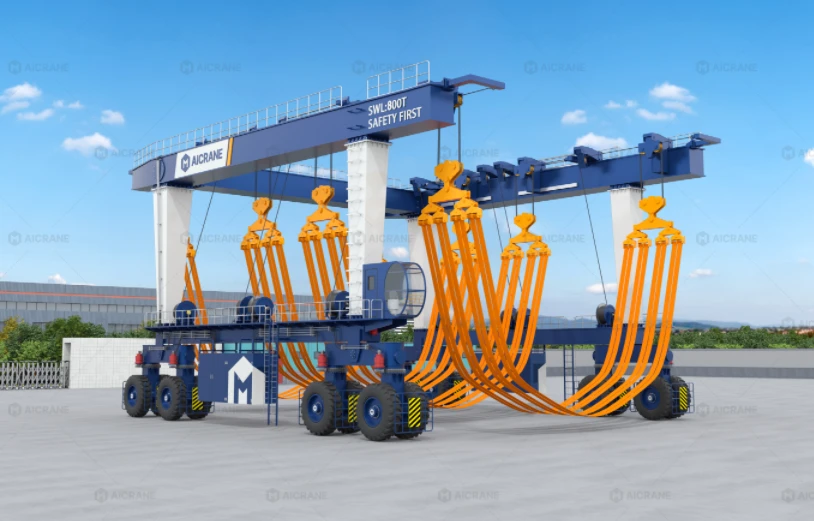

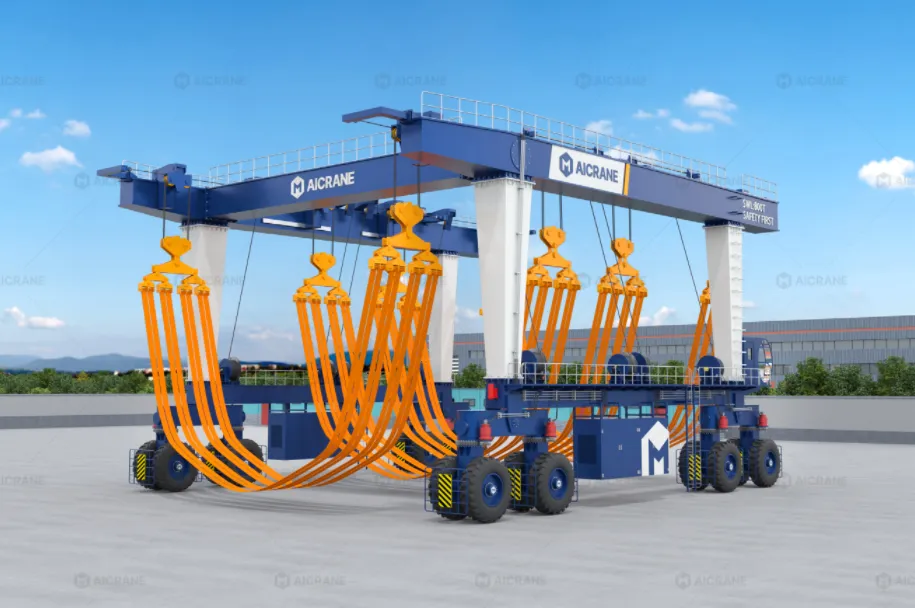
Boat travel lifts—also known as mobile boat hoists or marine gantry cranes—are widely used in shipyards, marinas, and boat maintenance facilities for lifting, transporting, and launching vessels. These machines typically operate in coastal areas or directly over water, where exposure to salt spray, humidity, and fluctuating temperatures can significantly accelerate corrosion. Without proper corrosion protection, structural steel components, mechanical parts, and electrical systems may deteriorate quickly, reducing equipment lifespan and increasing maintenance costs.
Marine environments are particularly aggressive because saltwater promotes electrochemical reactions that cause metals to rust much faster than in normal industrial conditions. High humidity, UV exposure, and temperature changes further weaken protective coatings and structural materials over time.
To ensure durability and long service life, modern boat travel lifts incorporate a variety of anti-corrosion structural features. These design strategies include corrosion-resistant materials, advanced coating systems, structural drainage designs, sealed mechanical components, and specialized protection for fasteners and cables. Understanding these features is essential for shipyard operators, marina managers, and equipment buyers who want reliable lifting solutions in harsh marine environments.
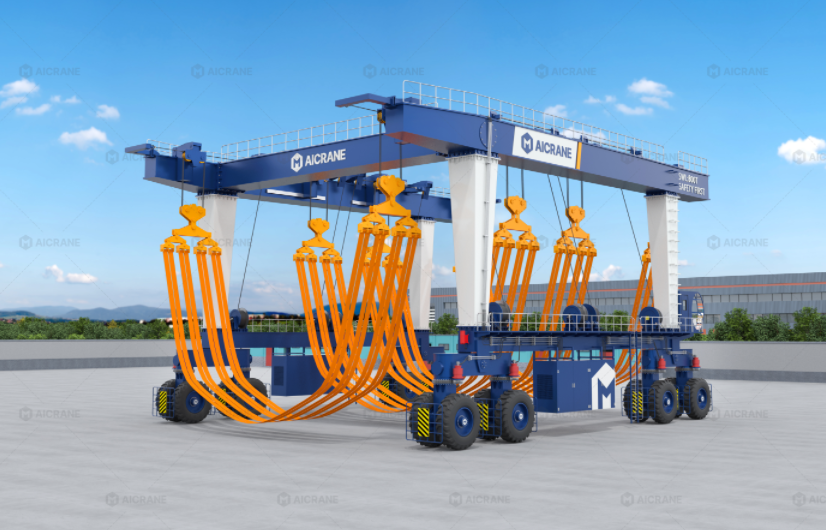
Marine Environmental Challenges Affecting Boat Travel Lifts
Before discussing anti-corrosion structural features, it is important to understand why marine environments are so destructive to lifting equipment. Several factors contribute to corrosion in boat travel lifts.
Saltwater and Salt-Laden Air
Saltwater contains sodium chloride, which accelerates oxidation reactions on steel surfaces. Even when the equipment is not directly submerged, salt particles carried in the air can settle on structural components and cause corrosion.
High Humidity and Condensation
Marine environments often have persistent high humidity levels. Moisture in the air condenses on metal surfaces, forming a thin electrolyte layer that promotes rust formation.
Temperature Fluctuations
Daily heating and cooling cycles cause expansion and contraction of metal structures. These movements can create micro-cracks in protective coatings, allowing moisture to penetrate the underlying metal.
Galvanic Corrosion
When two different metals are in contact in a salty environment, an electrochemical reaction can occur. This phenomenon, known as galvanic corrosion, can rapidly damage components if not properly controlled.
Because of these challenges, boat travel lifts require specially engineered anti-corrosion structural features that go beyond standard industrial crane design.
Corrosion-Resistant Structural Materials
One of the most important strategies for protecting boat travel lifts is selecting materials that inherently resist corrosion.
Marine-Grade Structural Steel
Most travel lifts use high-strength structural steel for their main frames because of its excellent load-bearing capacity. However, standard carbon steel is vulnerable to rust. To improve durability, manufacturers often use marine-grade or low-alloy steels such as ASTM A588 or similar weathering steels. These materials contain alloying elements like copper, chromium, and nickel that enhance resistance to atmospheric corrosion.
Such steels form a protective oxide layer that slows down corrosion compared to untreated steel, making them suitable for long-term use in coastal environments.
Stainless Steel Components
Critical small components—including bolts, pins, hydraulic fittings, and cable attachments—are frequently made from stainless steel, particularly grades 304 or 316.
Type 316 stainless steel is especially valuable in marine environments because it provides excellent resistance to chloride-induced corrosion from seawater exposure.
Using stainless steel for vulnerable components significantly reduces the risk of mechanical failure due to rust.
Non-Metallic Materials
Modern boat travel lifts may also incorporate non-metallic materials in certain areas. For example:
- Fiberglass-reinforced plastic panels
- Polymer cable sheaves
- Composite protective covers
These materials do not rust and help minimize maintenance requirements in areas exposed to water and salt spray.
Multi-Layer Protective Coating Systems
Even corrosion-resistant metals require additional protection in harsh marine conditions. Therefore, most boat travel lifts utilize multi-layer coating systems designed specifically for marine environments.
Zinc-Rich Primers
The first layer of protection is usually a zinc-rich primer. Zinc acts as a sacrificial metal, meaning it corrodes before the underlying steel does. This galvanic protection helps prevent rust even if the coating is scratched.
Epoxy Intermediate Coatings
An epoxy intermediate layer is commonly applied above the primer. Epoxy coatings provide excellent adhesion and form a strong moisture barrier that prevents saltwater penetration.
These coatings also offer resistance to chemicals, abrasion, and mechanical wear.
Polyurethane or Polyaspartic Topcoats
The outermost layer typically consists of polyurethane or polyaspartic paint. These coatings provide:
- UV resistance
- Color stability
- Additional protection against mechanical damage
Together, the primer, intermediate coat, and topcoat form a highly durable protective barrier suitable for marine exposure.
Hot-Dip Galvanization for Structural Components
Hot-dip galvanization is another widely used anti-corrosion technique in boat travel lift construction. During this process, steel components are immersed in molten zinc, forming a metallurgical bond between the steel and the zinc coating.
This protective layer offers several advantages:
- Long-term corrosion resistance
- Self-healing protection for small scratches
- Strong adhesion to the steel surface
Galvanized components can resist rust for decades in marine environments with minimal maintenance.
For this reason, many structural parts such as ladders, handrails, platforms, and connection plates are often galvanized.
Structural Drainage and Water-Shedding Design
Effective anti-corrosion design is not only about coatings and materials. The physical structure of the boat travel lift also plays an important role in preventing corrosion.
Eliminating Water Traps
Designers avoid creating cavities or horizontal surfaces where water can accumulate. Structural beams are often designed with sloped surfaces or drainage holes so that rainwater and seawater can drain away quickly.
Smooth Structural Transitions
Sharp corners and welded pockets can trap moisture and debris. To reduce corrosion risks, engineers use smooth weld transitions and sealed joints.
Sealed Structural Cavities
Some structural members are sealed or treated internally to prevent moisture buildup inside hollow sections.
By minimizing areas where water can accumulate, these design strategies significantly reduce long-term corrosion risks.
Corrosion Protection for Wire Ropes and Lifting Components
Boat travel lifts rely heavily on wire ropes and lifting systems, which must also be protected from corrosion.
Galvanized Wire Ropes
Galvanized steel wire ropes are commonly used in marine lifting equipment or shipyard cranes. The zinc coating protects the steel strands from moisture and salt exposure, increasing service life compared with uncoated wire ropes.
Protective Lubricants
Special marine-grade lubricants are applied to wire ropes to repel water and prevent internal corrosion between strands.
Polymer Sheaves and Bearings
In some designs, polymer or composite sheaves replace traditional metal ones. These components resist water damage and reduce corrosion-related wear.
Electrical and Hydraulic System Protection
Corrosion can also damage the electrical and hydraulic systems of boat travel lifts. Therefore, protective structural features are incorporated into these systems.
Sealed Electrical Enclosures
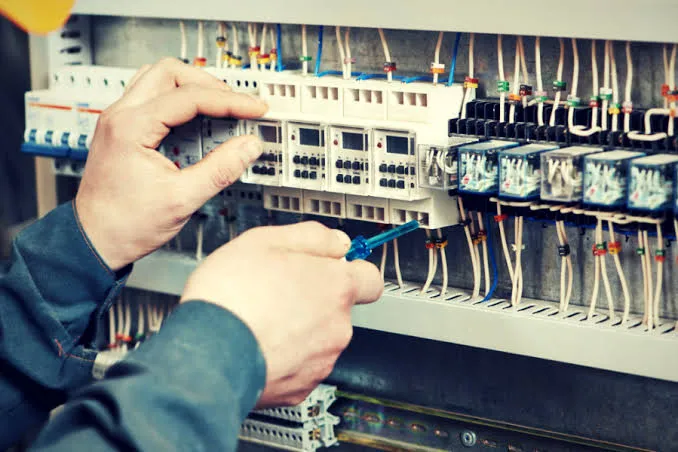
Control panels and electrical cabinets are typically housed in IP-rated enclosures that prevent moisture and salt from entering.
Corrosion-Resistant Connectors
Marine-grade connectors and sealed cable glands protect electrical connections from corrosion.
Stainless Hydraulic Fittings
Hydraulic lines often use stainless steel fittings and corrosion-resistant hoses to withstand exposure to saltwater.
These features ensure reliable operation even in humid and corrosive environments.
Cathodic Protection Systems
In some high-exposure installations, boat travel lifts may use cathodic protection systems. This technique involves attaching sacrificial anodes—usually made of zinc or aluminum—to the structure.
These anodes corrode instead of the main steel structure, providing an additional layer of electrochemical protection.
Cathodic protection is particularly useful for cranes installed directly near seawater or on docks.
Maintenance-Friendly Structural Design
Finally, effective anti-corrosion strategies must include maintenance considerations. Boat travel lifts are often designed to simplify inspection and repainting.
Key features include:
- Accessible inspection points
- Removable protective covers
- Modular components for easy replacement
Regular inspections allow operators to detect early signs of corrosion and repair damaged coatings before the structural integrity is compromised.
Conclusion
Boat travel lifts operating in marine environments face constant exposure to saltwater, humidity, and harsh weather conditions. Without proper protection, corrosion can quickly degrade structural components, mechanical systems, and electrical equipment, leading to costly repairs and downtime.
To address these challenges, modern travel lifts incorporate a comprehensive range of anti-corrosion structural features. These include corrosion-resistant materials such as marine-grade steel and stainless steel, advanced multi-layer coating systems, hot-dip galvanization, water-shedding structural designs, and corrosion-resistant lifting components. Additional protection measures—such as sealed electrical systems, galvanized wire ropes, and cathodic protection—further enhance durability.
By combining these engineering strategies with regular maintenance and inspection, boat travel lifts can achieve long service lives even in the most demanding marine environments. For shipyards, marinas, and boat repair facilities, investing in equipment with robust anti-corrosion structural features is essential for ensuring safe, reliable, and cost-effective vessel handling operations.

























Sign in to leave a comment.